
Culver City’s In-N-Out drive-thru fight turned on a procedural move that California cities keep for moments when ordinary zoning timelines are too slow: an urgency ordinance under Government Code § 65858. On June 8, 2026, the City Council adopted an interim ban on new drive-through facilities before In-N-Out could move its proposed restaurant through the city’s regular entitlement process; on July 13, the council extended that moratorium to June 2027 while a permanent ordinance is prepared. The June vote needed four-fifths support, lasted only 45 days unless extended, and had to be supported by written findings that new drive-thrus posed a “current and immediate threat” to public health, safety, or welfare.[1][2]
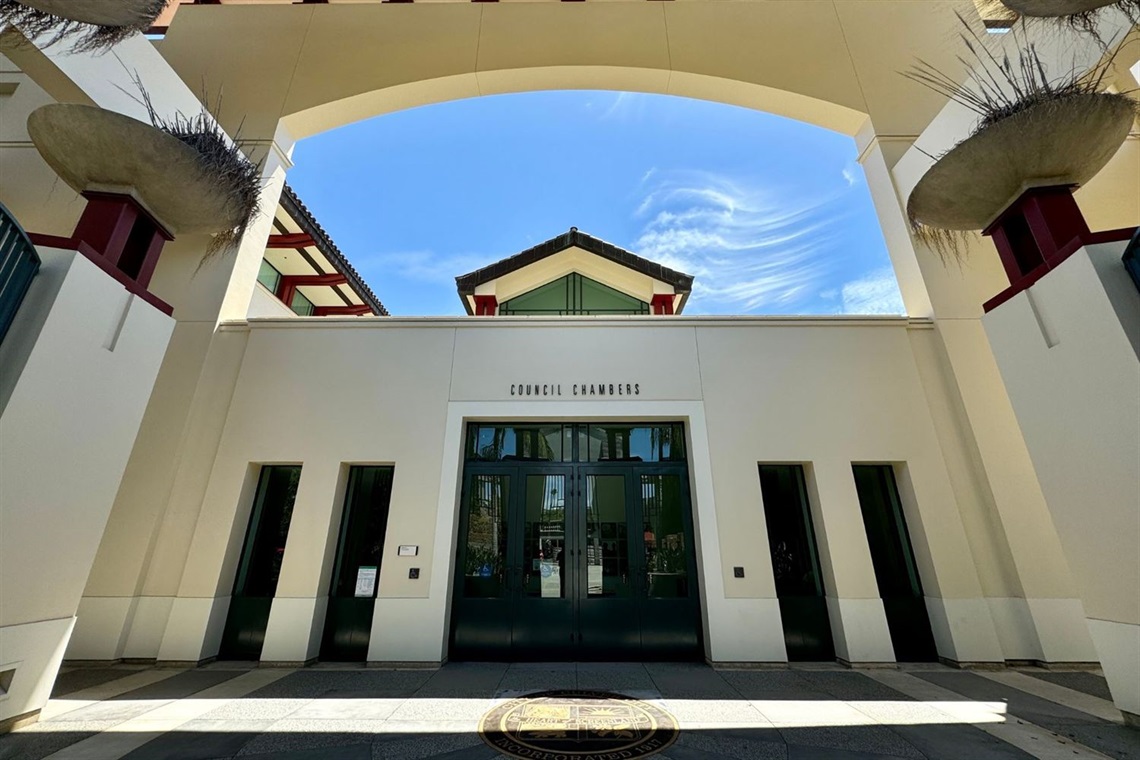
That is the practical legal frame for the drive-thru ban proposal. The most important question is not whether drive-thrus are good urban design or whether Culver City may eventually prohibit them. It is whether the city used the emergency moratorium power as a defensible interim planning device, or stretched that power into a project-specific blockade against a use that the existing code had not yet prohibited.
The city has real arguments. Its General Plan record gives it a planning basis for preferring pedestrian-oriented design, reduced auto dependence, and carbon-neutral development. The moratorium also preserves the current built environment rather than closing existing businesses. But the city’s safest legal ground is narrow. The more the record depends on the impending In-N-Out submittal as the emergency, the more a challenger can argue that the ordinance was less a temporary land-use study period than a targeted pause button pressed at the last possible moment.
The June 8 vote compressed several legal problems into one evening
The immediate chronology matters because § 65858 is built around timing. Vice Mayor Fish had called in February 2026 for a ban on new drive-through facilities. The Mobility Subcommittee advanced the issue in May. On June 8, the council adopted the urgency ordinance. On July 13, it extended the moratorium to June 2027 while the city worked toward a permanent zoning change.[1]
That sequence is not, by itself, evidence of unlawful targeting. Cities are allowed to notice a development proposal and then decide that their zoning code is behind their policy goals. Many interim ordinances begin with exactly that realization: an application exposes a gap in the code, and the council asks for time to close it before rights vest across a category of uses.
The difficulty is that urgency ordinances do not simply ask whether the city has a legitimate planning concern. They ask whether the city can justify emergency treatment. A permanent drive-thru ban could proceed through the usual zoning amendment process. The June ordinance instead stopped new drive-thrus immediately, before the permanent legislation had been drafted and before In-N-Out’s formal application had advanced through the ordinary review path.
| Procedural event | Legal significance |
|---|---|
| February 2026 call for a drive-thru ban | Shows the policy concern existed before the June urgency vote, but does not itself establish statutory urgency. |
| May Mobility Subcommittee action | Helps build a planning record for a permanent zoning amendment. |
| June 8, 2026 urgency ordinance | Triggers § 65858 requirements: four-fifths vote, 45-day initial limit, and written current-and-immediate-threat findings. |
| July 13, 2026 extension to June 2027 | Moves the moratorium from a short freeze into a longer interim control period while permanent rules are developed. |
| Planned permanent ordinance | Requires its own zoning and CEQA analysis; the urgency ordinance does not settle those issues. |
The vote mechanics added another complication. Two councilmembers were recused: Councilmember Albert Vera because of a business within 1,000 feet of the proposed site, and Councilmember Dan O’Brien because of Chamber of Commerce employment. To reach the required fourth vote, Vera was reportedly brought back through a random dice-roll conflict-resolution process, and he then supplied the fourth vote for the moratorium.[3]

That detail should not be overread. A strange procedure is not automatically an invalid procedure. Still, in land-use litigation, odd process can become a litigation accelerant. If the city already has to defend urgency, targeting, CEQA treatment, and grandfathering, a dice-roll return from recusal gives opposing counsel one more way to frame the ordinance as procedurally engineered around a specific project.
What § 65858 actually permits
California Government Code § 65858 gives cities and counties authority to adopt interim ordinances that temporarily prohibit land uses that may conflict with a contemplated general plan, specific plan, or zoning proposal. The statute is not decorative. It exists because land-use regulation can be defeated by timing: if a city announces that it is studying a prohibition, applicants may try to secure approvals before the new rule arrives.
But the statute also has built-in limits. The initial urgency ordinance requires a four-fifths vote and may remain in effect for no more than 45 days. Extensions require further urgency action and cannot continue indefinitely; the research materials describe the extension authority as allowing interim controls for up to two years through superseding urgency ordinances. The ordinance must also contain written legislative findings that there is a current and immediate threat to public health, safety, or welfare, and that approval of additional permits or entitlements would result in that threat.[2]
The four-fifths vote is not a mere formality. It is the Legislature’s signal that interim zoning power is exceptional. A regular zoning amendment may be debated, noticed, analyzed, revised, and adopted through ordinary channels. An urgency moratorium changes legal consequences immediately. It tells an applicant that even if the code yesterday allowed the contemplated use, the city today has frozen the category because waiting would itself create unacceptable risk.
That is why the “current and immediate threat” finding carries so much weight in Culver City’s ordinance. The city was not responding to a completed project, an operating nuisance, or a demonstrated failure of an existing drive-thru site. It was responding to the prospect that In-N-Out would formally advance a proposal under rules that had not yet been amended. The legal problem is not that the project prompted legislative attention. The legal problem is whether an impending application for a use that had been allowed under existing zoning can supply the emergency.
California moratorium analysis is sensitive on precisely that point. The California Sign Association’s legal discussion of moratoria, relying on California case law, notes that the mere filing of an application for a use authorized by current law should not, standing alone, be enough to create the required exigency.[2] Culver City’s facts are slightly different because the materials describe an impending formal submittal rather than a completed application. That difference may help the city on vested-rights timing, but it does not eliminate the statutory concern. If the emergency is essentially “an applicant is about to use the code as written,” the finding needs more support than the applicant’s timing.
The strongest city argument is planning consistency, not brand avoidance
Culver City is not forced to defend the ordinance as an anti-In-N-Out measure, and it would be weaker if it did. The better municipal argument is that drive-through facilities conflict with planning policies already adopted before this controversy became urgent. The city’s General Plan 2045, adopted in October 2024, prioritizes carbon neutrality by 2045 and pedestrian-oriented design, giving the city a preexisting policy record that can connect drive-thru restrictions to adopted mobility and land-use goals.[4]
That record matters. Courts generally do not require cities to prove that each interim land-use control is the only possible planning response. A city can act to prevent development that may undermine a pending zoning study. If Culver City’s findings tie new drive-thrus to queuing, curb conflicts, pedestrian safety, greenhouse-gas goals, and auto-oriented site design, the city has a recognizable police-power rationale.
The weakness is not the existence of a policy rationale. The weakness is the emergency fit. A long-term preference for walkable design usually supports a zoning amendment. It does not automatically support an urgency ordinance. The city’s burden is easier if the record shows that immediate approval of a new drive-thru would materially frustrate the pending permanent ordinance, not merely that drive-thrus are disfavored in the city’s current planning philosophy.
Why the unsubmitted In-N-Out application is legally awkward
The timing of In-N-Out’s proposal cuts both ways. From the city’s perspective, acting before a formal approval process advanced may have been exactly the point. Once an application is complete, an applicant may argue about processing rights, reliance, permit streamlining, or eventually vested rights depending on the circumstances. A temporary moratorium can prevent that race from consuming the very policy question the council wants to study.
From the developer-side perspective, however, the same timing looks targeted. If the zoning code allowed the use, and the city only declared a current and immediate threat when one high-profile applicant was preparing to proceed, the moratorium invites the argument that the city transformed ordinary political opposition into statutory urgency. The fact that the ordinance applies citywide helps the city. The fact that it was triggered by a salient, identifiable project helps a challenger.
That is not a clean constitutional takings case on the materials available. The moratorium is temporary, the project had not yet received final approvals, and the city is regulating a land-use category rather than physically occupying property. Nor is it plainly a due process violation merely because a legislative body changed course before an application vested. The more plausible attack is narrower: the statutory prerequisites for urgency were not satisfied, or the legislative findings do not support the leap from planning concern to immediate threat.
Grandfathering helps the CEQA theory, but complicates the targeting optics
Culver City’s moratorium does not close existing drive-thrus. The research materials identify eight existing drive-through businesses that were allowed to continue operating, while the ordinance stopped new drive-thru approvals.[1][5] That grandfathering choice is conventional land-use drafting. It avoids immediate disruption to existing businesses, reduces reliance problems, and makes the ordinance easier to characterize as a freeze on future approvals rather than a forced operational change.
For CEQA, that matters. The city’s public notice treated the urgency ordinance as exempt under CEQA Guidelines § 15061(b)(3), the general rule exemption, on the theory that the measure would maintain the status quo and therefore had no possibility of causing a significant environmental effect.[6] As applied to a short-term moratorium that prevents new drive-thrus and leaves existing facilities in place, that theory is plausible.
The exemption’s safe harbor is also limited. A freeze is not the same thing as a permanent zoning redesign. Once the city moves from an interim ordinance to a durable prohibition or restriction on drive-through facilities, the action becomes a zoning code amendment with a different CEQA posture. The city may still conclude that the permanent ordinance has no significant environmental impact, or it may rely on another CEQA pathway if supported by the record. But the status-quo logic becomes harder to use when the city is no longer merely pausing approvals while it studies the issue.
Grandfathering also creates a different litigation theme. Existing drive-thrus remain, while the project that triggered public attention is stopped. That does not automatically make the ordinance an equal-protection problem. Land-use law routinely distinguishes existing nonconforming or previously lawful uses from future approvals. Still, if a challenger frames the ordinance as a class-of-one measure aimed at In-N-Out, the city will want a record showing why the distinction between existing and future drive-thrus is grounded in ordinary planning transition rules rather than selective hostility.
The dice roll is a process problem even if it is not the central defect
The dice-roll episode is easy to sensationalize and harder to place correctly. The legal center of the ordinance remains § 65858: urgency, findings, vote threshold, duration, and relationship to the contemplated permanent zoning amendment. A court reviewing the moratorium would likely start there, not with the symbolism of a die on the dais.
Even so, the conflict-resolution mechanism is not just political theater. Two recusals left the council without the four votes required for an urgency ordinance. Vera, who had recused because of a business within 1,000 feet of the proposed site, was randomly selected to participate and provided the needed fourth vote.[3] The research materials characterize this as an unusual mechanism under the Political Reform Act framework, and unusual is enough to create a briefing issue.
The city may have an answer. California conflict rules have mechanisms for legally required participation when too many officials are disqualified and the public agency otherwise cannot act. Random selection can be used in some conflict situations to choose which disqualified official participates. But the validity of that move depends on the applicable conflict rule, the necessity of action, the way the selection was conducted, and the record the city made at the time.
That is why the dice roll is a vulnerability without being a conclusion. It may survive review if the city followed the relevant conflict-of-interest procedure. It may become more serious if the record does not clearly show why participation was legally necessary, why Vera rather than O’Brien returned, and how the city applied the random selection rule. In a close case, procedural clutter matters because it makes the ordinance easier to portray as assembled around an outcome.
Public debate explains the pressure, not the legal standard
The public controversy around traffic, queues, pedestrian safety, and In-N-Out’s regional popularity explains why this proposal became the test case. It does not decide the legal question. Cities may legislate in response to resident concern. Applicants may become symbols of a broader policy problem. Neither fact resolves whether § 65858’s emergency findings were strong enough.
National planning discussions give Culver City some background support. Drive-thru zoning reforms have been discussed as tools for addressing queuing, pedestrian conflicts, site design, and auto-oriented development patterns.[7] But those materials are not a substitute for local findings. A planning article can show that Culver City’s concern is not invented. It cannot prove that one pending Culver City proposal created a current and immediate threat under California’s interim ordinance statute.
In-N-Out’s own legal posture remains unknown. The company reportedly declined public comment on business matters, so any assessment of a potential challenge is necessarily conditional rather than predictive.[5] The relevant question is what pressure points would be available if a challenge were brought, not whether the company will bring one.
Where the litigation risk actually sits
The ordinance is not a procedural nullity. Culver City used a real statutory tool, acted through its council, adopted an interim measure, preserved existing drive-thrus, and tied the subject matter to adopted planning goals. Those facts matter, and they are why any confident claim that the moratorium is plainly unlawful goes further than the current record supports.
The legal aggressiveness is concentrated in four places. First, the “current and immediate threat” finding appears to rely heavily on an impending permit submittal for a use not yet prohibited by the code. Second, the CEQA general rule exemption is strongest only while the city is maintaining the status quo through a temporary freeze. Third, grandfathering eight existing drive-thrus is sensible transition drafting but leaves the stopped In-N-Out proposal as the obvious practical loser. Fourth, the dice-roll return of a recused councilmember to supply the fourth vote gives a challenger a distinct Political Reform Act and process issue to test.
Those are vulnerabilities, not outcomes. The city’s full legislative record could sharpen the emergency findings, clarify the conflict procedure, and show a careful bridge from General Plan policy to interim zoning necessity. The exact findings and staff materials should be checked against the complete city record before treating any weakness as dispositive. On the materials available now, Culver City’s moratorium sits in the legally familiar but uncomfortable space where each procedural choice has a defensible purpose, and each also has a narrower safe harbor than the city may want once the ordinance is read cold.
References
- Council moves to ban new drive-throughs in Culver City, Culver City Crescent, June 2026
- Legality of Moratoriums, California Sign Association
- Culver City mulls extending drive-thru ban for 10 months, NBC Los Angeles, July 2026
- Prohibit or Limit the Use of Drive-Through Services, Sustainable Development Code
- California city weighs drive-thru ban after In-N-Out proposal sparks debate, Fox Business, July 2026
- Drive-Through Ban Urgency Ordinance Extending Moratorium, Culver City
- Queuing Up Drive-Thru Zoning Reforms, American Planning Association
Comments
Join the discussion with an anonymous comment.