
A State Department Level 4 advisory for Iran answers one question badly if it is treated as the whole legal analysis. It tells a U.S. person, dual national, family member, executive, religious traveler, or lawyer that the U.S. government says “Do Not Travel.” It does not, by itself, make the trip a federal offense. There is no standalone statutory penalty for ignoring the advisory.
That clarification matters because overstating the advisory’s legal force can obscure the rules that actually bind. The State Department’s Iran page is still an important starting point: it places Iran at Level 4 and says the U.S. government has no diplomatic or consular relations with Iran, cannot provide routine or emergency consular services there, and that the Swiss protecting power’s Foreign Interests Section in Tehran is temporarily closed.[1] As of July 2026, that leaves the warning with unusual practical weight. It is not the penalty provision, but it tells counsel what safety net is missing if the legal problem becomes a detention, exit-ban, payment, or sanctions problem.

For practitioners assessing the legal implications of the State Department travel warning for Iran, the answer is therefore layered. The advisory is non-binding guidance. OFAC sanctions may regulate the traveler’s transactions even if the travel itself is permitted. Iranian domestic law may create exposure no U.S. license can cure. Wrongful detention risk changes the counseling environment even where the client has not committed a U.S. sanctions violation.
The travel exemption is real, but it is not a business license
The Iran sanctions regulations contain a travel-related exemption. Section 560.210(d) provides that the prohibitions in that section do not apply to “transactions ordinarily incident to travel,” including importation or exportation of accompanied baggage for personal use, maintenance within Iran, and arrangement or facilitation of travel-related services.[2] That language is often the first relief valve in an Iran travel conversation. It is also where sloppy advice begins.
“Ordinarily incident to travel” can cover the mundane mechanics of a trip. It does not convert travel into a safe harbor for investment, property acquisition, commercial operations, or dealings with blocked persons. The distinction is not academic. In November 2024, OFAC announced a $1,104,408 settlement with a U.S. individual for 75 apparent violations tied to the purchase, renovation, and operation of a 19-suite hotel on Iran’s Caspian Sea coast.[3]
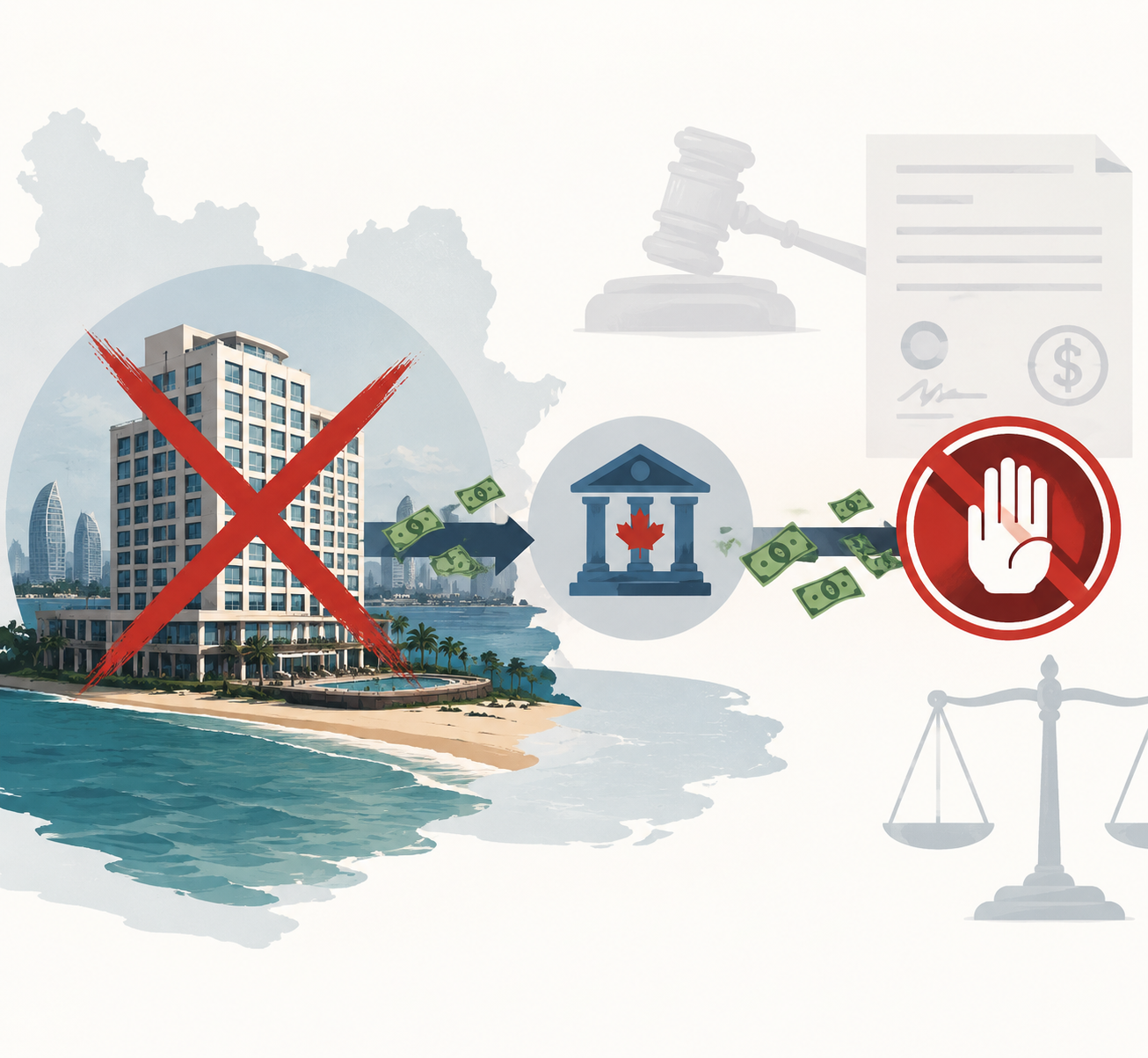
That enforcement action is useful because it shows where the boundary breaks. The conduct was not merely sleeping in a hotel, paying for meals, hiring a local guide, or moving through Iran as a traveler. OFAC described a course of conduct involving acquisition and development of a hotel business, informal value transfer systems, and transactions involving Bank Melli and Bank Keshavarzi, both Specially Designated Nationals.[3] Once bank relationships were terminated after sanctions concerns were flagged, payments were restructured through a Canadian money services business.[3]
A lawyer advising on Iran travel should not treat that case as proof that every trip is an enforcement target. It proves something narrower and more important: travel status does not sanitize commercial conduct. If a U.S. person’s itinerary includes site visits, property negotiations, hotel participation, revenue arrangements, investment discussions, or payment channels chosen to route around bank compliance controls, the analysis has left ordinary travel and entered sanctions territory.
The enforcement stakes are not theoretical. As of 2026, IEEPA civil penalties can reach $377,700 per violation or twice the value of the transaction, whichever is greater, and willful violations can carry criminal penalties up to $1 million and 20 years’ imprisonment.[4] OFAC’s 2026 year-to-date enforcement total was reported at $6.6 million across multiple actions, including a $3.77 million individual penalty described as ten times the statutory base amount in egregious circumstances.[4] Those numbers should not be used to frighten every traveler into the same category. They should force a transaction-by-transaction review before anyone tells a client the trip is simply “allowed.”
Mixed travel requires a transaction map, not a travel answer
The practical file should begin with a plain separation: who is traveling, who is paying, what is being paid for, what institutions touch the funds, what counterparties are involved, and whether any part of the trip creates value beyond the traveler’s personal maintenance in Iran. A sanctions review that starts and ends with “the advisory says do not travel” leaves too many moving parts undocumented.
| Question | Why it matters |
|---|---|
| Is the traveler a U.S. person, dual U.S.-Iranian national, non-U.S. employee, or family member? | Different legal systems may claim authority, and Iran may not recognize dual nationality for consular purposes. |
| Is the activity personal travel, pilgrimage, legal work, family support, employment, investment, or business development? | The OFAC travel exemption is narrower than many travel-adjacent plans. |
| Who pays, who receives, and which financial channel is used? | Blocked banks, blocked counterparties, informal transfer systems, and routed payments can change the analysis. |
| Will the traveler sign, inspect, negotiate, manage, renovate, acquire, or operate anything in Iran? | Those facts may indicate new investment or commercial activity rather than ordinary travel. |
| What happens if the traveler is detained, exit-banned, or denied consular access? | The State Department warning’s practical force is strongest when protection fails. |
OFAC’s pilgrimage guidance illustrates the point without overstating it. FAQ 932 says U.S. persons may engage in transactions ordinarily incident to travel to Iran for pilgrimage to the Imam Reza Holy Shrine, but only to the extent those transactions remain ordinarily incident to travel.[5] The religious purpose does not expand the exemption into permission for unrelated business, investment, or blocked-party transactions.
Legal services require the same care. Section 560.525 authorizes U.S. persons to provide certain legal services to or on behalf of the Government of Iran or persons in Iran, including representation before U.S. federal, state, or local courts and agencies, proceedings before international tribunals, and advice on compliance with U.S. laws.[6] The authorization matters because lawyers can be pulled into Iran-related matters precisely when another part of the file has already gone wrong.
But the existence of an authorized legal-services pathway does not solve payment. Section 560.525 points practitioners to § 560.553, under which payment of professional fees and reimbursement of expenses from blocked funds require a specific license.[6] This is the sort of detail that gets lost when a travel-warning paragraph is asked to do sanctions work. A lawyer may be able to advise or represent; the lawyer may still need to treat payment as a separate licensing issue.
For in-house counsel, the same structure applies to employees and executives. A personal visit by an employee to relatives in Iran raises different OFAC questions than a trip that includes meetings with suppliers, inspections of assets, employment discussions, payments through local banks, or requests to carry documents, devices, or funds. The word “travel” does not identify the legal category. The conduct does.
Iranian law is a separate source of exposure
A clean OFAC answer is not a clean Iran-risk answer. U.S. sanctions law can determine whether a U.S. person may pay, deal, invest, represent, or receive funds. It cannot determine whether Iranian authorities will detain a traveler, impose an exit ban, interrogate a dual national as an Iranian citizen, or treat past conduct outside Iran as criminally relevant.
The State Department advisory warns of arbitrary arrest and detention of U.S. citizens in Iran and states that Iran consistently denies consular access to dual U.S.-Iranian nationals.[1] That denial is not a small procedural inconvenience. For a dual national, it means the person most likely to assume that the U.S. passport supplies a fallback may be the person Iran treats as outside U.S. consular reach.
Prior travel to Israel is another example where the risk is legal, not merely atmospheric. Reporting in March 2026 described Iranian law criminalizing prior travel to Israel with imprisonment of two to five years, and cited the case of Kamran Hekmati, who was sentenced to two years for an Israel visit that had occurred 13 years earlier.[7] That case should not be converted into a frequency claim. It does show that prior Israel travel can be operationally relevant to Iran-entry counseling rather than a remote curiosity.
English-language public sources do not provide a tidy predictive chart for Iranian criminal procedure or detention practice. Counsel should be candid about that uncertainty. The safer professional move is not to invent clean rules, but to identify known categories of concern: dual nationality, prior Israel travel, perceived political or security links, journalism, religious activity, family disputes that may become exit-ban issues, and any conduct Iranian authorities might characterize differently from the traveler’s account.
Wrongful detention risk changes the advice even where no U.S. violation exists
On February 27, 2026, the State Department designated Iran as a State Sponsor of Wrongful Detention under the Countering Wrongful Detention Act of 2025 and Executive Order 14348.[8] The State Department said Iran was the first country designated under that framework and cited a long-standing pattern of wrongfully detaining U.S. nationals, including dual U.S.-Iranian nationals.[8] The same release stated that the Special Presidential Envoy for Hostage Affairs was tracking at least six U.S. nationals held in Iran on politically motivated charges.[8]
The designation is new, and its implementation should not be described as if every downstream consequence is already settled. Its present counseling value is narrower and firm: wrongful detention is now an expressly recognized policy layer sitting alongside the travel advisory, OFAC restrictions, and Iranian domestic-law exposure. It is not a substitute for the sanctions analysis, and it is not cured by a sanctions license.
The consular facts make that layer more severe. The United States has no embassy or consulate in Iran. The Swiss Foreign Interests Section, the usual protecting-power channel, is temporarily closed according to the State Department advisory.[1] If a traveler is detained or barred from leaving, the ordinary assumption that a government representative can appear, visit, or negotiate access is not available in the usual way. For dual U.S.-Iranian nationals, the State Department’s warning that Iran consistently denies consular access makes the gap still wider.[1]
What a competent Iran-travel file should document
The legal work product should not look like a paraphrase of the State Department page. It should separate four questions that are often collapsed in client conversations.
- Advisory force: the Level 4 warning is non-binding and carries no standalone statutory penalty for travel in disregard of it, but it establishes the safety and consular baseline.
- OFAC exposure: the travel exemption permits only transactions ordinarily incident to travel, and business, investment, blocked-party dealings, or routed payments may require a separate analysis or license.
- Iranian-law exposure: dual nationality, prior Israel travel, exit-ban risk, and detention practice must be assessed independently from U.S. sanctions compliance.
- Consular failure point: the file should state what protection is unavailable if the traveler is detained, because no U.S. consular services exist in Iran and the Swiss channel is temporarily closed.
That division also protects the lawyer. Immigration counsel may understand the passport and nationality issues but not the payment channel. Sanctions counsel may resolve the OFAC question but lack enough facts about family status, dual nationality, or prior Israel travel. In-house counsel may know the business purpose but underestimate how quickly a personal itinerary becomes a commercial transaction. The file should make those boundaries visible before the advice is relied on.
A competent Iran-travel risk assessment therefore cannot cite the State Department advisory alone. It should document the advisory’s non-binding status, OFAC’s binding limits, Iranian domestic-law exposure, and the current absence of a consular safety net.
References
- Iran Travel Advisory, U.S. Department of State, December 11, 2025, link
- 31 CFR § 560.210 - Exempt transactions, Legal Information Institute, link
- OFAC Settles with U.S. Individual for $1,104,408 Related to Apparent Violations of the Iranian Transactions and Sanctions Regulations, U.S. Department of the Treasury, November 19, 2024, link
- Penalties for OFAC Violations, Sanctions Lawyers, link
- OFAC FAQ 932, U.S. Department of the Treasury, link
- 31 CFR § 560.525 - Provision of certain legal services, Legal Information Institute, link
- Iran criminalizes prior Israel travel with 2-5 years imprisonment, Al-Monitor, March 2026, link
- Iran Designated as a State Sponsor of Wrongful Detention, U.S. Department of State, February 27, 2026, link
Comments
Join the discussion with an anonymous comment.