
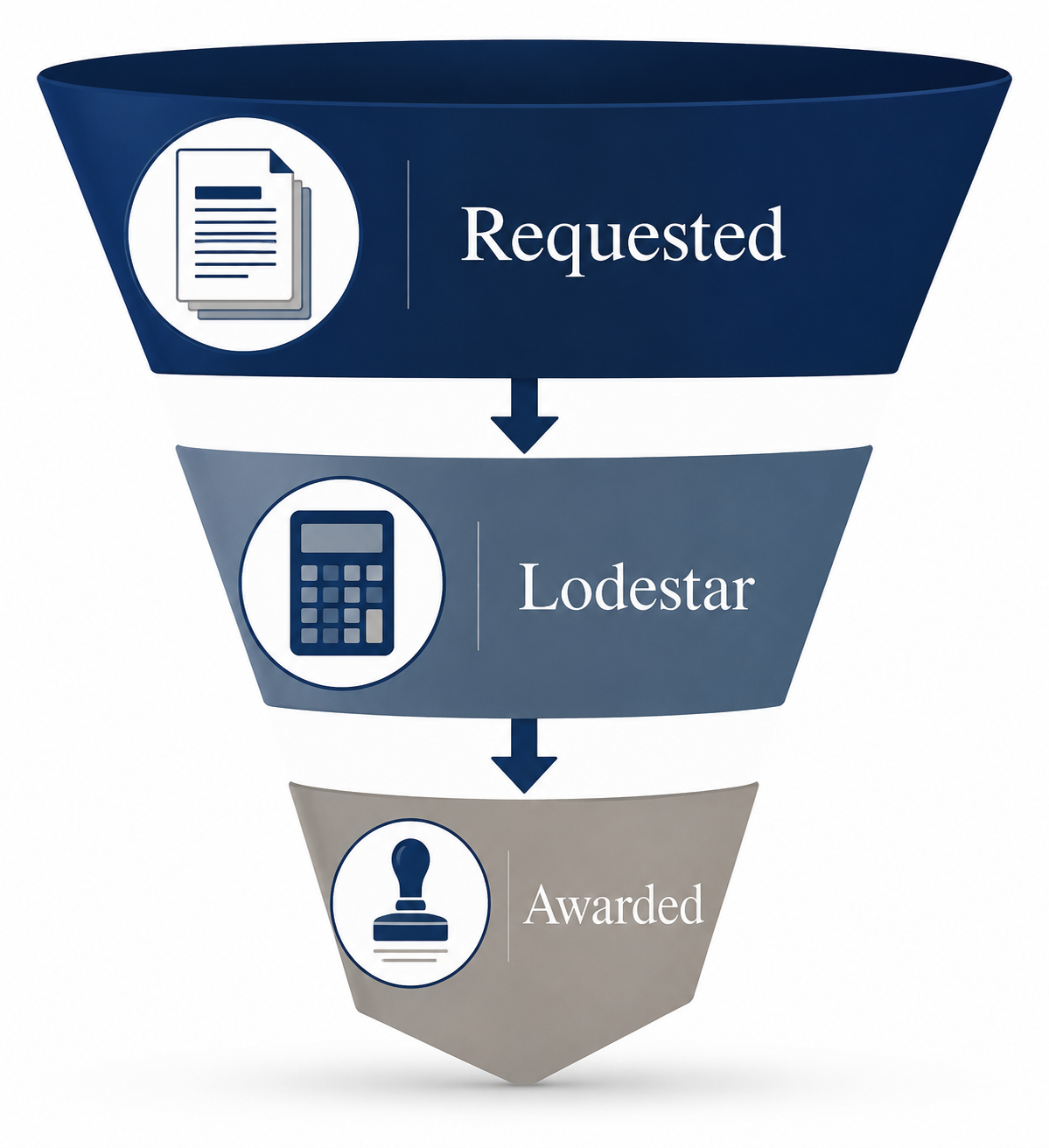
The useful number in Jada Pinkett Smith’s legal-fees dispute is not the $49,181.23 that Pinkett Smith requested. It is the path down from that request: a court-reported lodestar of $38,631, followed by a 15% reduction for partial success, ending in a $32,836 fee award under California’s anti-SLAPP statute.[1]
That sequence matters because Code of Civil Procedure section 425.16(c) makes fees mandatory for a prevailing defendant on a special motion to strike, but it does not make the requested amount mandatory.[2] The entitlement question and the amount question are different fights. In this order, the amount fight did real work.
The available record is imperfect. The court orders themselves have not been independently reproduced in a legal database for this discussion; the public window comes from PEOPLE and TMZ/AOL reports that quote or describe court documents. That is enough to examine the reported fee mechanics, but not enough to treat the order as a published anti-SLAPP fee decision.
What The Anti-SLAPP Motion Actually Changed
The underlying dispute was not decided by the fee order. Pinkett Smith sued Bilaal Salaam after public claims tied to Will Smith and the Smith family, and she later sought to recover fees incurred in connection with her anti-SLAPP motion.[3] For fee purposes, the critical point is narrower: the anti-SLAPP ruling struck some allegations, including claims tied to media statements and a cease-and-desist letter, while other parts of the lawsuit remained pending.[1]
That mixed result is what turned the fee motion from a simple entitlement exercise into a lodestar and apportionment exercise. Pinkett Smith could point to statutory fee-shifting. Salaam could point to limited success. The court then had to decide how much of the work was reasonably compensable for the anti-SLAPP win actually obtained.
The Court Did Not Start From The Invoice Total
The lodestar method is the familiar starting point: reasonable hours multiplied by reasonable hourly rates. In practice, that means the court first asks what work reasonably related to the compensable motion, then asks whether the time and rates are supportable. Only after that does it consider whether an adjustment is warranted.
Here, the reported order did not accept the $49,181.23 request as the lodestar. The court found $38,631 in reasonable fees before applying the partial-success reduction.[1] That first reduction is easy to skip over in quick coverage, but it is where much of the judicial judgment sits.
| Stage | Reported Amount | What It Reflects |
|---|---|---|
| Fee request | $49,181.23 | Amount Pinkett Smith sought in connection with the anti-SLAPP fee motion |
| Court’s lodestar | $38,631 | Reasonable fees after the court evaluated rates and time |
| Partial-success reduction | 15% | Across-the-board cut because the anti-SLAPP motion succeeded only in part |
| Final award | $32,836 | Fee award reported after the partial-success reduction |
PEOPLE reported that the court found some requested hourly rates excessive and reduced them, including lowering one attorney’s rate from $950 to $700 and another from $750 to $550.[1] Those are not cosmetic edits. At enough hours, a rate reduction changes the settlement conversation, the appeal calculus, and the client’s sense of what “mandatory fees” actually means.
The court also reportedly cut time it considered excessive. It reduced hours for preparing the anti-SLAPP motion, reply, and fee motion, and did not allow the entire billing presentation to pass through simply because the defense had prevailed in part.[1] That is the ordinary but important point: a successful anti-SLAPP movant still has to prove the reasonableness of the work.

The 15% Cut Is The Most Transferable Part Of The Order
After arriving at the $38,631 lodestar, the court imposed a 15% across-the-board reduction “due to Defendant’s partial success.”[1] That phrase deserves more attention than the celebrity caption around the case, because it is the part California litigators can actually use when forecasting exposure after a mixed anti-SLAPP ruling.
Partial success in anti-SLAPP fee practice is not all-or-nothing arithmetic. A defendant may prevail on protected activity allegations or particular claims, while leaving other theories alive. California’s fee-shifting provision supplies entitlement for the prevailing defendant, but the amount still has to be tethered to the success achieved and the work reasonably connected to that success.[2]
Practitioner commentary often describes this as a “Spectrum of Success” problem: the closer the anti-SLAPP result gets to eliminating the action, the stronger the case for full fees; the more limited the result, the more room the court has to apportion or reduce.[4] That framework is useful shorthand, not a substitute for the statute or the cases behind it. Its value here is that it explains why a mandatory fee statute still produced a discounted award.
The reported facts fit that spectrum. The motion struck allegations tied to media statements and cease-and-desist activity, but it did not end the lawsuit.[1] The court did not attempt, at least as reported, to slice every time entry into compensable and noncompensable fractions. It used a percentage reduction after fixing the lodestar. That kind of across-the-board adjustment is often the practical answer when the work overlaps but the success is incomplete.
For the lawyer opposing fees, the lesson is not merely to say “partial success.” The useful opposition gives the court a way to quantify it. Which claims survived? Which billed tasks would have been necessary even for the unsuccessful parts? Which hours are tied to arguments the court rejected or never needed to reach? A reduction request becomes more credible when it gives the judge a number, a method, or both.
Mandatory Entitlement Still Leaves Room To Litigate Amount
A fee motion after an anti-SLAPP win can sound predetermined if counsel talks only in statutory terms. Section 425.16(c) says a prevailing defendant on a special motion to strike “shall be entitled” to recover attorney’s fees and costs.[2] That language matters, and it is why fee exposure must be taken seriously as soon as an anti-SLAPP motion is filed.
But the Pinkett Smith order shows the gap between entitlement and amount. The court moved the number at three points: it reduced rates, reduced time, and then reduced the resulting lodestar by 15% for partial success.[1] Each move required a record. Each move also shows why fee opposition should look less like a damages closing argument and more like a billing audit tied to the anti-SLAPP ruling.
That does not mean every fee opposition should contest everything. Weak objections to every tenth of an hour can make the stronger points harder to see. The better target is the work that does not match the actual motion, the staffing or rate decision that exceeds the market record, and the time that appears disproportionate to the task performed.
The Inability-To-Pay Argument Failed On Timing
The post-award reporting adds a separate problem. Salaam later argued he could not pay the fee award, claiming he was “certified homeless” and receiving welfare benefits.[5] Those allegations should not be brushed aside as litigation theater. If a party’s financial condition is relevant to collection, hardship, or discretionary relief, it needs evidence and a procedurally proper vehicle.
The reported reason the court rejected the inability-to-pay argument at the fee stage was not that the court disbelieved the claim. It was timing. TMZ/AOL reported that the court found Salaam raised inability to pay for the first time at the hearing rather than in his written opposition.[5] That is a different ruling, and a more useful one for practitioners.
A fee hearing is usually too late to introduce a hardship theory that depends on facts outside the billing record. The opposing papers are where the issue has to be framed, supported, and connected to whatever legal discretion the court is being asked to exercise. If the point matters enough to affect the award or collection posture, it matters enough to put in declarations and exhibits before the hearing.
Salaam reportedly filed a reconsideration motion in June 2026 pressing his financial condition, and the same reporting says the court denied his request for trial and scheduled a case management conference for August 19, 2026.[5] As of the current date, no reported ruling resolves that reconsideration request. The procedural issue therefore remains a live post-award complication, not a resolved merits finding on his ability to pay.
What To Take From This Fee Order
This order is not a broad celebrity-litigation morality play, and it is not a published appellate map of anti-SLAPP fee law. Its practical value is narrower and better: it shows a trial court doing the fee math after a mixed anti-SLAPP result.
- Do not equate a mandatory fee entitlement with the amount requested.
- Build the lodestar record with rates, hours, task descriptions, and anti-SLAPP linkage in mind.
- When opposing fees, give the court a concrete way to account for partial success.
- Raise inability to pay, hardship, or collection-sensitive arguments in writing, with evidence, before the hearing.
- Keep post-award developments separate from what the original fee order actually decided.
The distance between $49,181.23 requested and $32,836 awarded is the point. The court’s reported order treated anti-SLAPP fee-shifting as mandatory in entitlement, discretionary in amount, and dependent on the written record counsel created before the hearing.[1][2]
References
- Jada Pinkett Smith Secures Over $30K in Legal Fees from Will Smith's Ex-Friend in Court Battle, PEOPLE, May 20, 2026
- California Code, Code of Civil Procedure - CCP § 425.16, FindLaw
- Jada Pinkett Smith Requests Will Smith's Former Friend Cover Her $49K Legal Fees, PEOPLE, April 24, 2026
- Anti-SLAPP Attorney Fees and the Spectrum of Success, California SLAPP Law, April 2023
- Smiths' Ex-Pal Says Can't Pay Jada Pinkett Smith's Legal Fees, I'm Homeless, AOL, June 18, 2026
Comments
Join the discussion with an anonymous comment.