
The Karim Khan accuser interview begins, for legal purposes, in a hotel room in Colombia. Sarah, the ICC staffer who has accused the court’s chief prosecutor of sexual misconduct, told CNN that she pretended to be asleep while Khan “put his hand down my leggings to grope me” and “put his tongue in my ear.” She described immobility, not resistance; continued employment, not immediate exit; later cordiality, not clean rupture. That is precisely why the account matters for ICC legal analysis: the alleged evidence of non-consent is behavior that a criminal-style evidentiary frame can too easily misread as ambiguity, passivity, or acquiescence.[1]
Nothing in that description proves the full case by itself. It does something narrower and more important. It identifies the kind of fact a workplace accountability system must know how to evaluate: a subordinate says she froze, appeased, managed the superior’s mood, and kept functioning because the person she accused remained tied to her job, immigration stability, and professional future. If the process asks mainly for force, prompt complaint, unmistakable refusal, or frictionless corroboration, it is not simply demanding rigor. It is selecting for a category of victim behavior that many workplace coercion cases do not produce.

The Colombia Account And The Problem Of Passive Evidence
A workplace investigator does not begin with the question, “Why didn’t she simply leave?” That question usually arrives already loaded with assumptions about freedom of movement, job security, immigration independence, reputation, and the emotional cost of resisting a superior. The more precise question is: what options were realistically available to this employee at that moment, and what consequences could she reasonably expect from each one?
Sarah’s Colombia account puts that distinction under pressure. Feigned sleep is not affirmative consent. Nor is it, standing alone, conclusive proof of assault. It is a described survival strategy. In legal terms, the fact-finder has to decide whether the conduct she described is consistent with non-consent under conditions of fear, hierarchy, and dependence. A process that treats visible resistance as the privileged indicator of non-consent will struggle before it reaches credibility, because it has already narrowed what non-consent is allowed to look like.
That matters because Sarah’s public account is not just an allegation of unwanted physical contact. It is an account of working under the authority of the person she later accused. She described Khan as the “boss of all bosses,” and said her job was linked to her right to remain in the European Union. “If I lose my job, I have approximately two weeks to leave the E.U., which means leaving my son and my husband,” she said.[1] That sentence is not background color. It is the legal architecture of coercion.

Dependency Changes The Meaning Of Choice
International organizations often speak in the language of mandate, independence, and institutional integrity. Their employment relationships can be far less abstract. A staff member may rely on the institution not only for salary but for residency, family stability, references, future appointments, and protection from professional retaliation. In that setting, “choice” is not eliminated, but it is constrained in ways an adjudicative record must be capable of seeing.
Sarah’s single-mother status and visa dependency are legally significant because they make continued contact less probative than it would be in a relationship without institutional control. Continued reporting lines can turn ordinary workplace interactions into risk management. A greeting, a polite response, or a failure to confront may show nothing more generous than an employee attempting to remain employed, housed, and professionally intact.
Her account also includes a warning from a colleague that even a transfer could leave her “seen as a threat or a loose string.”[1] That phrase is blunt in a way institutional policies rarely are. It captures a workplace reality that formal anti-retaliation rules do not automatically cure: a complainant may be feared not because she has done anything wrong, but because her knowledge creates institutional exposure. In a small and reputation-dependent legal world, that fear can travel faster than any formal complaint.
The Birthday Card Is Evidence, But Not The Evidence Khan’s Defenders May Want It To Be
The counter-evidence cannot be wished away. Sarah reportedly sent Khan a March 2024 birthday card calling him “kind, empathetic, funny, passionate and formidable.” Khan’s side has pointed to cordial messages and affectionate symbols, including a heart emoji, as inconsistent with her allegations.[2] A fair analysis has to take that material seriously. It is evidence of how she communicated with him after the alleged conduct. It may bear on credibility, state of mind, and the fact-finder’s assessment of the relationship.
But treating the card as a triumphant answer to the allegation assumes the very point that workplace misconduct law should be testing. Sarah’s explanation was that it was safer to stay on Khan’s good side.[1] That explanation is not automatically true because it is psychologically plausible. It is also not automatically false because the words in the card are warm. The legal question is whether an evidentiary framework can distinguish authentic affection from appeasement, reputation management, fear management, or what trauma-informed investigators often describe as fawning.
The same caution applies to continued cordial contact. In an ordinary commercial dispute, friendly later messages can be powerful impeachment. In a hierarchical workplace abuse claim, especially one involving immigration dependency, they are more ambiguous. They may still impeach. They may also document the complainant’s effort to preserve access, avoid retaliation, or keep the alleged abuser emotionally settled. The point is not to immunize every inconsistent communication from scrutiny. The point is to prevent a fact-finder from smuggling in a rule that a “real” victim would have become visibly hostile, immediately and consistently.
Knowledge Of Harm Is A Different Evidentiary Thread
Sarah also said she told Khan, “if this continues, I might do something to myself,” and that he stopped for two to three weeks before the conduct resumed.[1] That allegation does separate legal work from the Colombia episode. It is not merely a description of distress. If credited, it would support an inference that Khan was on notice that the conduct was harmful and unwanted, even if other parts of the record contain cordial communications.
A criminal-style analysis may ask whether that statement proves a specific act beyond reasonable doubt. A workplace misconduct analysis asks an additional question: what did the superior know about the subordinate’s distress, and what did he do after learning it? The alleged pause matters because it suggests the message was understood. The alleged resumption matters because it would undermine any claim that the subordinate’s later conduct was reasonably read as uncomplicated consent. Those are conditional conclusions; they depend on the unreleased record and on credibility findings the public cannot independently verify.
Two Standards, Two Versions Of Visibility
The institutional split is now the center of the case. The United Nations Office of Internal Oversight Services reportedly conducted a 13-month investigation, interviewed more than 30 witnesses, and generated more than 5,600 pages while applying a balance-of-probabilities standard. A three-judge ad hoc panel later produced an 85-page assessment applying a beyond-reasonable-doubt threshold and advised against removal.[2]
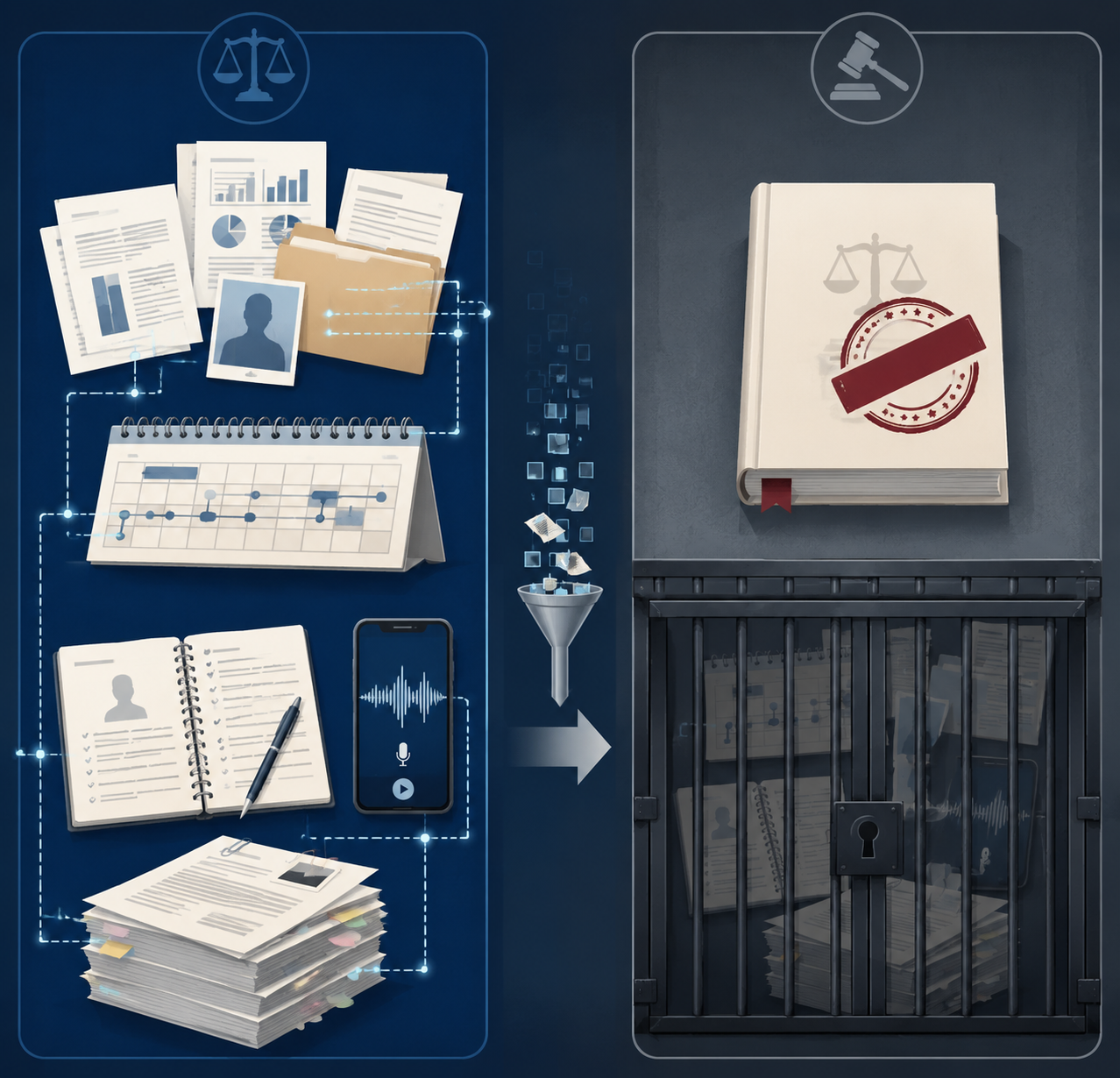
That is not a mere technical disagreement. Standards of proof do not just announce how certain a decision-maker must be. They affect what kinds of facts become useful. Balance of probabilities can work with patterns, context, relative plausibility, workplace dependency, behavioral inconsistency, and cumulative circumstantial evidence. Beyond reasonable doubt, especially when imported from criminal adjudication into an employment accountability process, tends to privilege discrete acts that can be cleanly corroborated and defended against as if liberty were at stake.
| Question | Balance-of-probabilities workplace inquiry | Beyond-reasonable-doubt criminal-style inquiry |
|---|---|---|
| What does the standard ask? | Which account is more likely when the whole employment context is considered. | Whether the allegation is proven to a very high level of certainty. |
| What evidence becomes central? | Patterns, dependency, communications, reporting barriers, witness context, and power dynamics. | Clear corroboration, inconsistencies, alternative explanations, and doubt about specific alleged acts. |
| What is the risk in this case type? | A mistaken finding can damage a respondent’s career and institutional legitimacy. | Coercion, freezing, fawning, and constrained workplace conduct can be treated as reasonable doubt. |
Neither standard is neutral in its consequences. A lower employment standard carries real risk for the accused, particularly where the accused holds a public legal office and the allegations are internationally politicized. But a criminal threshold carries a different risk: it can make an institution appear exacting while making certain forms of coercion nearly impossible to prove. The sharper the hierarchy, the more often the evidence will consist of delayed reporting, careful politeness, mixed messages, and partial corroboration. Those are not defects in the complainant’s account by definition. They are the predictable residue of dependency.
The public record is incomplete. The full OIOS report is not available here. Nor is the full 85-page panel opinion. Any judgment about Khan’s ultimate liability would require that record, the panel’s reasoning, the witness evidence, and the respondent’s full answers. The available reporting nevertheless permits a narrower conclusion: the two institutional processes appear to have asked different evidentiary questions, and those questions are likely to treat Sarah’s described behavior differently.
The Bureau Did Not Treat The Panel As The Last Word
After the panel advised against removal, the Bureau of the Assembly of States Parties voted 15-4-2 to make an initial determination of misconduct, according to Associated Press reporting published by U.S. News.[3] That vote does not establish the allegations as true. It does show that institutional actors did not unanimously accept the criminal-standard framing as the appropriate endpoint for workplace accountability.
The vote is especially important because removal of an ICC prosecutor is not ordinary workplace discipline. It implicates judicial independence, state-party politics, the court’s public legitimacy, and the risk that misconduct allegations may be used opportunistically by governments hostile to the prosecutor’s work. Those concerns are real. They explain caution. They do not explain why an employment misconduct determination should collapse into a criminal proof model.
The Assembly vote on removal was scheduled for July 24, 2026, and the outcome is not part of this analysis.[3] Before that vote, the legal issue is not whether the Assembly should remove Khan on the public record alone. It is whether the ICC’s accountability structure can credibly evaluate sexual misconduct allegations against one of its most powerful officials without requiring the complainant’s workplace conduct to resemble the conduct of someone who was free to leave.
What The Geopolitical Context Can And Cannot Answer
The Khan case cannot be fully separated from geopolitics. His defenders have alleged outside intelligence involvement, and Israeli officials have argued that the Gaza warrants were used as a deflection from the misconduct allegations.[2] Those claims complicate the institutional environment in which the ICC must act. They may affect how states read the timing, the motives of actors around the process, and the perceived legitimacy of any outcome.
They do not resolve Sarah’s workplace-law evidence. Geopolitical weaponization can coexist with a real complaint, a false complaint, an unprovable complaint, or a procedurally mishandled complaint. A serious legal analysis has to resist two temptations at once: treating the misconduct allegations as automatically validated because the institution is powerful, and treating them as automatically suspect because hostile states may exploit them.
A second accuser has also reportedly come forward, but the available public record does not provide independent corroboration by major news organizations beyond recording her statement. That account may become important if tested through reliable reporting or institutional process. It should not be used here to inflate the evidentiary weight of Sarah’s account.
The Institutional Lesson
The strongest legal lesson from Sarah’s interview is not that every allegation against a powerful official must be credited. It is that workplace sexual misconduct systems fail when they borrow the prestige of criminal procedure without asking whether the borrowed standard fits the institutional relationship being judged.
A criminal standard is designed for punishment by the state and the moral gravity of conviction. A workplace accountability process is designed to decide whether a person can safely and legitimately continue to hold institutional power. Those are related questions, not identical ones. When the respondent is the chief prosecutor of an international criminal court, the reputational stakes are extraordinary. So are the stakes for subordinates who must decide whether reporting him will cost them their job, legal residence, family stability, and future in the field.
Sarah’s account forces the ICC to confront a design problem. The alleged Colombia incident supplies the issue of consent. The visa dependency supplies the coercive structure. The birthday card and cordial messages supply the evidentiary ambiguity. The OIOS investigation and ad hoc panel split supply the procedural conflict. Taken together, they show how a system can be formally rigorous and still be poorly equipped to evaluate coercion, trauma responses, and institutional dependency in workplace sexual misconduct claims.
References
- ICC staffer talks publicly about alleged sexual abuse by chief prosecutor Karim Khan, The Guardian, July 16, 2026.
- Sexual abuse claims, Karim Khan and an international criminal court in crisis: what happens now?, The Guardian, April 11, 2026.
- ICC Staffer Repeats Misconduct Allegations Against Prosecutor Karim Khan in TV Interview, U.S. News/AP, July 16, 2026.
Comments
Join the discussion with an anonymous comment.