
The custody rule that misses the distinction
The Kirsten Storms brain aneurysm legal case exposes a problem family courts already know, even when they do not name it. Tennessee Code § 36-6-106(8) tells judges to consider the "moral, physical, mental and emotional fitness" of each parent, but it does not give them any tool for separating neurological symptoms from an independent psychiatric disorder.[1] That is a broad standard. It becomes hazardous when the record contains behavior that can be read either as evidence of instability or as a predictable response to a monitored brain condition.
The timeline is the point. Reports say Storms learned in January 2025 that she had an aneurysm, later described in a December 2025 update as being in a 'gray zone' that called for monitoring rather than immediate surgery.[2][3] By April 2026, Brandon Barash had obtained an emergency restraining order in the custody dispute, with the public reporting focusing on a mental-health-crisis narrative.[4] That sequence matters because it shows how quickly a monitored neurological condition can sit inside a file that is also full of allegations a court may treat as ordinary fitness evidence.
- January 2025: the aneurysm was discovered and surgery was discussed as a live question.[2]
- December 2025: the condition was publicly described as a 'gray zone' case, meaning monitored rather than rushed to surgery.[3]
- April 2026: the custody fight turned into an emergency restraining-order proceeding.[4]
The medical literature does not let a court dismiss that sequence as celebrity noise. A 2021 case report described paranoia and fear in a patient whose symptoms resolved after aneurysm treatment, which is a reminder that a presentation can look psychiatric while the cause is vascular.[5] A 2022 study of 105 patients with small unruptured intracranial aneurysms found that more than half reported depression and anxiety, and some changed daily activities because of aneurysm-related concerns.[6] In August 2024, the American Heart Association reported that simply being aware of an unruptured aneurysm may heighten mental-health risks.[7] Taken together, those materials support a narrower point, not a dramatic one: a monitored aneurysm can generate vigilance, fear, and disorganization that are real, documentable, and easy to misread.
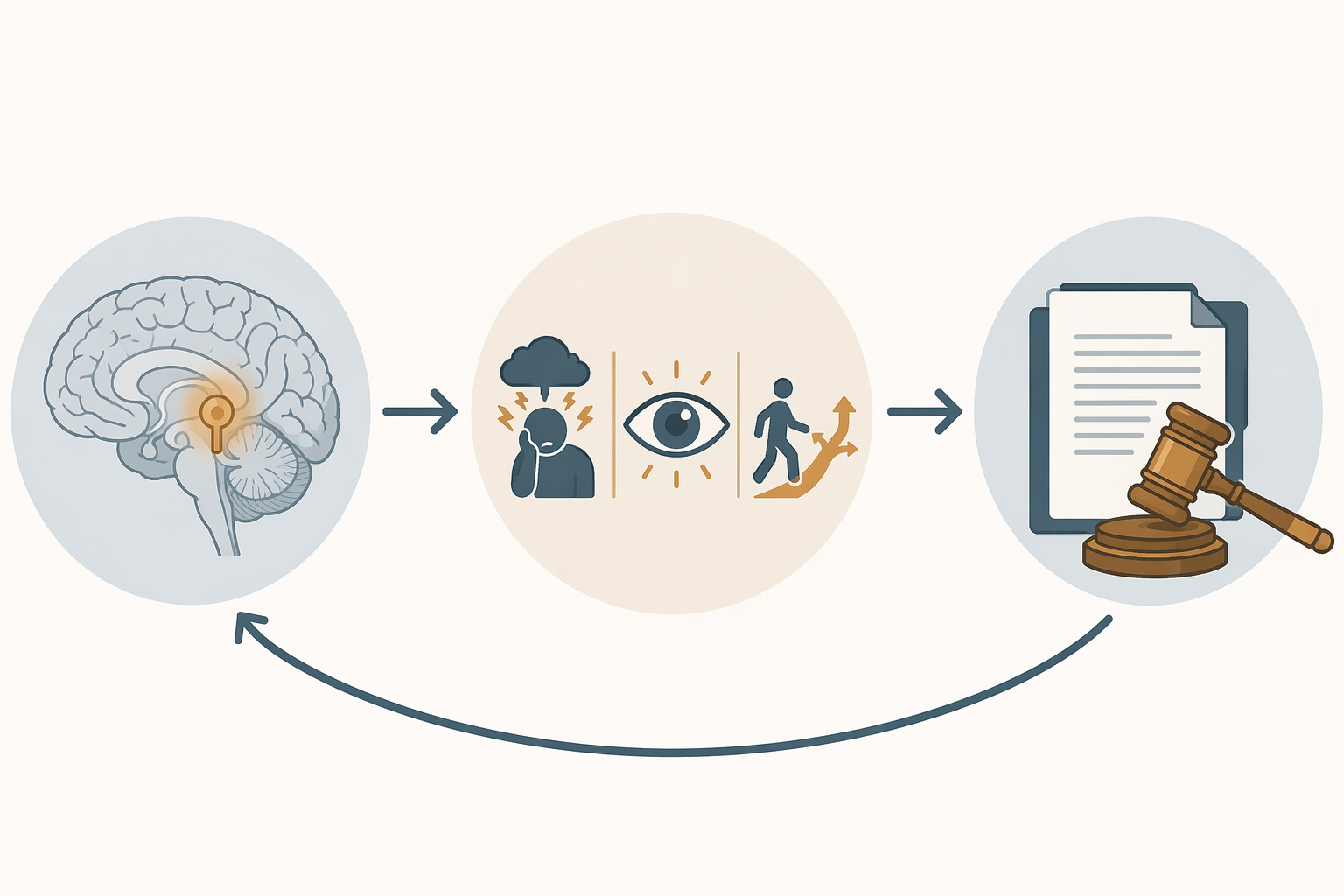
That is where Tennessee's custody framework shows its weakness. Section 36-6-106(8) asks the court to judge fitness, but it does not provide a mechanism for asking whether the behavior before the court is driven by neurological uncertainty, medication effects, sleep disruption, fear of rupture, or a separate psychiatric condition. Those are not the same facts, even if they sometimes appear in the same record. A parent can be medically monitored, medically frightened, and still not be psychiatrically impaired in the way a custody petition may suggest.
The Storms matter does not show that the April 2026 restraining order was wrong, and the reported psychiatric hold, medication allegations, and housing instability may each carry independent weight. It does show something more useful and more uncomfortable for family-law practice: Tennessee custody law can treat a reversible neurological gray zone as if it were the same thing as parental unfitness. Until the statute or the record-building process learns how to separate those questions, medically appropriate monitoring can remain self-incriminating.
References
- Tennessee Code § 36-6-106 - Justia
- General Hospital Star Kirsten Storms Will Undergo Brain Surgery for Aneurysm - People - Jan. 2025
- Kirsten Storms shares update amid legal battle with ex Brandon Barash - Entertainment Weekly - Jul. 2026
- Kirsten Storms' Ex-Husband Brandon Barash Granted Emergency Restraining Order Due to "Mental Health Crisis" - People - Apr. 2026
- Schizophrenia, bipolar disorder, or intracranial aneurysm? A case report - PMC - 2021
- Psychiatric symptoms in small unruptured intracranial aneurysm patients - Stroke: Vascular and Interventional Neurology - 2022
- Being aware of an unruptured brain aneurysm may heighten mental health risks - American Heart Association - Aug. 2024
Comments
Join the discussion with an anonymous comment.