
A national grocery compliance team can no longer treat Kroger’s dynamic-pricing controversy as a matter of “watch the FTC.” By Q3 2026, the more immediate problem is state law. Kroger is continuing to deploy electronic shelf labels and related pricing infrastructure across a large store footprint, while Maryland has enacted a food retail surveillance pricing ban, New York is enforcing a disclosure statute, and California is asking questions through existing consumer protection and privacy authority.
That does not mean every digital shelf label is unlawful, or even that every algorithmic price update is the same legal event. A shelf label can replace paper tags without personalizing prices. A loyalty program can lower a price for enrolled shoppers. A delivery platform can display a price that differs from the in-store shelf. A promotion can change across regions without using individualized consumer data. The compliance issue begins when the system can connect a shopper’s data to the price that shopper is offered, especially where the result is an individualized higher price.
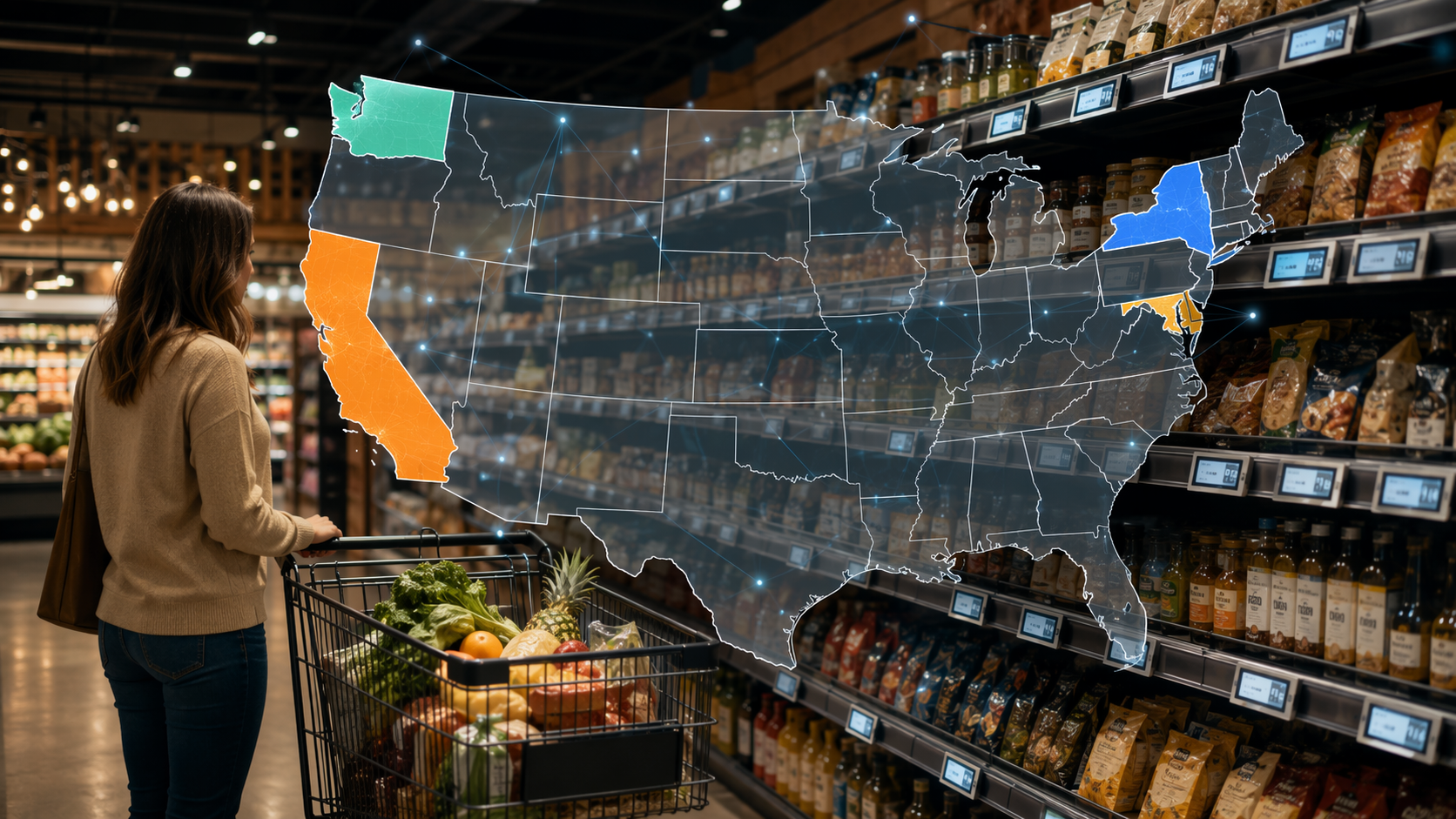
For retailers, that distinction is no longer academic. Maryland’s new statute gives compliance teams a concrete effective date and penalty range. New York’s law supplies a disclosure model that is already being used by its attorney general. California shows that a state does not need a new AI pricing statute before it starts investigating. The legal work for 2026 is therefore less about predicting one federal rule and more about separating data inputs, display technology, platform relationships, and consumer disclosures by jurisdiction.
Maryland turns surveillance pricing into an operating-calendar issue
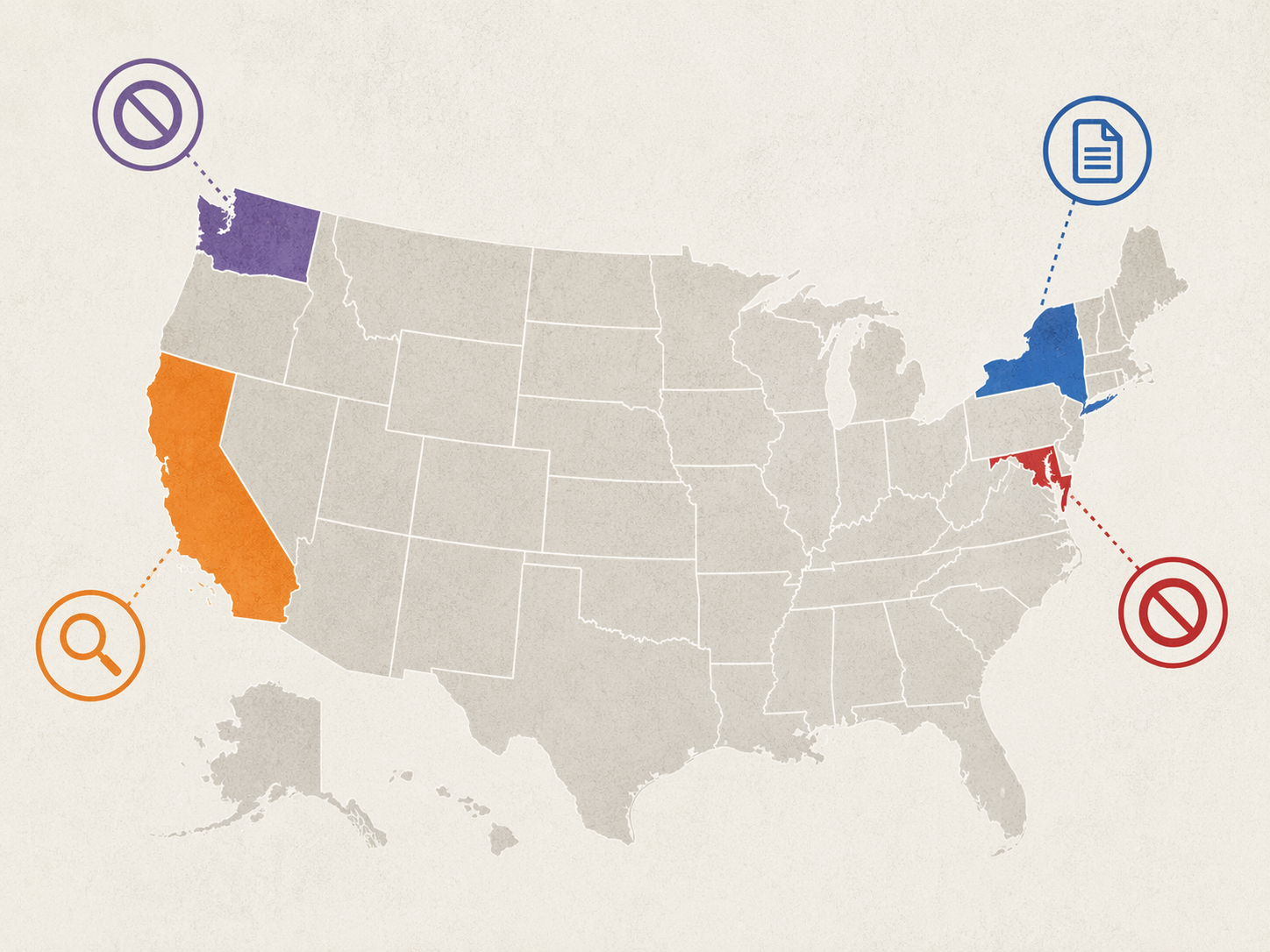
Maryland’s HB 895, the Protection From Predatory Pricing Act, is the cleanest place to start because it does what most federal discussions have not done: it defines a prohibited food retail pricing practice, names covered data categories, identifies exemptions, assigns enforcement authority, and sets a start date. The law takes effect October 1, 2026, and has been described by Skadden as the first state ban on surveillance pricing in the food industry.[1]
The core prohibition is narrower than the phrase “dynamic pricing ban” suggests. Maryland targets grocery retailers and third-party delivery services that use personal data to set individualized higher prices. Covered data includes loyalty program data, purchase history, location, demographics, and protected class data. The law does not erase ordinary promotional pricing, and it exempts loyalty program discounts.[1]
Those carveouts matter. A retailer that runs a weekly regional promotion, changes prices because of supply costs, or gives a loyalty member a lower price is not facing the same question as a retailer whose system can infer that one shopper may tolerate a higher price than another. The compliance memo has to ask what data entered the pricing decision, whether the price was individualized, and whether the individualized result increased the consumer’s price rather than merely discounting it.
Maryland also makes the enforcement posture legible. The statute does not create a private right of action. Enforcement belongs to the state attorney general, with penalties of $10,000 to $25,000 per violation and reimbursement of investigation costs.[1] That will not eliminate class-action theories under other laws, but it changes the first-order statutory exposure. The immediate operational audience is the attorney general, not a private plaintiff invoking HB 895 directly.
| Maryland compliance question | Why it matters |
|---|---|
| Is the actor a grocery retailer or third-party delivery service? | The statute is food-retail specific rather than a general algorithmic pricing law. |
| Did the system use personal data such as loyalty, purchase history, location, demographics, or protected class data? | The covered-data inquiry is central to whether the pricing practice falls inside the ban. |
| Was the price individualized and higher? | The law targets individualized higher prices, not every automated price update. |
| Is the pricing practice a loyalty discount or promotion? | The statute preserves important retail practices that need to be documented rather than casually assumed. |
| Can the company explain the data flow before October 1, 2026? | The effective date turns the issue into an implementation project, not just a monitoring item. |
The untested parts are just as important. Maryland’s law has not yet been interpreted by a court, and the practical boundary between a permitted loyalty discount, a promotion, and an impermissible individualized higher price will depend on how systems are built and documented. A retailer that cannot show what data was excluded from price-setting may have a harder conversation than one that can produce a data map, business rules, and exception handling for Maryland stores.
New York asks for disclosure, and the attorney general is already looking
New York’s Algorithmic Pricing Disclosure Act takes a different route. Rather than banning the Maryland category outright, New York requires disclosures around algorithmic pricing. The law has been in effect since November 2025, and the New York attorney general has already used it to investigate Instacart pricing practices.[2]
That difference changes the legal work. In Maryland, counsel needs to know whether the system is using covered personal data to set individualized higher grocery prices. In New York, the threshold question includes whether algorithmic pricing is being used in a way that triggers a consumer-facing disclosure obligation. The same pricing architecture can therefore generate one state analysis about prohibition and another about notice.
The Instacart investigation is also a reminder not to collapse the whole grocery ecosystem into the in-store shelf. A delivery platform may have its own pricing logic, customer interface, data collection practices, and contractual relationship with the retailer. If a grocery brand appears on that platform, legal and reputational risk may still arrive at the retailer’s door, but the fact pattern is not identical to a price shown on an electronic shelf label inside a Kroger-owned store.
California shows why a new AI statute is not required
California’s posture is less tidy, which is precisely why it belongs in the same compliance conversation. In January 2026, the California attorney general launched an investigative sweep under existing consumer protection and privacy laws directed at grocery retailers using electronic shelf labels and dynamic pricing.[2]
As of mid-2026, the research record does not identify a public California enforcement action from that sweep. But waiting for a filed complaint would miss the operational point. California can ask about data collection, price-setting logic, consumer representations, privacy disclosures, and unfair or deceptive practices without first enacting a Maryland-style food retail pricing statute.
For a multistate grocer, California therefore sits in a different column from Maryland and New York. The issue is not a specific new effective date or one disclosure form. It is investigation readiness: whether the company can answer how electronic shelf labels are used, whether consumer-specific data can affect price, what vendors do, what privacy notices say, and how store-level practices match the public description of the system.
The consumer evidence is platform-specific, but regulators will use it
Consumer Reports gave regulators a concrete reason to keep asking these questions. Its December 2025 investigation reported up to 23% price differentials per item on Instacart, with prices varying based on device type, location, and customer history. The organization also reported that 72% of surveyed users opposed differential pricing and estimated potential damages of up to $1,200 per year per household.[3]
That evidence should be used carefully. It concerns Instacart pricing, and Instacart serves Kroger, but it is not proof that Kroger in-store shelf prices are being individualized through electronic shelf labels. The distinction is not lawyerly nitpicking. It determines which entity controlled the interface, which data set was used, which disclosures governed the transaction, and which contract terms allocate responsibility.
Still, the Instacart findings explain why state attorneys general are unlikely to treat the issue as speculative. Once a public investigation reports device, location, and customer-history variation in grocery platform pricing, a retailer’s generic assurance that digital systems are “for efficiency” does not answer the next question. Regulators will ask whether the retailer’s own systems, vendors, or delivery partners can make a shopper-specific price decision and whether the consumer was told enough to understand that possibility.
Kroger’s rollout keeps the issue in the grocery aisle
Kroger’s EDGE shelf-label rollout is the reason this controversy is not confined to delivery apps or academic pricing models. Mid-2026 reporting described Kroger as continuing to expand digital shelf tags through a Microsoft partnership across approximately one-quarter of roughly 3,000 stores, including Fred Meyer and QFC locations in the Pacific Northwest, despite customer outcry and litigation risk.[4][5]
Electronic shelf labels can solve real store problems. Anyone who has dealt with paper tag changes, missed promotions, stale price signs, or labor-intensive resets understands the attraction. A large grocery chain has legitimate reasons to want faster, more accurate shelf updates across regions and banners.
But the compliance file cannot stop at the label. It needs to trace the full pricing system: headquarters pricing rules, loyalty databases, mobile apps, delivery-platform feeds, vendor pricing tools, promotion engines, store-level exceptions, and the public statements made about what the technology does. The legal controversy attaches less to the screen on the shelf than to whether the broader system can make customer-specific price decisions that the company has not disclosed or cannot explain.
The FTC record is useful, but it is not the compliance deadline
The federal record is not empty. The FTC’s surveillance pricing study reported that intermediary pricing firms worked with at least 250 client retailers and could use personal data such as mouse movements, browsing history, location, and demographics to set individualized consumer prices.[6]
That study helps explain the vocabulary now appearing in state debates. It also widens the field beyond grocers. If an intermediary can ingest behavioral, location, and demographic signals and then assist with individualized pricing, the risk is not limited to a retailer that builds its own AI system in-house.
But the FTC is not supplying the operative rule for grocery pricing in 2026. Wiley’s analysis notes that FTC Chair Andrew Ferguson characterized the prior administration’s surveillance pricing study as a “rush job,” and that the ongoing 6(b) study is unlikely to produce enforcement under current leadership. Multiple federal bills, including the Stop Price Gouging in Grocery Stores Act, the Stop AI Price Gouging and Wage Fixing Act, the One Fair Price Act, and the PRICE Act, remain stalled.[2]
That federal vacuum matters because it removes the comfortable sequencing many national retailers prefer: wait for federal guidance, harmonize the program, then roll it out. State attorneys general and legislatures are not waiting for that sequence. The same pattern has appeared in other consumer protection settings, where jurisdictional divergence becomes the practical compliance reality before a national rule arrives; Lex Machina Review’s coverage of DraftKings consumer protection lawsuits by jurisdiction is one useful comparison point for how quickly that map can become operationally significant.
Other states are not copying one model
The emerging state map is not a neat spread of Maryland clones. Skadden and Wiley identify additional state activity in places including California, New Jersey, Pennsylvania, and Washington, with approaches ranging from bans to disclosure rules to broader scrutiny of digital shelf technology.[1][2]
Washington’s proposal shows how far the divergence could go. SB 6312 would ban digital shelf labels in large stores entirely until 2030.[2] That is a different regulatory object from Maryland’s individualized higher-price ban. Maryland focuses on data-driven surveillance pricing in food retail. Washington’s proposal would target the shelf-label technology itself for covered stores, even before reaching the finer question of whether a particular price was personalized.
For a retailer operating across many states, those differences are not drafting details. They affect procurement, store remodel schedules, vendor contracts, privacy reviews, marketing claims, and training for store teams that may be asked by customers why one state has digital tags and another does not. A national pricing project now needs a state-law overlay early enough to affect implementation, not after hardware is on shelves.
What a Monday-morning compliance review should separate
The practical starting point is to stop treating “AI grocery pricing” as one category. A defensible review should separate at least five workstreams, because the state laws and investigations are aiming at different parts of the retail system.
- Data inputs: Identify whether loyalty data, purchase history, location, demographics, protected class data, browsing behavior, or device-related signals can influence a price offered to an individual shopper.
- Pricing effect: Distinguish individualized higher prices from loyalty discounts, general promotions, regional price changes, inventory-driven updates, and ordinary price corrections.
- Consumer disclosures: Map where algorithmic pricing notices may be required, especially in jurisdictions following a New York-style disclosure approach.
- Electronic shelf label deployment: Track where ESLs are used, what systems feed them, and whether any state proposal targets the hardware rather than only the pricing logic.
- Delivery-platform relationships: Separate in-store pricing from marketplace or delivery-app pricing, and review contracts, data rights, disclosures, and escalation paths when a platform’s pricing becomes the subject of an investigation.
- Attorney general readiness: Prepare the documents a state AG is likely to request: data maps, vendor descriptions, consumer notices, public statements, pricing governance records, and explanations of how exceptions are handled.
This is not a recommendation to freeze all modernization. It is a recognition that the legal question has moved closer to store operations. A company can support faster shelf updates and still need hard internal answers about whether customer-specific data ever changes the price a shopper sees.
By Q3 2026, the governing question is no longer whether federal AI pricing enforcement will arrive first. For grocery retailers, third-party delivery services, and the vendors between them, the live question is which state obligation applies before it does.
References
- Maryland Becomes the First State to Restrict Surveillance Pricing in the Food Industry, Skadden, May 2026.
- Amidst uncertainty from FTC, states zero in on dynamic and algorithmic pricing, Wiley/Reuters, 2026.
- Exclusive: Instacart's AI Pricing May Be Inflating Your Grocery Bill, Consumer Reports, December 2025.
- Kroger is doubling down on a controversial price tag technology, including in Oregon, OregonLive, June 2026.
- Kroger rolls out digital shelf tags despite customer outcry, New York Post, June 2026.
- FTC Surveillance Pricing Study Indicates Wide Range of Personal Data Used to Set Individualized Consumer Prices, Federal Trade Commission, January 2025.
Comments
Join the discussion with an anonymous comment.