
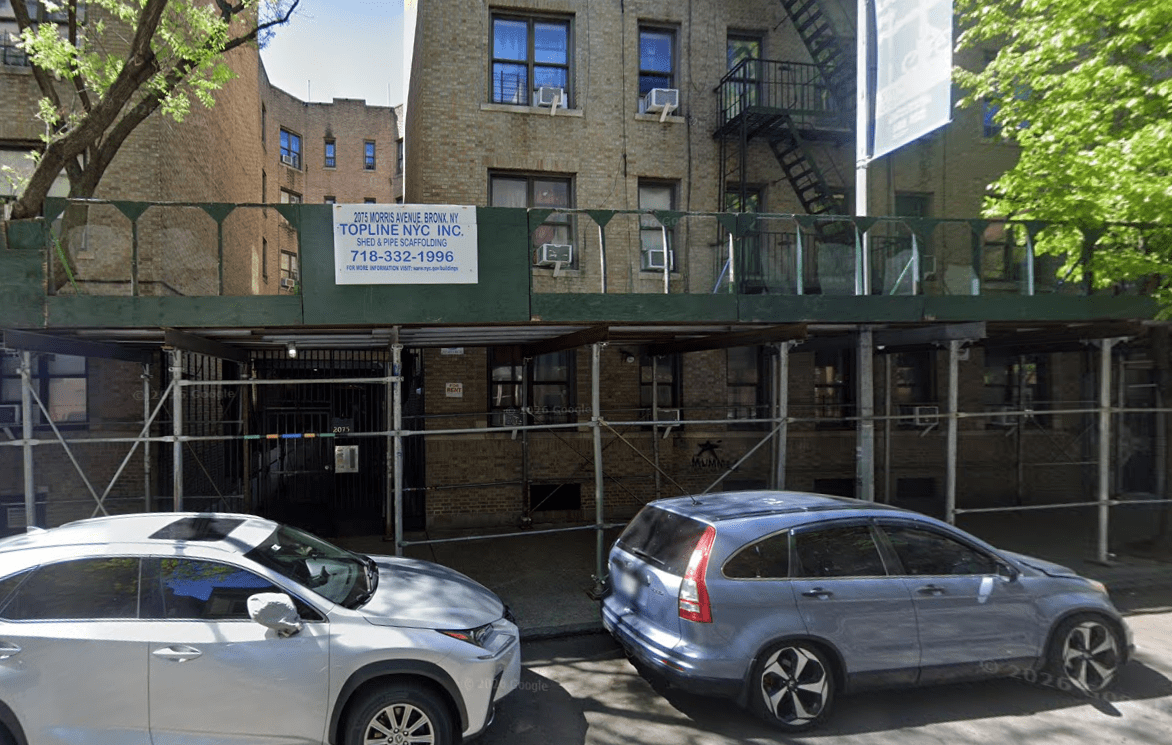
The July 2026 Bronx seizure begins with the kind of fact pattern that invites the wrong legal shortcut. Law enforcement said nearly 10 pounds of fentanyl were found in a third-floor apartment at 2075 Morris Avenue, while 14 children were evacuated from two daycare centers on the first floor; Antonio Cabrera was arrested and charged with reckless endangerment, criminal possession of a controlled substance, and criminal nuisance.[1] The DEA also stated that laboratory analysis of the seized substances was pending, so even the drug evidence remains in the posture of an allegation, not a completed adjudication.[1]
For landlords and counsel, the harder question is not whether fentanyl near childcare space is alarming. It is what must be shown before the building owner’s problem becomes more than reputational damage: a void lease, damages under New York Real Property Law § 231, premises-liability exposure, nuisance theories, or federal civil forfeiture. That question changes materially when the alleged trafficker is not the daycare operator, but a residential tenant elsewhere in the building.
Two Morris Avenue Cases, Two Liability Models
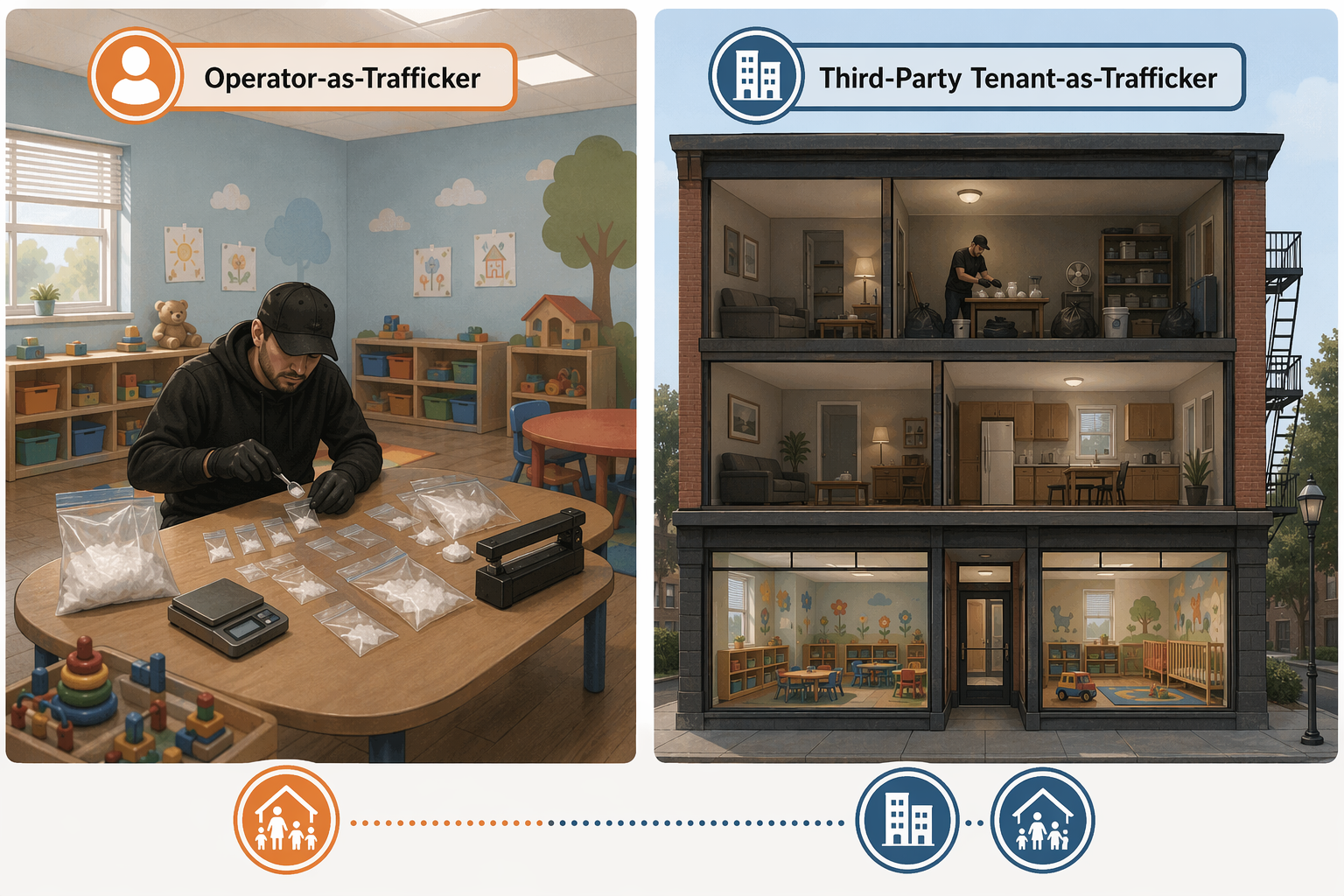
The 2023 Divino Niño tragedy at 2705 Morris Avenue supplies the comparison that keeps the 2026 case from being flattened into a generic “drugs near daycare” story. Federal prosecutors alleged that daycare operator Grei Mendez and tenant Carlisto Brito operated a fentanyl packaging operation inside the daycare premises; 1-year-old Nicholas Dominici died after fentanyl exposure, and Mendez allegedly deleted more than 20,000 text messages.[2]
That is a different legal model from the 2026 seizure. In 2023, the childcare premises themselves allegedly doubled as the drug site, and the daycare operator was part of the charged conduct.[2] In 2026, law enforcement described the alleged fentanyl operation as being in a third-floor apartment, with two daycare centers below and children evacuated from the building.[1] The suspect’s alleged conduct may have endangered daycare children, but the publicly reported facts do not make the daycare operators the traffickers.
| Issue | 2023 Divino Niño case | 2026 Morris Avenue apartment seizure |
|---|---|---|
| Location of alleged drug activity | Inside the daycare premises | Third-floor residential apartment above first-floor daycares |
| Role of alleged trafficker | Daycare operator and tenant alleged to be involved | Residential tenant alleged to be involved |
| Child exposure fact | One child died after fentanyl exposure | Fourteen children evacuated; reported case remains pending |
| Main landlord-liability question | What the owner knew or should have known about illegal use by a childcare tenant | What the owner knew or should have known about a separate tenant’s conduct affecting daycare occupants |
That distinction matters because landlord liability usually does not turn on outrage alone. It turns on control, notice, lease terms, response to complaints, inspection practices, and whether illegal use of the premises can be tied to the landlord’s knowledge or legally sufficient failure to know.
What Real Property Law § 231 Actually Does
New York Real Property Law § 231 is the statute that should be read before anyone says the landlord is automatically safe, or automatically liable. Section 231(1) renders void a lease or occupancy agreement when the premises are used for an illegal trade, manufacture, or business.[3] Section 231(2) goes further: a landlord who knowingly permits that illegal use may be liable for damages arising from it.[3]
The first part is a control mechanism. If a tenant is using leased space for illegal drug activity, the lease can be treated as void, giving the owner a route to remove the tenant rather than continue a contractual relationship with an illegal use. In the 2023 daycare case, if the childcare premises were used for fentanyl packaging as alleged, the illegal-use inquiry points directly at the daycare leasehold.[2][3]
The second part is where landlord exposure becomes more difficult. “Knowingly permits” does not necessarily require a confession, an email, or an owner watching narcotics being packaged. New York landlord-liability analysis recognizes that constructive notice can matter: if circumstances put a landlord on notice of likely illegal use and the landlord fails to investigate or act, the owner may face an argument that the activity was knowingly permitted.[4]
That does not mean every landlord becomes an insurer against hidden criminal conduct. A residential tenant who conceals drugs inside an apartment presents a different proof problem from a commercial tenant whose business use, visitors, hours, odors, trash, complaints, or physical alterations signal that the premises have changed function. The gap between actual knowledge and constructive notice is filled with facts: who complained, what was visible, how long it lasted, whether inspections were allowed, and whether management ignored a pattern that a reasonable owner would have pursued.
Why the Daycare Lease Is Not Just Another Commercial Lease
A daycare tenant changes the risk profile of a building because the foreseeable occupants include very young children, parents, staff, inspectors, and caregivers. That does not rewrite § 231, but it changes what careful management should notice and preserve. A landlord leasing to a childcare provider should expect licensing-related inspections, parent traffic, delivery patterns, maintenance requests, and complaints to create a paper trail. If that trail later shows signs of illegal use, the owner’s claim of having “no idea” will be tested against the records the owner did, or should have, kept.
The 2026 case presses a different edge of the statute. If the alleged fentanyl was in a third-floor apartment, § 231 analysis first points to that apartment lease, not automatically to the daycare leases below.[1][3] The owner’s exposure would likely depend on whether the owner or managing agent had actual knowledge of illegal use in the apartment, or whether red flags made the use knowable enough to support constructive notice.
Constructive Notice Is Where Most of the Fight Would Be
Constructive notice is not a magic phrase for punishing a landlord after the fact. It is a way of asking whether the owner had enough information that inaction became legally meaningful. In a mixed-use building, the evidence can come from sources that look mundane before they look damning: tenant complaints, unusual traffic, repeated access problems, odors, blocked exits, altered locks, cash-only occupancy arrangements, unexplained visitors, or maintenance staff observations.
For the 2026 Morris Avenue seizure, publicly available reporting does not establish who owned the building, what the owner knew, whether anyone complained, whether management inspected the third-floor apartment, or whether any warning signs existed before law enforcement arrived. No public record identified in the reviewed sources indicates that either building owner has been charged or sued. Those gaps are not formalities; they are the difference between a frightening building event and a viable owner-liability theory.
The same caution applies in the other direction. A landlord cannot assume that lack of actual knowledge ends the inquiry if the building’s records show repeated signals that a reasonable manager would have investigated. Constructive notice is most dangerous to owners when they have documents that prove the opportunity to know: unanswered emails, inspection denials, incident reports, prior police calls, staff notes, or complaints from daycare personnel or parents.
The Divino Niño facts make that point sharper without deciding any owner’s liability. When alleged trafficking occurs inside a daycare, the owner’s records about the childcare tenancy become central: lease use clauses, access rights, inspection history, licensing communications, maintenance visits, and any irregularities in how the space was used. When alleged trafficking occurs in an apartment above daycare space, the records shift toward building-wide management: apartment inspections, complaints from below, stairwell and common-area conditions, visitor patterns, and any prior police or nuisance history.
Premises Liability: Foreseeability, Not Hindsight
Premises liability enters through a different door. The issue is whether the landlord owed a duty to protect tenants, invitees, or visitors from foreseeable criminal acts on the property, and whether the landlord failed to take reasonable steps within the landlord’s control. Landlord liability for third-party criminal conduct generally depends on foreseeability, control over the premises, and the adequacy of the owner’s response to known risks.[5]
Daycare occupants make foreseeability more consequential because the injured or endangered people are not ordinary adult tenants who chose to live in the building. They are children brought to a licensed childcare setting, often by parents who have no access to upper-floor apartments and no ability to evaluate the building’s internal risk. That does not prove negligence, but it affects how a court or insurer may view the seriousness of ignored warning signs.
The geography will also be argued, though it should not be overstated. The 2026 seizure occurred on the same Bronx avenue just over a mile from the 2023 Divino Niño tragedy, and that proximity may be used to claim that daycare-adjacent fentanyl risk was no longer abstract after Nicholas Dominici’s death.[1][2] But premises liability still requires a closer factual bridge: what was foreseeable at this building, to this owner or manager, before this event.
A prior tragedy in the neighborhood does not automatically make every concealed apartment crime foreseeable. It can, however, make indifference harder to defend where the owner leased to childcare providers and then ignored building conditions that touched those childcare spaces. Foreseeability is rarely one fact; it is the accumulation of facts that made a risk visible enough to require action.
Federal Forfeiture Is Possible, but Not Automatic
Federal civil forfeiture is the theory that can frighten owners into either overstatement or denial. Under 21 U.S.C. § 881(a)(7), real property used, or intended to be used, in any manner or part to commit or facilitate certain drug offenses may be forfeitable.[4] The phrase “in any manner or part” is broad enough to reach real property even when only part of a building is implicated.
That breadth does not mean the government automatically takes an entire building every time drugs are found in one unit. The owner may assert the innocent-owner defense under the Civil Asset Forfeiture Reform Act, which generally requires showing lack of knowledge or, after learning of the conduct, lack of consent and reasonable steps to stop the illegal use.[4]
For a landlord, the defense is practical before it is doctrinal. Courts and prosecutors will look at whether the owner treated the property like a managed asset or like a rent stream with deliberate blind spots. If a tenant concealed fentanyl in an apartment and the owner had no realistic way to know, the innocent-owner argument is materially stronger. If complaints, inspections, police activity, or lease violations accumulated while management did nothing, ignorance becomes less persuasive.
The 2026 case is therefore not a clean forfeiture prediction. Public reporting does not establish the building owner’s knowledge, the suspect has been charged but not convicted, and DEA lab analysis was pending at the time described by law enforcement.[1] Those uncertainties make any confident conclusion about forfeiture premature. They do not make the forfeiture issue imaginary.
Drug-House and Nuisance Pressure Points
Drug-house laws and nuisance theories add pressure, especially where illegal drug activity is tied to a property rather than a single person. General landlord guidance notes that several states, including New York, California, and Maryland, treat certain drug-house violations as felonies carrying potential imprisonment and fines, though enforcement against landlords without actual knowledge is rare and heavily fact-dependent.[6]
The 2026 charges against Cabrera included criminal nuisance, according to the DEA’s release.[1] That charge is against the alleged tenant, not proof of owner liability. Still, nuisance language matters in civil and regulatory conversations because it focuses attention on whether a property was allowed to become a site of recurring danger. If the evidence shows only one concealed criminal episode, the owner’s position is different from a record of repeated activity, repeated complaints, and no meaningful response.
Post-Divino Niño Regulation Changes the Baseline
After Nicholas Dominici’s death, New York City lawmakers introduced new measures aimed at protecting children from opioid exposure, including enhanced daycare inspection training and parent-notification requirements.[7] Those laws are not, by themselves, a landlord-liability statute. They do, however, affect the environment in which a landlord leases to childcare providers.
Regulatory baselines shape expectations. A landlord is not the daycare licensing agency, and ordinary owners are not narcotics investigators. But when a building contains licensed childcare, a management file that shows no attention to use clauses, access rights, complaints, inspection coordination, or unsafe conditions will age badly after a fentanyl event. The legal question will be narrower than moral blame, but it will not be limited to whether the owner personally saw drugs.
How Counsel Should Separate the Exposure
The first separation is tenant role. If the daycare operator is the alleged trafficker, the illegal use is bound up with the childcare tenancy itself. Lease voiding, damages under § 231, childcare regulatory duties, and premises-liability theories will all look to what the owner knew or should have known about the daycare space. If a separate residential tenant is the alleged trafficker, the inquiry shifts to apartment-level control and building-wide notice.
The second separation is type of knowledge. Actual knowledge is direct: a report, admission, police notice, inspection finding, or observed illegal condition. Constructive notice is inferential: enough facts existed that a reasonable landlord should have investigated. The weaker the owner’s inspection and complaint-response records, the easier it becomes for a claimant to argue that management chose not to know.
The third separation is remedy. A void lease is not the same as tort damages. Tort damages are not the same as forfeiture. A nuisance theory is not the same as a licensing violation. In a serious daycare-adjacent fentanyl case, those theories may overlap, but each still requires its own proof. Treating them as one undifferentiated claim helps no one except the party trying to avoid the hard facts.
No public record identified in the reviewed sources establishes that the owners of either Morris Avenue building have been charged or sued, and ownership details for 2075 and 2705 Morris Avenue could not be definitively verified. That uncertainty should restrain any prediction about liability.
The two Morris Avenue cases do not create a rule that landlords are always liable when drugs are found near daycare space. They show something narrower and more useful: in New York, “no actual knowledge” may be an incomplete defense where constructive notice, childcare use, lease controls, foreseeable criminal acts, and federal forfeiture are all in play. Counsel assessing a mixed-use building must separate operator misconduct from third-party tenant misconduct, document what was knowable before the event, and treat daycare-adjacent drug activity as a risk category where statutory, tort, nuisance, and forfeiture theories can meet in the same file.
References
- Ten Pounds of Fentanyl Seized from Bronx Apartment — Two Daycare Centers in Building Evacuated, Drug Enforcement Administration, July 15, 2026
- Day care operator charged in baby's fentanyl death allegedly deleted more than 20K text messages, ABC News
- Real Property Law Section 231 renders void an agreement for occupancy of a premises used for illegal trade, business or manufacture, reentry.net/ny
- New York State Increases Potential Liability of Commercial Landlords Based on Illegal Activities of Tenants, Adams Leclair LLP
- Criminal Acts and Activities: Landlord Liability FAQ, Nolo
- Drug Activity and Rental Property, LegalMatch
- New Laws Introduced to Protect Kids from Opioid Exposure following Nicholas Feliz Dominici's Death, Norwood News
Comments
Join the discussion with an anonymous comment.