
$1.72 is a small number doing unusually heavy legal work. In the Live Nation antitrust trial, the jury accepted it as the per-ticket overcharge for a defined set of fan purchases: tickets sold through Live Nation/Ticketmaster at 257 major concert venues in 21 states and the District of Columbia, from 2020 through 2024, excluding broker purchases and covering roughly 20% of Live Nation's ticket volume.[1]
That is not the same thing as saying every Ticketmaster customer was overcharged by $1.72. It is also not a forecast that ticket prices will fall by $1.72 if the verdict survives. The figure is narrower, more technical, and less settled: it is a jury finding built on an expert damages model that the trial judge has not yet finally allowed to stand.
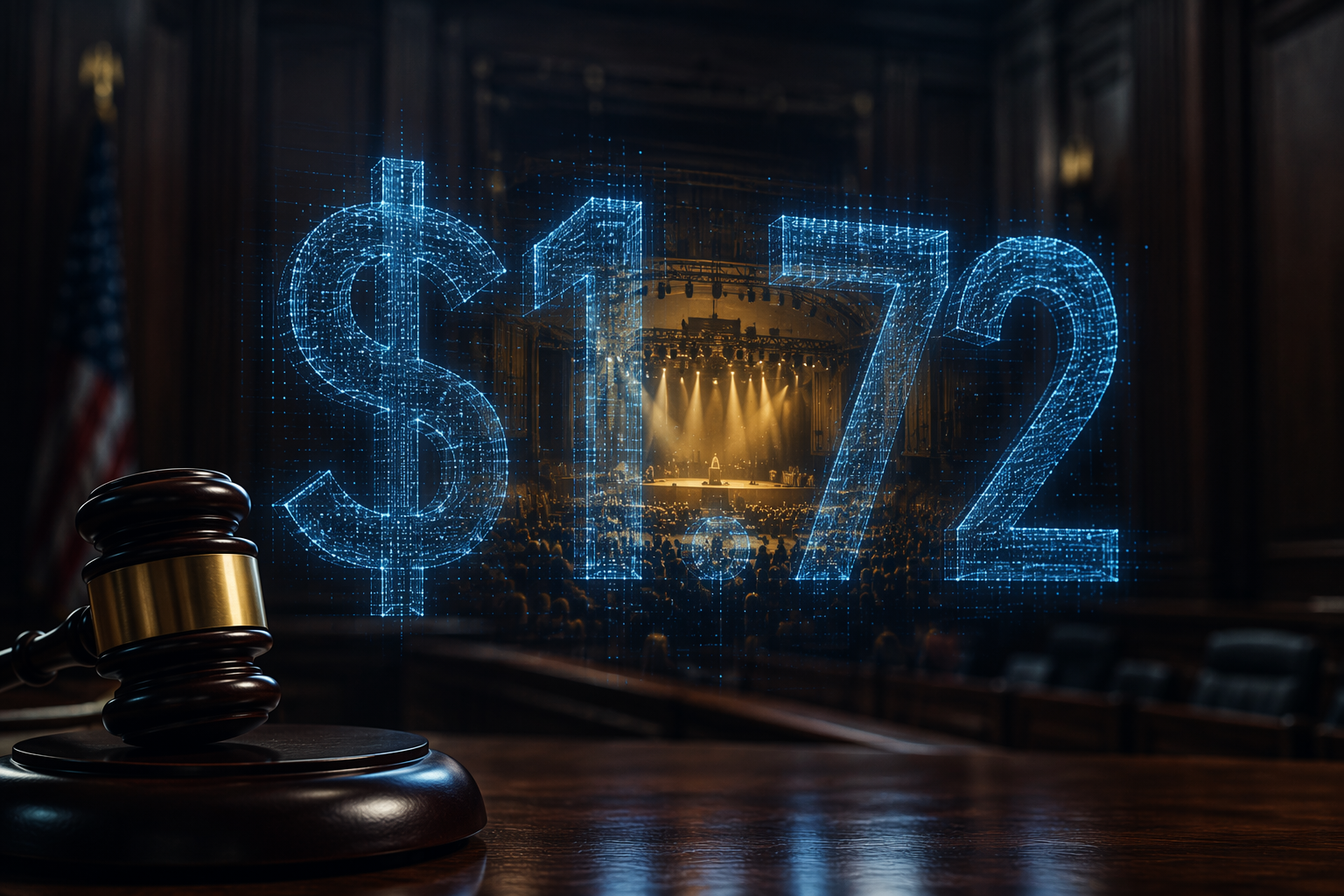
The legal impact of the verdict therefore starts in an awkward place. The states won a liability verdict. The jury accepted a clean damages number. But Live Nation has challenged the expert testimony supporting that number under Rule 702 and has also pursued post-trial relief under Rule 59. Judge Arun Subramanian reserved ruling and, according to Crowell & Moring's post-verdict analysis, noted "significant concerns" about the damages testimony.[1]
For practitioners, that reservation matters more than the rhetorical force of a monopoly verdict. If the damages testimony is excluded, the $1.72 figure does not merely become less persuasive; it may lose the evidentiary foundation on which the damages award depends.
The Number Only Works Inside The Jury's Market
The damages model presented by economist Rosa Abrantes-Metz rested on a narrow market definition: major concert venues, not the broader universe of ticketed live events. The venues at issue had more than 8,000 seats and hosted at least 10 concerts a year, according to trial coverage of the expert testimony.[2]
That market definition is not an incidental pleading choice. It is the frame that makes Live Nation's alleged power economically measurable. Under the accepted concert-venue market, Live Nation's share was treated as 86%; Live Nation has argued that a broader market including sports venues would lower that share to about 44%.[1]
The liability verdict came on April 15, 2026, with the states winning across the antitrust claims identified in post-verdict commentary.[3] But the damages theory does not float free from that liability frame. If the concert-venue market definition fails on appeal, the retained-fee comparison used to quantify the alleged overcharge becomes vulnerable with it.
This is why the $1.72 number should be read less like a general consumer statistic and more like the output of a conditional model. The condition is the jury's accepted view of the market.
How The Fee-Retention Model Gets To Consumer Injury
Abrantes-Metz's model focused on retained ticketing fees. That choice is important. A ticketing fee can be split, rebated, paid through, or retained. The alleged consumer injury was not measured by every dollar visible on a checkout screen. It was measured by the portion of ticketing fees Live Nation/Ticketmaster allegedly retained above a competitive benchmark within the relevant venue market.
In damages terms, retained fees are attractive because they connect the asserted exercise of market power to a per-transaction margin. If the platform can retain more of the fee because venues have fewer practical alternatives, the retained amount becomes a candidate measure of overcharge. That is a cleaner path than trying to treat the face value of a ticket, the artist's economics, venue guarantees, and ancillary fees as one undifferentiated price.
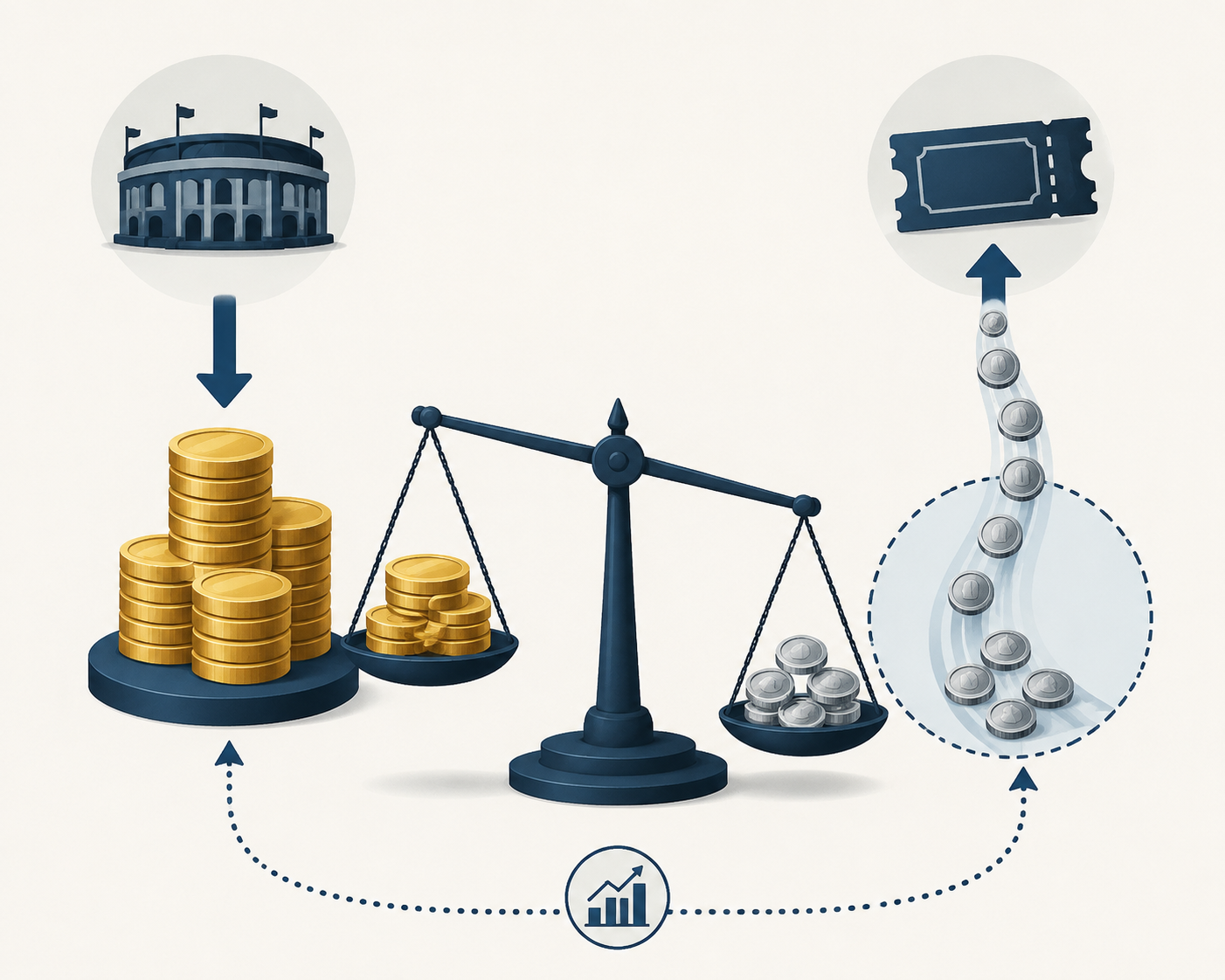
The model also explains why the damages award is smaller than the public scale of the Live Nation/Ticketmaster business might suggest. Crowell & Moring described single damages as below $150 million, with trebling under the Clayton Act producing a figure of roughly $450 million before any unresolved offsets.[1] Those amounts are meaningful, but they are not systemwide disgorgement of Live Nation's ticketing revenue.
| Damages Boundary | What It Means |
|---|---|
| 257 venues | The finding concerns a defined venue set, not all venues using Ticketmaster. |
| 21 states and DC | The covered purchases are geographically limited to the plaintiff jurisdictions. |
| 2020-2024 | The model is tied to a specific damages period. |
| Fan purchases excluding brokers | The calculation does not generalize to broker transactions. |
| Roughly 20% of Live Nation ticket volume | The jury's number applies to a subset of total Live Nation transactions. |
The defensibility of this architecture turns on traceability. The retained-fee measure has to track the alleged anticompetitive conduct, the accepted market, the affected transaction set, and the class of purchasers whose injury is being calculated. A neat per-ticket average is useful only if the path to it remains visible under cross-examination.
The Offset Fight Is Not Accounting Trivia
Live Nation's central damages attack is not simply that the $1.72 number is too high. It is that the model allegedly treats one side of the venue contract economics as injury while ignoring another. Live Nation argues that upfront payments to venues are integral to the ticketing contracts and should be considered when calculating whether consumers were overcharged.
If that argument prevails, the model changes substantially. Upfront venue payments would operate as an offset against retained per-ticket fees. A platform could argue that what looks like excess fee retention at the ticket level is partly or fully counterbalanced by value transferred to venues at the contract level.
The states' answer is that fixed upfront payments are not marginal per-ticket costs. On that view, a lump-sum transfer to a venue does not reduce the amount a fan pays in an allegedly supracompetitive ticketing fee. Three former DOJ Antitrust Division chief economists -- Nancy Rose, Fiona Scott Morton, and Steven Berry -- filed a June 2026 amicus brief supporting that position and arguing that upfront fixed venue payments should not be netted against per-ticket consumer overcharges.[4]
Their point matters because it addresses the model's most practical vulnerability. In vertical integration and platform cases, the defendant often can identify multi-sided contractual value: guarantees, rebates, marketing commitments, technology investments, preferred access, data rights, or lump-sum payments. The damages question is not whether those items exist. It is whether they are costs of serving the marginal transaction allegedly overcharged, or transfers that belong elsewhere in the economic analysis.
The former DOJ economists' position is persuasive to the extent it preserves that distinction. A fixed payment may help win an exclusive or preferred venue contract. It does not automatically mean each fan received a per-ticket price reduction equal to some allocated share of that payment. But Live Nation's counterargument cannot be dismissed as mere relabeling. If venue contracts are negotiated as bundled economic packages, a court may be reluctant to let plaintiffs isolate retained fees while excluding contractual concessions that helped secure the same ticketing relationship.
Rule 702 Is The Gate The Verdict Still Has To Pass
The jury has already done its work. The court has not. Live Nation's Rule 702 challenge asks whether Abrantes-Metz's damages testimony was sufficiently reliable and fit the case as tried. Its Rule 59 arguments put additional pressure on whether the verdict can stand in light of alleged evidentiary and trial errors. Crowell & Moring's analysis reports that Judge Subramanian deferred ruling on the motion to strike while expressing significant concerns, leaving the damages award procedurally exposed.[1]
That posture is unusual enough to matter for anyone trying to cite the case as a template. A jury verdict can validate how a damages story landed with factfinders. It does not, by itself, resolve whether the model satisfied the admissibility standard. If the court later excludes the testimony, the clean verdict form will not rescue the damages award.
This is also where market definition and damages fit converge. A model may be economically coherent inside one market and unreliable inside another. If the relevant market is major concert venues, retained ticketing fees at those venues may speak directly to consumer injury. If the legally relevant market expands to a broader ticketing universe, the same comparison may no longer measure the injury the law recognizes.
The DOJ Settlement Complicates The Money Question
The damages fight also sits beside a separate DOJ settlement. Bloomberg Law reported in March 2026 that Live Nation reached a DOJ settlement in the antitrust case.[5] Crowell & Moring described a $280 million amount already accrued toward state damages through that settlement, while also noting that the interaction between that fund and any final state judgment remains unresolved.[1]
The settlement terms reported in the research record include a 15% fee cap and divestiture of 13 amphitheaters, subject to Tunney Act review.[5] Those terms may affect remedy discussions and settlement credits, but they do not make the $1.72 damages model final. Nor do they answer whether the same conduct, purchasers, or transactions are covered in a way that cleanly offsets the verdict.
That unresolved interaction is one reason the headline damages figure should be handled cautiously. A trebled amount of roughly $450 million is not necessarily the cash amount that will ultimately be paid if post-trial motions, settlement credits, or appellate rulings alter the judgment.[1]
Remedies Are A Separate Track
The states have continued to seek structural relief, including a Live Nation/Ticketmaster breakup, in the remedy phase.[6] That issue is consequential, but it should not be collapsed into the damages calculation. A breakup remedy would address market structure going forward. The $1.72 finding addresses alleged past overcharges for a defined group of purchases.
Nor should the liability verdict be translated into an immediate ticket-price prediction. Even if liability and damages survive, future ticket prices would depend on remedy design, venue contracting, artist economics, fee regulation, settlement terms, and any appellate changes to the judgment. The trial record supports a narrower proposition: the jury accepted a retained-fee overcharge model for a defined venue market and purchase universe.
Crowell & Moring has also cautioned that an appeal is unlikely to arrive before 2028.[1] That timing matters for in-house counsel reading the case as a risk signal. The verdict is immediately relevant as a litigation event, but its doctrinal value will remain unsettled while post-trial and appellate challenges move through the court.
What Practitioners Can Actually Take From The Case
The most usable lesson is not that antitrust plaintiffs should always present a small per-unit overcharge. It is that a small number can be powerful when the market, transaction set, and alleged mechanism of harm are tightly aligned. Here, the retained-fee theory gave the jury a manageable way to translate market power into consumer injury.
For plaintiffs, the model shows the value of separating fixed contractual transfers from marginal per-transaction charges when the alleged injury is paid by consumers at checkout. For defendants, the case shows where to attack: market definition, transaction scope, pass-through assumptions, and whether the damages expert has improperly isolated one revenue stream from a broader contract package.
For platform companies, the offset dispute is the piece worth saving. Many platform markets involve payments to one side of the market and charges to another. A damages model that treats those flows separately may be economically disciplined, but it must explain why separation is justified rather than merely convenient.
The $1.72 finding is defensible under the jury's accepted concert-venue market definition. Its value as a precedent for antitrust damages work depends on the next ruling: whether the court lets the expert testimony supporting that number remain in the case.
References
- After the Verdict: Navigating the Live Nation/Ticketmaster Antitrust Fallout, Crowell & Moring, May 2026
- Day 20 of Live Nation on Trial: Battle of the Experts, Big Tech on Trial
- States Win Antitrust Case Against Live Nation: Lessons from a Landmark Antitrust Case, Duane Morris Antitrust Law Blog, April 15, 2026
- Prominent Economists Back States' Damages Theory In Live Nation/Ticketmaster Antitrust Fight, TicketNews, June 2026
- Live Nation Reaches DOJ Settlement in Antitrust Case, Bloomberg Law, March 9, 2026
- States still seeking Live Nation/Ticketmaster breakup in antitrust remedies phase, Sports Business Journal, May 22, 2026
Comments
Join the discussion with an anonymous comment.