
A lottery prize expiration question should be treated first as a jurisdiction-and-deadline problem, not as a jackpot story. The selling jurisdiction controls the claim period. The game type determines which clock is running. The date that matters may be the draw date, or it may be the official end date of a scratch-off game. A casual answer such as “about 180 days” is not enough for a client, a compliance file, or a closing-window decision.
The broad comparative rule is narrow but useful: U.S. lottery claim periods vary by state and game type, with draw-game claim periods running from 90 days to one year from the draw date, and scratch-off claim periods running from 60 days to one year from the game’s official end date. A 180-day scratch-off period is the most common duration in the 2026 state-by-state compilation, appearing in 21 states plus the District of Columbia, but that figure should be used as a map, not as authority for a specific ticket. [1]
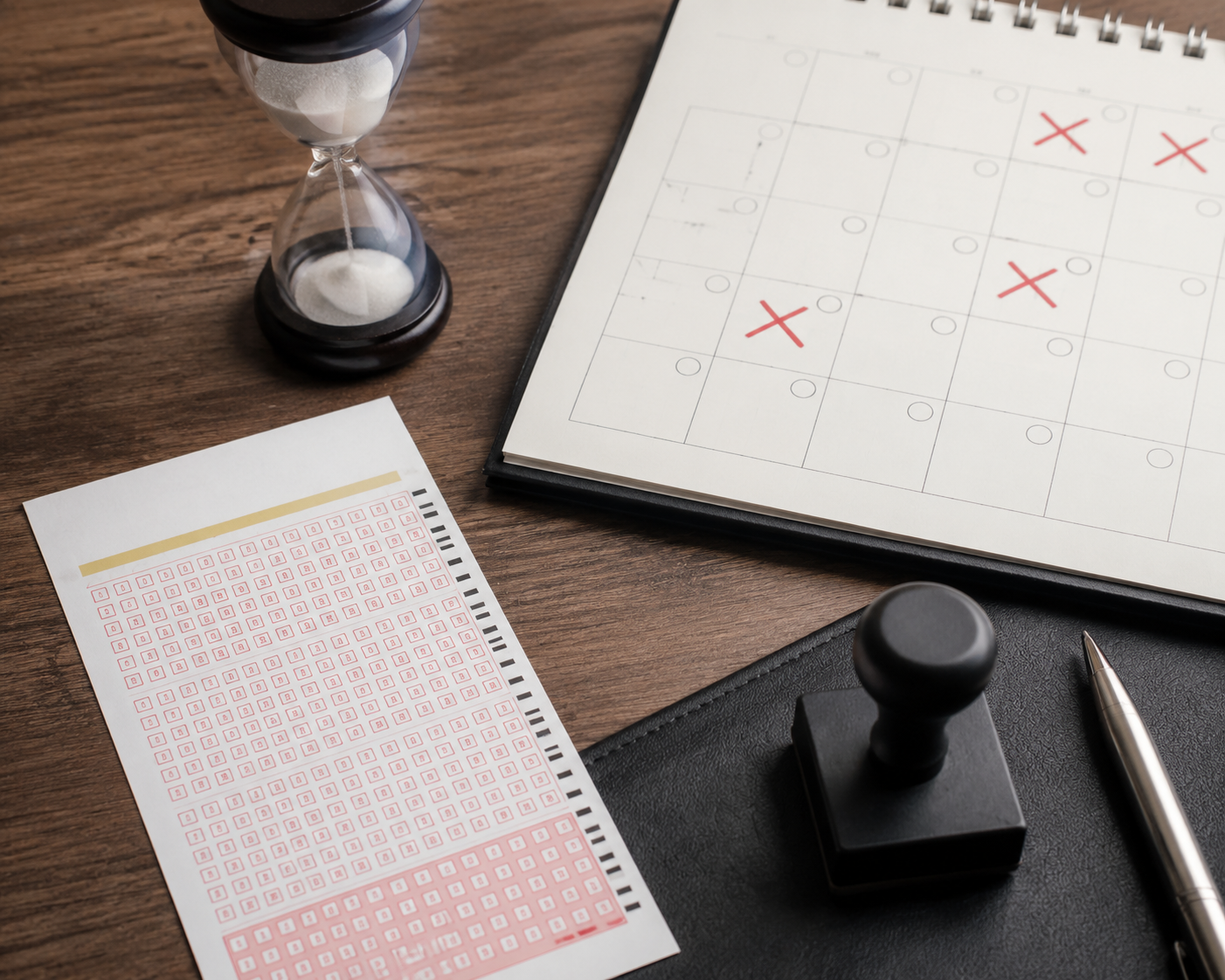
Start With the Controlling Clock
For triage, a reference table should not try to replace the state lottery authority. It should tell the reviewer what to verify before anyone gives a deadline answer.
| Ticket type | Clock-start event | Supported claim-period range | Verification point |
|---|---|---|---|
| Draw games, including state draw games and multi-state games sold in a state | Draw date | 90 days to one year from the draw date | Confirm the selling jurisdiction’s lottery statute, rule, claim guide, or official FAQ. [1] |
| Scratch-off or instant tickets | Official game end date, not the purchase date or the date the ticket was scratched | 60 days to one year from the official game end date | Confirm the game’s official end date and the state’s post-end claim period. [1] |
| Powerball | The draw-date clock set by the selling jurisdiction | Not set by Powerball as a national uniform period | Powerball directs players to the rules of the jurisdiction where the ticket was purchased. [2] |
| Mega Millions | The draw-date clock set by the selling jurisdiction | Not set by Mega Millions as a national uniform period | Mega Millions likewise points to the selling jurisdiction for claim-period rules. [3] |
That last point is where many deadline errors begin. Powerball and Mega Millions are national brands, but the claim period is not a national deadline. A Powerball ticket bought in one state does not inherit the claim period of another state merely because the drawing is shared. The lottery office that sold the ticket supplies the governing claim rule. [2][3]
How to Read a State-by-State Deadline Table
A state-by-state table is useful only if it preserves the distinction between comparison and authority. The 2026 Scratcher’s Paradise compilation is the broad scaffold here because it collects state claim windows and separates draw-game timing from scratch-off timing. It should not be treated as the final citation for legal advice when an official statute, administrative rule, lottery claim guide, or commission page is available. [1]
| What the table says | What it actually proves | What still must be checked |
|---|---|---|
| A state has a 180-day claim period | The comparative source reports a 180-day window for that state or game category | Whether the 180 days run from the draw date, the official game end date, ticket validation, publication of winning numbers, or another state-defined event |
| A scratch-off ticket can be claimed after sales stop | Scratch-off deadlines commonly depend on the official game end date rather than the day the player bought or scratched the ticket | The exact official end date for that specific game and the number of days allowed after that date |
| A draw-game ticket has a one-year period | The state may allow one year for that draw-game prize category | Whether the year runs from the drawing, announcement, close of the game, or another defined date under state law |
| The state has no general hardship waiver | The reviewed state-level materials did not identify a general administrative appeal or equitable extension for ordinary missed deadlines | Whether a narrow statutory exception applies, especially for military service |
The safest workflow is mechanical. Identify the jurisdiction printed on or associated with the ticket. Identify the game. Determine whether it is a draw game or a scratch-off. Locate the trigger date. Then verify the claim period in an official source. If any of those items is missing, the answer is not yet ready for a client or internal file.

Draw Date Is Not the Same Thing as Scratch-Off End Date
Draw games are comparatively straightforward because the event that starts the deadline is the drawing. The ticket either corresponds to a particular drawing date or it does not. The remaining work is to apply the selling jurisdiction’s claim period to that date.
Scratch-offs create more avoidable confusion. A player may buy a scratch-off ticket long before the game is officially closed. Another player may find a ticket in a drawer after sales have ended but before the final claim deadline. The purchase date and the scratch date are usually the wrong starting point. The relevant clock runs from the game’s official end date, and the state’s post-end claim period supplies the expiration date. [1]
For a legal or compliance reviewer, that means a scratch-off file needs two documents, not one: the rule stating the number of days allowed after game end, and the lottery’s official record showing when that specific scratch-off game ended. Without the game-end date, the claim-period number is only half the calculation.
Official Sources: What They Look Like in Practice
Representative statutes and rules show the kind of authority a reviewer should look for. They do not make four states interchangeable, and they do not prove a national rule. They do, however, show how claim deadlines appear in primary or official materials.
| Jurisdiction | Authority to check | Why it matters |
|---|---|---|
| Virginia | Virginia Code section 58.1-4020, Unclaimed prizes | Provides statutory treatment of unclaimed prizes and includes a specific military-service provision. [4] |
| Minnesota | Minnesota Administrative Rules, chapter 7857 | Places prize-payment procedures in administrative rules, illustrating that the controlling source may be regulatory rather than a short consumer FAQ. [5] |
| Pennsylvania | 61 Pa. Code section 811.17 | Addresses unclaimed prize money in the state lottery regulatory code. [6] |
| Florida | Florida Statutes section 24.115, discussed in the Florida Attorney General opinion on unclaimed lottery prize money | Shows statutory treatment of unclaimed prize money and the limits on use of those funds. [7] |
| Florida | Florida Lottery Winner’s Guide | Provides an official consumer-facing claim guide that can be useful alongside statutory materials. [8] |
This is also where a file note should be precise about source rank. A state statute or administrative rule carries different weight from a lottery marketing page. A winner’s guide can be highly useful, especially for operational steps, but if the issue is disputed or the deadline is close, the statute, regulation, and lottery commission’s current official position should be checked directly.
Multi-State Games Still Belong to the Selling Jurisdiction
Powerball and Mega Millions each tell players to look to the jurisdiction where the ticket was purchased for claim-period rules. That point belongs near the beginning of any deadline analysis because the brand name can obscure the legal source of the deadline. [2][3]
A practical example can be kept simple. If a client presents a Mega Millions ticket bought in State A, the claim-period question is not answered by asking what Mega Millions allows in general, or what State B allows for the same drawing. The reviewer needs State A’s rule, State A’s draw-date trigger, and State A’s claim submission requirements. If the client crossed a state line to buy the ticket, that fact is not incidental; it is the jurisdictional anchor.
Unclaimed Prizes Are Routine Enough to Matter
Expiration rules are not decorative. In Texas, a $14 million lottery prize was claimed two days before the ticket would have expired, a near-miss that illustrates how quickly a claim-period question can become a same-day legal task. Texas also reported more than $200 million in unclaimed lottery prizes in 2024. [9]
California’s unclaimed-prize totals are larger over a longer period: NBC Bay Area reported that the state had accumulated about $1.1 billion in unclaimed prize money over 40 years. [10] Those figures do not prove that most winners misunderstand the law, and they do not identify why any particular ticket went unclaimed. They do show that missed claims are not merely hypothetical.
After Expiration, Hardship Is Usually the Wrong Theory
The reviewed state-level comparative research did not identify a general administrative appeal, hardship waiver, or equitable extension available to ordinary late claimants after a lottery prize claim period expires. [1] That conclusion should be stated carefully. It is not a statement about every conceivable lawsuit, and it is not advice about a particular dispute. It is a deadline-administration point: the ordinary lottery-commission claim process should be treated as unforgiving unless a specific statute or rule says otherwise.
The absence of a general hardship waiver matters before the deadline passes. A claimant who is hospitalized, traveling, unable to locate paperwork, or waiting on family discussions may have understandable reasons for delay. Those facts should not be assumed to stop the statutory or regulatory clock. If the deadline is approaching, the legal task is to determine how to preserve the claim under the state’s submission rules, not to collect sympathy facts for an extension that may not exist.
Military-Service Exceptions Require Statutory Text
Military service is the one exception category that current comparative materials identify as broadly relevant, but it should not be converted into a general equitable safety valve. Virginia provides a verified example: Virginia Code section 58.1-4020(E) allows certain service members to claim forfeited prizes up to 180 days after discharge from active duty. [4]
That Virginia provision is useful because it shows what an exception looks like when it exists: it is written into the statute, it has a defined eligible class, and it has its own timing rule. The broader 2026 comparative source describes the military-service exception as the only known exception, but not every state statute has been individually verified here for identical wording or scope. [1] For any deployed service member, the file should be checked against the selling jurisdiction’s current statute or rule, not against a generalized description of military protections.
A Defensible Deadline Workflow
For attorneys, paralegals, and compliance officers, the working answer should be documented in a way another reviewer can reconstruct. The file should show the ticket’s selling jurisdiction, game type, trigger date, claim period, source consulted, and any exception analysis.
- Confirm the selling jurisdiction. For multi-state games, do not use the national game brand as the legal source of the claim period.
- Classify the ticket as a draw-game ticket or a scratch-off ticket. The deadline calculation depends on that classification.
- Identify the correct trigger date: draw date for draw games, official game end date for scratch-offs.
- Verify the claim period in the state statute, administrative rule, official lottery claim guide, or current lottery commission source.
- Check for a narrow statutory exception only after the ordinary deadline calculation is complete, with particular attention to active-duty military provisions.
- If the deadline is close, confirm the state’s required claim method, office hours, documentation rules, and whether mailing, in-person presentation, or validation by a retailer is legally sufficient.
The legal rule may be short, but the deadline answer is not complete until the clock-start event and the governing jurisdiction are pinned down. A ticket that expires in two days does not leave room for folklore from a lottery counter. It needs the rule, the date, and the citation.
References
- State-by-State Claim Deadlines, Scratcher’s Paradise, 2026, https://www.scratchersparadise.com/do-scratch-off-tickets-expire/
- Powerball FAQs, Powerball, https://www.powerball.com/faqs
- Mega Millions FAQs, Mega Millions, https://www.megamillions.com/faqs.aspx
- Virginia Code § 58.1-4020 — Unclaimed prizes, Virginia Law, https://law.lis.virginia.gov/vacode/title58.1/chapter40/section58.1-4020/
- Minnesota Administrative Rules, Chapter 7857, Minnesota Revisor of Statutes, https://www.revisor.mn.gov/rules/7857/full
- Pennsylvania 61 Pa. Code § 811.17, Legal Information Institute, https://www.law.cornell.edu/regulations/pennsylvania/61-Pa-Code-SS-811-17
- Unclaimed lottery prize money — limitations on use, Florida Attorney General, 1996, https://www.myfloridalegal.com/ag-opinions/unclaimed-lottery-prize-money-limitations-on-use
- Florida Lottery Winner’s Guide, Florida Lottery, https://floridalottery.com/winning/guide
- Person claims $14 million Texas Lottery prize two days before ticket expires, FOX 32 Chicago, https://www.fox32chicago.com/news/person-claims-14-million-texas-lottery-prize-two-days-before-ticket-expires
- $1.4M Powerball ticket sold in Bay Area remains unclaimed, NBC Bay Area, https://www.nbcbayarea.com/news/local/powerball-ticket-unclaimed/3894866/
Comments
Join the discussion with an anonymous comment.