
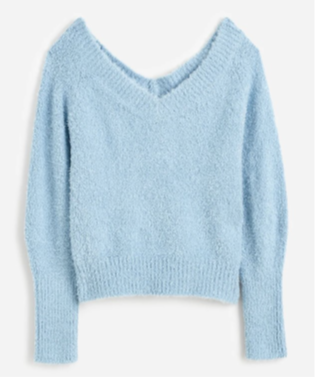
The practical question in the Madewell sweater recall is not whether the words “full refund” sound consumer-friendly. It is what a buyer must give up, if anything, to get that refund. The July 16, 2026 recall covers about 5,900 women’s sweaters imported by J. Crew Group LLC and sold for about $138 to $148 during the HO24 season; the stated hazard is that the sweaters violate the mandatory federal flammability standard for clothing textiles and pose a burn risk. CPSC reports one fire incident and no injuries. [1]
Madewell’s remedy is concrete: consumers are told to stop using the sweater, destroy it by cutting it in half, photograph the destroyed sweater, and submit that proof to receive a full refund to the original form of payment or store credit. [2] That condition is the part most likely to be misunderstood. It is not the same thing as a release of legal claims, but it is also not a casual retail return where the sweater goes back into a sales channel.
What The Recall Remedy Actually Requires
A consumer complying with the recall has to do more than request a refund. The product has to be taken out of use, physically destroyed, documented, and submitted through the process Madewell describes. That work is inconvenient, especially for a buyer who paid department-store prices for a sweater less than two years ago. But inconvenience is not the same as legal forfeiture.
- The consumer stops wearing the recalled sweater.
- The sweater is destroyed by cutting it in half.
- The consumer photographs the destroyed sweater.
- The consumer submits the photograph and recall information to Madewell.
- Madewell provides a full refund to the original payment method or store credit, according to its recall page. [2]
The distinction matters because a recalled sweater is not supposed to keep circulating. CPSC’s Fast Track Recall Program is designed to move corrective actions quickly when a firm is prepared to implement an acceptable remedy; under that program, CPSC may publicize a voluntary recall without making a preliminary determination that the product contains a substantial product hazard. [3] In that setting, a destruction-and-photo requirement functions as verification: the company and regulator can see that the recalled garment has been removed from use rather than refunded and then resold.
That verification function also fits the broader product-safety rule against putting recalled goods back into commerce. Federal consumer product safety law prohibits selling recalled products in commerce, and that concern is not limited to first-party retail sales. A sweater that is refunded but left intact can migrate to resale, donation, or online secondhand channels. The cut-and-photo step is a blunt way to prevent that.
The Flammability Violation Is The Legal Center Of The Recall
The recall is not built around fit, pilling, color transfer, or the usual disappointments of apparel quality. CPSC says the sweaters violate the mandatory standard for clothing textiles, creating a risk of serious injury or death from a burn hazard. [1] The relevant federal framework is the Flammable Fabrics Act and CPSC’s clothing-textile standard at 16 C.F.R. part 1610. CPSC describes that standard as using a three-class flammability system for clothing textiles. [4]
The public recall notice does not specify which flammability class result the Madewell sweaters received or the detailed test pathway that led to the violation. That absence matters. It is enough to say the regulator and recalling firm identified a violation of the mandatory clothing textile standard; it is not enough to infer a particular lab result, burn rate, or defect theory beyond the recall language.
The single incident report should be read with the same restraint. One reported fire incident with no injuries is significant because it shows the hazard was not purely theoretical in the recall record. It does not, by itself, establish a pattern of injuries, a damages history, or a developed claimant pool. As of July 19, 2026, the recall is only three days old. [1]
Why The Full Refund Likely Beats The Ordinary Warranty Baseline
The phrase “consumer law return rights” can make this recall sound simpler than it is. Outside the recall, a buyer would usually have to locate a right in a store policy, an express warranty, an implied warranty, a state consumer-protection statute, or a product-liability theory. Those are different tools. They do not all guarantee a refund, and they do not all operate the same way after a garment has been owned for many months.
For many garment purchases, the most plausible baseline is the implied warranty of merchantability under state commercial law. In ordinary terms, the product must be fit for the ordinary purposes for which goods of that kind are used. The U.S. consumer protection framework remains a mix of federal and state law, with state law supplying many private consumer remedies. [5] A sweater that violates a mandatory flammability standard presents a stronger merchantability problem than a sweater that merely wore out faster than expected.
Even so, the remedy a consumer could demand through ordinary implied-warranty law is not automatically a no-questions full refund 9 to 19 months after purchase. Warranty remedies often turn on state law, privity rules, disclaimers, notice requirements, the timing of the defect, available proof, and whether the buyer has already had substantial use of the goods. A purchaser might have a serious argument that a garment violating a federal flammability rule was not merchantable when sold. That is not the same as saying every purchaser could easily force the retailer to refund the full original price without using the recall process.
| Issue | Recall remedy | Ordinary implied-warranty posture |
|---|---|---|
| Timing | Available to covered consumers under the recall process announced July 16, 2026 | Depends on state law, notice, limitations periods, and proof |
| Amount | Full refund to original payment method or store credit, according to Madewell | May involve repair, replacement, refund, diminution in value, or other state-law remedies |
| Proof | Destroy sweater and submit photograph | Consumer may need purchase proof, defect proof, notice proof, and evidence of damages |
| Use of garment | Recall does not appear to reduce the refund because the sweater was worn before the recall | Prior use can complicate rescission or full-refund theories |
| Injury claims | Recall page describes the refund process, not a personal-injury adjudication | Separate product-liability or personal-injury theories may apply if someone was harmed |
That is the core reason the Madewell remedy is legally meaningful. A full refund after this amount of time is likely more generous than what many consumers could obtain quickly under an implied-warranty theory standing alone. The recall turns a legal argument into an administrative process: destroy, document, submit, get the refund or credit.
There is a consumer-side cost to that administrative clarity. A buyer loses the physical sweater as evidence once it is cut in half. For an uninjured consumer who only wants the purchase price back, that may be a sensible trade. For someone claiming an actual burn injury, property damage, or a disputed denial of the recall refund, destroying the product without preserving photographs, purchase records, communications, and incident details could create avoidable proof problems. The recall instructions should be followed for safety; a person with an injury claim should also get jurisdiction-specific advice before assuming the refund process answers every legal question.
Accepting The Refund Is Not The Same As Waiving Injury Claims
Nothing in the public materials identified here says that submitting the destruction photograph requires a consumer to sign a release of personal-injury claims. Madewell’s recall page describes the refund remedy and the proof needed to receive it. [2] The CPSC Fast Track framework explains why a voluntary recall may be structured around quick corrective action rather than a fully litigated hazard determination. [3]
That means the refund and an injury claim should be kept conceptually separate. A refund compensates the purchase price of the product. A product-liability claim, where available, addresses injury or other legally recoverable harm allegedly caused by the product. Consumer-facing recall guidance commonly recognizes that recalled-product situations can involve refunds, repairs, replacements, and potential claims for injuries, depending on the facts and the jurisdiction. [6]
The practical advice is narrow but important: do not read the recall notice as a lawsuit, and do not read the refund as a universal settlement. If a consumer has no injury and no refund dispute, the recall process may provide a straightforward remedy. If there was a burn, fire damage, medical treatment, or a disagreement over eligibility, the analysis leaves the recall page and moves into state-specific warranty, tort, damages, notice, and evidence rules.
What Lawyers And Legal Teams Should Not Overread
A recall this new has a thin public record. The available sources establish the recall date, product count, price range, importer, manufacturing origin, reported incident count, stated regulatory violation, and refund mechanism. [1][2] They do not establish class-action filings, agency penalties, a negotiated settlement class, a pattern of injuries, or a final adjudication that the sweaters caused harm in any particular case.
It would also be a mistake to conflate this recall with unrelated Madewell recall chatter. The July 2026 sweater recall is about women’s sweaters and the federal clothing-textile flammability standard. A separate drawstring-related recall involving other retail facts would not supply evidence about this sweater remedy or this flammability issue.
For legal professionals comparing recall remedies across product categories, the method matters more than the brand name. Vehicle recall analyses often turn on repair adequacy, diminished value, warranty overlays, and safety-defect timing; apparel recalls more often compress the remedy into refund, replacement, destruction, or disposal. The same caution applies in both settings: identify the official remedy first, then ask what independent claims remain outside it.
Where The Consumer Stands
For the ordinary owner of a covered Madewell sweater, the recall remedy is likely better than the baseline fight consumer law would otherwise require. A full refund after 9 to 19 months of ownership is more than many buyers could count on obtaining quickly through an implied-warranty demand, even where the underlying safety violation gives the consumer a serious argument that the garment should not have been sold.
The destruction condition should be treated as a recall-compliance mechanism, not as a hidden waiver, based on the public materials now available. It removes the recalled sweater from use and creates proof that the consumer did not keep or resell it. That is consistent with the CPSC Fast Track setting and the federal interest in keeping recalled products out of commerce.
The boundary is just as important. The refund process does not decide personal-injury claims, does not prove damages, and does not answer every state-law question. Anyone with an actual injury, fire loss, disputed refund, missing proof of purchase, or concern about preserving evidence needs advice tied to the governing jurisdiction and the specific facts.
References
- Madewell Recalls Women’s Sweaters Due to Risk of Serious Injury or Death from Burn Hazard; Violate Mandatory Standard for Clothing Textiles, U.S. Consumer Product Safety Commission, July 16, 2026.
- Product Recall, Madewell.
- CPSC Fast Track Recall Program, U.S. Consumer Product Safety Commission.
- Flammable Fabrics Act, U.S. Consumer Product Safety Commission.
- Consumer Protection Laws and Regulations USA 2026, ICLG.
- Recalled Products, NYC Bar Legal Referral Service.
Comments
Join the discussion with an anonymous comment.