
The legal split is cleaner than the politics around it. The International Criminal Court’s arrest warrant for Benjamin Netanyahu can be treated as a serious instrument of international criminal law, and Zohran Mamdani’s pledge to enforce it in New York can still be unenforceable. Those are not contradictory positions. They are the result of asking two different questions: whether the ICC had a basis to issue the warrant, and whether a New York City mayor has domestic legal authority to turn that warrant into an arrest.
The first question starts in The Hague. On November 21, 2024, ICC Pre-Trial Chamber I issued warrants for Netanyahu and former Israeli defense minister Yoav Gallant, alleging the war crime of starvation as a method of warfare and crimes against humanity including murder, persecution, and other inhumane acts, for alleged conduct from October 8, 2023 to May 20, 2024.[1] The Chamber proceeded on the ICC’s “reasonable grounds” arrest-warrant standard, not a trial judgment, and its jurisdictional theory rests on Palestine’s 2015 accession to the Rome Statute and the Court’s 2021 conclusion that Palestine qualifies as a state party for Article 12(2)(a) purposes.[1][2]
That footing matters because the warrant is not merely a press release with legal styling. The ICC’s theory is that alleged crimes occurred on the territory of a Rome Statute state party, giving the Court territorial jurisdiction even though Israel is not itself a party. Analysts have debated complementarity and the sufficiency of Israeli domestic proceedings, but the Pre-Trial Chamber concluded that the Article 58 threshold had been met.[2][3] The enforceability question, however, begins after that point. A valid ICC warrant does not automatically become executable criminal process in New York.
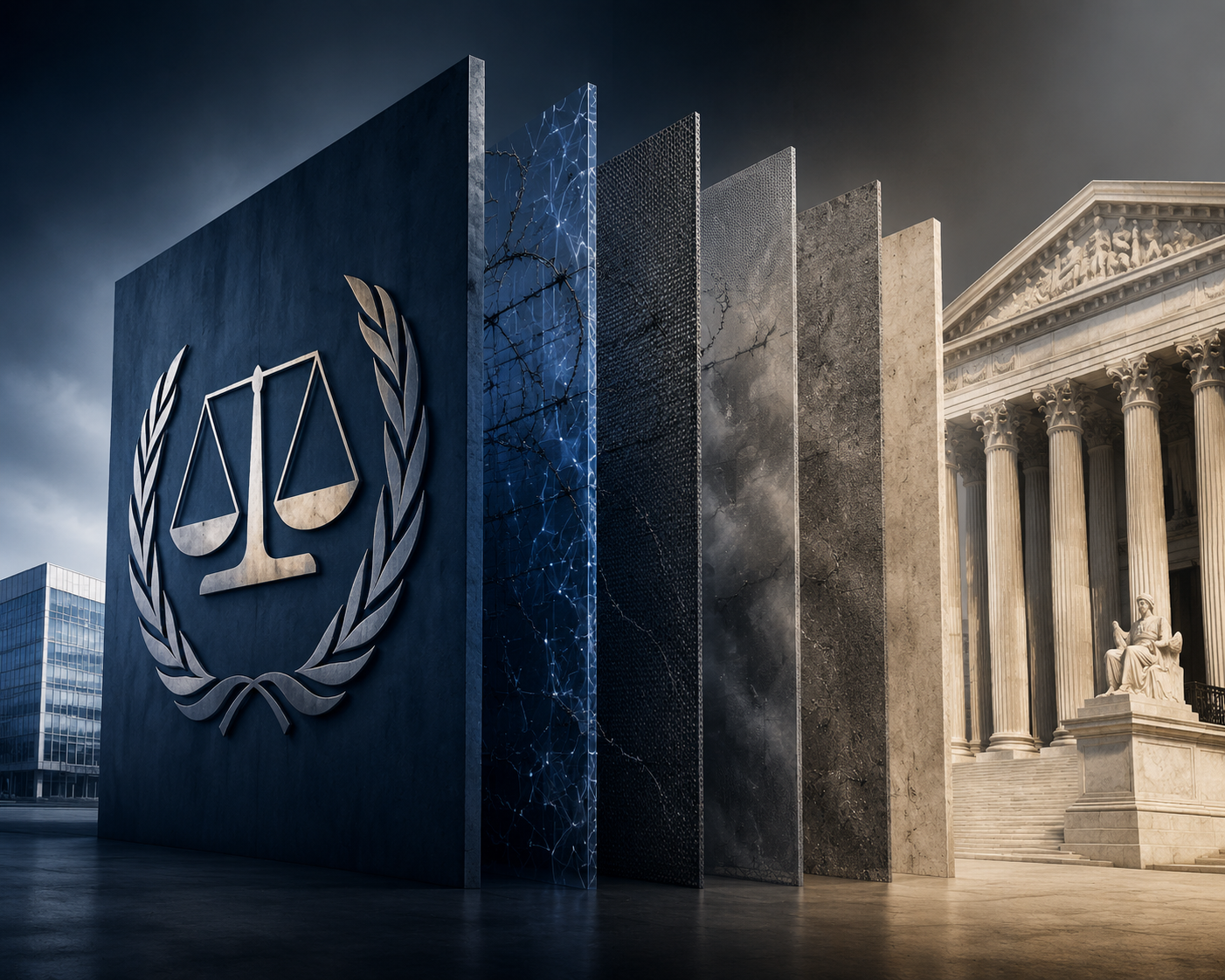
The United States Has No Rome Statute Duty To Arrest
The simplest barrier is treaty status. The United States is not a party to the Rome Statute. It therefore has no Rome Statute obligation to cooperate with ICC arrests, surrender suspects, or give domestic effect to ICC warrants. That is not a merits ruling on the allegations; it is a consequence of non-membership.
Rome Statute states parties occupy a different position. They accept cooperation duties under Part 9 of the Statute, subject to disputes over immunity, complementarity, domestic implementation, and political will. The United States has not accepted that framework. A mayor cannot supply by municipal declaration what the federal government has not undertaken by treaty.
This is why comparisons to European or Latin American Rome Statute members can mislead when imported into a New York setting. In a state party, the hard question may be whether national law implements the cooperation duty and whether immunity blocks surrender. In the United States, the threshold question is more basic: what legal instrument authorizes a local officer to detain a foreign head of government on the basis of a foreign tribunal’s warrant? The Rome Statute is not that instrument.
A City Cannot Conduct Its Own Foreign Criminal Policy
The pledge then runs into constitutional structure. Foreign affairs are not a field in which a city can improvise merely because the moral stakes are international. The federal government controls recognition, diplomatic relations, treaty obligations, sanctions policy, and the legal consequences of dealing with foreign leaders. A municipal arrest of a sitting foreign prime minister on an ICC warrant would not be an ordinary local policing decision. It would be an attempt to make national foreign policy through handcuffs.
The relevant doctrine is broader than express preemption by a particular statute. The Supreme Court’s foreign-affairs cases, including Zschernig v. Miller, recognize that state action may be constitutionally suspect when it intrudes into foreign affairs even without a direct treaty conflict.[4] That dormant foreign-affairs principle is not an all-purpose veto over every local statement about world events, but an arrest of a foreign head of government is far from symbolic procurement policy or a council resolution. It would alter the United States’ dealings with another sovereign at the most coercive point of state power.
New York’s own state government has signaled the same limit in less doctrinal language. Governor Kathy Hochul responded to Mamdani’s pledge by saying, “The New York City mayor does not have the power to do that.”[5] That statement is not itself a full preemption opinion, but it identifies a practical defect that lawyers in city government would have to confront immediately: the mayor does not command an independent foreign-affairs apparatus, and the New York Police Department does not acquire federal arrest authority because City Hall announces a position on the ICC.
The chain of authority matters. The ICC issued the warrant. Rome Statute parties may have treaty-based cooperation duties. The United States has chosen not to be a party. Federal officials, not municipal officials, control the nation’s foreign relations. State and local officers generally need domestic legal authorization to arrest. At no point in that chain does a New York mayor receive power to execute foreign criminal process against a visiting head of government.
| Question | Legal Answer Under Current U.S. Law |
|---|---|
| Did the ICC issue an arrest warrant? | Yes. The warrant was issued by ICC Pre-Trial Chamber I on November 21, 2024. |
| Does the United States have a Rome Statute duty to execute it? | No. The United States is not a Rome Statute party. |
| Can New York City independently enforce it? | No. Foreign affairs and foreign criminal cooperation are federal matters, not municipal powers. |
| Would immunity questions disappear because the ICC issued the warrant? | No. Article 27 and Article 98 create a serious dispute for non-party-state officials. |
| Do federal statutes make cooperation easier? | No. Existing federal law restricts state and local cooperation with the ICC. |
Head-of-State Immunity Is Not Erased At The Curb
International-law readers will rightly resist a crude version of the immunity argument. The Rome Statute does not treat official capacity as a defense before the Court. Article 27 provides that official position, including as a head of state or government, does not exempt a person from criminal responsibility under the Statute.[6] That provision is central to the ICC’s design. It is why the Court can issue warrants that would be impossible under older assumptions about personal status and impunity.
But Article 27 does not answer every question about third-state arrests. Article 98 separately restricts the Court from requesting surrender or assistance that would require a requested state to act inconsistently with its obligations concerning the immunity of a person of a third state, unless the Court first obtains that third state’s cooperation.[6] That tension is familiar from the Omar al-Bashir litigation and from the continuing debate over whether customary international law permits, requires, or forbids arrests of sitting leaders of non-party states when the Security Council has not removed immunity.[6]
Netanyahu’s position sharpens the problem. Israel is not a Rome Statute party. The warrant’s jurisdictional basis is territorial, through Palestine’s party status, rather than Israel’s consent. Whatever one thinks the ICC may do inside its own legal order, a U.S. local officer attempting an arrest would face the domestic-law question whether a sitting foreign head of government enjoys immunity from coercive process. In the United States, that inquiry is not for a police precinct or mayoral legal memo to resolve ad hoc.
U.S. courts traditionally give substantial weight to the executive branch on status-based immunity for foreign officials. The reasons are not sentimental. Recognition, diplomatic contact, and reciprocal treatment of U.S. officials abroad sit in the foreign-affairs core. If a local arrest were attempted without federal authorization, immunity would not be a polite objection raised later; it would be one of the first reasons the arrest could not lawfully proceed.
Federal Statute Also Cuts Against Local Cooperation
The statutory barrier is not subtle. The American Service-Members’ Protection Act, codified at 22 U.S.C. § 7421 et seq., was enacted to limit U.S. support for the ICC and restrict cooperation by federal, state, and local agencies with the Court.[4] Its title understates its reach. The statute is not confined in practical effect to service members standing at a base gate; it reflects a congressional decision that cooperation with the ICC is a matter tightly controlled by federal law.
For a city, that matters operationally. Arrests require personnel, databases, detention space, transport, judicial presentment, and communications with other authorities. A mayoral promise cannot sever those acts from federal restrictions on ICC assistance. If the city were asked to use police resources to execute an ICC warrant, the legal question would not be whether the mayor supports accountability. It would be whether city employees are being directed to cooperate with an international criminal court in a way Congress has prohibited or reserved.
This is where the pledge collapses as an instruction to government employees. Campaign language can survive ambiguity; arrest commands cannot. Officers need lawful authority before they detain someone. Agency counsel need a statutory basis before they expose the city to litigation and diplomatic conflict. Command staff need to know which sovereign is responsible for the consequence. The ASPA barrier does not merely make the arrest politically inconvenient. It helps explain why a city lawyer would have to say no before the first operational plan was written.

Mamdani’s Own Limitation Does Some Legal Work
Mamdani, elected New York City mayor in November 2025, has been reported as saying he would honor the ICC warrant if Netanyahu came to New York, while also acknowledging that he would not “rewrite laws” to do so.[7] That caveat is more important than the campaign exchange around it. If no law authorizes the arrest, the caveat swallows the pledge as a matter of governance.
There is still political meaning in saying that a city should not welcome a leader subject to an ICC warrant. A mayor can shape protocol, public rhetoric, and some municipal choices at the edges of diplomatic events. But an arrest is not an edge case. It is a seizure of a person, justified only by law, and followed by custody, court process, or transfer. The moment the promise becomes literal, it exits the realm where mayors have room to signal values and enters a field governed by federal authority, immunity, and statute.
The Enforcement Crisis Is Real, But It Does Not Enlarge City Power
The global enforcement record also counsels precision. In April 2025, Netanyahu visited Hungary without being arrested, even though Hungary was still a Rome Statute state party at the time; Prime Minister Viktor Orbán announced Hungary’s withdrawal, but Rome Statute withdrawal requires a one-year notice period before taking effect.[8] That episode belongs to the broader compliance crisis around the Israeli-leaders warrants, discussed in the companion analysis of the ICC arrest warrants for Israeli leaders.
Hungary’s non-arrest should not be overused. It does not prove that no state party can ever execute the warrant, and it does not erase the cooperation duties that Rome Statute members may face. It does show something narrower and useful: even states with a clearer treaty relationship to the ICC may resist execution when the target is a sitting leader and the diplomatic stakes are high. The United States and New York City sit even further away from an enforceable duty.
The political response in Washington points in the same direction, but it should be kept in its proper category. Representative Elise Stefanik announced the Sovereignty Enforcement Integrity Act in September 2025 as a proposal aimed at preventing state and local enforcement of ICC warrants against U.S. allies and officials.[9] As proposed legislation, it is not current law. Its relevance is evidentiary, not operative: members of Congress saw local ICC-enforcement pledges as a federal-sovereignty problem and moved to foreclose them more explicitly.
Why The Warrant Can Matter Even If New York Cannot Execute It
None of these barriers invalidates the ICC warrant. They operate in a different legal system. The ICC may maintain the warrant, Rome Statute states may have to decide how to handle travel by covered individuals, and the warrant may continue to affect diplomacy, aviation planning, official visits, and the political costs of non-cooperation. The United States’ refusal to join the Rome Statute does not make the Court disappear.
Nor does unenforceability in New York resolve the underlying allegations. The warrant alleges grave crimes, and the ICC’s standard at the arrest stage is not the same as conviction after trial. Israel’s objections, complementarity arguments, the prosecutor’s institutional controversies, and the Court’s jurisdictional theory all remain part of the international-law debate. A municipal arrest pledge is simply the wrong vehicle for resolving any of that.
Under current U.S. law, the legal answer is layered but not close. The United States has no Rome Statute duty to execute ICC warrants. New York City cannot conduct independent foreign criminal policy. Head-of-state immunity would pose an immediate obstacle for a sitting leader of a non-party state. Federal statutes restrict state and local cooperation with the ICC. Each barrier is enough to stop the arrest pledge; together, they make it unenforceable even while the ICC warrant remains legally meaningful internationally.
References
- Situation in the State of Palestine: ICC Pre-Trial Chamber I rejects the State of Israel’s challenges to jurisdiction and issues warrants of arrest for Benjamin Netanyahu and Yoav Gallant, International Criminal Court, November 21, 2024
- Nuts & Bolts of the International Criminal Court Arrest Warrants in the “Situation in Palestine”, Just Security
- The ICC’s Unsurprising Decision on Arrest Warrants for Netanyahu, Gallant, and Deif, Lawfare
- Local Threats, Global Warrants: Mamdani, the ICC, and Constitutional Boundaries, University of Miami International and Comparative Law Review
- Hochul says NYC mayor ‘does not have the power’ to arrest Netanyahu, The Times of Israel
- The ICC arrest warrants against Deif, Netanyahu and Gallant explained, Chatham House
- Zohran Mamdani says he would arrest Netanyahu if elected NYC mayor, Anadolu Ajansi
- Hungary says it will quit ICC as Netanyahu visits despite arrest warrant, Reuters, April 3, 2025
- Stefanik Introduces Sovereignty Enforcement Integrity Act, House.gov, September 2025
Comments
Join the discussion with an anonymous comment.