
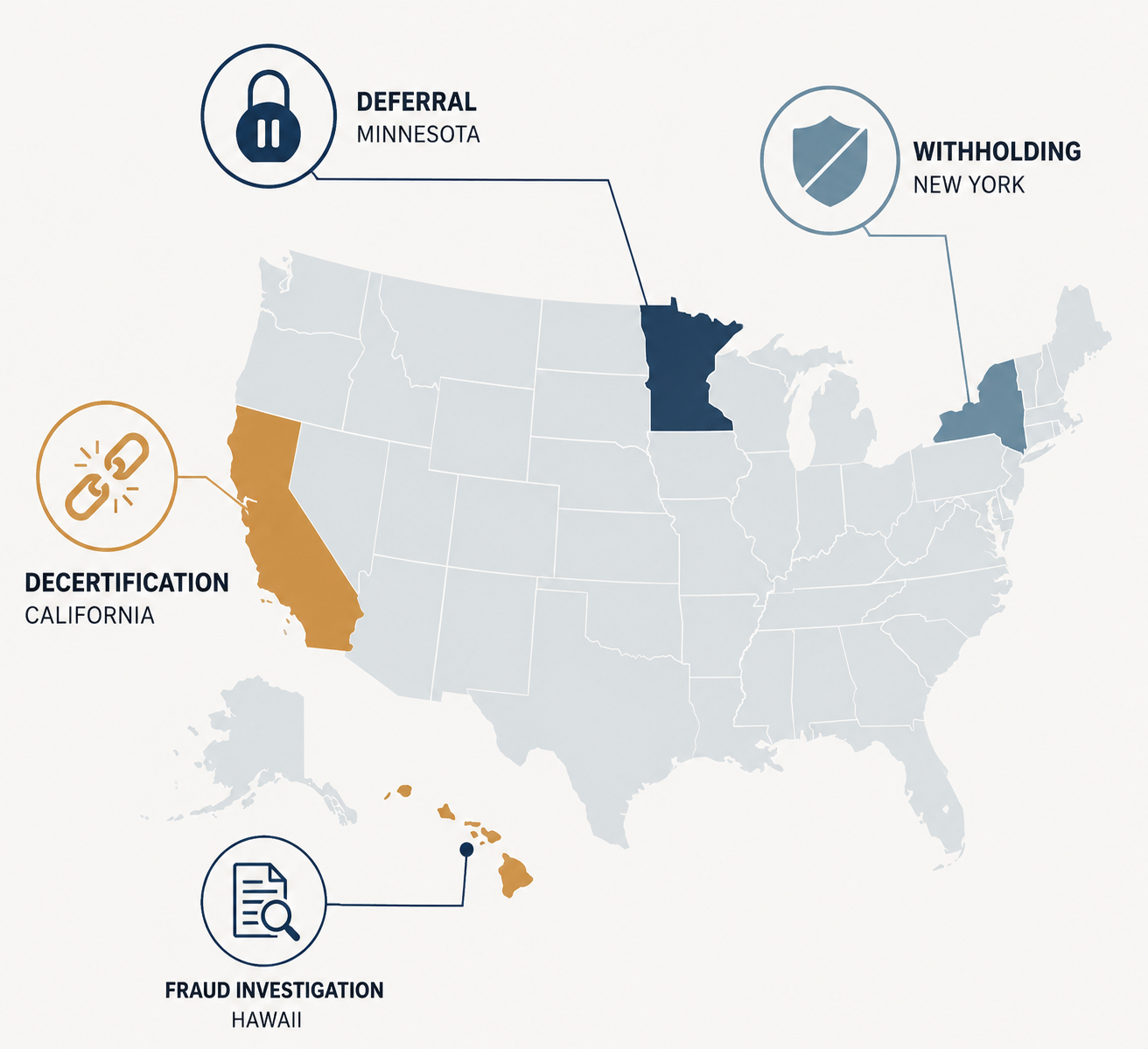
Minnesota is the cleanest place to start because it shows the legal shape of the freeze better than the rhetoric around it. CMS announced it was halting some Medicaid payments to the state on fraud allegations, then Minnesota sued over a $243 million deferral after the agency had already announced $259.5 million in deferred funds [1][2]. The problem for litigators is not whether fraud enforcement can exist; it is that CMS appears to have paired a prospective withholding with a retroactive deferral against the same service categories.

Minnesota Sets the Procedural Problem
Judge Tostrud called the $243 million deferral historically unprecedented, and the record says it was 15 times larger than any prior Medicaid deferral. Even so, he refused to enjoin it because the administrative process had not concluded, which made the challenge premature on ripeness grounds. That is the narrow point worth keeping: the court did not reach the due-process, APA, or statutory-authority claims on the merits, and it treated JD Vance's "turn the screws" comment as insufficient by itself to show bad faith [3].
One Tool, Then Another
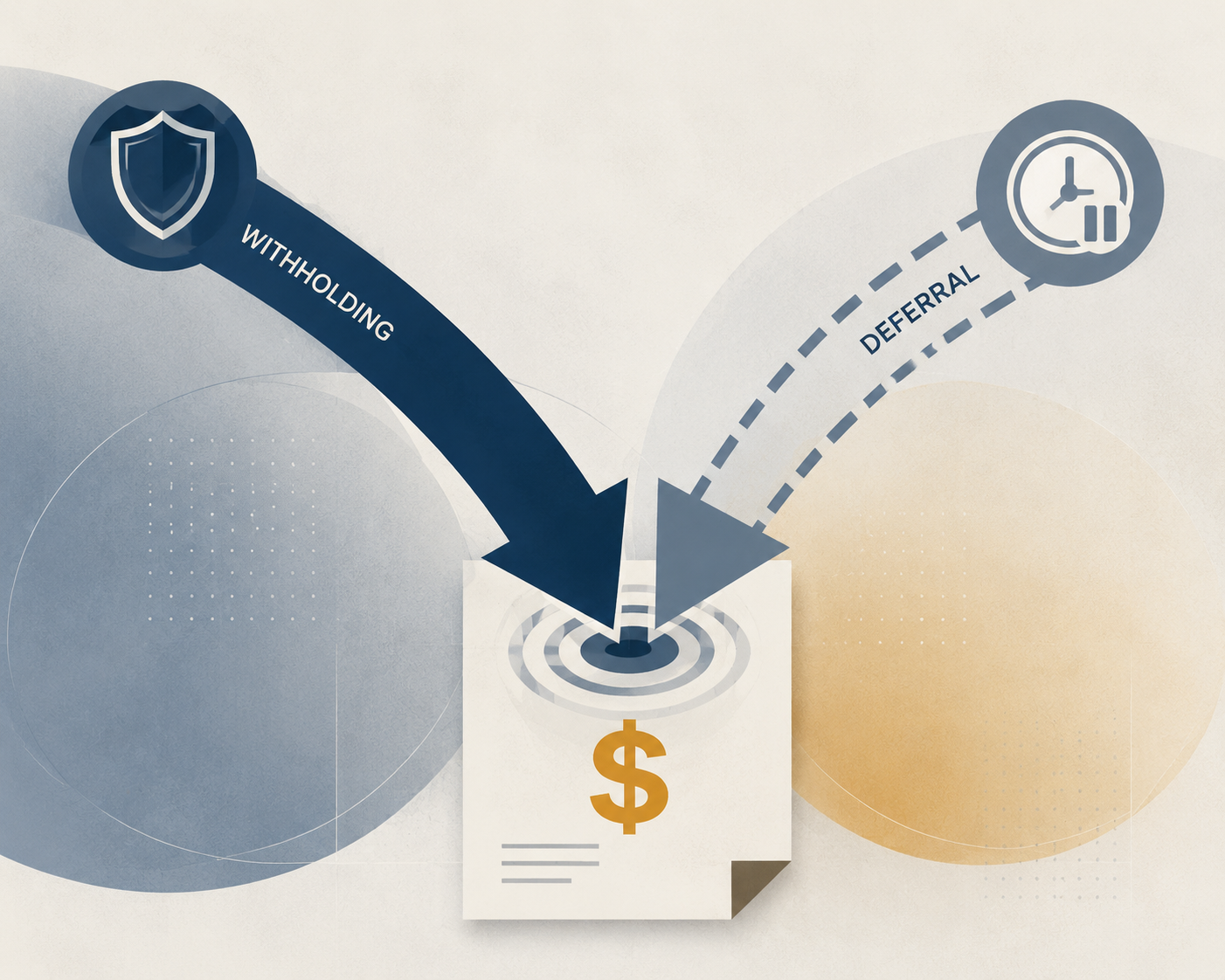
The dual-authority move is what sets Minnesota apart from a routine payment dispute. CMS was not simply freezing money; it was layering future withholding and retroactive deferral over the same categories, a sequence critics at CBPP said reads as a pretext to weaken Medicaid and punish particular states [1][2][4]. Whether one agrees with that characterization or not, the legal problem is concrete: each mechanism has its own record, timing, and review path, and stacking them makes it easier for the agency to keep pressure on while the litigation clock runs.
California Shows Scale
California adds scale, not clarity. CMS called the $1.1 billion IHSS freeze the "largest ever," but California pointed to three mundane explanations for program growth: a 17.5 percent caseload increase from 2023 to 2025, wages rising from $19 to $21 an hour, and higher-acuity patients moving out of nursing facilities [5]. Those facts do not settle the fraud question, but they do show why a spending spike is not the same thing as proof of misconduct.
New York Gets Two Fronts
New York is the clearest example of pressure arriving from two directions. On June 16, DOJ sued over alleged sham bidding in the state's $10 billion Consumer Directed Personal Assistance Program, and on June 30 HHS OIG cut funding for New York's Medicaid Fraud Control Unit [6][7]. Federal officials also pointed to the unit's low output, saying it had produced only 8 to 9 indictments a year compared with far more in peer states [7].
Hawaii Shows the Grant Lever
Hawaii is narrower, but it tests a different lever. HHS OIG decertified the state's Medicaid Fraud Control Unit, said it had recorded zero criminal indictments from 2022 through 2025, and cut about $3 million in funding [8]. That is not the same thing as denying claims or clawing back payments from a provider; it is grant-compliance pressure aimed at the enforcement arm itself.
What remains unresolved is the part administrative lawyers actually care about. Minnesota shows that ripeness can postpone a merits ruling even when the money pressure is immediate [3]. California, New York, and Hawaii show that CMS and HHS are willing to use different authorities in parallel, sometimes against the same service ecosystem and sometimes against the state's anti-fraud unit. The open question is whether that architecture fits inside a recognizable statutory path, or whether CMS has stitched together tools that no court has yet approved on the merits [3].
References
- US halts some Medicaid payments to Minnesota, alleging fraud - Reuters, 2026-02-25
- Minnesota sues Trump over $243 million in withheld Medicaid funding - Courthouse News
- Judge refuses to block Trump's $243 million Medicaid deferral in Minnesota - Courthouse News
- Federal Government's Attacks on Medicaid Are a Pretext to Weaken the Program and Punish Particular States - CBPP
- Trump officials hit California with 'largest ever' freeze on Medicaid funds - CalMatters
- Department of Justice Files Suit to Stop Ongoing Medicaid Fraud Related to New York's $10 Billion Home-Care Program - Department of Justice, 2026-06-16
- Trump cuts New York funding for Medicaid fraud unit - Reuters, 2026-06-30
- Trump cuts off funds to Hawaii Medicaid fraud unit over lack of cases - Reuters, 2026-06-04
Comments
Join the discussion with an anonymous comment.