
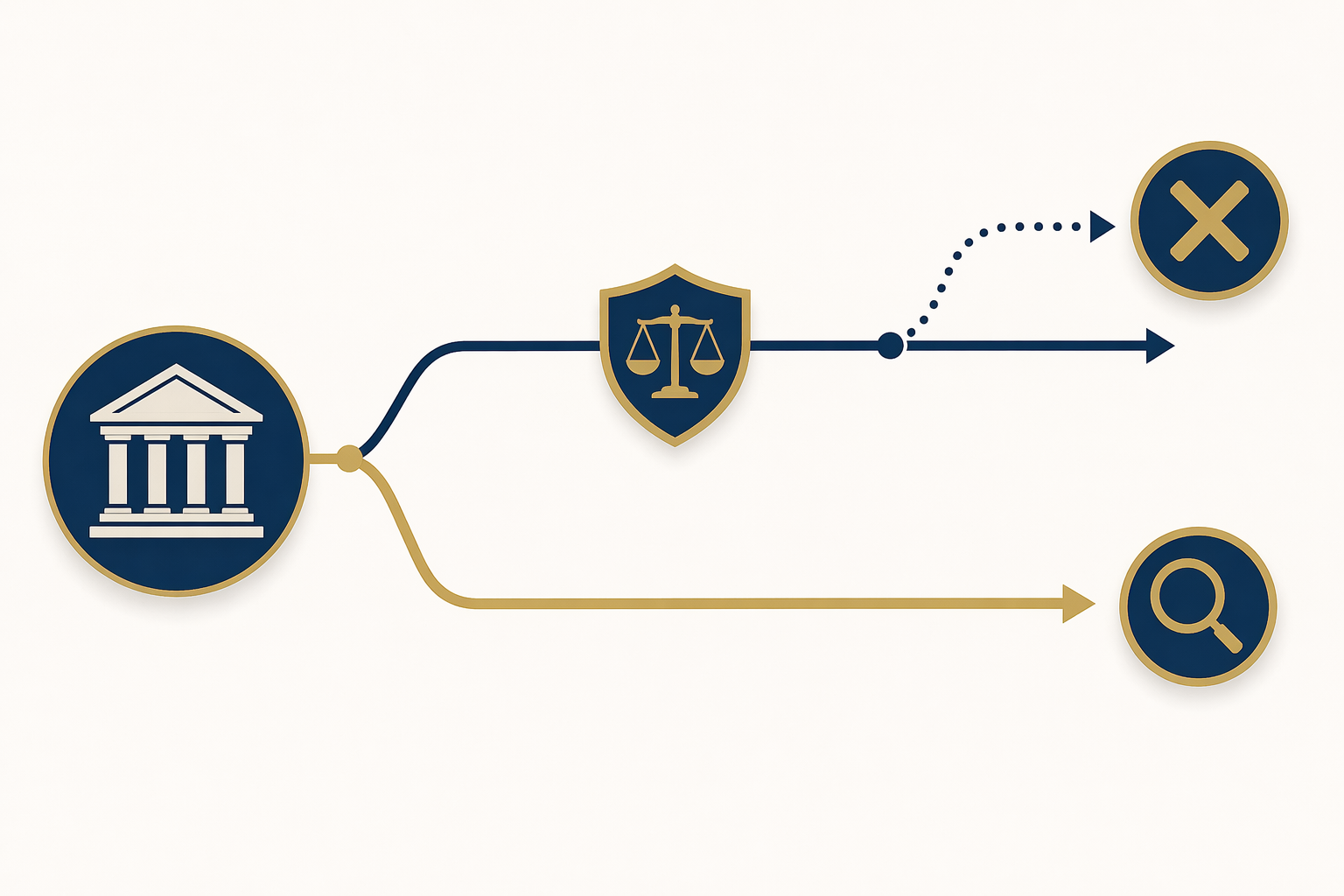
The phrase "the Nolan Wells family denied the autopsy" gets the legal posture backward. On the record available so far, the family did not invoke Mississippi's objection rule to stop a state exam; it pursued a separate private autopsy after the state released the body. That distinction matters because Mississippi law gives surviving spouses, or if there is no spouse, surviving parents, a real power to object to a state autopsy, but the objection operates inside the state process rather than as a general veto over every postmortem examination. [1][2][3][4]
What Mississippi law actually does
| Provision | What it means |
|---|---|
| Mississippi Code § 41-37-25 [2] | No autopsy may proceed over the objection of the surviving spouse, or if there is none, a surviving parent. |
| Mississippi DPS guidance [1] | Families may object on religious, cultural, or other grounds; pathologists make every effort to honor those wishes, and if the physician's duty cannot be fulfilled the family may petition a court before the autopsy proceeds. |
| Mandatory autopsies [1] | Mississippi says autopsies are mandatory only for children under 2 with unknown cause of death and for deaths in prisons or jails; other suspicious deaths are recommended, not required. |
That combination is strong on paper and narrow in practice. It can stop the state from moving forward, but it does not require the state to perform the exact examination the family wants. If the state releases the body, the family may still have to fund its own pathologist and build its own record after the fact.

Why the Wells case is a useful test
The Wells timeline shows the gap cleanly. Reporting places his disappearance on July 4, the recovery of his body on Horn Island on July 6, Mississippi's state autopsy on July 7, and the release of independent autopsy findings on July 22 at an NAACP event in Washington, D.C. The second exam was funded by Colin Kaepernick's Know Your Rights Foundation and was arranged so the family could use a pathologist with no ties to Mississippi law enforcement. [3][4]
That sequence matters because it is not a refusal in the statutory sense. It is a workaround after release. The state keeps its investigative file. The family gets a parallel examination. Those are different legal routes, and they create different timing, cost, and evidentiary consequences.
What the split means
Mississippi's objection regime sits toward the protective end of the map, and general autopsy-rights references show that family control over postmortem exams varies widely by state. That is why the phrase "family objection" cannot be treated as a uniform national rule; in some places it carries real blocking power, and in others it is much thinner. [5][6]
The deeper point is the asymmetry. Mississippi gives families a powerful way to stop a state autopsy, but the Wells sequence shows that it does not give them a symmetrical way to force the state to do one on the family's terms. HB1180 points to that gap by proposing a court path when the state declines. The routes still differ in cost, timing, and evidentiary effect.
References
- Mississippi Department of Public Safety FAQ — Mississippi Department of Public Safety — https://www.dps.ms.gov/faq
- Mississippi Code § 41-37-25 — Justia — https://law.justia.com/codes/mississippi/title-41/chapter-37/section-41-37-25/
- Nolan Wells investigation timeline — AP News — https://apnews.com/article/nolan-xavier-wells-ben-crump-mississippi-naacp-b620c2bedf4c05d2a460b5bb1e7ee02e
- Ben Crump to release Nolan Wells second autopsy findings at NAACP event July 22 — Clarion Ledger — 2026-07-21 — https://www.clarionledger.com/story/news/2026/07/21/ben-crump-to-release-nolan-wells-second-autopsy-findings-naacp-event-july-22/90995942007/
- Autopsy Rights — Legal Information Institute, Cornell Law School — https://law.cornell.edu/wex/autopsy_rights
- Autopsy Laws by State 2026 — World Population Review — https://worldpopulationreview.com/state-rankings/autopsy-laws-by-state
Comments
Join the discussion with an anonymous comment.