
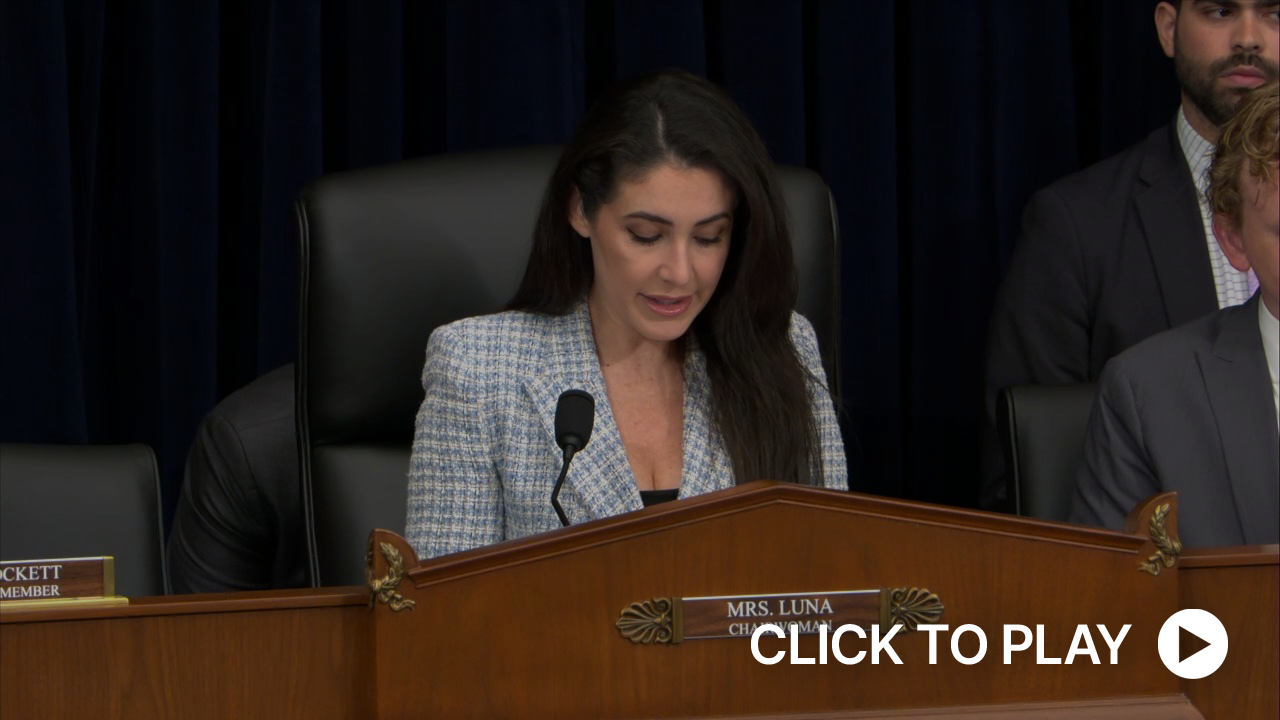
The June 30, 2026 House Oversight hearing on MKULTRA put a harder question back on the table than the familiar one about whether the CIA’s Cold War conduct was indefensible. The public record now includes renewed testimony about nonconsensual experimentation, congressional deception, file destruction, and a 1963 internal finding that the program exceeded the CIA’s legal charter.[1] That is enough to reignite the liability question. It is not enough, by itself, to create a liability path.
That distinction is where the legal issues begin to matter. A congressional hearing can sharpen the record, expose contradictions, and put names, dates, and destroyed files into a public sequence. A damages case asks different questions: who can be sued, whether the sovereign has waived immunity, whether the claim is timely, whether a constitutional remedy exists, and whether the plaintiff can obtain the records needed to prove what happened.
Stephen Kinzer’s testimony gave the hearing its bluntest moral vocabulary, describing MKULTRA as “medical torture.”[2] Journalist Tom O’Neill told the committee that Congress had been misled during the 1977 hearings and testified that the number of people affected could reach “tens of thousands,” a claim that should be treated as witness testimony rather than an adjudicated finding.[3] Rep. Anna Paulina Luna focused on former CIA Director Richard Helms’s destruction of 152 files, characterizing it as obstruction of justice and criminal destruction of federal records.[4] The National Security Archive has also emphasized that a 1963 CIA Inspector General report found MKULTRA had exceeded the agency’s legal charter.[5]
Those details matter because they are not simply atmospheric. Destroyed files affect proof. Misled investigators affect tolling arguments and congressional oversight. An internal finding about legal authority affects the difference between unauthorized misconduct and merely ugly policy. But in U.S. court, even facts this concrete run into doctrines designed to stop certain cases before discovery.
The first problem is the defendant
A viable MKULTRA damages case needs more than a victim and a government program. It needs a defendant who can be sued. The United States generally cannot be sued unless it consents. Federal officers may be sued in some constitutional tort cases, but courts have narrowed those remedies sharply. Intelligence contractors, universities, hospitals, and physicians raise their own problems: limitations periods, missing records, government-contractor defenses, causation, personal jurisdiction, successor liability, and proof that a particular plaintiff was exposed to a particular intervention.
That is why the most vivid facts from the hearing do not map neatly onto a complaint. If Helms destroyed files, the missing files may explain why victims cannot prove their cases; they do not automatically supply a private damages remedy. If congressional investigators were misled in 1977, that may strengthen the political case for declassification or a compensation statute; it does not necessarily waive sovereign immunity. If MKULTRA exceeded the CIA’s charter, the next legal question is still whether any court may award damages for that violation.
The answer has often been no. Not because the conduct became acceptable with age, and not because courts found the victims unbelievable as a class. The barriers are structural.
Stanley shows the doctrine at its harshest
The central U.S. case is United States v. Stanley. James Stanley, an Army master sergeant, alleged that he was secretly given LSD as part of Army chemical-warfare testing and suffered severe consequences. The Supreme Court held in 1987 that he could not bring a Bivens damages claim because his injuries arose “incident to service.”[6]
That phrase does a large amount of work. Under the Feres doctrine, service members generally cannot recover damages from the United States under the Federal Tort Claims Act for injuries incident to military service. Stanley extended the same basic barrier into the Bivens context, refusing to create a constitutional damages remedy even where the alleged wrong was involuntary LSD dosing rather than battlefield judgment or ordinary military discipline.[6]
The dissenting opinions understood what was being lost. Justice Brennan invoked the Nuremberg Code and warned against insulating nonconsensual human experimentation from remedy. Justice O’Connor wrote separately that no judicially crafted doctrine should bar a service member from suing over a secret program of human experimentation.[6] The dissents are morally powerful. They are not the rule.
For MKULTRA claimants connected to military service, Stanley is the hardest gate. It means that a plaintiff can allege involuntary drugging, long-term psychiatric injury, and official concealment and still lose before reaching ordinary factual development if the court characterizes the injury as incident to service. The doctrine does not deny that the event happened. It denies the forum.
| Claim Type | Likely Legal Barrier | Practical Result |
|---|---|---|
| Service member alleges secret LSD exposure during a government program | Feres doctrine and United States v. Stanley | No Bivens remedy if injury is treated as incident to service |
| Civilian sues the United States for experimentation-related torts | Sovereign immunity and FTCA limits | Claim fails unless a waiver applies and no exception restores immunity |
| Victim seeks CIA records to prove exposure or identify researchers | FOIA Exemption 3 and CIA v. Sims | Agency may withhold protected intelligence-source information |
| Survivor seeks compensation through Congress | No general statutory compensation scheme | Relief depends on an exceptional political act |
Sovereign immunity turns misconduct into a waiver question
For civilians, the initial barrier is different but just as unforgiving. The United States is immune from suit unless Congress has waived that immunity. The Federal Tort Claims Act waives immunity for some torts by federal employees, but the waiver is limited, and exceptions matter as much as the waiver itself. Intentional abuse, discretionary functions, foreign conduct, national-security programs, and claims entangled with official policy decisions can each create dismissal terrain before a court reaches the merits.
This is where broad descriptions of MKULTRA as illegal government experimentation can mislead readers. Illegality is not the same as consent to be sued. A plaintiff still has to plead a claim inside the statute Congress wrote. If the claim falls outside the FTCA waiver, or inside one of its exceptions, the court lacks authority to award damages against the United States.
The hearing record makes the waiver problem more frustrating, not less. A program that allegedly exceeded the CIA’s legal charter sounds like exactly the kind of government conduct that should face judicial testing. Yet sovereign immunity asks whether Congress opened the courthouse door for that kind of claim. The sharper the evidence becomes, the more conspicuous the absence of a general MKULTRA compensation statute looks.
The exceptions prove the point. Frank Olson’s family received a $750,000 settlement by special act of Congress in 1975, not through a generally available MKULTRA damages pathway.[5] Canada later made C$100,000 payments to 77 victims in 1992 for humanitarian reasons, with no admission of liability.[8] Those payments matter because they show governments could identify at least some victims and provide relief. They also show how ad hoc the relief was.
The record problem is also a law problem
MKULTRA litigation is unusually dependent on records because many victims could not have known, at the time, what was done to them or under whose authority. Destroyed files therefore do more than offend archival norms. They interrupt causation, identification, limitations arguments, class membership, and damages proof.
But record access has its own barrier. In CIA v. Sims, the Supreme Court held that the CIA could withhold the identities of MKULTRA researchers under FOIA Exemption 3. The Court accepted the CIA’s broad authority to protect intelligence sources and credited the idea that seemingly small pieces of information could reveal protected intelligence relationships when assembled with other material.[7]
Sims is not a damages case, but it affects damages cases in the way discovery-adjacent secrecy rules often do: it controls access to the proof that would let victims connect institutions, doctors, fronts, funding, and individual injuries. The so-called mosaic theory does not have to refute a survivor’s account. It allows the agency to argue that disclosure itself creates an intelligence harm.
The June 2026 testimony makes this especially bitter. Congress is again asking about deception and destruction, while the Supreme Court’s FOIA doctrine still gives the CIA substantial room to withhold intelligence-source information. A victim can be told, in effect, that the files were destroyed, the remaining files are protected, and the claim is too old or too immune to litigate.
The Canadian action is real, but it is not a U.S. workaround
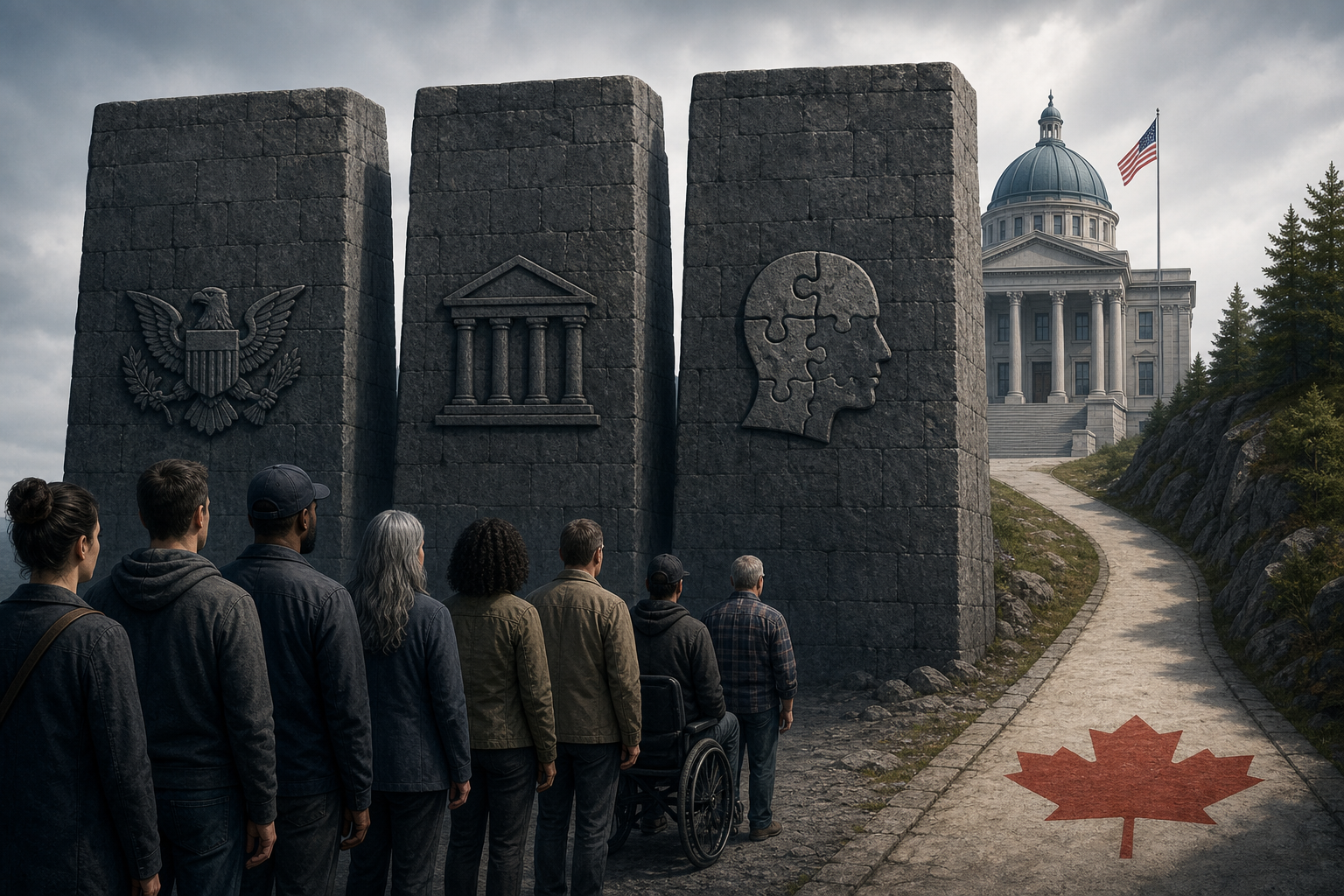
The live litigation avenue most worth watching is in Quebec. In July 2025, the Quebec Superior Court authorized a class action brought by representatives Lana Ponting and Julie Tanny over the Montreal experiments associated with Dr. Ewen Cameron at the Allan Memorial Institute.[8] Authorization is important. It is not a merits ruling.
The Montreal allegations have the kind of institutional specificity U.S. plaintiffs often lack. Cameron’s “depatterning” practices have been described as involving induced comas, paralytic drugs, unusually intense electroshock, and repeated audio messages. Reporting on the class action states that Cameron received CIA-linked funding through the Society for the Investigation of Human Ecology, including $60,000 for the work.[8]
Ponting’s role also illustrates the remedial failure left by earlier compensation. She was not included in the 1992 Canadian payments because she did not yet know she was a victim.[8] That is not a procedural footnote. It is the predictable consequence of a secret medical-intelligence program: people are asked to meet legal deadlines and evidentiary burdens before they have the records needed to understand their own histories.
Even in Canada, however, the U.S. government is not an easy defendant. In October 2023, the Quebec Court of Appeal ruled 3-0 that the United States remained immune under Canada’s State Immunity Act because the alleged acts predated the 1982 statute.[9] The current Quebec class action therefore matters as a meaningful venue for claims against Canadian institutional defendants and other non-immune parties. It should not be oversold as a clean route to U.S. government liability.
Why the hearing still matters
A court-centered account can understate what a hearing can do. The June 2026 record matters because it can force agencies to answer more specific declassification demands, give legislators a basis for a compensation bill, and help survivors and families organize facts that were previously scattered across memoir, rumor, partial releases, and litigation fragments. Public record-building is not nothing.
It also clarifies what kind of accountability remains available. Criminal prosecution is not the realistic frame decades later, and the research record does not support claims that any U.S. official was criminally prosecuted for MKULTRA. Helms was fined $2,000 for lying to Congress about an unrelated matter, and Sidney Gottlieb was never charged.[5] Civil litigation, in turn, remains boxed in by Feres, sovereign immunity, and FOIA secrecy doctrine.
That leaves legislation and disclosure as the more plausible U.S. routes. Congress could create a compensation scheme. It could mandate a more aggressive declassification process. It could fund medical review, records assistance, or survivor outreach. Those would be political remedies, not the ordinary operation of tort or constitutional litigation.
In 2026, the strongest MKULTRA record yet still confronts a remedial architecture built to keep most victims from obtaining damages or records in U.S. courts. Evidence can reignite liability questions without creating a liability pathway.
References
- Mind Control and Accountability: Uncovering the Truth of the CIA’s MKULTRA Project, House Oversight Committee
- Stephen Kinzer Testifies on MKULTRA, Brown University
- House hearing MKULTRA testimony, The Hill
- Congress Reopens the CIA MKULTRA Files as Witnesses Call for Answers, Military.com
- MKULTRA Declassification Task Force Should Focus on the Real Secrets, National Security Archive, 2026
- United States v. Stanley, 483 U.S. 669 (1987), Legal Information Institute
- CIA v. Sims, 471 U.S. 159 (1985), Legal Information Institute
- MK-ULTRA depatterning lawsuit Montreal experiments CIA, CBC
- MK-ULTRA class action lawsuit U.S. immunity in Canada, CBC, 2023
Comments
Join the discussion with an anonymous comment.