
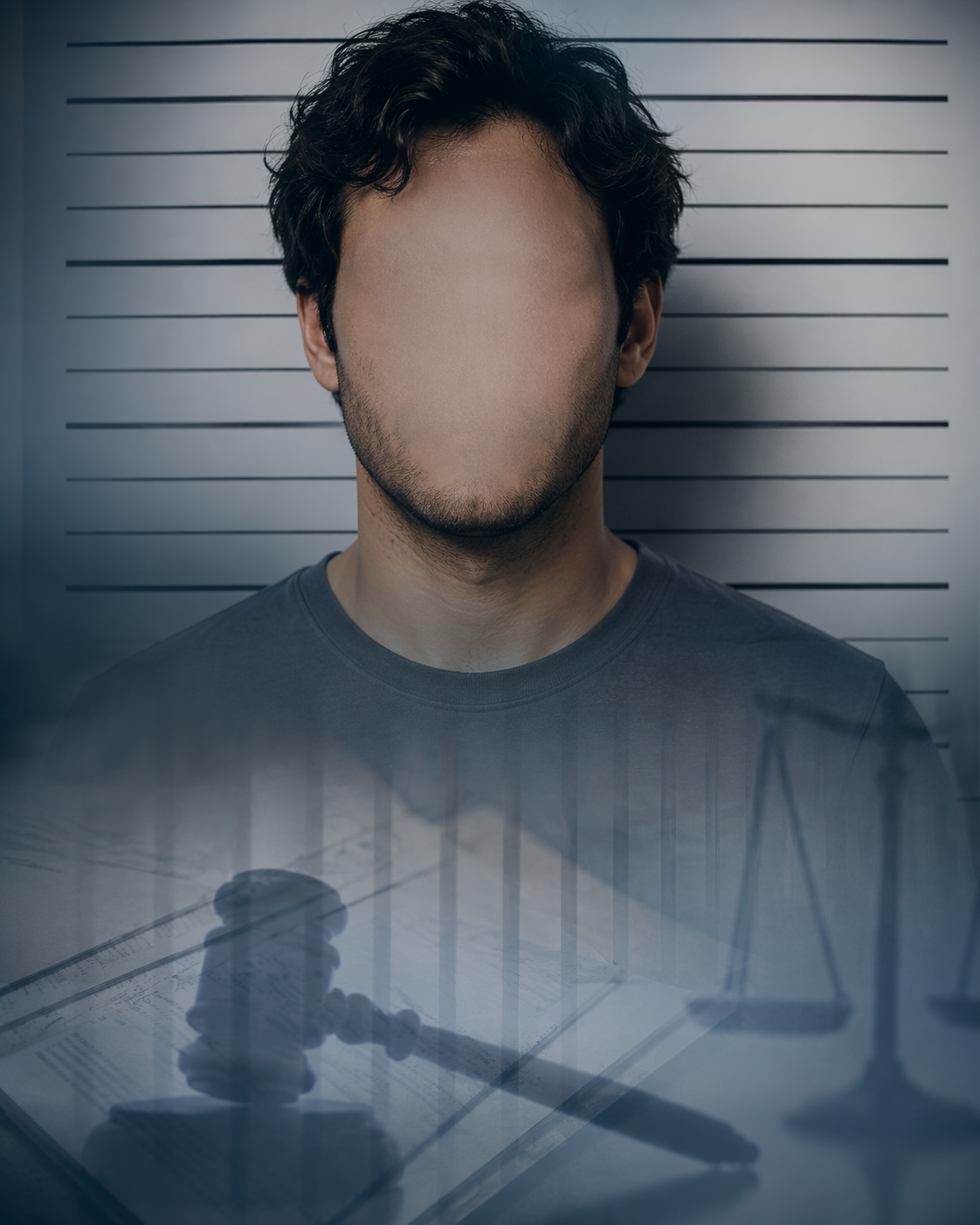
The first access fight in the legal proceedings against David Leroy French is not over a courtroom door. It is over a booking photo.
Pima County authorities identified French as the suspect in the downtown Tucson shooting and, according to Fox News Digital, the Pima County Sheriff’s Department said it “is not releasing French’s mugshot at this time, citing a ruling by the 9th U.S. Circuit Court of Appeals.”[1] That sentence does more work than it first appears to. It moves Houston v. Maricopa County out of the appellate reporter and into the daily mechanics of a high-attention criminal case: intake, booking, hospital custody, public information requests, newsroom image choices, and the pressure to show the face of the person the government says it arrested.
There is an important caveat at the threshold. The public record available here is a media report of the Sheriff’s Department’s position, not a published Pima County legal memorandum or written policy explaining how the department reads the 9th Circuit’s ruling. That matters because the legal question is not simply whether an agency may stop posting mugshots on its own website. The sharper question is whether Houston is being treated as a reason not to release a particular booking photo at all, including in response to press inquiries or other access channels.
What Houston actually held
On September 5, 2024, the 9th Circuit held in Houston v. Maricopa County, 116 F.4th 935, that posting mugshots of unconvicted arrestees on a county website violated substantive due process. The court treated the practice as pretrial punishment and rejected the county’s asserted transparency justification as lacking a rational relationship to the stated purpose.[2]
That is a strong holding, but it is not the same thing as a universal mugshot blackout. The case addressed a county’s online publication of booking photos of people who had not been convicted. It did not close criminal hearings. It did not make the existence of an arrest secret. It did not erase ordinary identifying information from every public process attached to an arrest. The difference is not lawyerly hair-splitting; it is the difference between a court telling a jail not to operate a searchable mugshot display and an agency deciding that no one outside law enforcement may receive the image.
The Tucson case is therefore a useful stress test because the public interest is unusually intense. French was arrested July 19, 2026, was hospitalized and booked in absentia, and faced 19 charges with more pending, according to local reporting. Those reports also note a prior aggravated assault conviction and intensive probation since May 2025.[3][4] Those facts explain why residents and reporters would press for confirmation, photographs, and case information quickly. They do not answer the due process question.
The practical gap between “do not post” and “do not release”
Houston is easiest to apply when the agency conduct looks like the conduct in Houston: a jail or sheriff’s office uploads booking photos of unconvicted arrestees to a public-facing website. The line becomes harder at the access desk. What happens when a reporter asks for a mugshot directly? What happens when a public records request seeks the booking packet? What happens when the suspect has been named, charged, and discussed publicly, but the image remains withheld?
If Pima County is only saying it will not post French’s mugshot online, the decision sits close to Houston. If it is saying it will not release the mugshot through any channel while French remains unconvicted, that is a broader operational rule. It may still be defensible under the county’s reading of due process, but it is not the exact fact pattern the 9th Circuit decided. The available reporting does not tell us which version the department has adopted.
That ambiguity shifts risk across institutions. A sheriff’s office that reads Houston too narrowly may keep feeding the same downstream mugshot ecosystem the 9th Circuit found constitutionally troubling. A sheriff’s office that reads it too broadly may suppress a record that journalists and community members reasonably expect to use for identification, accountability, and error-checking. Neither risk is theoretical in a mass shooting case, where the government’s charging decision carries immediate public consequence and the accused person has not been convicted.
News organizations bear their own risk. A mugshot can be a blunt instrument: it supplies a face, but it also supplies a visual accusation. Editors know the shortcut. The booking photo often appears before the probable cause statement is read closely, before defense counsel has appeared, and before the first meaningful judicial testing of the government’s account. Still, in a case with multiple victims, public safety anxiety, and fast-moving rumor, a confirmed government image can also help distinguish the arrested person from people with similar names or recycled social media photographs.
Civil rights lawyers will notice a different pressure point. Once an agency releases a mugshot to one requester, the practical ability to limit republication disappears. Even if the county never places the image on its own site, the release may produce the same permanent online record through news archives, social platforms, data brokers, or mugshot aggregators. Houston’s reasoning was aimed at government publication, but the harm the court recognized was amplified by what happened after government publication.
Why the technology mattered to the constitutional analysis
The older habit was to talk about mugshots as if they were simply records sitting in a file. Houston treated the posting practice as part of a distribution system. Before the ruling, Maricopa County maintained a three-day mugshot window on its public website; after that period, the booking photos were removed. The 9th Circuit’s concern, as summarized in subsequent coverage, was that third-party sites scraped the images during that brief window and then permanently hosted them elsewhere.[5]

That architecture changes the meaning of “temporary.” A county can remove an image after three days and still have supplied the raw material for a permanent commercial or reputational record. The person in the photograph may later have charges dismissed, receive an acquittal, or be misidentified in search results for years. The government’s own website may be fleeting; the data market built around it is not.
For legal technology analysts, that is the point worth lingering over. Houston is not only a mugshot case. It is also a case about how courts now evaluate public-sector data releases in light of automated copying, indexing, and persistence. The constitutional injury did not depend only on a single county webpage. It depended on the predictable life of the image after publication.
| Access practice | Why the distinction matters after Houston |
|---|---|
| County posts mugshots of unconvicted arrestees on a public website | This is the practice closest to the 9th Circuit’s holding in Houston. |
| County declines to post online but responds to targeted press or records requests | This may reduce bulk scraping while preserving some case-specific access, but the released image can still be copied permanently. |
| County refuses to release the mugshot through any channel while charges are pending | This is a broader operational choice; current reporting does not confirm whether Pima County has formally adopted this position. |
| Court hearings and ordinary case proceedings remain public | Houston did not close proceedings or make the underlying criminal case inaccessible. |
What remains public in the French prosecution
The absence of a released mugshot does not make the French prosecution private. The reported facts already in public circulation include the suspect’s name, arrest date, hospitalization and booking in absentia, charge count, and probation context.[3][4] Court hearings remain public; Houston did not change that. Charging documents, appearances, bond arguments, and later evidentiary proceedings are separate access points from a sheriff’s publication or release of a booking photograph.[2][5]
This is where imprecision can mislead. Saying the 9th Circuit “banned mugshots” suggests a clean, categorical rule that does not match the narrower record. Saying nothing changed would be equally wrong. Agencies in Arizona are plainly treating the decision as a live constraint on how they handle booking images, and Pima County’s reported response shows that the constraint can matter most when public demand is highest.
The timing also matters. As of July 21, 2026, the case is only two days removed from French’s arrest. A hospitalized suspect, a booking in absentia, and a major public safety prosecution can produce interim decisions that later get revised once custody status changes, lawyers appear, or agency counsel provides more formal guidance. The current posture should be read as an early application, not a final administrative settlement of what Houston requires in every future case.
Arizona is not the only jurisdiction adjusting
The 9th Circuit’s ruling controls within the circuit unless altered through later appellate action. Reporting after Houston described Arizona agencies responding to the decision, and California separately passed a 2024 law banning law enforcement from posting mugshots on social media.[6][7] Those developments are not identical. A circuit due process ruling, a state statute, a sheriff’s website policy, and a social media restriction operate through different legal mechanisms. But they point in the same institutional direction: booking images are being treated less like routine publicity and more like pretrial records with constitutional and reputational consequences.
The hard cases will not be low-level arrests that never make the evening news. They will be cases like this one, where the public wants a face immediately and the accused person’s presumption of innocence is most vulnerable to being overwhelmed by the scale of the allegation. Houston gives agencies a constitutional reason to hesitate. It does not give them a script for every access request that follows.
That is why the Pima County decision deserves attention even before a court is asked to rule on it. A precedent written about online publication is now shaping real-time public access decisions in one of Arizona’s most scrutinized criminal cases. The legal proceedings against David Leroy French will move through the ordinary channels of charging, appearance, and proof. The mugshot dispute is moving through a newer channel: the constitutional law of data permanence, agency risk management, and the shrinking space between a government upload and an indelible public record.
References
- Tucson shooting suspect charged after 9 wounded in downtown nightlife district — Fox News Digital
- Houston v. Maricopa County, 116 F.4th 935 — U.S. Court of Appeals for the Ninth Circuit, September 5, 2024
- Suspect identified in downtown Tucson mass shooting — KOLD, July 20, 2026
- Suspect identified in Tucson mass shooting — WMTV, July 20, 2026
- Ninth Circuit: Posting Jail Mugshots on Arizona County's Website Violates Substantive Due Process — Prison Legal News, April 1, 2025
- Recent circuit court ruling bans mug shots from being posted online in Arizona — KOLD, September 7, 2024
- 9th Circuit Court Rules Mugshots Posted Online Constitute Pretrial Punishment — Nava Law
Comments
Join the discussion with an anonymous comment.