
By July 22, the MV Barima case is still more investigation than accusation. No public charges have been filed, the captain and first engineer are in custody after positive cannabis tests, and the passenger record already looks unreliable because only 35 of 67 rescued passengers appeared on the manifest.[1][2] That combination matters more than the first rush of outrage, because it points to impairment, record falsification, and boarding control as the issues most likely to matter in court.
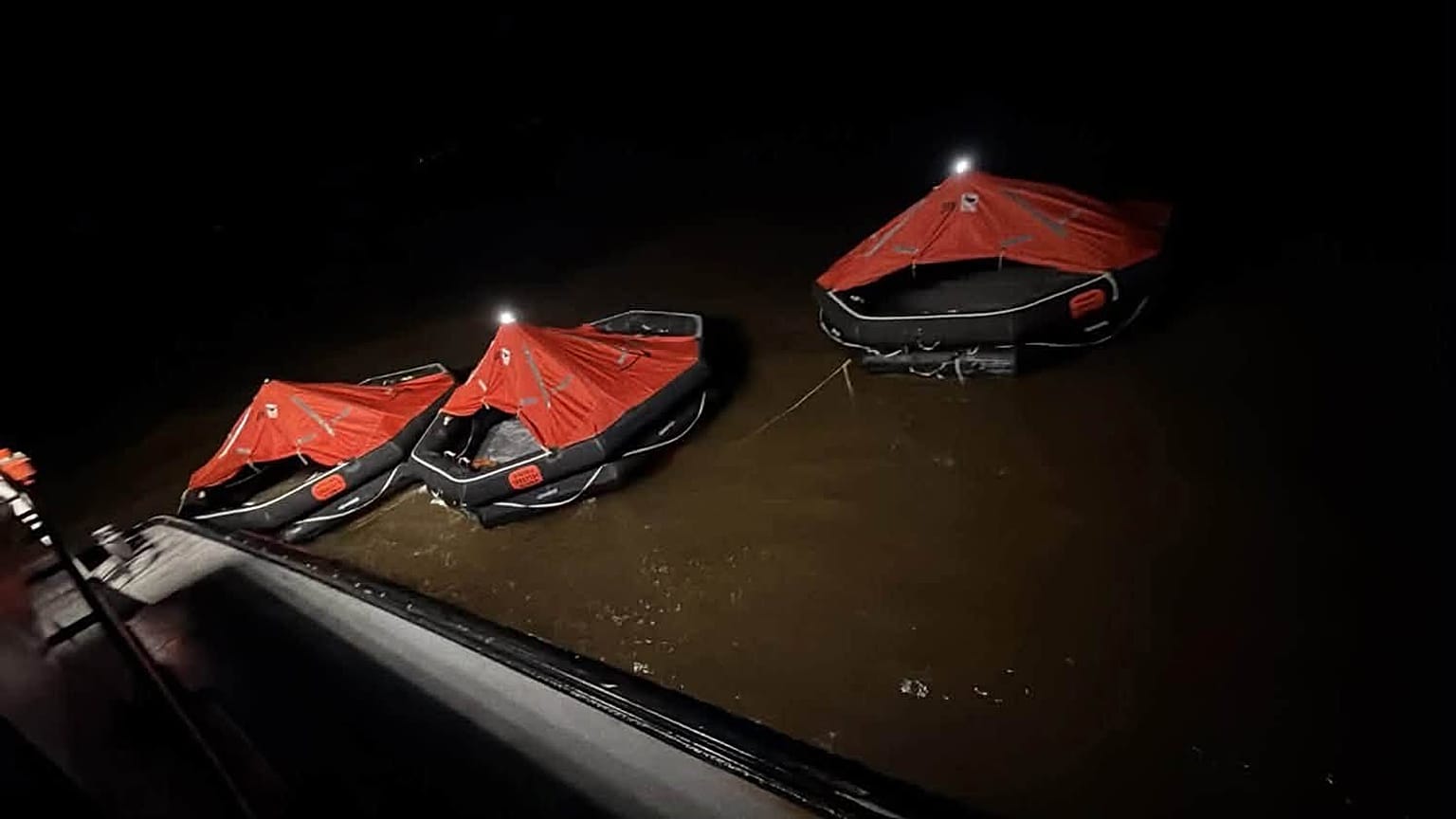
What investigators already have
The inquiry is already extending beyond the bridge. A sailor has also been detained, police have extracted CCTV from Kingston Goods Wharf, and the government suspended the entire loading-and-dispatch team to preserve evidence integrity.[3] The prime minister's public position is not a charge, but it shows the direction of travel: if negligence, misconduct, or criminal wrongdoing is established, the response is meant to be punitive rather than administrative.[3]
The passenger count itself is still unsettled. One government estimate has put 179 people aboard, while the official manifest listed 133 and the latest casualty tallies reported 77 rescued and 41 bodies recovered.[4][5] That spread matters because a prosecution built on a false manifest is trying to prove not just who died, but who was legally responsible for saying who was on the vessel in the first place.[1][2][4][5]
Where criminal exposure can attach
On the materials available, Guyana will likely have to build this case from general homicide and negligence concepts under the Criminal Law (Offences) Act and from maritime compliance and record offenses under the Shipping Act, rather than from a dedicated seaman's manslaughter statute of the U.S. sort.[7][8] That makes the charging theory less tidy than in jurisdictions with a specific maritime-death offense, but it also gives investigators room to separate command decisions from paperwork fraud and supervision failures.
- Captain: impairment matters most if investigators can tie it to the decision to sail, the handling of the vessel, the response to danger, or the failure to stop a voyage that was already compromised by loading or manifest problems.[1][2]
- First engineer: the theory is narrower on command but still serious if the positive drug test is linked to unsafe machinery operation, degraded emergency readiness, or some other act or omission that helped produce the loss.[1]
- Loading and dispatch personnel: the manifest discrepancy and cash-ticket practice can support record-related or manifest-fraud charges, especially if the system of omission was routine rather than accidental.[1][2][3]
- Management figures: the suspension of the loading and dispatch team suggests investigators are already asking whether the problem was tolerated above the dockside level, not just committed by the crew on duty.[3][4]
The captain's exposure is not limited to drugs, but the test result is only one piece of the case. A positive cannabis test is strong evidence of impairment, but it does not by itself prove causation; the stronger institutional fact may be the manifest itself, because a false passenger record can show that the operator was already comfortable with unsafe departures before the sinking.[1][2]
The live investigation lanes
Four tracks are visible at once: police custody and drug testing, MARAD's regulatory review, evidence-preservation steps such as the dispatch suspension and CCTV extraction, and the slower path toward civil or institutional liability if families, insurers, or regulators later test who controlled boarding, maintenance, and dispatch.[3][7]
The vessel history will also be part of the legal risk picture. The Barima was built in 1939, last dry-docked in 2024, and was already scheduled for major repairs in October 2026.[6] None of that proves unseaworthiness on its own, but it is the kind of record that lets investigators ask whether an old ferry was being operated inside or outside the range that its maintenance cycle and inspections could reasonably support.[6]
The casualty count has continued to move, with reports on July 21 placing the tally at 77 rescued and 41 bodies recovered.[5] In a case like this, a shifting human count is not just tragic background; it is a reminder that manifest fraud is also evidentiary fraud, because the legal system cannot assign duties or causation cleanly until it knows who was actually aboard.[1][2][5]
Why the charges may still lag
The comparison point is useful only as orientation. The U.S. Conception case shows that deaths from unsafe operation can support criminal negligence prosecutions where a statute is built for maritime disaster, while the IMO's domestic ferry safety model helps define what a more mature ferry regime is supposed to look like.[8][9] Neither source tells Guyana prosecutors what to file; they only show the kind of record a court will expect to see when a ferry death case is pushed beyond political condemnation and into criminal proof.
As of July 22, the record supports several potential criminal and regulatory avenues, but the decisive questions remain evidentiary confirmation, statutory charging choice, and whether investigators can prove legally culpable conduct by identifiable people rather than only a tragic sinking.
References
- MV Barima tragedy: captain, first engineer arrested; only 35 of 67 rescued were on passenger list - News Room Guyana, July 19, 2026
- Guyana ferry disaster investigation - AP News, July 19, 2026
- MV Barima team suspended as probe moves ahead - News Room Guyana, July 20, 2026
- Government launches full investigation as MV Barima search rescue continues - DPI Guyana, July 20, 2026
- Update: 41 bodies recovered, 77 persons rescued - iNews Guyana, July 21, 2026
- Guyana's ferry system on trial after MV Barima sinks - Guyana Graphic
- Maritime Administration - MARAD Guyana
- Captain sentenced to 4 years for criminal negligence in fiery deaths of 34 - NBC News
- IMO Model Regulations on Domestic Ferry Safety (MSC.518(105)) - IMO, April 2022
Comments
Join the discussion with an anonymous comment.