
Nebius’s U.S. expansion is easy to describe in the language of capacity: larger AI factories, more contracted power, behind-the-meter generation, and a management target that points beyond 4 GW of contracted power by the end of 2026.[1] The harder file is in Vineland, New Jersey, where the company’s first major U.S. facility has been moving through construction while its air-permit posture remains unresolved.
The legal implications of Nebius’s AI data center expansion start there, not with the company’s national map. Permit application PCP250002 was filed with the New Jersey Department of Environmental Protection on Dec. 16, 2025, and remained under review as of mid-2026.[2] That is not a routine scheduling footnote. It is the point at which a private power strategy meets public environmental review, source aggregation rules, and New Jersey’s environmental justice statute.

Vineland Is a Permitting Case Before It Is a Capacity Story
The Vineland project has the usual features of an AI infrastructure announcement: a large industrial parcel, an urgent compute market, and a company looking for power that does not wait politely for grid interconnection. But the permit record changes the frame. Behind-the-meter generation can reduce dependence on the grid; it does not make generation legally invisible.
The central unresolved issue reported in the Vineland review is whether the data center’s power equipment must be treated together with the adjacent Corning facility under a common-control or source-aggregation analysis.[2] That question matters because grouping separate operations as one stationary source can push a project into a more burdensome permitting category. In the Vineland analysis, the consequence identified is potential exposure to federal Clean Air Act Title V permitting, with an added timeline estimated at one to two years.[2]
That estimate comes from third-party investment analysis rather than a public NJDEP determination, so it should not be treated as the department’s conclusion. Still, it is the right legal question to watch. Common-control analysis is not about whether two facilities share a fence line in some casual sense. It asks whether operations, ownership, control, industrial grouping, and practical interdependence make nominal separation inadequate for permitting purposes. If the answer changes the source boundary, the permit clock and the substantive review can change with it.
For a data center operator, that is an awkward category of risk. It does not look like a construction delay caused by weather, labor, or equipment. It is a legal characterization problem. The company can redesign the power stack and negotiate supply, but if regulators view the relevant pollution source more broadly, the record follows that view.
Environmental Justice Review Gives the State More Than a Comment Role
Vineland also sits in a jurisdiction where environmental justice review is not merely a meeting requirement. New Jersey’s Environmental Justice Law, N.J.S.A. 13:1D-157, gives NJDEP authority to deny permits for certain facilities in overburdened communities.[3] Vineland qualifies as an overburdened community under the statute’s thresholds, including census-block groups meeting 35% low-income or 40% minority criteria.[3]
That authority is the part that capital planning tends to understate. An environmental justice process with denial authority is not the same thing as public relations risk. It can affect whether a permit issues, what conditions attach, and how cumulative local burdens are evaluated. For a project dependent on fast deployment, a legal standard that forces the state to examine added burdens in an already burdened community is a direct project constraint.
The legal pressure has not stayed abstract. Local reporting described community concern over the Vineland project’s energy needs, noise, and construction impacts as the facility moved forward in South Jersey.[4] Environmental advocates later framed the project as part of a broader data-center burden on communities already carrying industrial and infrastructure impacts.[5] Those accounts do not by themselves decide the permit. They matter because the statute gives some community burdens legal significance rather than leaving them as background objections.
Two local consequences show the point more clearly than any general complaint about AI energy demand. A proposed $6.2 million municipal loan connected to the Vineland project was tabled and later withdrawn.[5] Separately, the Cumberland County Health Department opened a noise investigation tied to the site.[5] A withdrawn financing item and a health-department investigation are not dispositive environmental findings, but they are evidence that local opposition has moved into official channels.
The Bloom Energy Pivot Changes the Record, But Does Not Close It
Nebius’s most important response has been technological. In May 2026, the company announced a 10-year agreement with Bloom Energy for 328 MW of fuel-cell capacity at Vineland, with a reported value of $2.6 billion.[1] Bloom’s fuel cells are non-combustion equipment, and that matters. A shift away from combustion generation can reduce some air-emissions exposure that would otherwise come with turbines or reciprocating engines.

It is still too early to call that shift a legal solution. NJDEP has not publicly resolved how the Bloom Energy arrangement affects PCP250002. The narrower, supportable conclusion is that the fuel-cell pivot may lighten combustion-related permitting exposure while leaving open how the department treats the application, the site’s source boundaries, and any continuing environmental justice review.
The June 2026 Northwise Project analysis described the Vineland energy plan as on hold and lacking final approval, and it treated the Bloom pivot as a meaningful execution change rather than a final regulatory clearance.[6] That is the right distinction. Vendor technology disclosures and company deal terms show what Nebius wants to build. They do not substitute for a permit decision.
Fuel cells also shift the legal questions rather than eliminating them. A non-combustion design still depends on fuel supply, service arrangements, interconnection details, emergency backup choices, and the financial commitments used to support the power plan. If municipal service fees, local infrastructure commitments, or backup generation remain part of the project, counsel still has to trace those pieces through zoning, utility, health, and environmental records.
Later Sites Show a Different Legal Posture
Nebius’s later U.S. moves read differently after Vineland. They are not proof that the company has solved every state and local constraint. They do show more front-end attention to the terms on which a host community receives an AI factory.
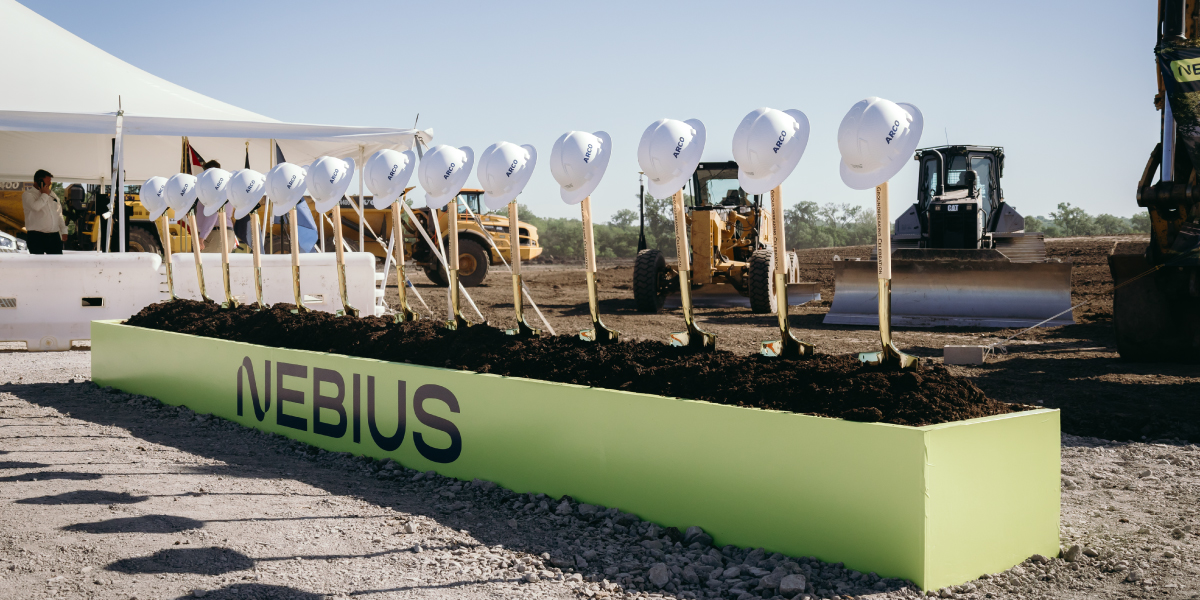
In Independence, Missouri, Nebius presented the project with explicit community-benefit commitments, including reported tax payments of $650 million and elimination of school meal debt.[1] Those commitments do not answer New Jersey permit questions, and they should not be treated as a universal template. Their significance is narrower: the company appears to be building local acceptance into the site strategy earlier, rather than waiting for opposition to harden around permits, financing, and health complaints.
Birmingham, Alabama, shows the same pattern from the local-government side. AL.com reported in June 2026 that an AI company backtracked on a data-center campus change after Birmingham adopted new rules, including a citywide data center zoning ordinance with 20 conditions.[7] The reporting also described a homeowner lawsuit, though that account could not be independently verified from court records in the materials available here.[7]
The Birmingham episode is not an environmental justice case in the New Jersey statutory sense. It is useful because it shows how local governments can translate data-center concern into land-use controls: conditions, design limits, process requirements, and leverage over changes to a campus plan. For expansion counsel, that is the practical lesson. Even where state environmental law is less aggressive, local zoning can become the forum where infrastructure anxiety becomes binding text.
Pennsylvania Is Still an Unresolved Test
Nebius’s reported Pennsylvania gigawatt-scale campus should be treated with more restraint. It may become another important test of state and local review, but the materials available do not yet show the same developed record of environmental justice scrutiny, source-aggregation debate, withdrawn local financing, or zoning conditions that exists in Vineland and Birmingham. Scale alone does not tell us which legal constraint will matter first.
The broader regulatory direction, however, is not ambiguous. WilmerHale described emerging state regulation of data centers in February 2026, and ArentFox Schiff reported in April 2026 that more than 300 bills across 30 states related to data centers were active or under consideration.[8][9] Those figures do not mean every data center faces the same burden. They do mean that state legislatures and local governments are no longer treating data-center siting as a private real-estate matter with utility coordination attached.
The Legal Implication for Nebius
For Nebius, the legal implication is not that Vineland will necessarily fail. The public record described here does not support that conclusion. The implication is that deployment speed now depends on institutions the company does not control: NJDEP permit staff, environmental justice review, county health officials, municipal finance decisions, zoning boards, and, where litigation appears, courts.
That changes how expansion risk should be read. A power agreement can be funded. A fuel-cell supplier can be announced. A construction site can be active. Yet the project can still be pinned in place by how regulators define the source, whether cumulative burdens trigger denial authority, and whether local officials decide that noise, financing, or land-use conditions require another round of process.
Vineland is a bellwether because it puts those constraints in one file. The later community-benefit commitments in Independence and zoning accommodations in Birmingham are not side notes to the expansion story. They are evidence that environmental justice law, air permitting, and local opposition are already shaping how Nebius presents, structures, and adjusts its U.S. data center strategy.
References
- Nebius newsroom, Nebius
- Nebius Is Stuck. IREN Saw It Coming., Infrathesis Substack
- New Jersey Environmental Justice Law, N.J.S.A. 13:1D-157, State of New Jersey
- Massive AI data center with major energy needs under construction in South Jersey, NJ.com, July 2025
- The AI data center boom is the next environmental crisis, Jersey Vindicator, March 2026
- NBIS Stock Vineland NJ Data Center: Power, Execution, & Risk, Northwise Project, June 2026
- AI company backtracks on change to data center campus after Birmingham's new rules, AL.com, June 2026
- State Regulation of Data Centers: Emerging Trends, WilmerHale, February 2026
- State Regulation of Data Centers in 2026 – A Shifting Landscape, ArentFox Schiff, April 2026
Comments
Join the discussion with an anonymous comment.