
France made the contradiction easy to see. It welcomed the ICC warrant for Vladimir Putin and urged Mongolia to arrest him, then leaned on Article 98(1) to argue that Benjamin Netanyahu should be shielded because Israel is a “democracy committed to the rule of law.” Germany has been no cleaner: first treating the warrant as a serious question for states governed by the rule of law, then with Chancellor Merz saying there would be “ways and means” for Netanyahu to visit without arrest. That is not doctrinal continuity. It is political sorting dressed up as legal caution [1].

The point is not that Article 98 is meaningless. It is that it gets reached for after governments have already decided whom they are prepared to inconvenience. Once the target is a friend, the language changes from obligation to compatibility, from enforcement to coordination, from arrest to discretion. The legal vocabulary stays polished; the outcome does the real work.
The record that matters
The strongest argument against treating the Netanyahu warrant as a routine legal event is the enforcement record itself. As Ferdinandusse notes, no ICC arrest warrant against a sitting head of a non-party state has ever been executed. That covers the long trail from al-Bashir to Putin to Netanyahu, and it is the kind of fact that matters more than any elegant reading of the Statute because it shows what the system actually does when it meets resistance [2].
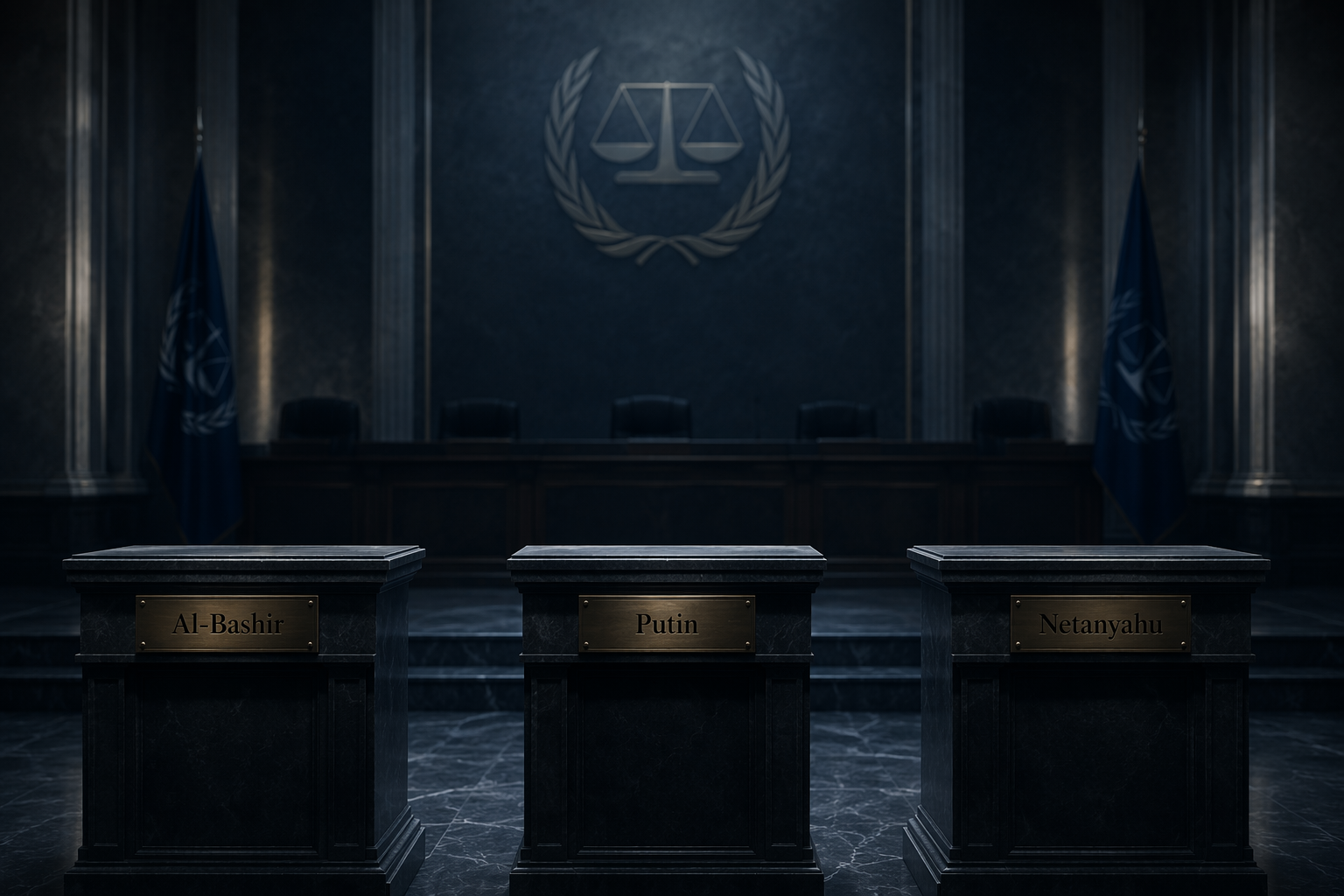
That record is why the Netanyahu warrant should be read less as a standalone legal milestone than as another test of whether the Court can make its claims real when the state in question does not want them to be real. The authority is there on paper. The question is whether any state is willing to pay the diplomatic cost of giving it effect.
How the exception was already built in
The idea that liberal democracies would not really be the Court’s quarry was not invented after the fact. It sits in the Rome Statute-era assumption that complementarity would effectively protect those states from any serious ICC intrusion, because their domestic systems were presumed to do the job themselves. Lindsey Graham said the quiet part out loud when he argued that the Rome Statute was never conceived to come after Israel, the United States, France, Germany, or Great Britain. That is not a fringe complaint. It is a candid version of the exception that many governments now invoke more carefully [1].
Seen from that angle, the present split is not between law and politics but between two kinds of politics: one that still wants the Court to bite, and one that wants to preserve the Court’s language while declining its consequences. France’s switch from applauding Putin’s exposure to protecting Netanyahu, and Germany’s eagerness to find a path around arrest, belong to the second camp. They do not reject the ICC outright. They reserve its force for other people.
Hungary shows what that looks like when the Court actually tests a member state. In July 2025, the ICC found Hungary had violated its obligations by not arresting Netanyahu during his April visit, and Budapest answered by withdrawing from the Rome Statute. That is the enforcement mechanism in miniature: a ruling, a refusal, then a political exit. It is hard to mistake that for settled compliance [3].
So the question of Netanyahu's arrest authority ends where the enforcement record begins. The warrant matters, but not because it proves the Court can command obedience on its own. It matters because it exposes how contingent that obedience remains. The real dividing line is not between legal and illegal responses. It is between states willing to let an ICC claim become operational and states willing to soften, delay, or evade it when the person named is politically costly to touch.
References
- “A ‘Democratic Exception’ to ICC Jurisdiction,” Verfassungsblog, Verfassungsblog
- “Pinochet, Bashir, Putin, Netanyahu, Gallant,” Just Security, Just Security
- ICC finding on Hungary’s non-compliance in the Netanyahu arrest-warrant matter, International Criminal Court
Comments
Join the discussion with an anonymous comment.