
Once an NFL player contract is signed, the legal work is not finished. In many ways, that is when the most technical part begins. For the 2026 league year, each club’s salary cap is set at $301.2 million, while the NFL also identified $77.6 million in benefits per club, producing a broader $378.8 million total player spending figure per team. Those are related numbers, but they are not the same legal constraint: the cap is the accounting limit against which player costs are charged, not a simple ledger of all cash a club will spend in the year. [1]
The useful question is therefore not whether a team “paid” a player. It is what the contract obligates the club to pay, when the Collective Bargaining Agreement requires that amount to count against the salary cap, and what happens to the unrecognized portion if the player is later released, traded, injured, retained, or protected by a guarantee. The 2020 CBA, which runs through 2030, organizes the relevant architecture across salary cap rules, guarantees, and anti-circumvention provisions commonly identified as Articles 12, 13, and 14. [2]

Cash obligation and cap recognition are separate legal events
A club can transfer cash to a player immediately while the CBA spreads the cap recognition of that same payment over future league years. Conversely, a club can owe future salary under a player contract without that future salary yet counting against the current cap in the same way a paid signing bonus does. The distinction is not semantic. It determines whether a roster move creates savings, accelerates dead money, or merely shifts charges from one league year to another.
The signing bonus is the cleanest example. NFL Operations describes signing bonus treatment as prorated over the life of the contract for cap purposes, up to a maximum of five years. A player may receive the bonus as cash when the contract is executed, but the cap charge is allocated over the covered years rather than absorbed immediately. [3]
That rule is the source of much of what is casually called cap management. It is also the source of much of what later becomes dead money. A payment already made can continue to appear on future cap ledgers because the cap system is recognizing the amount according to the CBA’s allocation rule, not according to the date the wire moved.
Signing bonus proration creates the future charge
Assume a hypothetical five-year contract includes a $20 million signing bonus. If the contract qualifies for maximum proration, the cap treatment would allocate $4 million of signing bonus charge to each of five league years. The club has paid the player $20 million, but the cap has not yet absorbed all $20 million.
If the player remains on the roster for all five years, the accounting is uneventful: each year carries its scheduled prorated amount, along with whatever other salary, bonuses, or incentives count under the applicable rules. The system becomes more interesting when the contract ends before the proration schedule does.
That remaining unamortized bonus is not erased because the player is gone. It is a cap consequence of past compensation. Spotrac’s dead-cap explanation frames dead money as salary cap charges for players no longer on the roster, including remaining prorated bonus amounts that have not yet counted against the cap. [4]
This is where many public explanations become imprecise. A release may reduce future cash owed to the player, depending on the contract and guarantees. It may also create, preserve, or accelerate cap charges from money already paid. Those are different events. The same transaction can be cash-saving and cap-expensive.
The June 1 fork determines when dead money lands
When a player is released before June 1, remaining prorated bonus amounts generally accelerate into the current league year’s cap. The club may stop carrying the player’s future base salaries, but the unrecognized portion of prior bonus compensation comes due for cap purposes. [4]
Using the same hypothetical $20 million bonus prorated at $4 million per year, suppose the player is released after two seasons and before June 1 of the third league year. The first two $4 million charges have already counted. The remaining $12 million would accelerate into the current cap year. The player is no longer on the roster, but the accounting for the prior bonus is not optional.
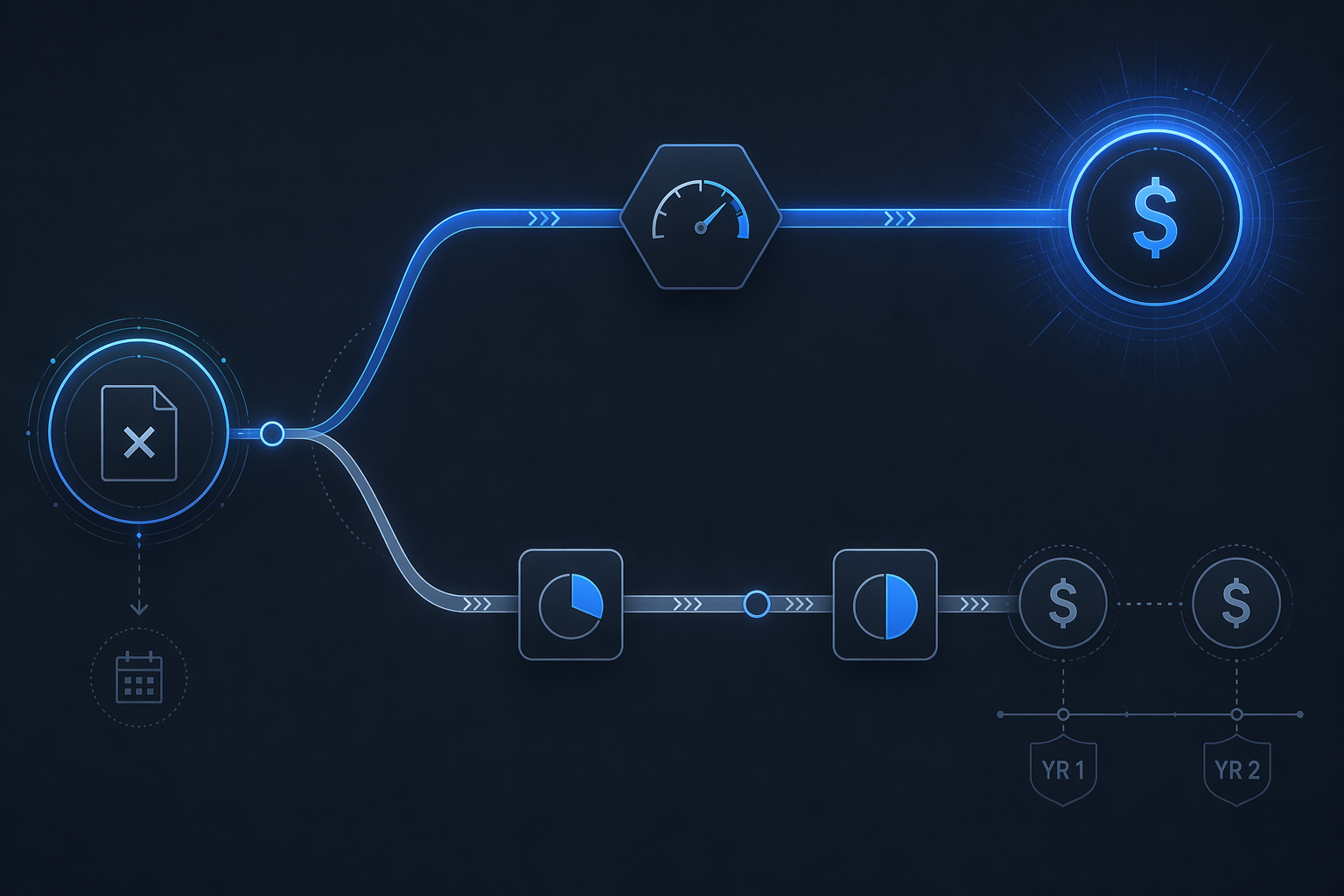
The post-June 1 treatment changes the timing. Reporting on dead cap mechanics describes the June 1 distinction as allowing a club to split the charge: the current year generally carries the current year’s prorated amount, while remaining future prorations move into the following year. USA Today’s 2025 explainer also notes that teams may use a post-June 1 designation on up to two players, permitting the accounting treatment even when the release occurs earlier in the offseason. [5]
In the hypothetical above, a qualifying post-June 1 release in the third league year would not push the entire remaining $12 million into that year. The third year would absorb its scheduled $4 million proration, and the remaining $8 million would move to the next league year. The club has not avoided the charge. It has changed the year in which the CBA requires recognition.
| Roster move | Current-year cap effect | Later cap effect |
|---|---|---|
| Pre-June 1 release | Remaining unamortized signing bonus generally accelerates into the current league year | No later prorated signing bonus charges remain from that bonus |
| Post-June 1 release or designation | Current year generally carries that year’s scheduled proration | Future unamortized prorations generally shift into the next league year |
The June 1 rule is therefore not a loophole in the ordinary sense. It is a timing rule. It matters because timing is a legal and operational reality under a hard-cap system: a charge in March may block a signing, while the same charge next year may be manageable. But the underlying amount does not disappear merely because the club used the designation.
Guarantees answer a different question: what must still be paid?
Dead cap analysis asks when prior compensation is recognized against the cap. Guarantee analysis asks whether the club still owes compensation to the player after a later event. Those questions overlap in practice, but they are not the same question.
NFL contract guarantees are commonly analyzed through three protections: skill, cap, and injury. A skill guarantee protects the player if the club terminates the contract because it determines the player no longer has sufficient ability. A cap guarantee protects against termination because the club wants cap room. An injury guarantee protects the player if he cannot pass a physical or cannot perform because of a football-related injury covered by the guarantee terms. LawInSport’s introductory legal guide explains that a contract is fully guaranteed only when all three protections apply. [6]

That three-part structure is why “guaranteed” can be an incomplete description. A salary guaranteed for injury only may protect the player while injured but not necessarily if he is healthy and released for performance reasons. A salary guaranteed for skill and cap but not injury leaves a different exposure. The legal consequence turns on the triggering condition and the exact protection granted.
The cap consequence then follows the compensation obligation and the CBA’s accounting treatment. If guaranteed salary remains owed after release, the club may have both a cash liability and a cap charge. If a signing bonus was already paid, its remaining proration may accelerate even if no future base salary is owed. A contract analyst has to model both lines, not average them into a single notion of “money left on the deal.”
Restructures change timing, not the premise of the system
A common restructure converts some portion of a player’s base salary into signing-bonus-style compensation, often with the player receiving cash while the club spreads the cap charge over remaining contract years, subject to the applicable proration limits. SumerSports describes this mechanism as a way to reduce a current-year cap hit by converting salary into bonus treatment, while adding future prorated amounts to the contract. [7]
The attraction is obvious. If a player was already scheduled to receive salary, converting part of that salary into bonus can create current cap room without requiring the player to take less cash. The legal and accounting consequence is equally obvious once the signing-bonus rule is kept in view: the club has created future cap charges that will have to be recognized later, either on schedule or through acceleration if the contract terminates early.
This is not free money, and it is not automatically reckless. It is a timing election inside a collectively bargained accounting system. The quality of the decision depends on the player’s expected roster life, the club’s future cap position, the guarantee structure, and the cost of carrying or accelerating the added proration in later years.
Void years are an accounting extension with a hard ending
Void years operate in the same general family of timing devices. They add contract years that are not expected to be played, allowing bonus proration to be spread across additional years while the player’s substantive commitment expires earlier. The source support available here is thinner than for ordinary signing bonus proration, dead cap, and guarantees, so the safer characterization is narrow: void years are a cap-timing technique, not a cancellation of cap liability.
When the contract voids, the remaining unrecognized amounts do not vanish. They become due under the applicable cap rules. For modeling purposes, the void date should be treated as a scheduled event capable of accelerating or concentrating charges, not as an administrative footnote.
Anti-circumvention is the enforcement backstop
The salary cap rules do not rely only on accounting convention. The CBA’s anti-circumvention framework polices attempts to avoid the collectively bargained limits. Reporting on past salary-cap circumvention matters identifies potential penalties including fines up to $5 million, contract cancellation, and forfeiture of draft choices. [8]
The enforcement history matters because it keeps the cap from being treated as a set of optional formatting rules. NBC Sports’ 2025 discussion of cap circumvention points to the Denver Broncos’ late-1990s salary-cap violations and the Houston Texans’ 2023 discipline as examples of the league imposing consequences for conduct found to violate cap-related rules. [8]
Those examples should not be stretched into a claim that every aggressive structure is circumvention. The relevant line is not whether a contract is creative or whether a fan base dislikes the result. The line is whether the arrangement fits within the CBA’s permitted allocation and disclosure rules or attempts to evade them.
Disputes still run through the collectively bargained system
Cap-related disputes are not merely public-relations fights between clubs and agents. They sit inside the CBA’s dispute architecture. Constangy’s discussion of the 2022–2025 collusion arbitration reports that the NFL prevailed in January 2025 before system arbitrator Christopher Droney on player-compensation collusion claims concerning guaranteed compensation. [9]
That point should be used carefully. Without the full arbitration award, it would be unsound to overstate the arbitrator’s reasoning or convert the result into a broad rule about all guarantees. What the matter does show, at a structural level, is that disputes over compensation practices and cap-adjacent conduct remain subject to the collectively bargained forum and its assigned decision-maker.
The post-signing framework in one view
| Issue | Contract question | CBA cap question |
|---|---|---|
| Signing bonus | Has the club paid or promised bonus compensation? | Over how many years may the bonus be prorated, subject to the five-year limit? |
| Release before June 1 | What future compensation, if any, remains owed? | What unamortized bonus accelerates into the current league year? |
| Post-June 1 release or designation | What obligations survive termination? | Which charges remain in the current year and which move to the following year? |
| Guarantees | Is the player protected for skill, cap, injury, or all three? | How does any owed amount count after the triggering event? |
| Restructure | What salary is converted or newly guaranteed? | What current charge is reduced and what future proration is created? |
| Void years | When does the contract cease to bind the player to future service? | When do remaining deferred charges become recognizable? |
| Circumvention | Does the arrangement comply with the CBA’s permitted structures? | What penalty or remedial authority may apply? |
This is the practical shape of the NFL salary cap rules legal framework after contract execution. The signature page activates parallel tracks. Cash may move immediately or later. Cap recognition may occur on a different schedule. Guarantees determine whether future compensation remains owed after a triggering event. Roster decisions can accelerate or split charges. Restructures and void years alter timing while preserving the underlying logic. Anti-circumvention rules and CBA arbitration supply the enforcement layer.
The club’s real position cannot be read from the headline contract value, the current-year cap hit, or the cash paid to date in isolation. It has to be read from the interaction among the player contract, the CBA’s allocation rules, the date of the roster move, the guarantee language, and the enforcement framework that makes those distinctions matter.
References
- NFL announces 2026 salary cap set at $301.2 million per team — NFL.com
- Collective Bargaining Agreement — Over the Cap
- Contract Language — NFL Operations
- Understanding NFL Dead Cap — Spotrac
- What is dead cap money in the NFL? — USA Today, 2025
- An introductory guide to the NFL's salary cap — LawInSport
- Contract Restructures Explained — SumerSports
- Yes, the NFL has experienced salary-cap circumvention — NBC Sports, 2025
- NFL Wins Arbitration on Player Compensation Collusion Claims — Constangy
Comments
Join the discussion with an anonymous comment.