
On July 20, 2026, Daniel Ortega said Nicaragua “will not hold any more elections,” a statement reported the same day by The Guardian and Reuters and then sharpened by the Associated Press into its immediate legal consequence: the November 2027 election was being cancelled.[1][2][3] The announcement was not framed as a mere speech. It was presented as a directive to the National Assembly to draft implementing laws, which matters because the regime has repeatedly used enactment, amendment, administrative order, and court action to turn political closure into legal form.
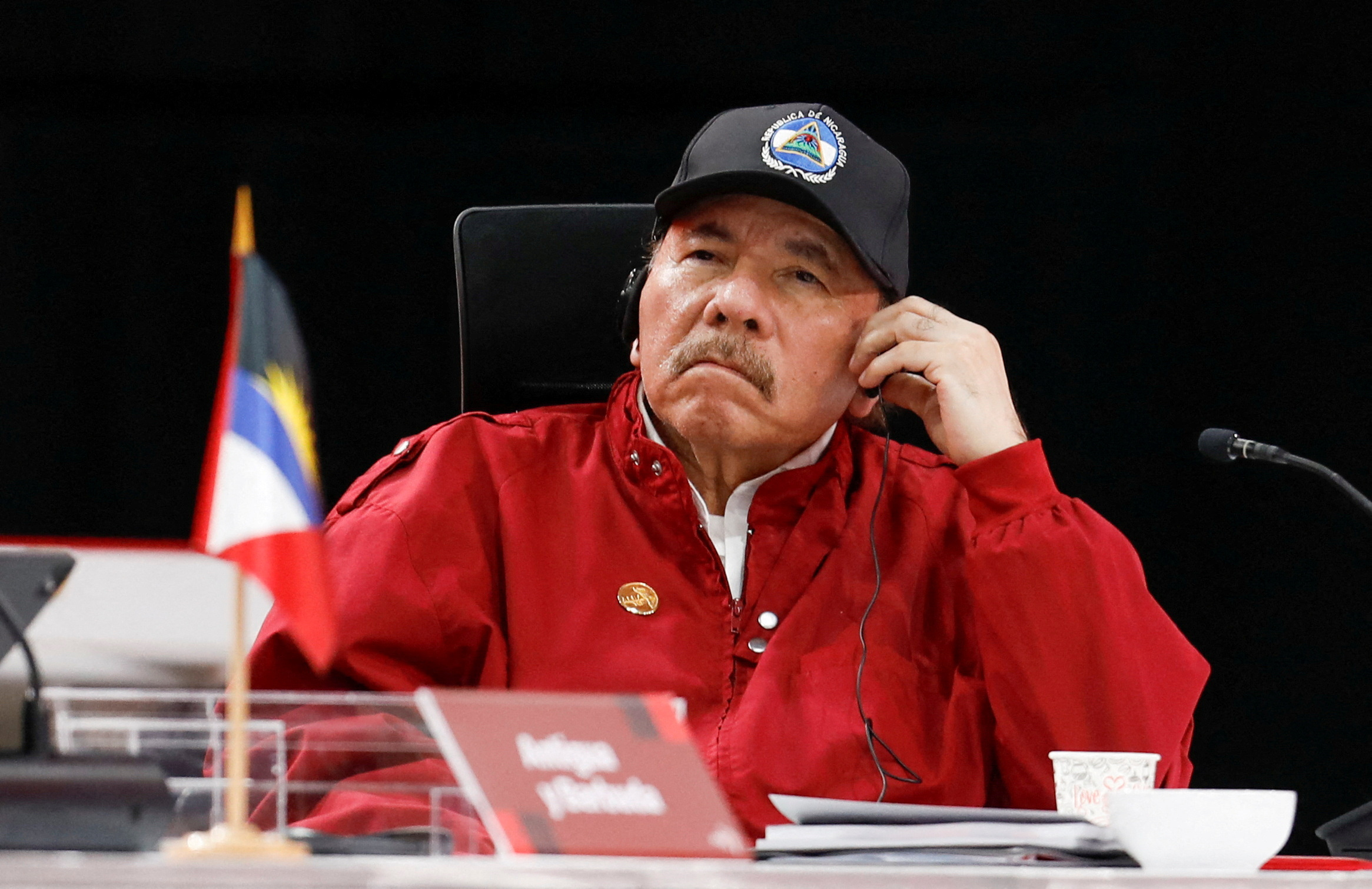
That is the central point for lawyers, governments, and human rights bodies. The cancellation is the visible endpoint, not the legal plot. By the time Ortega announced that elections would cease, the state had already been rewritten around a family executive, the political community had been narrowed through nationality law, and the legal profession had been struck at the point where remaining challenges might still have been filed.
The sequence is unusually stark: the 2025 constitution altered the architecture of state power; the January 2026 dual-citizenship ban restricted who could remain politically attached to Nicaragua from abroad; the July 2026 lawyer-license purge weakened the profession that could test government action in court; and the July 20 election directive activated the final premise—that no electoral contest needed to occur at all.
The constitution did the quiet work first
The 2025 constitutional rewrite deserves more attention than the July 20 sentence because it changed the legal position from which that sentence could later be spoken. Juan Sebastián Chamorro’s ConstitutionNet analysis identifies Article 133 as the provision creating a male-female co-presidency, a structure that legally entrenched Ortega and Rosario Murillo together at the apex of the state.[4] That arrangement was not only symbolic. It made family rule a constitutional office design.
The more decisive clause was Article 8. Chamorro describes it as subordinating all branches of government to the executive, eliminating the ordinary constitutional premise that courts, the legislature, electoral authorities, and other state bodies can stand apart from presidential command.[4] Once that switch is flipped, institutional vocabulary survives while institutional independence does not. A court may still sit. A legislature may still vote. An electoral authority may still issue forms. But the constitutional question changes from whether those bodies are independent to whether the text has made their dependence lawful.
The same analysis notes another deletion with large consequences: the Universal Declaration of Human Rights was removed from the constitutional text.[4] Such removals are easy to treat as ornamental, especially when domestic repression is already plain. They are not ornamental to the lawyer who has to decide what can still be pleaded. If a constitutional text strips out a rights reference, subordinates institutional actors to the executive, and creates a co-presidency at the top, it narrows both the argument and the forum before any dissident reaches a courtroom.
| Instrument | Legal move | Practical effect |
|---|---|---|
| 2025 constitution | Created a male-female co-presidency under Article 133; subordinated branches to the executive under Article 8; removed the Universal Declaration of Human Rights from the text | Converted family executive rule and institutional dependence into constitutional structure |
| January 2026 dual-citizenship ban | Restricted dual nationality after rapid legislative passage | Narrowed the political community, especially for Nicaraguans abroad |
| July 2026 lawyer-license purge | Supreme Court stripped licenses from at least hundreds, if not thousands, of lawyers | Disabled many of the professionals who could bring or sustain legal challenges |
| July 20, 2026 election directive | Announced that Nicaragua would not hold more elections and instructed the National Assembly to draft implementing laws | Moved from captured electoral competition to abolition of elections as a legal program |
The table can make the chain look too tidy. In practice, each move landed on people already facing surveillance, exile, imprisonment, institutional closure, or professional ruin. Still, the legal form matters because it shows how finality was laundered. The regime did not merely ignore courts and statutes. It used courts and statutes to decide who could act, who could sue, who could vote, and which institution would have authority to say no.
Nationality law narrowed the political body
The January 2026 dual-citizenship ban should not be read only as a citizenship story. ConstitutionNet’s analysis describes a ban passed in under two months by a rubber-stamp assembly, affecting an estimated hundreds of thousands of Nicaraguans abroad.[5] Its significance lies in where it falls in the sequence. After constitutional capture, nationality became a method for deciding which Nicaraguans remained safely inside the political community.
That January 2026 step followed the 2023 denaturalization law that stripped more than 546 individuals of nationality.[5] The number should not be inflated into a complete measure of exclusion; it marks a documented legal mechanism. Together, denaturalization and the later dual-citizenship ban created a warning to exiled citizens and opponents abroad: political belonging could be made conditional, revocable, or incompatible with the lives they had been forced to build elsewhere.
For elections, that matters before ballots are printed. Candidate eligibility, voter identity, party organization, legal representation, campaign finance, and international advocacy all depend on a legally recognized political community. If citizens abroad are made vulnerable through nationality rules, the opposition is not merely disadvantaged in a campaign. It is partly displaced from the body that the state recognizes as entitled to contest power.
The lawyer purge changed what a right could still mean
The July 2026 Supreme Court purge of lawyers is the bridge between constitutional design and enforceability. The Associated Press reported that at least hundreds, if not thousands, of lawyers had their licenses stripped, and U.N. experts called it a “purge of the legal profession.”[6] The imprecision is part of the record; it should not be cleaned up into a neater statistic. What can be said is already severe enough: the state targeted the professional class that would ordinarily draft claims, represent detainees, challenge administrative acts, defend NGOs, and preserve evidence.
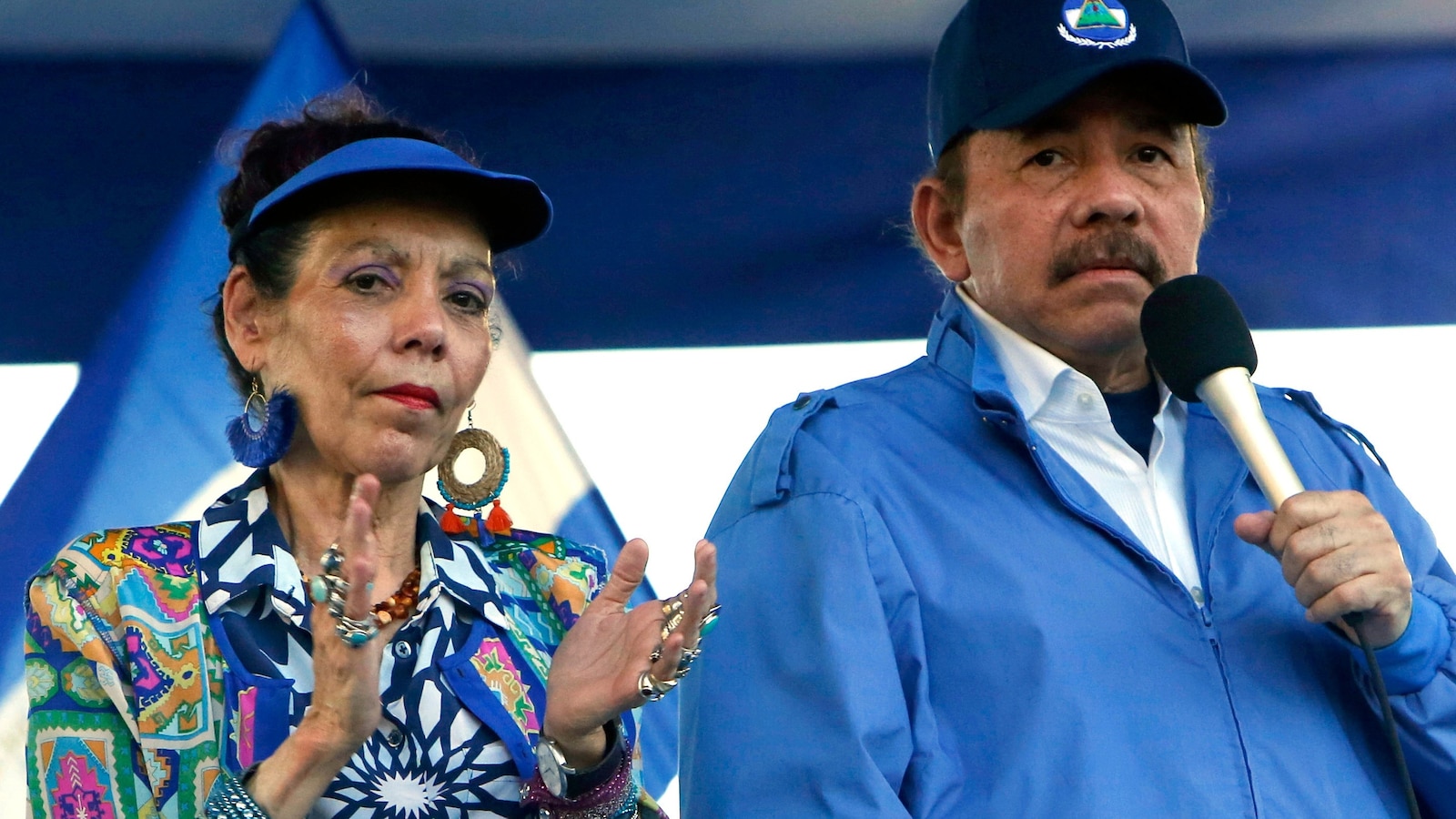
A constitution can leave a right nominally visible while making it practically unusable. That is what professional neutralization does. If independent lawyers lose their licenses, a person with a formally preserved claim may still be unable to find counsel willing or able to file it. If the courts are constitutionally subordinated to the executive, the lawyer’s task is already compromised. If the lawyer is then removed from the profession, the remaining right becomes a document without a working instrument.
AP placed the purge after a larger institutional clearing: the closures of more than 5,600 NGOs, 29 universities, and 58 media outlets.[6] Those figures show why the lawyer purge was not an isolated disciplinary episode. NGOs need counsel to challenge cancellation. Universities need counsel to resist seizure or closure. Media outlets need counsel to defend journalists, contest fines, and preserve corporate existence. When those institutions are closed and the lawyers who might defend them are disbarred or intimidated, legal remedies shrink from a practical path into a formal memory.
This is also where the distinction between paper institutions and operative independence becomes unavoidable. A supreme court that issues license decisions may look like a judicial actor. Under a constitutional order that has subordinated branches to the executive, and in a political environment where independent civic institutions have been closed, that same act can function as an administrative weapon with judicial clothing. The legal profession is not incidental to authoritarian consolidation; it is the profession that makes illegality legible and, when courts permit it, actionable.
The election announcement was the capstone, not the first breach
Seen from that sequence, the July 20 announcement reads less like an improvisation than an activation. The Guardian and Reuters reported Ortega’s statement that Nicaragua would not hold more elections; AP tied the announcement to the cancellation of the November 2027 election, which had been the next scheduled national vote after the presidential term was extended from five to six years in January 2025.[1][2][3] The directive to the National Assembly to draft implementing laws preserved the regime’s preferred grammar: the end of elections would still pass through legal form.
That grammar is not a defense. It is the method. First, the constitution dissolved separation of powers in substance. Then nationality law made exile politically hazardous. Then the court system removed licenses from lawyers in numbers AP could only state as at least hundreds, if not thousands. Then the executive announced that the electoral mechanism itself would be discontinued, with the legislature assigned to write the necessary laws.
The legal injury is therefore not limited to the absence of a 2027 ballot. The deeper injury is that each ordinary remedy was narrowed before the final act arrived. Opposition candidates had already faced exclusion from meaningful competition. Exiled citizens had reason to fear nationality consequences. NGOs, universities, and media outlets had been closed in large numbers. Lawyers who might represent them were stripped of licenses or placed on notice that professional independence carried personal consequences.
What remains to be tested
There are international-law questions under instruments such as the American Convention on Human Rights, the International Covenant on Civil and Political Rights, and the Inter-American Democratic Charter. Those questions include political participation, effective remedies, nationality, and the consequences of Nicaragua’s relationship with regional oversight bodies. A fuller treaty-focused assessment belongs in a separate analysis of Nicaragua’s election cancellation and its legal implications.
Domestically, the narrow remaining window is procedural rather than reassuring. The July 20 announcement directed the National Assembly to draft implementing laws, so the final legislative mechanism had still to be written at the time of the announcement.[1][2][3] That does not make the system open. It identifies the next legal switch: the statutory language that will translate the abolition of elections from presidential directive into enacted law.
This is not legal advice, and it is not an argument that law alone explains the repression. Violence, imprisonment, fear, exile, and institutional coercion are not made less real because they are accompanied by constitutional articles and court orders. The point is narrower and colder: by July 20, 2026, the regime was not simply cancelling an election. It was completing a legal architecture already rewritten to obey the executive, exclude or discipline opponents abroad, and disable independent legal resistance at home.
References
- Guardian report on Ortega’s July 20, 2026 election announcement — The Guardian, July 20, 2026.
- Reuters report on Ortega’s July 20, 2026 election announcement — Reuters, July 20, 2026.
- Associated Press report confirming cancellation of Nicaragua’s November 2027 election — AP News, July 20, 2026.
- Chamorro analysis of Nicaragua’s 2025 constitution — ConstitutionNet.
- ConstitutionNet analysis of Nicaragua’s January 2026 dual-citizenship ban — ConstitutionNet.
- Associated Press report on Nicaragua’s July 2026 lawyer-license purge — AP News, July 2026.
Comments
Join the discussion with an anonymous comment.