
The legal significance of New York City’s new cooling tower rules became concrete almost immediately. In early July 2026, while building owners were still adjusting to Local Law 159’s monthly Legionella testing cycle, the city identified an Upper East Side Legionnaires’ disease cluster and publicly ordered 31 buildings to clean and disinfect cooling towers after preliminary PCR screening returned positive results.[1] By July 16, the reported cluster had reached more than 63 cases, with 52 people hospitalized, according to the New York Post.[2]
For counsel researching NYC Legionella water-testing regulations, that timing matters. Local Law 159 is not just a new maintenance calendar. It creates a tighter record of who tested, who reported, who failed to submit, and who was sitting on incomplete vendor documentation when the Health Department came looking.
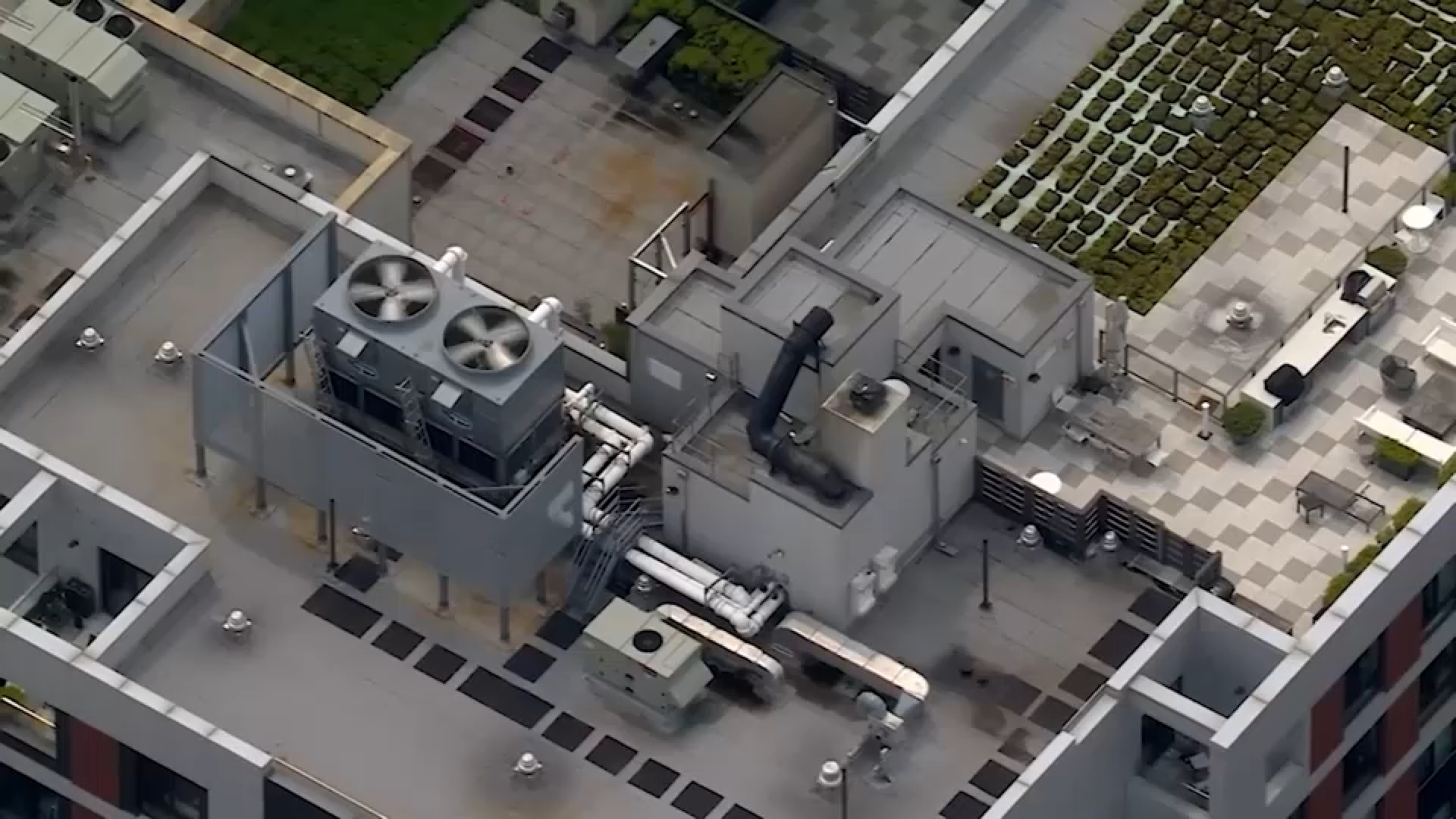
That is the hard turn in the 2026 regime. A cooling tower file that once might have been treated as routine building operations can now become the first exhibit in a regulatory response, a board investigation, an insurance notice, or a personal-injury demand. The rule’s operative details therefore deserve more attention than a generic reminder to “stay compliant.”
What Local Law 159 Changed
Local Law 159 took effect May 8, 2026, according to NYC Health. The city described the rule as requiring building owners to test cooling tower water for Legionella every 31 days during operation, use an Environmental Laboratory Approval Program-certified laboratory, and submit each result to the Health Department within five days of receiving it.[3]
The 31-day culture test is the most visible change, because it triples the frequency from the prior quarterly testing framework. But the compliance file is broader than the monthly lab report. The city’s cooling tower registration and maintenance materials also require weekly bacteriological monitoring by dipslide or equivalent method, routine inspection and maintenance, cleaning and disinfection, corrective actions when test results trigger them, annual certification, and current tower registration information.[4]
| Requirement | What the owner must be able to show |
|---|---|
| Legionella culture testing every 31 days while the cooling tower is in use | A timely sample, an ELAP-certified lab result, and a record that the monthly testing cycle did not lapse [3] |
| Five-day reporting window | Submission to the Health Department within five days after receiving the result, not merely internal receipt by a manager or vendor [3] |
| Weekly dipslide or equivalent bacteriological testing | A week-by-week monitoring record that can be matched to the tower and operating period [4] |
| Summer hyperhalogenation from July 1 through August 31 | Documented seasonal treatment during the highest-risk operating period identified in the rule [3] |
| Cleaning, disinfection, maintenance, and corrective action obligations | Work orders, vendor logs, treatment records, and follow-up results sufficient to reconstruct what happened after a trigger [4] |
The five-day reporting period is easy to understate. It is not the same thing as testing. A board or portfolio owner can have a water-treatment vendor pull a sample and still face a separate problem if the result is not submitted on time. In a later dispute, that distinction will matter: one issue is whether the tower was monitored; another is whether the owner met the city’s reporting obligation after the result existed.
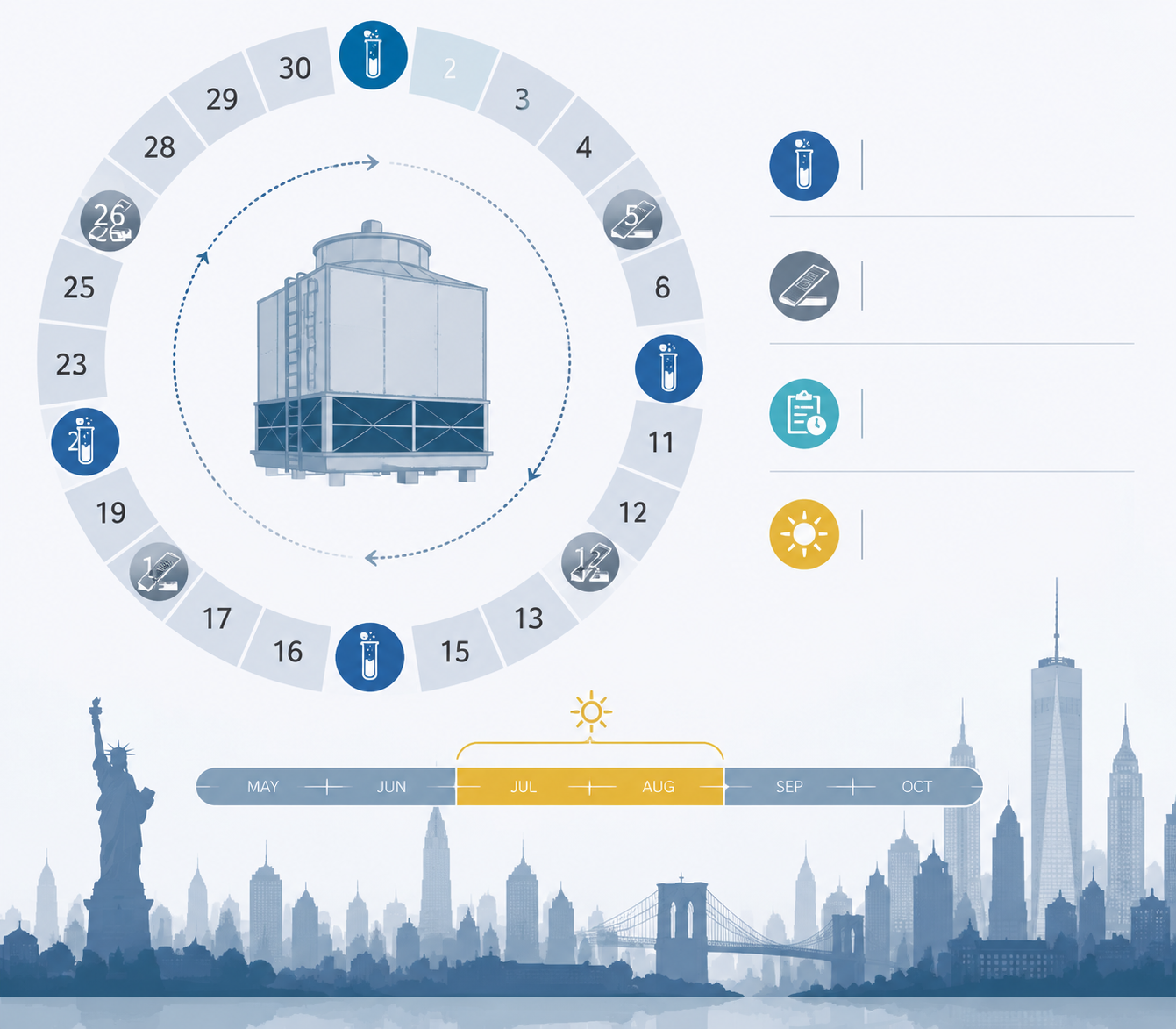
The July-August hyperhalogenation requirement also changes the evidentiary rhythm. It gives the city and private litigants a seasonal benchmark. If an illness cluster appears in or near that period, the owner’s file should be able to show not only monthly culture testing, but also whether the tower received the mandated summer treatment and whether weekly monitoring suggested deteriorating water conditions before the positive test.
Why This Rule Arrived After Local Law 77
New York’s cooling tower program did not begin in 2026. Local Law 77 followed the 2015 South Bronx Legionnaires’ disease outbreak and created the city’s basic registration, inspection, maintenance, and annual certification framework for cooling towers. Local Law 159 is better understood as a tightening of that existing regime, not a fresh entry into an unregulated field.
The immediate political and public-health pressure came from a later outbreak in Central Harlem. Healthbeat reported in April 2026 that the Harlem outbreak involved 118 cases and seven deaths, and that the new rules were spurred by that episode.[5] That history matters because it explains why the city is no longer satisfied with quarterly culture testing and annual paperwork. The legal question now is whether owners can prove continuing compliance across a much shorter testing interval.
The Upper East Side Response Shows How the Rule Operates Under Pressure
The July 2026 Upper East Side cluster is not a final liability record. It is, however, an early demonstration of the city’s enforcement posture. On July 10, NYC Health released what it described as a preliminary list of buildings ordered to clean and disinfect cooling towers after positive PCR screening results. The department emphasized that PCR screening can identify the presence of Legionella genetic material before culture confirmation, and the city ordered cleaning and disinfection without waiting for culture results.[1]
That is a major practical point for counsel. Owners cannot assume that action will wait for a slower confirmatory process. Once a tower is in an outbreak geography and returns a preliminary positive screening result, the city may require remediation while the evidentiary picture is still developing. The owner’s internal chronology then becomes critical: when the tower was last cultured, when the lab result arrived, whether it was reported within five days, when dipslides were performed, when biocide levels were adjusted, and who approved cleaning.
The public release of building addresses also changes the business and litigation environment. A named property may face resident questions, board-level scrutiny, lender or investor concerns, insurance notifications, media contact, and preservation demands before any causal link between a specific tower and illness has been established. Counsel should be careful not to overread a preliminary positive PCR screen as proof of causation, but it is equally dangerous to treat it as a private operational detail.
The Submission Gap Is Already an Enforcement Problem
Early reported compliance data suggest that the new system is producing failures quickly. The New York Post reported on July 16 that more than 250 testing-related violations had been issued since January 2025, and that about 20 percent of registered cooling tower owners had not submitted required test results.[2] The same report described a fine structure ranging from $500 to $2,000, with potential misdemeanor charges.[2]
Those figures should be read as reported enforcement data, not as a complete adjudicated record of owner misconduct. A non-submission can arise from different failures: no test, delayed vendor work, a lab result that did not move from vendor to manager, a manager who did not transmit it to the city, or confusion during the transition to monthly reporting. For regulatory purposes, though, those distinctions may not save the owner from a violation. For litigation purposes, they become the factual map.
A building that tested but did not report may have a different public-health profile from a building that never sampled at all. But both can create damaging documentary gaps. If a later plaintiff alleges exposure during the missing period, the owner may be left proving reasonableness through vendor emails, invoices, handwritten logs, or testimony rather than through the city-facing record the rule was designed to create.
Inspection Capacity Has Not Kept Pace With the Paperwork Burden
The city’s inspection program is another source of risk, but not in the way some owners may hope. Gothamist reported on July 6 that the Health Department had conducted 1,306 cooling tower inspections in the first half of 2026, compared with 1,156 in the first half of 2025 and more than 3,000 in the first half of 2017, when the original program was ramping up.[6] Gothamist also noted that 114 additional June inspections were not yet reflected in the data at the time, which means the first-half 2026 number may have been understated.[6]
The same reporting identified gaps in the outbreak area: 48 percent of towers in the affected ZIP codes had gone more than one year without inspection, and 26 percent had no 2026 test record in the city data reviewed by Gothamist.[6] The Health Department acknowledged that the new monthly reporting requirement had reduced inspection capacity, according to Gothamist, while the city’s fiscal year 2027 budget included $13 million and 23 new water ecologists for the program.[6]
An understaffed or paperwork-heavy inspection system is not a defense to an owner’s missed obligations. It may, however, shape later disputes over notice, enforcement priority, and reasonableness. If the city did not inspect a tower for a long period, an owner may point to its own vendor program and internal controls. If the owner also lacks monthly culture submissions, weekly monitoring records, or summer treatment documentation, the absence of inspection will not fill the file.
The Public Comment Record Foreshadows Future Arguments
The industry did not accept the new rule without objection. The NYC Rules record for the cooling tower reporting amendments includes more than 200 written public comments, with owners, vendors, and industry participants raising concerns about cost, scientific basis, laboratory capacity, and implementation timing.[7] Some comments questioned whether monthly culture testing would materially improve disease prevention compared with quarterly testing, and some pointed to CDC data characterizing cooling towers as a subset, rather than the majority, of Legionnaires’ disease outbreak sources.[7]
Those objections are not legally irrelevant. They may surface in enforcement negotiations, due-process arguments, procurement disputes, vendor-capacity disputes, and board explanations for delayed implementation. They also help explain why a portion of owners may have been slow to adapt when the effective date arrived.
But the comments do not suspend the obligation. Once the rule took effect, the owner’s burden became operational: test at the required interval, use the proper laboratory, report on time, perform weekly monitoring, complete summer hyperhalogenation, and preserve the records. A future argument that the rule was expensive or scientifically contested will not be helped by a file that cannot show who was responsible for compliance in May, June, and July 2026.
Where Counsel Should Expect the Record to Break
The most likely failures are not exotic. They are calendar failures, handoff failures, and documentation failures. A board may have assumed the managing agent handled reporting. The managing agent may have assumed the water-treatment vendor submitted the result. The vendor may have sampled on time but transmitted a result to the wrong person. Outside counsel may be retained only after the city has issued an order, by which point everyone is reconstructing the same five-day window from inboxes and invoices.
Several record points deserve particular attention in any owner-side review:
- Whether every operating cooling tower had a culture test within each 31-day period after the effective date.
- Whether the laboratory was ELAP-certified for the relevant testing.
- Whether each result was submitted within five days after receipt, and who can prove the receipt date.
- Whether weekly dipslide or equivalent bacteriological monitoring records exist for the same period.
- Whether July-August hyperhalogenation was performed and documented.
- Whether vendor contracts, scopes of work, and reporting protocols match the owner’s legal obligations rather than an older quarterly testing practice.
Vendor guidance can be useful for translating the rule into building operations, and industry summaries have generally tracked the city’s shift from quarterly to monthly culture testing, weekly dipslide testing, and summer hyperhalogenation.[8] But counsel should resist letting a vendor checklist become the authority. The controlling obligations come from NYC Health and the Health Code materials, and any practical workflow should be checked against those sources.
Liability Exposure Will Turn on More Than a Positive Test
A positive Legionella result does not by itself answer causation, exposure, negligence, or damages. Cooling towers are one potential source of Legionnaires’ disease, and the scientific record may require strain comparison, location history, timing analysis, and expert testimony. The public-comment record itself underscores that source attribution is contested in the broader policy debate.[7]
Still, the compliance record will be difficult to separate from liability analysis. If a tower is later investigated in connection with illness, a clean sequence of monthly culture results, five-day submissions, weekly monitoring logs, and corrective-action records gives counsel something concrete to work with. A missing sequence invites a different set of questions: why the test was late, why the result was not reported, why the vendor contract was not updated, why the board was not told, and whether the same lapse affected other towers in the owner’s portfolio.
Portfolio owners face a particular version of that risk. A single missed submission may be explainable as an isolated handoff problem. Repeated non-submissions across buildings can look like a systems failure. Co-op and condo boards face a different problem: minutes, management reports, vendor proposals, and resident communications may later reveal when the board learned of the new testing cadence and what it authorized in response.
The July 2026 outbreak makes that analysis less theoretical. It placed the new Local Law 159 framework into active use within weeks of its effective date, under conditions where the city was publishing building lists, ordering remediation based on preliminary PCR screening, and reviewing tower records against rapidly developing case reports. In that setting, monthly testing is only the start. The real legal question is whether the owner can produce a coherent record before the city, residents, insurers, and potential claimants start building their own.
Local Law 159 is therefore best understood in Q3 2026 as a record-creation and enforcement framework operating under outbreak conditions. This analysis is for legal and regulatory information purposes for professionals reviewing the cited sources; it is not legal or compliance advice.
References
- NYC Health Dept. Releases Preliminary List of Buildings Ordered To Clean and Disinfect Their Cooling Towers, NYC Health, July 10, 2026.
- Hundreds of NYC cooling towers issued Legionella testing violations since last year, New York Post, July 16, 2026.
- New Legionella Testing Regulations for Cooling Towers Go Into Effect Citywide As Summer Nears, NYC Health, 2026.
- Cooling Tower Registration and Maintenance, NYC Department of Health and Mental Hygiene.
- Spurred by Harlem Legionnaires' disease outbreak, new rules for NYC cooling tower testing to take effect, Healthbeat, April 10, 2026.
- NYC Legionella inspections rose only gradually before latest Legionnaires' cluster in Manhattan, Gothamist, July 6, 2026.
- Reporting Requirements for Cooling Towers, NYC Rules.
- NYC Compliance Update: Local Law 77 Now Extended as Local Law 159, Rochester Midland Corporation.
Comments
Join the discussion with an anonymous comment.