
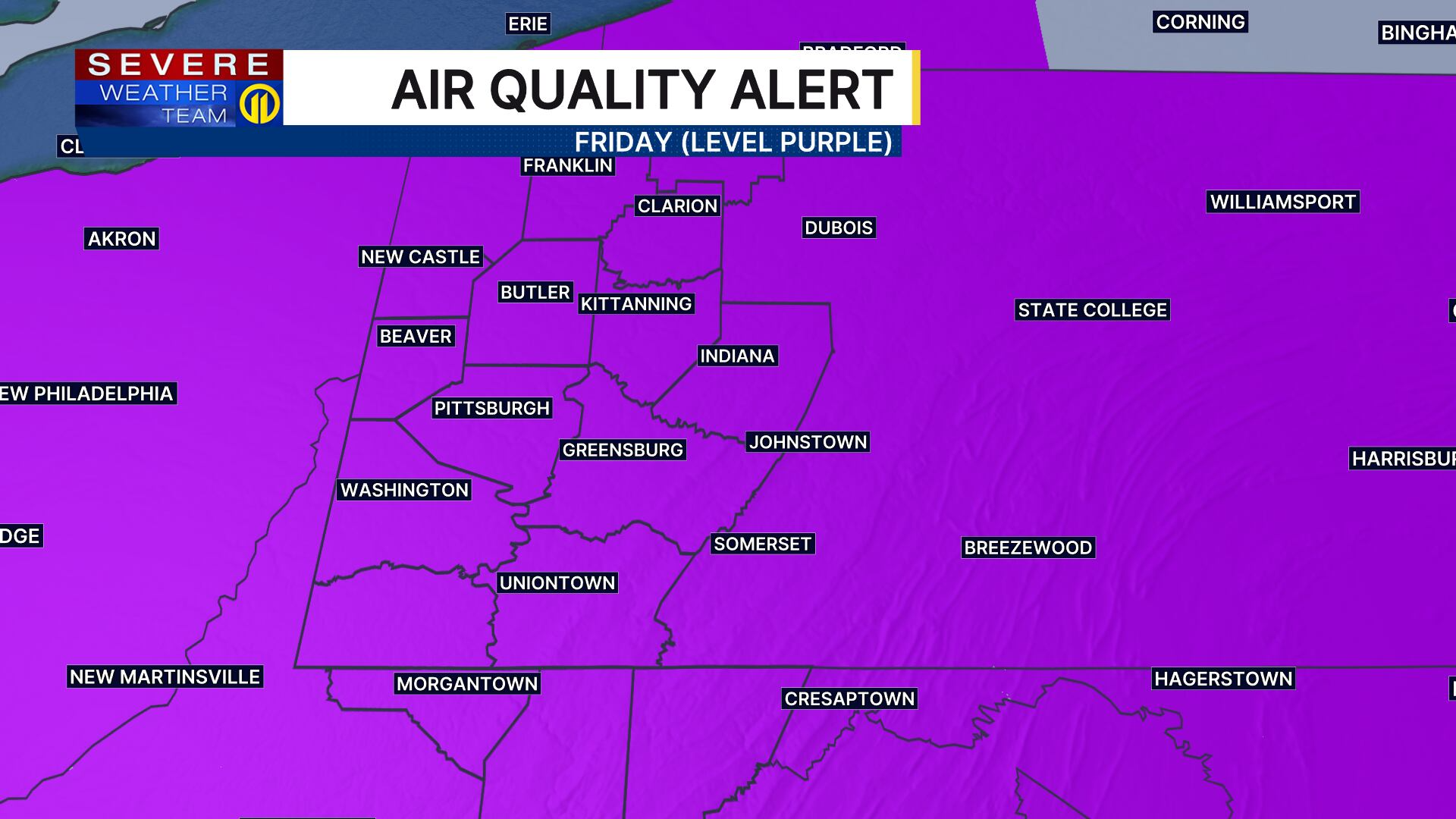
On July 17, 2026, Pennsylvania employers faced a problem that was simple to describe and harder to administer: the Department of Environmental Protection declared the state's first statewide Code Purple air-quality alert, placing outdoor work in "very unhealthy" air, but Pennsylvania had no wildfire-smoke workplace standard telling employers exactly when to stop work, move crews, issue masks, or document the decision.[1]
That is the legal tension behind Pennsylvania's Code Purple air-quality alert. A Code Purple alert is not itself an OSHA regulation. It does not automatically close job sites. It does not turn every outdoor shift into a violation. But it is also not a weather inconvenience an employer can safely ignore. Once a public agency identifies air conditions as very unhealthy, the employer has notice of a potential workplace hazard, and the later dispute will likely be reconstructed from ordinary records: who checked the AQI, who made the staffing call, what workers were told, what protection was offered, and whether the response was feasible under the circumstances.
This article is informational, research-driven legal analysis, not legal advice. Employers should consult counsel about their own operations, workforce, collective bargaining obligations, medical-accommodation issues, and local emergency orders.
What Code Purple Meant On July 17
DEP's July 16 announcement declared a statewide Code Purple alert for Friday, July 17, 2026, because wildfire smoke was expected to drive fine-particle pollution across Pennsylvania.[1] The next day, DEP said a Code Orange alert would remain in effect for southeastern counties on Saturday, July 18, as conditions improved but did not fully clear.[2]
On the EPA AirNow color scale, Code Purple corresponds to an AQI of 201 to 300, categorized as "very unhealthy." The pollutant of concern in the July event was PM2.5, fine particulate matter small enough to create respiratory and cardiovascular concern, particularly for people with existing health conditions and for workers breathing heavily during outdoor labor.[3]
The regional plume was not a localized nuisance. Reporting tied the episode to more than 850 active wildfires in Canada and more than 55,000 acres burned in Minnesota, with smoke affecting the northeastern United States.[4] For Pennsylvania employers, the important legal point is more modest than the atmospheric one: the hazard was public, measured, and foreseeable enough that an employer's inaction could be questioned later.
The Regulatory Gap Comes First
Pennsylvania is not operating under a state occupational-safety plan with its own wildfire-smoke rule for private employers. Employers in the Commonwealth generally sit under federal OSHA, and Pennsylvania has not adopted a California-style wildfire-smoke workplace standard that sets detailed AQI thresholds and mandatory control steps.[5]
That distinction matters. California, Oregon, and Washington have moved further, with specific wildfire-smoke requirements addressing monitoring, training, exposure controls, or respirator practices.[5][6] Those rules do not govern a Pennsylvania contractor, warehouse, municipality, landscaper, delivery operation, or utility crew merely because smoke crosses state lines. They do, however, make it harder to treat wildfire smoke as a novel workplace issue that no safety professional could reasonably anticipate.
The absence of a Pennsylvania-specific standard creates less certainty, not less responsibility. In a later OSHA inquiry, workers' compensation dispute, grievance, or negligence-adjacent record review, the employer will not be defending compliance with a neat Pennsylvania wildfire-smoke checklist. It will be defending the reasonableness of its response to a recognized hazard under the facts available at the time.
Where OSHA Fits: The General Duty Clause
In the current Pennsylvania landscape, the most important federal workplace-safety concept is OSHA's General Duty Clause. In broad terms, it requires employers to provide a workplace free from recognized hazards that are causing or are likely to cause death or serious physical harm. Employer-side analysis of wildfire-smoke events has increasingly treated that clause as the enforcement mechanism where no state-specific wildfire-smoke rule exists.[5]
A General Duty Clause case is not won or lost merely because the AQI crossed a color band. OSHA would generally need to show a recognized hazard, likely serious harm, feasible means of abatement, and employer knowledge. A statewide DEP alert helps with recognition and knowledge. PM2.5 health concerns help with seriousness. The harder, more fact-dependent questions are feasibility and abatement: what could this employer reasonably have done for this work, at this location, with this timing?
That is why the legal analysis quickly becomes operational. For a construction site, feasibility may include moving tasks indoors, shifting heavy work to another time, pausing nonessential exterior work, using enclosed equipment, adding filtered rest areas, or making N95 respirators available. For a delivery operation, it may mean route adjustments, shorter outdoor loading intervals, indoor recovery periods, and clearer escalation rules for supervisors. For municipal work, it may mean suspending certain services for a day. The clause does not dictate the same answer for each workplace, but it does leave exposed the employer that never asked the question.
National safety guidance has converged around several recurring wildfire-smoke controls: monitor PM2.5 or AQI, reduce exposure where feasible, use engineering controls such as filtration when indoor spaces are available, provide respiratory protection, and train workers on the hazard and the employer's procedures.[5][7] That convergence does not create a Pennsylvania regulation by itself. It does shape what a safety officer, investigator, expert witness, or claims handler may later view as reasonable.
What A Defensible Response Looks Like
The safest legal posture is not a memo saying, "No Pennsylvania rule applies." It is a contemporaneous file showing that the employer treated the alert as a workplace-safety event, made decisions tied to AQI information, and used feasible controls. The file does not need to be theatrical. It needs to be usable months later by someone who was not in the 6 a.m. operations call.
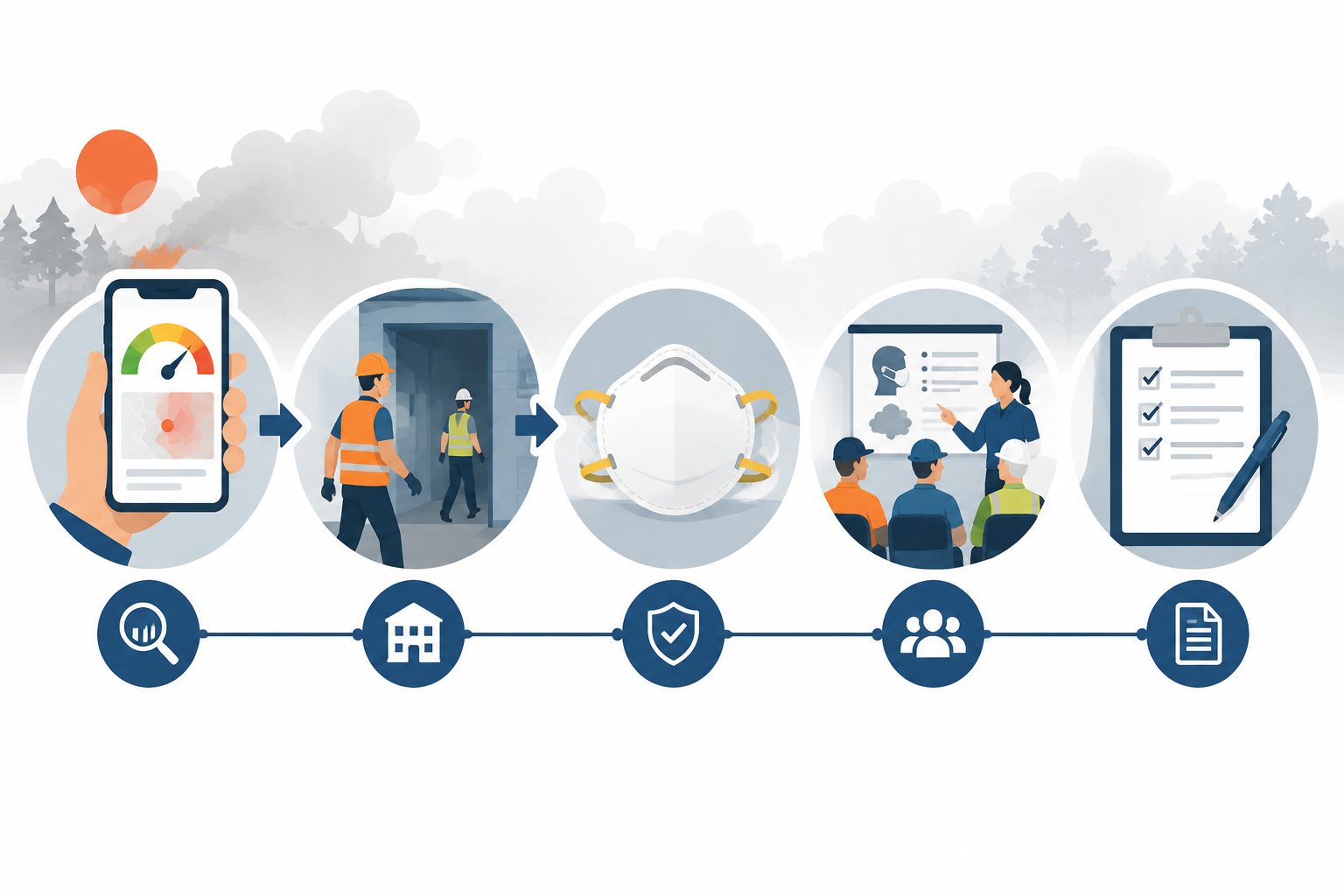
| Decision Area | What The Record Should Show |
|---|---|
| AQI monitoring | Who checked AirNow or another reliable source, when they checked it, which work locations were reviewed, and what AQI category applied. |
| Work changes | Which outdoor tasks were postponed, shortened, relocated, or kept in place because they were essential. |
| Exposure reduction | Whether workers received indoor breaks, access to filtered areas, enclosed vehicles or equipment, or schedule changes. |
| Respiratory protection | Whether N95 respirators were made available or required, how use was communicated, and how the employer handled fit, comfort, and supply limits. |
| Worker communication | What supervisors told employees about smoke symptoms, reporting concerns, voluntary mask use, breaks, and stop-work escalation. |
| Preserved evidence | Screenshots, emails, text alerts, shift logs, tailgate-training notes, purchase receipts, and supervisor instructions. |
Monitoring should be tied to the actual place of work, not just a statewide headline. A company with crews in Erie, Harrisburg, Philadelphia, and Scranton may not be able to defend a single statewide answer if local AQI levels, task intensity, and indoor alternatives differed. The point is not to create paperwork for its own sake; it is to connect the employer's instructions to the conditions affecting the worker.
Respirators require care in how they are described. Making N95 masks available during a smoke event is a practical exposure-reduction step and appears in wildfire-smoke guidance.[5][7] Requiring respirator use can implicate additional respiratory-protection obligations depending on the program and circumstances. Employers should not let that complexity become an excuse for doing nothing, but they also should not casually announce mandatory respirator rules without understanding the compliance consequences.
Training can be brief and still matter. Workers should know why smoke is being treated as a hazard, what symptoms to report, when and where to take breaks, whether masks are voluntary or required, and who has authority to change the work plan. A five-minute documented toolbox talk before exterior work is more useful than a polished policy drafted after a complaint.
Philadelphia's Response Is A Useful Benchmark, Not Binding Law
Philadelphia's response during the same event gives private employers a practical comparator. The city suspended trash pickup, closed public pools, and recommended that outdoor staff receive N95 masks and indoor breaks every 90 minutes.[8] The city's own Code Purple notice also directed residents to limit outdoor activity and addressed particulate-matter conditions in the city.[9]
A municipal decision is not a universal legal standard for every private employer. A hospital, warehouse, roofing contractor, delivery company, school district, and sanitation department do not have the same public obligations or operational constraints. Still, if a public employer in the same air event suspended outdoor services, supplied masks, and built in indoor breaks, a private employer that required strenuous outdoor work without monitoring, alternatives, masks, or explanation should expect harder questions.
The comparison is especially useful because it is local and contemporaneous. It does not require importing a California regulation into Pennsylvania. It simply shows what one Pennsylvania public employer treated as reasonable while the same statewide alert was active.
Outdoor Work Does Not Have One Legal Answer
During a Code Purple alert, some work can be moved, some can be delayed, and some may have to continue. The legal problem is not that all outdoor work becomes unlawful. It is that the employer must be able to explain why the remaining exposure was necessary and what was done to reduce it.
Construction guidance issued during the July 2026 event emphasized practical job-site steps such as monitoring air quality, adjusting work schedules, limiting strenuous outdoor activity, relocating workers where feasible, and providing respirators when appropriate.[10] Those measures are familiar because they track the hierarchy of ordinary safety decision-making: identify the hazard, reduce exposure first, rely on personal protective equipment where needed, and communicate clearly.
The harder cases will involve production pressure. A supervisor may believe a concrete pour, emergency repair, road closure, customer route, or municipal service cannot wait. That may be true. But if the file contains no AQI check, no discussion of alternatives, no break plan, no mask availability, and no worker communication, the employer has left itself with only a hindsight assertion of necessity.
Workers' Compensation Exposure Comes Later
OSHA is not the only reason records matter. Respiratory complaints may surface after the alert ends, and workers' compensation questions may turn on exposure, medical causation, timing, and whether the condition is tied to work rather than general community smoke. Goldberg Segalla's analysis of Canadian wildfire-smoke claims frames compensability around factors including the nature of the employment, the degree of exposure, medical evidence, and jurisdiction-specific rules.[11]
Pennsylvania occupational-illness claims are also affected by timing rules; the research materials identify a three-year period from diagnosis for such claims.[11] That is a reminder that the relevant evidence may be needed long after the AQI map has disappeared from the home page. Employers should preserve the ordinary materials that show where employees worked, what air conditions were known, what controls were offered, and how symptoms or complaints were handled.
The workers' compensation issue should not be overstated. A regional smoke event affects workers and nonworkers alike, and causation will often be contested. But a thin employer record makes every later dispute harder, especially for employees whose jobs required prolonged outdoor exertion while others were advised to stay inside.
What Is Certain, And What Is Not
As of July 19, 2026, there does not appear to be published Pennsylvania appellate case law specifically resolving employer liability for wildfire-smoke exposure under the General Duty Clause. Federal OSHA enforcement against Pennsylvania employers for wildfire smoke also remains less tested than the compliance conversation surrounding it. That uncertainty should make advice more careful, not more dismissive.
The certain points are narrower but important. Pennsylvania experienced a statewide Code Purple alert. Code Purple reflects very unhealthy AQI conditions. PM2.5 from wildfire smoke is a recognized health concern. Pennsylvania lacks a specific wildfire-smoke workplace rule. Federal OSHA's General Duty Clause remains available where employers expose workers to recognized serious hazards without feasible controls. Other states' wildfire-smoke standards, while not binding in Pennsylvania, show that regulators no longer view this as an exotic safety topic.
That combination leaves Pennsylvania employers with a practical legal answer: do not claim a safe harbor from silence. Build a contemporaneous, good-faith record showing AQI monitoring, feasible exposure reduction, respirator access where appropriate, worker communication, and supervisor-level decision-making. If enforcement or a claim arrives later, that record will matter more than any after-the-fact statement that the company took air quality seriously.
References
- DEP Declares Statewide Code Purple Air Quality Alert for Friday, July 17, 2026, Pennsylvania Department of Environmental Protection, July 16, 2026
- DEP: Code Orange Remains in Effect for Southeastern Counties on Saturday, July 18, 2026, Pennsylvania Department of Environmental Protection, July 17, 2026
- What does Code Purple mean? Pennsylvania's air quality alert system explained, CBS Pittsburgh
- Canadian wildfire smoke blankets Northeastern US, raising air quality risk for employers, Insurance Business Magazine
- Where There's Wildfire Smoke, There Are Safety and Compliance Concerns for Employers, Faegre Drinker, July 2026
- Wildfire Smoke at the Workplace: Safety and Legal Considerations for Employers, Ogletree Deakins
- Wildfire Smoke and Air Quality: What Employers Need to Know to Protect Workers, National Association of Safety Professionals
- Philadelphia under Code Purple wildfire smoke air quality alert, WHYY
- Philadelphia under Code Purple Air Quality Alert for Particulate Matter, City of Philadelphia, July 17, 2026
- Keep Workers Safe from Wildfire Smoke, National Association of Home Builders, July 2026
- Canadian Wildfire Smoke and Potential Workers' Compensation Claims, Goldberg Segalla
Comments
Join the discussion with an anonymous comment.