
The House passage of H.R. 139 on July 14, 2026, by 308-117 turned permanent daylight saving time from a policy idea into a compliance problem, and reporting around the vote shows the bill now has bipartisan momentum, Trump endorsement, and a Senate path still complicated by procedural resistance. [1][2][3]
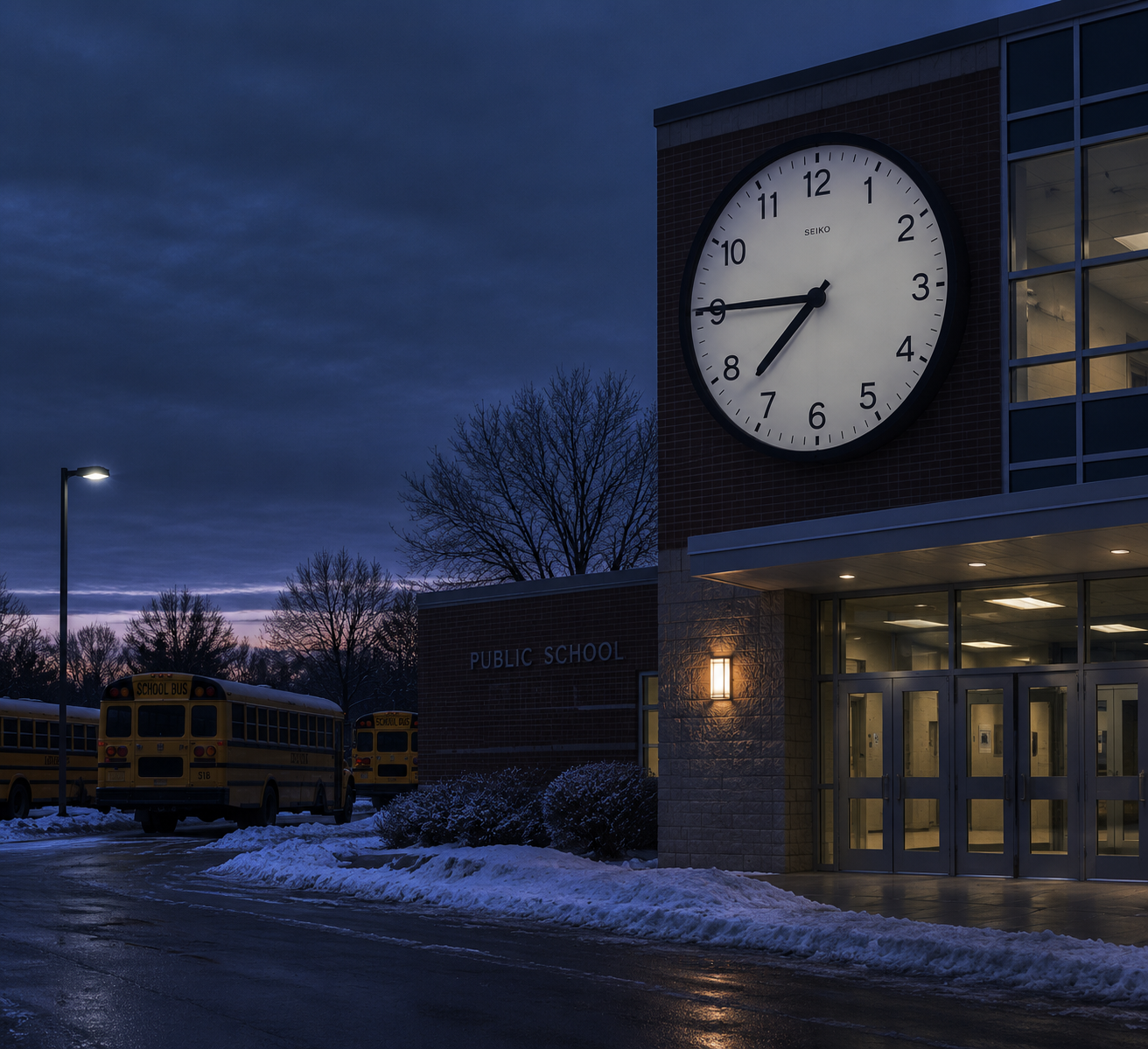
A federal time rule does not erase state school timing law
That vote matters because it would not just change clocks; it would change the legal background against which schools already operate. NBC News reported that 19 states have enacted conditional laws to adopt permanent daylight saving time if Congress authorizes it, which shows how much state policy is waiting on federal action rather than harmonized with it. The same reporting also notes that winter sunrise under permanent DST would push close to 9 a.m. in Seattle and close to 9:45 a.m. in Williston, North Dakota. [2]
For school districts, that is the real daylight saving time law effect on students: a district can be on the right side of a clock rule and still be operating in darkness when buses unload, crossing guards take post, and attendance begins. Once sunrise slides later than the bell, the question is no longer whether the schedule exists on paper. It is whether the schedule still produces the morning conditions state lawmakers said they wanted when they wrote later start-time laws.
California shows how the clash becomes concrete
California's SB 328 is the clearest example. The law requires middle schools to start no earlier than 8 a.m. and high schools no earlier than 8:30 a.m., and it was the first state law of its kind. Under permanent DST, sunrise in parts of California in December could approach 8:30 a.m., which means a district could technically satisfy the statute while still starting the day before daylight has really arrived. [4]
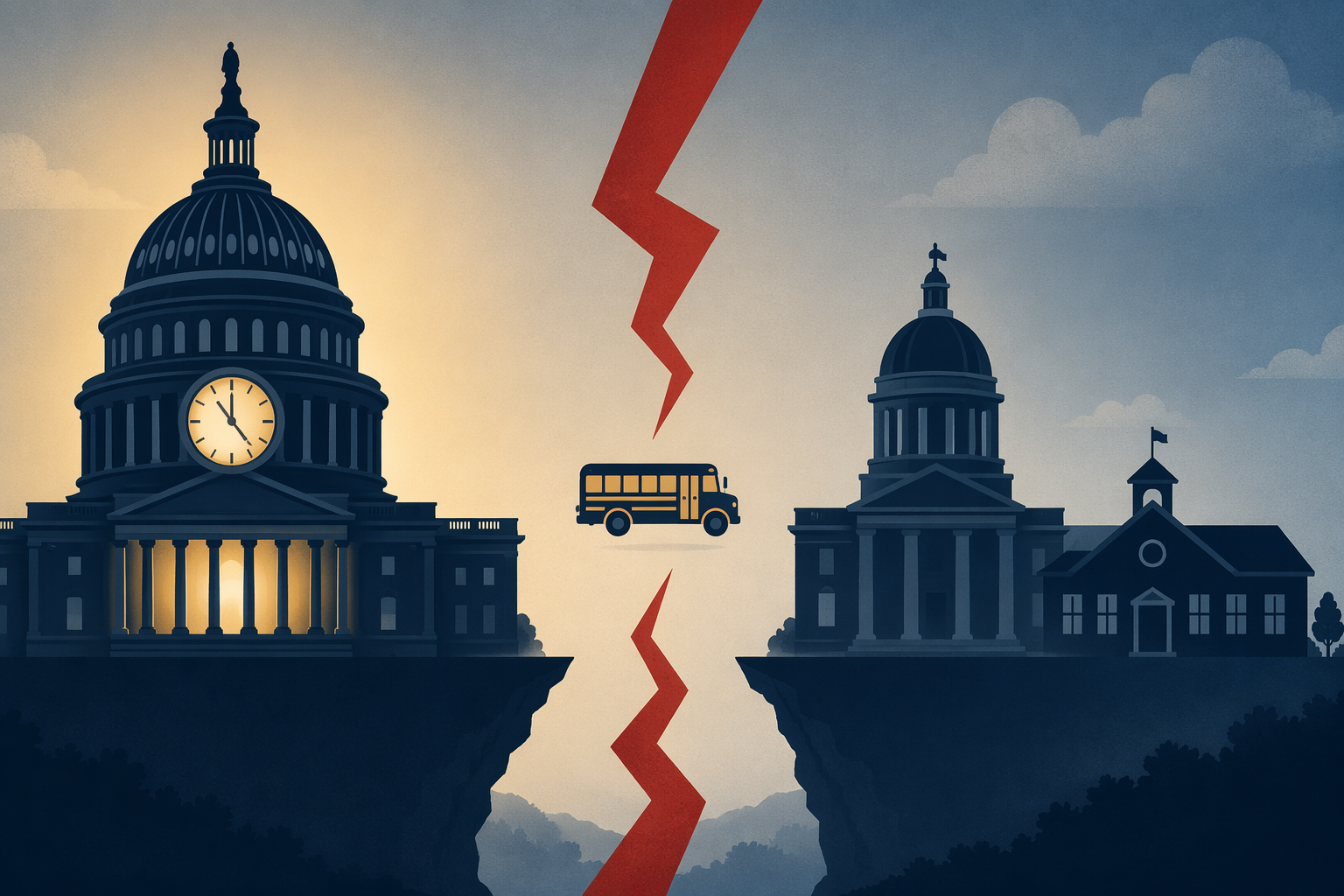
That is where the operational lawyering begins. A start-time mandate is not just a calendar preference; it is tied to transportation contracts, supervision duties, roadway conditions, and the safety assumptions that district administrators use when they decide when buses roll. If the federal government fixes the clock but does not explain how state school-start statutes should be read in that new clock regime, districts are left to reconcile two commands that may point in different directions.
States are still moving underneath the federal debate
Florida's 2026 effort to reverse its later-school-start-time law shows that this field is still fluid. State lawmakers are not treating school timing as a settled background rule; they are revisiting it when they think the balance between morning light, student sleep, transportation, and local control has shifted. [5]
That matters because permanent DST would not land on a blank slate. It would land on states that have already made different judgments about whether later starts improve student welfare, and on districts that have already built calendars, bus routes, and staffing plans around those judgments. If Congress changes the time system again, the education codes sitting underneath it will not all move in the same direction.
Student-welfare arguments support standard time more than DST
The institutional health and education groups are mostly aligned on the same point: permanent standard time is the safer student-welfare choice, not permanent DST. The American Academy of Sleep Medicine, the American Academy of Pediatrics, the National PTA, the two largest teachers unions, and the National School Boards Association have all supported standard time rather than year-round DST, and the AASM has specifically opposed permanent DST on health grounds. [6][7]
That support does not solve the legal conflict by itself, but it shows why school lawyers keep coming back to morning light. The argument is not merely that students may sleep better under one system or another. It is that the morning schedule is part of a district's safety environment, and a federal time change can move that environment without changing a single state education statute.
Congress has seen the public backlash before. The 1974 emergency daylight-saving experiment was repealed in less than a year after parents objected to children walking to school in darkness, which is a useful reminder that schoolchildren and morning light have already helped sink a daylight-saving experiment once. [8]
The unresolved compliance problem sits with districts
The bill's text still does not reconcile permanent DST with state school-start mandates, and that omission is what makes the issue legally uncomfortable. If the federal clock says one thing and a state education statute says another, school districts will not get a neat answer from the statute itself. They will get the task of deciding which requirement can be operationalized safely, and which one is most likely to be challenged later. That puts district counsel, superintendents, transportation directors, and building administrators in the position of translating a national time rule into local risk management, with no clear bridge in the bill between the clock on paper and the conditions students face before first period.
References
- House passes bill to make daylight saving time permanent — The Hill, July 2026
- House passes bill that would make daylight saving time permanent — NBC News, July 2026
- US House passes bill to make daylight saving time permanent — Reuters, July 2026
- California becomes first state in nation to mandate later school start times — 6ABC / ABC News
- Florida Senate passes bill to undo law for later school start times — NBC Miami, 2026
- More Productivity or 'Zombied Out' Students? — The 74 Million
- Taking to 'heart' the proposed legislation for permanent daylight saving time — PMC / PubMed Central
- Sen. Cotton floor speech — Congressional Record / Senate floor remarks
Comments
Join the discussion with an anonymous comment.