
The July 18, 2026 cetirizine recall has the kind of small, stubborn fact that tends to matter later: a pharmacy technician saw red dot discoloration on tablets. The FDA notice identifies four lots of cetirizine HCl 5 mg tablets recalled by Unique Pharmaceutical Laboratories, a division of J.B. Chemicals & Pharmaceuticals Ltd., because of possible ranitidine cross-contamination. The manufacturer is based in Panoli, Gujarat, India, and the U.S. distributor is Rising Pharma Holdings in East Brunswick, New Jersey. The notice also says no adverse events had been reported as of the recall announcement.[1]

That last point matters, but not because it ends the analysis. “No adverse events reported” is a causation boundary. It tells lawyers that, as of the notice, the record does not yet contain identified injury reports tied to the recalled lots. It does not answer the pleading question, the exposure question, or the question whether plaintiffs can use the recall itself as the opening factual hook for discovery.
As of July 22, 2026, no lawsuits specifically tied to this cetirizine-ranitidine recall have been identified. The legal issue, then, is not whether filed claims are already moving. It is whether this fact pattern gives plaintiffs a pleading route that looks materially different from the conventional manufacturing-defect case.
Why this recall is not just another contamination notice
In an ordinary pharmaceutical manufacturing-defect case, the plaintiff usually has to do more than point to a bad outcome or an unwanted substance. The familiar defense move is to ask for the deviation: which lot, which specification, which batch record, which departure from the intended process. Without that, the complaint can look like a design-defect claim wearing a manufacturing-defect label.
The cetirizine recall is awkward for that framework. The alleged problem is not that cetirizine’s active ingredient was designed in a way that produced the injury theory. It is that a different drug, ranitidine, may have entered the product stream. If a plaintiff later alleges exposure from a recalled bottle, the intuitive liability story is manufacturing contamination, not inadequate labeling. That matters because labeling claims against generic drug manufacturers often run into federal preemption problems, while manufacturing-defect claims generally occupy a different lane.
The practical question is how much specificity a plaintiff must have before discovery. Must the plaintiff allege and eventually prove that the particular bottle or batch departed from the manufacturer’s specifications? Or can the plaintiff allege that the manufacturer’s own intended system created the conditions for cross-contamination, even without batch-specific deviation proof at the outset?
The California order that changes the pleading conversation
The reason the cetirizine recall now carries more litigation significance than the notice alone would suggest is the September 2025 California JCCP order in In re Ranitidine Cases. Holland & Knight described the order as allowing plaintiffs to proceed on what amounts to a hybrid manufacturing-defect theory, one that treats the manufacturer’s intended process itself as the defect-producing mechanism rather than requiring proof that individual batches departed from their specifications.[2]
That is the pressure point. Traditional doctrine separates design defect from manufacturing defect because they ask different questions. A design-defect claim challenges the product as intended. A manufacturing-defect claim usually accepts the intended design and asks whether the unit or batch strayed from it. The California order, as analyzed by practitioners, permits a plaintiff to say something more uncomfortable for defendants: the manufacturing process was followed, but the intended process was itself structured in a way that generated the contaminating condition.[2]
Defense lawyers noticed the move for a reason. Drug & Device Law called the theory “nonsensical” and warned that the order would “throw California product liability law into disarray.”[3] That reaction is advocacy, but it is not empty noise. If a court lets a plaintiff call the intended manufacturing system defective without treating the claim as design defect, the defendant loses a familiar early merits argument: that no manufacturing-defect claim exists unless the plaintiff can identify a concrete deviation from specifications.
The detail that should bother any litigator briefing the next motion is that the JCCP order reportedly acknowledged plaintiffs had “no evidence” of deviation for individual batches and still allowed the theory to survive summary judgment.[2] That is not a pleading-stage indulgence in the usual sense. It suggests that, at least in that court’s view, the absence of batch-specific deviation evidence did not defeat the claim if the defect was framed at the level of the intended manufacturing system.
One California trial court order does not rewrite national product-liability law. It has not been tested on appeal, and defendants outside that coordinated proceeding will have every reason to resist it. But treating it as harmless because it is only a trial-court ruling also misses how mass-tort theories spread. Plaintiffs do not need immediate national consensus to use an order as a drafting model, an opposition brief template, or a way to survive long enough to reach internal records.
What the hybrid theory does to proof
The hybrid theory does not eliminate proof. It changes where the fight starts. Instead of beginning with the plaintiff’s inability to identify a batch-specific specification failure, the case may begin with questions about facility layout, product sequencing, cleaning validation, shared equipment, quality systems, investigation records, and whether the manufacturer intended to run the process in a way that made cross-contact foreseeable.
| Traditional manufacturing-defect frame | Hybrid manufacturing-system frame |
|---|---|
| The product departed from intended specifications. | The intended manufacturing system allegedly produced the contaminating condition. |
| The plaintiff is pressed to identify the defective batch or unit. | The plaintiff may focus first on process design, controls, and contamination pathways. |
| No deviation evidence can be case-dispositive early. | No batch-specific deviation evidence may not end the case if systemic intent is adequately alleged. |
| Discovery targets batch records and failed specifications. | Discovery expands toward quality systems, cleaning procedures, line-sharing, investigations, and process decisions. |
That is a meaningful litigation shift even if the plaintiff still has to prove exposure, injury, causation, and defect. A complaint can be thin on facts about the exact manufacturing misstep and still be dangerous if it ties together a recall, a visible tablet anomaly, a named contaminant, a shared manufacturing context, and an allegation that the process itself was arranged in a way that allowed the contaminant into the product.
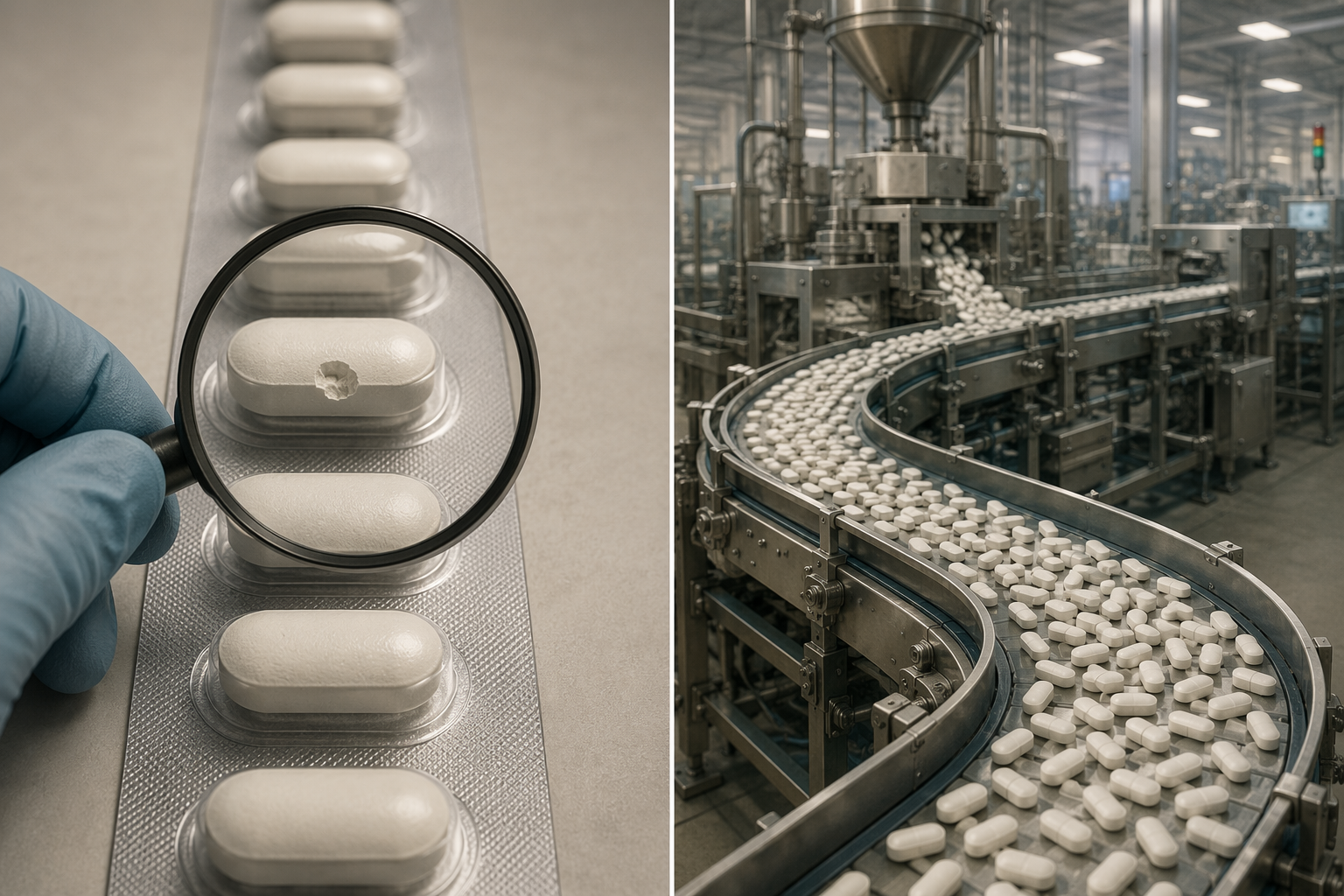
The red dot discoloration in the cetirizine notice is precisely the sort of fact that can carry more weight than generic recall language. It gives a plaintiff something tactile. A pharmacy technician saw an abnormal physical condition. The manufacturer recalled identified lots because of possible ranitidine cross-contamination. Those facts do not prove injury, and they do not prove how ranitidine entered the tablets. But they provide a concrete bridge from product appearance to manufacturing-process discovery.[1]
Why cetirizine-ranitidine cross-contamination is a clean test case
Cross-contamination is unusually well suited to the hybrid theory because the alleged wrong is not hard to locate conceptually. A plaintiff does not need to argue that cetirizine should have carried a different warning about its own pharmacology in order to explain why ranitidine should not have been in the bottle. The contaminant is foreign to the expected product.
That distinction matters in generic-drug litigation. The ICLG’s U.S. drug and medical-device litigation overview identifies preemption as a central defense framework in pharmaceutical cases, and generic failure-to-warn claims remain shaped by PLIVA v. Mensing.[5] If the claim is that a generic manufacturer should have unilaterally changed labeling, the plaintiff faces a difficult federal-law problem. If the claim is that the product was contaminated because of the way it was manufactured, the preemption analysis is not the same.
That does not mean every manufacturing-defect label defeats preemption. Courts look past labels when a claim is really a disguised warning or design claim. But the cetirizine recall facts give plaintiffs a cleaner manufacturing story than many generic-drug cases: tablets sold as cetirizine may have contained ranitidine. The asserted duty would be to make the drug without cross-contaminating it, not to say something different about cetirizine’s risks.
For defendants, the immediate answer will likely be to separate recall risk from tort proof. Possible cross-contamination is not proof that a particular plaintiff ingested ranitidine, not proof of dose, not proof of injury, and not proof that any alleged exposure caused a compensable condition. The FDA notice’s statement that no adverse events had been reported gives that argument real force at the outset.[1]
But that answer does not neutralize the pleading problem created by the hybrid theory. A plaintiff may not need the adverse-event record to open the courthouse door if the claim is initially framed around recalled lots, abnormal tablet appearance, and a manufacturing system that allegedly permitted ranitidine cross-contact. The injury case can remain undeveloped while the defect theory survives long enough to seek records that only the manufacturer and distributor possess.
The ranitidine mass tort context still matters
The cetirizine recall is not a rerun of the Zantac litigation, and it should not be treated as one without facts tying actual exposure and injury to the recalled product. Still, ranitidine litigation supplies the legal weather around this recall. MDL-2924 reporting lists 15,018 total actions filed and 847 pending, and states that the Eleventh Circuit Daubert appeal in Rosenberg was argued in October 2025 but remained undecided as of July 2026.[4]
Those numbers do not prove anything about cetirizine. They do show why courts and lawyers will not treat ranitidine-related allegations as a curiosity. They also keep expert admissibility in the foreground. If the Eleventh Circuit’s pending ruling changes the federal landscape for NDMA causation evidence, it could affect how parties value and litigate later cross-contamination claims, even if the recall theory itself begins as a manufacturing-defect case rather than a broad ranitidine product case.[4]
That is one reason confident predictions are premature. A plaintiff still needs an injury theory. A plaintiff still needs exposure evidence. A plaintiff still needs admissible expert testimony if the alleged harm depends on toxicology, dose, or disease causation. The hybrid theory may help a complaint or opposition brief survive a defect challenge, but it does not fill every evidentiary gap.
What litigators should watch next
The first practical marker is whether any complaint tied to the recalled cetirizine lots pleads contamination as a conventional manufacturing defect or borrows the California hybrid language. The difference will show up in the allegations. A traditional complaint will hunt for deviation: failed cleaning, mislabeled equipment, commingled material, a bad lot record. A hybrid complaint will likely plead that the intended manufacturing setup itself made ranitidine cross-contamination possible.
- Whether plaintiffs allege ingestion from one of the four recalled lots, rather than mere purchase of cetirizine.
- Whether complaints rely on the red dot discoloration as evidence of visible product abnormality.
- Whether defendants move early on the absence of batch-specific deviation proof.
- Whether plaintiffs plead the manufacturing process as intentionally structured in a way that permitted cross-contamination.
- Whether courts treat that theory as manufacturing defect, design defect, or an impermissible collapse of the two.
- Whether expert-admissibility rulings in ranitidine litigation narrow or expand the practical value of any surviving defect claim.
The second marker is how defendants handle preemption. A broad motion that assumes all generic-drug claims are warning claims may miss the more difficult issue. The stronger defense position will likely preserve preemption arguments while separately attacking defect, causation, exposure, injury, and the legal validity of the hybrid theory.
The third marker is appellate discipline. Until the California order is tested beyond the trial court level, it remains persuasive material, not settled law. But persuasive material can still shape pleadings, discovery fights, and settlement posture. If another court adopts the same reasoning in a cross-contamination case, the issue will stop looking like an isolated California experiment.
The legal risk from ranitidine contamination in cetirizine is therefore narrower than a wave-of-litigation headline and broader than a routine recall notice. The current record does not show filed recall-specific lawsuits or reported adverse events. What it does show is a fact pattern that fits unusually well with an emerging California theory allowing plaintiffs to frame contamination as the product of systemic manufacturing intent rather than an isolated batch deviation. If other courts borrow that theory, the exposure problem for manufacturers and distributors expands materially, even while causation, appellate review, and expert admissibility remain unresolved.
References
- Unique Pharmaceutical Laboratories, Div. J. B. Chemicals & Pharmaceuticals Ltd. Issues Voluntary Nationwide Recall of Cetirizine HCl Tablets USP 5 mg Due to Potential Ranitidine Cross-Contamination, FDA, July 18, 2026.
- New California Ranitidine Litigation Order Makes, Holland & Knight, September 2025.
- New California Ranitidine Litigation Order Makes a Huge Mess of Everything, Drug & Device Law, September 2025.
- MDL-2924 Zantac, MDL Update, July 2026.
- USA: Drug & Medical Device Litigation 2026, ICLG, 2026.
Comments
Join the discussion with an anonymous comment.