
Justice Raper dismissed Charlotte MacInnes’ defamation claim against Rebel Wilson on July 22, 2026, after finding that MacInnes failed to establish that the publications caused, or were likely to cause, serious harm to her reputation. Costs were ordered against MacInnes, and her representative confirmed that she intends to appeal.[1]
That is the operative appeal update: the case did not turn, at this stage, on whether Wilson’s posts were tasteful, whether every allegation was true, or whether the public commentary was bruising in the ordinary sense. It turned on whether MacInnes had put forward enough evidence to pass the statutory serious-harm threshold under section 10A of the Defamation Act 2005 (NSW). On the reporting presently available, she did not.

The case failed before the court had to resolve every factual fight
The uncomfortable feature of the ruling is that it allows two things to be true at once. The court could accept parts of MacInnes’ account, criticize the reliability of Wilson and related witnesses, and still dismiss the claim because the pleaded publications were not shown to have crossed the serious-harm threshold.
That is not a technicality in the pejorative sense. Section 10A is designed to do real work. It asks a plaintiff to establish that the publication has caused, or is likely to cause, serious harm to reputation before the case proceeds into the fuller machinery of defamation liability and remedy. In practical terms, it prevents a case from surviving merely because the words are ugly, widely discussed, or capable of bearing defamatory imputations.
The reported findings that mattered most were not the most sensational ones. They were the career facts. Wilson’s barrister, Dauid Sibtain SC, argued successfully that MacInnes had not run her case on lost career opportunities. The court also accepted evidence that MacInnes’ career flourished after the posts, including a lead stage role and a six-figure record deal.[1]
Those findings do not mean a plaintiff can never prove serious harm while continuing to work. Creative careers do not move in neat lines, and public allegations may affect casting, financing, touring, or private industry confidence in ways that are hard to see from the outside. But a plaintiff still has to prove the point. If the visible record after publication includes significant professional gains, the harm case needs evidence that explains why those gains do not answer the pleaded reputational injury.
Serious harm is an evidentiary burden, not a tone assessment
For practitioners, the lesson is less glamorous than the names attached to the case. A plaintiff cannot assume that high-profile allegations, online attention, and industry embarrassment will speak for themselves. The serious-harm inquiry asks what happened to reputation in a legally cognizable way, or what was likely to happen, and the evidence must meet that question rather than orbit it.
| Issue | Why it mattered at the serious-harm stage |
|---|---|
| Career trajectory after publication | The reported lead stage role and six-figure record deal gave the defendant concrete evidence against a serious reputational injury case. |
| Lost-opportunity theory | Wilson’s side argued that MacInnes did not run her case on lost career opportunities, leaving a gap between alleged reputational sting and proved consequence. |
| Credibility disputes | Unreliable evidence could affect factual findings, but it did not remove MacInnes’ burden to establish serious harm. |
| Jurisdiction | NSW law required serious harm; Western Australian law would not have imposed that same threshold. |
The discipline of this threshold is that it separates reputational discomfort from actionable serious harm. A performer may feel the force of public allegations immediately. Friends may call. Agents may ask questions. The press may repeat the worst parts. None of that is irrelevant as human context, but the court still needs evidence connecting the publication to serious reputational damage or a likelihood of it.
That evidence might, in another case, include lost roles, withdrawn negotiations, changed contractual terms, industry witnesses, contemporaneous communications, or proof that decision-makers treated the publication as disqualifying. The reported difficulty for MacInnes was that the record the court accepted went the other way at the point that mattered: her career advanced after the posts.[1]
The credibility findings do not make this a Wilson vindication
It would be too simple to read the dismissal as a judicial endorsement of Wilson’s conduct. Reporting from the close of the case recorded serious criticism of the Wilson side’s evidence. The BBC reported that Justice Raper found Wilson and two related witnesses unreliable, and that Wilson had a “propensity to exaggerate events.”[3]
The Guardian’s trial reporting captured the same credibility terrain, including submissions that Wilson was a “fantastical liar” who had made up serious allegations against multiple people.[4] Those submissions and findings matter because they prevent the dismissal from being flattened into a morality play in which one side was believed and the other was not.
On the reported outcome, the court also found that MacInnes did complain to Wilson on September 6, 2023, before later walking back her discomfort.[1] That finding is not incidental. It shows why the judgment is legally sharper than a celebrity headline: a plaintiff may win an important factual point and still lose if that point does not establish the statutory threshold on which the proceeding depends.
For readers who want a fuller breakdown of the ruling itself, the companion analysis at A Legal Analysis of the Rebel Wilson Defamation Case Ruling is the better place to sit with the judgment structure. The point here is narrower: serious harm allowed the court to dispose of the case without finally deciding every factual dispute that made the dispute publicly combustible.
Why NSW law mattered
The jurisdictional point deserves more attention than it will receive in most celebrity coverage. ABC reported before judgment that one dispute was whether New South Wales or Western Australian law applied. NSW law applied, and NSW has the section 10A serious-harm requirement. Western Australia has not implemented that serious-harm test, meaning MacInnes would not have had to clear the same statutory threshold if WA law had governed the claim.[2]
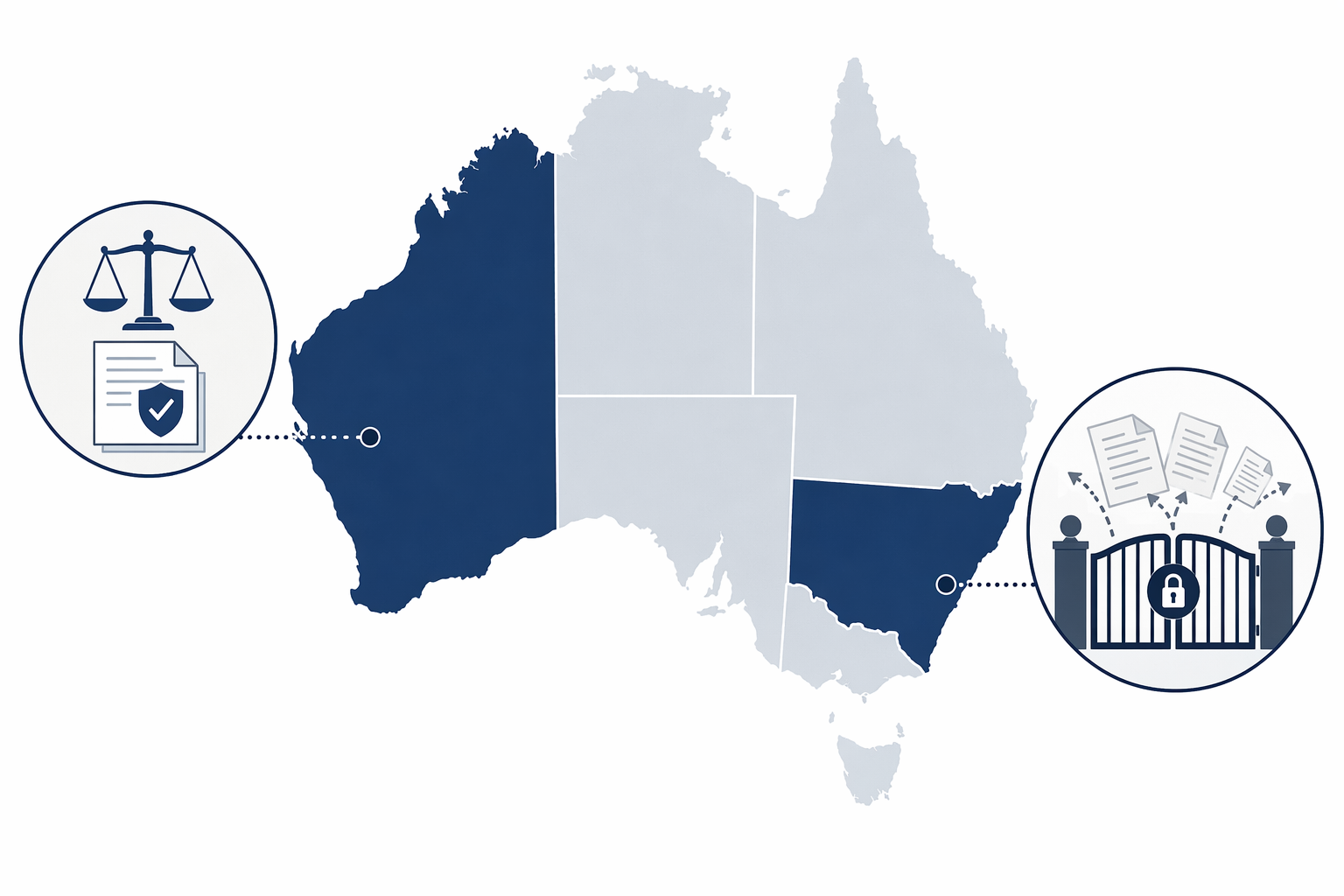
That does not make jurisdiction a magic answer for either side. Cross-border publication cases still require careful analysis of where publication occurred, where harm is said to have been suffered, and which law governs. But after this ruling, defendants will have a clear reason to press serious-harm jurisdictions where the facts allow it, and plaintiffs will need to think early about whether their pleaded forum leaves them with a threshold they can actually prove.
The difference is procedural, but it changes litigation economics. A serious-harm threshold can move the most important evidentiary contest to the front of the case. That affects affidavits, subpoenas, witness selection, settlement pressure, and costs exposure. MacInnes is now facing that last consequence directly because costs were ordered against her after dismissal.[1]
What the appeal has to confront
The appeal has been announced, but the available reporting did not identify formal grounds of appeal, and no publicly accessible notice of appeal was available when this article was prepared. That distinction matters. An announced appeal is not yet an argument.
MacInnes may try to challenge the way serious harm was assessed, the treatment of the career evidence, or the application of NSW law. She may argue that reputational harm in the entertainment industry cannot be measured by headline career outcomes alone. She may also seek to frame the lead role and record deal as compatible with other forms of industry damage. Those are possible appellate directions, not reported grounds.
The practical problem is that an appeal court will not approach a blank page. The reported factual record includes a finding that her career flourished after publication, and that she did not run a lost-opportunity case. Unless that record is dislodged, reframed, or legally neutralized, the appeal must explain how serious reputational harm was established despite evidence of professional advancement.[1]
This is also where the absence of the full written judgment limits confident analysis. When this article was prepared, the complete reasons were not publicly docketed, so the available account depends on reliable reporting rather than a line-by-line reasons analysis. Practitioners should therefore be cautious about drawing fine conclusions about the precise two-step serious-harm reasoning until the reasons can be read in full.
Different procedural devices, different burdens
Wilson’s wider defamation litigation has also produced U.S. procedural skirmishing, including a California anti-SLAPP appeal in which Law360 reported that Wilson could not defeat a defamation suit on appeal.[5] The comparison is useful only up to a point. Anti-SLAPP procedure and Australian serious-harm thresholds allocate burdens, timing, and costs risk in different ways.
For a broader account of Wilson’s defamation wins and procedural lessons across matters, see The Rebel Wilson Defamation Case Wins and Their Legal Lessons. The MacInnes ruling should not be treated as a universal celebrity-defamation template. Its value lies in the specific Australian threshold question: what evidence must a plaintiff put on before the court will let the claim proceed?
The practitioner takeaway
Plaintiffs should build the serious-harm case as a front-end evidentiary exercise, not as something damages evidence will tidy up later. If the case is about lost opportunities, plead and prove them. If the case is about industry avoidance, identify the decision-makers and the changed behavior. If the case is about likely future harm, explain why the likely harm is serious despite any visible professional progress.
Defendants, meanwhile, will look closely at post-publication facts that cut against reputational damage: continued work, new contracts, positive publicity, expanding audiences, or commercial gains. Those facts will not always defeat serious harm, but they can force a plaintiff to articulate a more precise harm theory than “people saw the allegation and it was damaging.”
MacInnes may yet test the ruling on appeal. But unless she can overcome the reported finding that her career advanced after the publications, the appeal faces a difficult evidentiary problem as much as a legal one. Serious harm is now the first battleground. Reputational injury must be proved, not presumed.
References
- Rebel Wilson wins defamation case brought by The Deb star Charlotte MacInnes, ABC News, July 22, 2026
- Rebel Wilson awaits ruling in defamation battle with fellow actor, ABC News, July 22, 2026
- Rebel Wilson accused of complete revision of history as defamation case closes, BBC News
- Rebel Wilson is a fantastical liar who made up terrible allegations against multiple people, The Guardian, May 8, 2026
- Rebel Wilson Can't Defeat Calif. Defamation Suit On Appeal, Law360, May 13, 2026
Comments
Join the discussion with an anonymous comment.