
Sandra Bullock did not give Hollywood the clean AI sound bite it usually knows how to process. Speaking at CNBC's Changemakers Summit on April 16, 2026, after fake AI-generated trailers for a nonexistent "Practical Magic 2" had circulated online, she told the room: "We have to observe it. We have to understand it. We have to lean into it. We have to make it our friend." In the same conversation, she warned that "there are people who will use it for evil and not good."[1][2]

That tension is the point. Bullock's comments are not a contradiction so much as a useful description of where celebrity AI risk now lives: between industry adoption and legal incompleteness. Studios can use generative tools for previsualization, dubbing, temp marketing assets, and digital replica planning. Fans can make convincing trailers before a production announcement is real. Bad actors can wrap a famous face or voice around a product, a scam, or a sexually explicit image before anyone in legal has seen the file.
The legal question raised by Bullock's comments is not whether performers should like AI. It is what they can enforce when their identity moves through a system faster than consent forms, takedown teams, and state-law claims can follow.
The Risk Arrives Before the Lawsuit
Entertainment lawyers rarely encounter AI risk first as a fully formed complaint. It appears as a link in a text thread, a manager asking whether a voice was licensed, a studio business affairs team checking a vendor deliverable, or an estate representative trying to work out whether a deceased performer has been digitally revived without authority. By the time the legal category is identified, the asset may already have been clipped, reposted, monetized, or copied out of the jurisdiction where the strongest claim exists.
That is why Bullock's "lean into it" framing matters. It accepts that AI tools are already part of entertainment operations, but it does not answer the cleanup problem. A celebrity can be curious about useful AI and still face unauthorized trailers, synthetic endorsements, voice clones, or digital replicas that land in different legal buckets.
At the federal level, the United States still has no general right-of-publicity statute. Protection for a person's name, image, likeness, and sometimes voice largely depends on state law, with roughly 35 states recognizing some form of right-of-publicity protection.[3] That number sounds broad until an asset travels nationally. The right may exist in one state, be narrower in another, survive death for one period in one jurisdiction and a different period elsewhere, and interact differently with free speech, parody, newsworthiness, platform immunity, fraud, contract, or unfair competition theories.
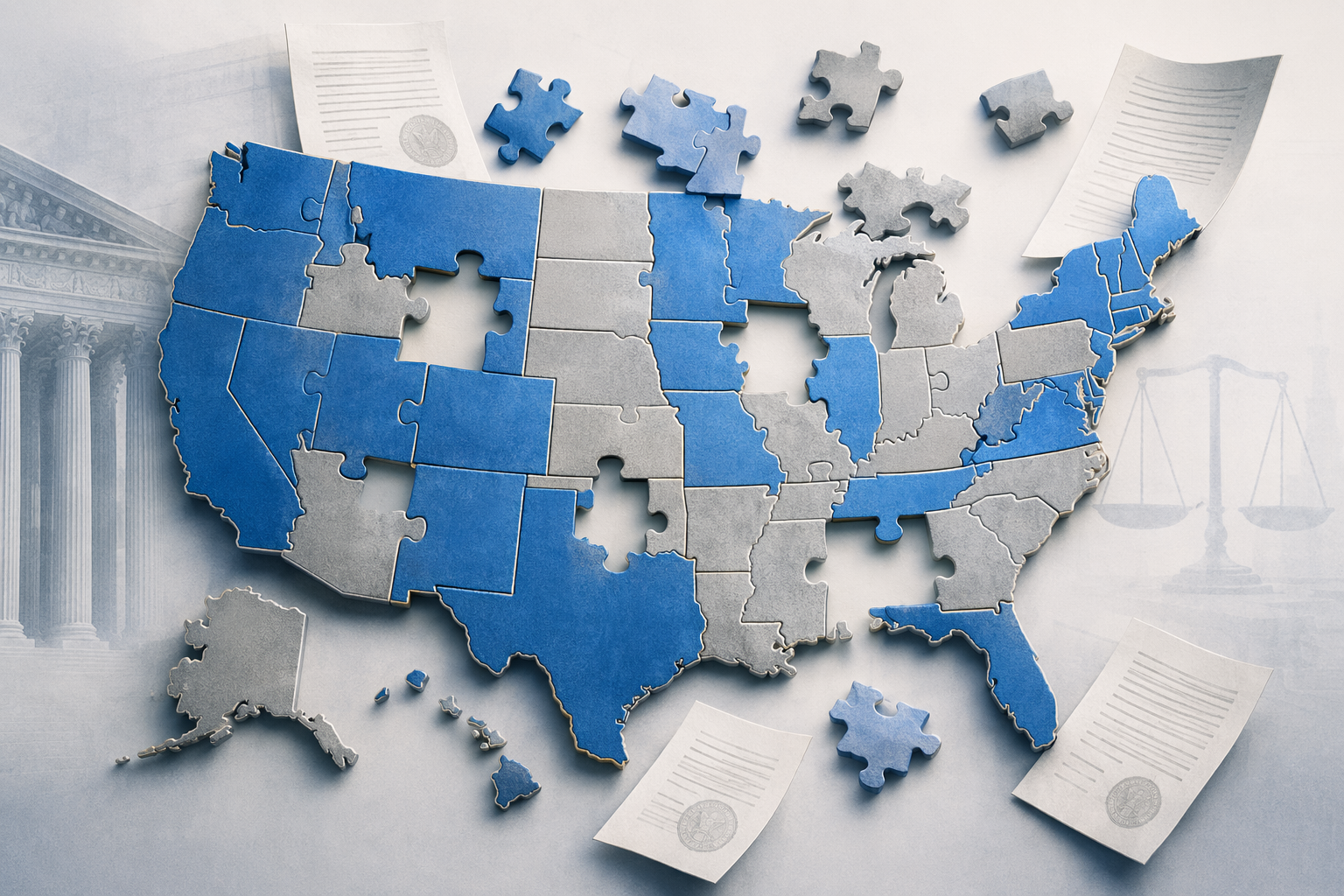
For counsel, that means the first question is still a forum question: where did the use occur, where was the celebrity domiciled, where was the harm felt, who uploaded or distributed the material, and what claim is actually available? AI has made the asset more portable; it has not made the law more uniform.
What Celebrities Can Actually Rely On Now
The existing tool kit is real, but uneven. A living performer may have state right-of-publicity claims if an unauthorized AI use commercially exploits identity. A contract may bar or limit digital replica creation. A guild agreement, talent rider, vendor agreement, or production services contract may require consent, disclosure, approval, or deletion. An estate may have postmortem rights or estate-planning documents that restrict exploitation. A deceptive ad may create consumer protection, false endorsement, or fraud theories. A sexually explicit deepfake may trigger a different statutory regime altogether.
Voice is not outside that structure. In Midler v. Ford Motor Co., the Ninth Circuit held in 1988 that a deliberate imitation of Bette Midler's distinctive voice for a commercial advertisement could violate her right of publicity even though the advertiser had not used her actual recording.[4] The case is not an AI case, but it remains one of the reasons lawyers pay close attention when a synthetic voice is not literally copied yet appears designed to evoke a specific performer.
That distinction matters in AI disputes because the disputed output may be probabilistic rather than a simple sample. A company may say it used another actor, another dataset, or a voice style rather than a protected recording. The performer's side may argue that the product was selected, tuned, marketed, or deployed because it invoked the celebrity's commercially valuable identity. The enforceable answer may depend less on whether the public calls it a deepfake and more on evidence of intent, similarity, consent, commercial use, and state-law coverage.
California Has Moved, But Not for Everyone Everywhere
California's recent AI replica laws are important because so many entertainment contracts touch California law or California-based parties. Effective January 1, 2025, AB 2602 makes certain contract provisions unenforceable if they permit use of a performer's digital replica without specific, informed consent and representation by a lawyer or union. AB 1836 addresses deceased personalities, prohibiting unauthorized AI digital replicas in specified circumstances and allowing $10,000 penalties or actual damages.[5][6]
Those measures give lawyers something concrete to draft against. They also show the limits of relying on a single state. AB 2602 is primarily a contract enforceability tool. It is useful when there is a deal, a counterparty, and a clause to challenge. It does less work when the problem is a scam advertiser with no talent agreement, a fan account outside the United States, or a platform user who never negotiated with the performer at all.
AB 1836 is similarly significant for estates, but it does not convert postmortem publicity rights into a national code. Estates still need to understand domicile, applicable law, contract chains, and where enforcement is practical. The more valuable the identity, the more likely the estate is to face uses that do not arrive through licensed channels.
Tennessee's ELVIS Act Adds a Music-Specific Signal
Tennessee moved earlier in a narrower but highly visible lane. The ELVIS Act was signed on March 21, 2024, and became effective July 1, 2024. It amended Tennessee's existing personal rights law and has been described as the first U.S. law specifically aimed at protecting musicians from unauthorized AI voice cloning.[7]
For recording artists and music companies, the Tennessee law is a meaningful marker. For film and television performers, athletes, influencers, and estates outside Tennessee, it is another reminder that protection is being built by jurisdiction and industry pressure point rather than by one national rule.
Different AI Harms Fall Into Different Legal Buckets
It is tempting to treat every celebrity AI dispute as the same story: famous person versus machine. That loses the legal differences that drive remedies. A fake sequel trailer, a chatbot voice, a dental plan ad, a deceased actor recreation, and a nonconsensual nude image may all be AI-enabled, but they do not ask the same legal question.
Scarlett Johansson's 2024 dispute with OpenAI sat closest to the voice-imitation line. After OpenAI released the "Sky" voice for ChatGPT, Johansson said it sounded "eerily similar" to her. NPR reported that OpenAI CEO Sam Altman had approached Johansson about lending her voice nine months earlier and that she declined; after her lawyers sent letters, OpenAI paused the voice.[8] The Guardian likewise reported on the legal pressure and the comparison to her performance in "Her."[9]
That fact pattern is not simply "AI copied a celebrity." The more legally relevant questions include whether the output appropriated a distinctive voice, whether prior outreach suggested intent, what representations were made about the voice actor, and what claims would survive under applicable law. The dispute did not produce a final court holding on those questions, so it should not be treated as if it settled the AI voice issue.
Tom Hanks' 2023 dental plan warning sits in a different bucket. Hanks told fans that an AI version of him was being used to promote a dental plan and that he had "nothing to do with it."[10] The immediate problem there was not a studio experimenting with a contractually controlled digital double. It was apparent commercial deception: a recognizable person used to move consumers toward a product without authorization.
Robin Williams' estate illustrates a postmortem planning issue. Williams signed a deed restricting exploitation of his image and likeness for 25 years after death, according to The Hollywood Reporter.[11] Separately, his daughter Zelda Williams has publicly condemned AI recreations of her father, calling attention to how emotionally and commercially charged posthumous synthetic performances can be.[12] Estate restrictions can shape authorized exploitation, but they still have to be enforced against the particular user, in the particular forum, under the particular right.
Bullock's fake "Practical Magic 2" trailer scenario is another category again. A fake trailer may be framed by its maker as fan expression, parody, speculation, or noncommercial entertainment. It may also confuse audiences, trade on performer identity, or interfere with studio marketing. The legal posture turns on details that viral discourse usually skips: monetization, platform context, disclosure, use of actual footage or synthetic replicas, consumer confusion, and whether the use is commercial enough for the available claim.
The Federal Bills Do Not Yet Close the Gap
The NO FAKES Act is the federal proposal most directly aimed at the celebrity-likeness problem. Its legislative path has already had several versions: a discussion draft in 2023, formal introduction in July 2024, reintroduction in April 2025, and a revised version introduced in May 2026 with more than 20 Senate co-sponsors.[13][14] The revised 2026 announcement listed support from a broad coalition that included SAG-AFTRA, OpenAI, Disney, Google, the RIAA, and the ABA.[13]
The bill's appeal is easy to understand. A federal digital replica right would reduce some of the forum shopping and state-by-state uncertainty that now surrounds unauthorized AI uses of voice and likeness. Reported versions of the proposal have included statutory damages of $5,000 per violation for individuals and up to $25,000 for compliant platforms.[14] For counsel used to stitching together publicity, contract, false endorsement, and takedown arguments, a federal claim would change the leverage discussion.
But as of July 2026, the NO FAKES Act is not law. Broad support does not resolve the operative questions that legislation has to answer: what counts as a protected digital replica, how consent can be granted or revoked, what exemptions apply for expressive works and commentary, how platform obligations are triggered, and how the statute interacts with existing state rights. Treating the bill as inevitable would be a drafting mistake, not a risk plan.
The TAKE IT DOWN Act is different. It is federal and enacted. Signed on May 19, 2025, as Public Law 119-12, it passed the House 409-2 and criminalizes publication of nonconsensual intimate imagery, including certain deepfake imagery, with penalties of up to two years' imprisonment.[15][16] The Baltimore Sun reported that the first charges under the law were filed in May 2026 against two men accused of creating AI nude deepfakes of celebrities.[15]
That matters, especially for targets of sexualized synthetic abuse. It is still not a substitute for a federal right-of-publicity statute. A fake endorsement, unauthorized voice clone, synthetic movie trailer, or unlicensed posthumous performance may be exploitative without falling within the TAKE IT DOWN Act's narrower nonconsensual intimate-imagery framework.
Why Contract Hygiene Is Carrying More Weight
Until Congress acts, the most immediate work is contractual. That does not mean contracts solve public-facing AI misuse. They do not bind anonymous uploaders, overseas vendors outside practical reach, scam advertisers, or every model provider whose output resembles a performer. But they do let studios, streamers, agencies, production companies, and talent teams reduce ambiguity before a digital asset exists.
The useful provisions are rarely the broad ones. A clause saying a producer may use "new technologies" or "digital media" is a weak substitute for language that identifies whether a digital replica may be created, what inputs may be used, which projects are covered, whether the use is promotional or in-program, whether localization is included, whether the performer or estate has approval rights, how long the consent lasts, whether the replica can be trained into future systems, and what happens to model files after the job.
California's AB 2602 pushes in that direction by targeting provisions that lack specific, informed consent and representation.[5][6] The practical effect is not just litigation posture. It changes deal behavior. A production legal team that wants to preserve AI flexibility now has a reason to make the replica permission visible, separate, and reviewable. A talent lawyer has a reason to ask whether consent is tied to a defined performance or whether it quietly authorizes synthetic reuse beyond the role being paid for.
For estates, the drafting problem is longer-lived. A living actor can renegotiate, object publicly, or withhold future services. An estate may be managing decades of licensing requests, archival footage, documentary uses, advertising offers, games, hologram performances, and AI recreations. The Robin Williams restrictions show one way to control authorized exploitation after death, but they also show why postmortem identity planning has become part of AI risk management rather than a niche estate issue.[11]
Monitoring Has To Be Source-Aware
The instinct after a viral AI asset is to ask, "Can we take it down?" The better first pass is more granular: who posted it, who generated it, who paid for it, where it is hosted, whether it is monetized, whether it uses actual protected material, whether it impersonates endorsement, whether it contains intimate imagery, whether it names a real project, and whether the relevant contract chain permits any part of the use.
Those answers decide whether the response is a platform report, demand letter, union inquiry, contract notice, consumer deception claim, right-of-publicity claim, criminal referral, or public clarification. A fake fan trailer and a fraudulent ad may both use the same face, but they do not call for the same sequence.
They also decide how much evidence needs to be preserved before the asset disappears. Legal teams need copies, URLs, account information, timestamps, ad library records where available, screenshots, captions, disclosures, engagement data, and any surrounding statements that show commercial purpose or intent to evoke the celebrity. In voice cases, evidence of prior outreach or rejected consent may matter. In estate cases, the controlling documents and domicile analysis may matter before any public statement is useful.
This is where Bullock's comments land hardest. "Lean into it" is a sensible operating posture for creative teams that cannot pretend generative AI will stay outside entertainment. It is not a waiver of legal risk. If anything, it raises the standard for consent language, asset controls, and monitoring because more authorized AI work will make unauthorized AI work harder for audiences to distinguish.
The Practical Meaning of Bullock's Position
Bullock's comments are useful because they refuse the easy binary. She did not tell Hollywood to reject AI wholesale. She also did not pretend good intentions will discipline bad uses. That is closer to the actual posture of the business: use the tools where they help, assume misuse will happen, and make sure consent is not being invented after the asset is already public.
For celebrities and their counsel, the legal risk is not lowered by a star's willingness to understand AI. The risk is shaped by whether a use is authorized, whether the authorization is specific, whether the relevant state recognizes the right being asserted, whether a federal statute applies, whether the use is commercial or expressive, whether an estate has enforceable restrictions, and whether the target can identify a responsible counterparty.
That leaves Hollywood in an uncomfortable but familiar place. The technology is moving as if there is a national clearance system. The law is still behaving like a patchwork. Until that changes, the safest reading of Bullock's "make it our friend" line is not permission to relax. It is a reminder to build the consent record before the replica, the trailer, the voice, or the ad starts traveling without one.
References
- Sandra Bullock Encourages Hollywood To 'Lean Into' AI, Deadline, April 2026, link
- Sandra Bullock Shares Thoughts on AI and Says We Have to Make It Our Friend and Lean Into It, Parade, link
- AI Celebrity Deepfakes Clash With Web of State Publicity Laws, Bloomberg Law, link
- Midler v. Ford Motor Co., Justia, 1988, link
- California Passes New Legislation Prohibiting Unauthorized AI Replicas, DG Law, link
- California's New AI Laws Limit Uses of Digital Likeness, Fenwick, link
- ELVIS Act, Wikipedia, link
- OpenAI Pulls AI Voice That Was Compared To Scarlett Johansson In The Movie 'Her', NPR, May 20, 2024, link
- Scarlett Johansson OpenAI Legal Artificial Intelligence ChatGPT, The Guardian, May 27, 2024, link
- Tom Hanks Says Dental Plan Ad Uses A.I. Version of Him Without Permission, The New York Times, October 2, 2023, link
- Robin Williams Restricted Exploitation of His Image for 25 Years After Death, The Hollywood Reporter, link
- Robin Williams' Daughter Slams AI Recreations: 'Disturbing', Variety, 2023, link
- Blackburn, Coons, Salazar, Dean, Colleagues Introduce Revised Version of NO FAKES Act, U.S. Senator Marsha Blackburn, May 2026, link
- No Fakes Act, Wikipedia, link
- AI Deepfake Charges Under New Law In Celebrity Pornography Case, Baltimore Sun, May 21, 2026, link
- TAKE IT DOWN Act, Wikipedia, link
Comments
Join the discussion with an anonymous comment.