
For a borrower still sitting in SAVE, the legal problem is no longer theoretical. The practical fork opened on July 1, 2026: make an affirmative repayment choice within the 90-day notice-to-enrollment window, or risk being moved by default into a Standard or Tiered Standard plan that may be far more expensive and may not preserve the borrower’s intended forgiveness path. The Department of Education announced the SAVE termination and transition window as implementation of the court-ordered end of the plan, affecting roughly 7.5 million borrowers.[1] Student Loan Borrower Assistance has warned borrowers not to treat the notice period as a pause in consequences, because the next plan assignment can happen without the borrower getting the kind of individualized legal explanation that would matter in an attorney’s office.[2]
That is the uncomfortable part of the SAVE exit: there are options, but they are not all equally protective, not all available to every borrower, and not all fast enough to solve the immediate payment problem. A borrower who waits for litigation, servicer guidance, or a cleaner agency explainer may wake up with a bill that is technically lawful, financially unmanageable, and procedurally hard to unwind.

The 90-day window is a deadline, not a waiting room
The Department’s notice structure makes the borrower responsible for acting before the system finishes moving them. That distinction matters. A borrower does not need to have caused the legal fight over SAVE, misunderstood the plan, or ignored their loans to be exposed to a payment shock. The risk comes from being placed into the next available administrative box before a safer choice is made.
The most useful way to see the problem is through an ordinary household budget. In an interview discussed by KCRA, Betsy Mayotte of The Institute of Student Loan Advisors described a family of four earning $120,000 with $60,000 in loans that could see payments move from roughly $430 per month under SAVE to roughly $630 to $850 under IBR.[3] That is not a minor paperwork adjustment. It is the difference between a plan a household had organized around and a bill that may crowd out rent, child care, medical debt, or a car payment.
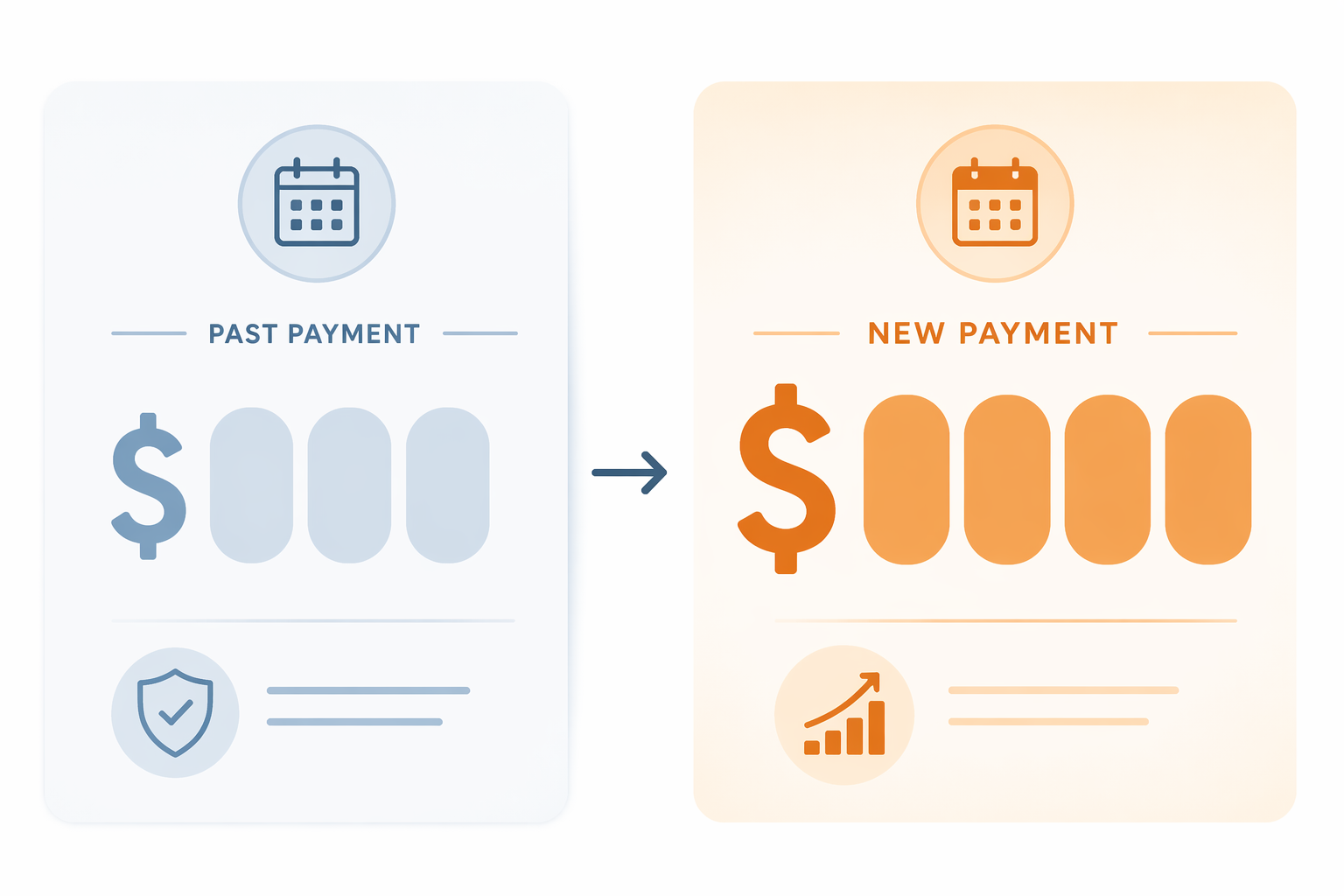
For counsel, the first triage question is not which repayment plan sounds best in the abstract. It is whether the borrower can control the next placement before auto-enrollment does it for them. The second question is whether the choice preserves the borrower’s existing forgiveness strategy, especially Public Service Loan Forgiveness. The third is whether any requested administrative remedy can arrive before the next bill does.
This article is legal landscape analysis, not legal advice. Borrowers need individualized review of loan type, consolidation history, income, family size, employment certification, and prior qualifying payment counts before relying on any repayment move.
The active lawsuit matters, but it does not stop the clock
The main litigation hook is the amended lawsuit filed on June 23, 2026, in the U.S. District Court for the District of Columbia. The plaintiffs argue that the Department must restore REPAYE and cannot force borrowers into less affordable alternatives after SAVE’s termination; the Department has sought dismissal based on the Missouri settlement posture.[4] That lawsuit is not just background noise. It frames the strongest borrower-side argument that the agency’s transition is not merely inconvenient, but legally defective if it removes a prior statutory or regulatory repayment pathway without an adequate substitute.
Still, a pending case is not a payment plan. Unless a court issues relief that directly protects a borrower before the borrower’s account is moved or billed, counsel cannot assume the litigation will preserve affordability on its own. Attorneys advising SAVE borrowers should track the case closely, document reliance harms, and preserve records of notices and servicer communications, but the safer assumption is that the administrative transition will continue unless and until a court order actually changes it.
That is the point where litigation strategy and consumer counseling separate. Litigation may create the remedy. Counseling has to prevent the avoidable default, the missed PSLF month, or the unaffordable auto-enrolled bill while the remedy is still being fought over. For the broader court landscape, a borrower-side attorney may also want to compare developments against a running tracker of student loan cancellation court rulings in 2026, because the SAVE exit is now moving alongside several related challenges rather than in a clean administrative lane.
Plan switching is damage control, not a perfect substitute
The obvious move for many borrowers is to apply for another income-driven repayment plan before the transition period closes. The available candidates may include IBR, PAYE, ICR, or the new Repayment Assistance Plan, depending on the borrower’s loan type, timing, and eligibility. The legal question is not whether those labels exist. It is whether the borrower can get into a plan that is affordable enough to prevent delinquency and eligible enough to keep forgiveness progress alive.
| Possible route | What counsel should test first |
|---|---|
| IBR | Whether the projected payment is manageable and whether the borrower qualifies under the applicable IBR rules. |
| PAYE | Whether the borrower remains eligible and whether the servicer can process the request before auto-enrollment. |
| ICR | Whether it is the only practical IDR route for the borrower’s loan history, including consolidation-related issues. |
| RAP | Whether the borrower can tolerate the emerging terms while final implementation details remain unsettled. |
| Standard or Tiered Standard | Whether the borrower is being placed there by default and whether that placement threatens affordability or forgiveness. |
RAP deserves particular caution. TICAS describes RAP as including a $10 monthly minimum payment, 30-year forgiveness, a full interest waiver, a $50 monthly principal match, and no $0 payment option.[5] TISLA has similarly flagged borrower-facing questions about how the new plan works and how it compares with existing IDR options.[6] Those features may make RAP useful for some borrowers, but they do not make it a universal safe harbor. A borrower who previously owed $0 under an income-driven plan may find the absence of a $0 option especially consequential.
The other caution is timing. A plan application that is legally sound can still fail the borrower if it sits unprocessed while a higher bill comes due. In the AFT v. ED litigation record, borrower advocates reported approximately 1.99 million pending IDR applications as of April 30, 2025, with only 79,349 processed that month.[7] Those numbers do not prove that every 2026 SAVE transition application will stall. They do show why “just apply” is not enough as a legal counseling strategy.
A careful file should therefore include the application submission date, confirmation number or screenshot, the plan selected, the income documentation used, any servicer call notes, and the borrower’s current and projected payment. If the servicer later claims the borrower failed to act, the record should already answer that. If the borrower needs a forbearance while the request is pending, the record should make clear that the borrower sought a lawful repayment placement before the system defaulted them into something worse.
The Standard plan trap is sharper for PSLF borrowers
For borrowers pursuing Public Service Loan Forgiveness, the danger is not only a higher monthly bill. It is losing months that would otherwise count. TISLA’s FAQ warns that the Standard Repayment Plan on a Direct Consolidation Loan does not count for PSLF.[6] That is the kind of detail that disappears in broad agency language about repayment “options,” but it can be decisive for a teacher, nurse, public defender, nonprofit worker, or government employee who consolidated years ago and is trying to protect qualifying payment progress.
Counsel should not assume that every plan with the word “Standard” functions the same way for PSLF purposes. The borrower’s loan type and consolidation status matter. If the borrower is moved into a non-qualifying plan and keeps paying because the bill looks official, the harm may not surface until the borrower later checks PSLF counts. By then, the borrower may be arguing about retroactive credit instead of preventing the loss.
That prevention work is unglamorous: confirm employer certification status, pull the borrower’s qualifying payment count, identify whether the next plan will count, and avoid relying on a servicer’s oral reassurance when written program rules point the other way. A borrower close to forgiveness needs a different risk analysis than a borrower at the beginning of repayment, even if both are leaving SAVE on the same notice schedule.
Forbearance and complaints can preserve a record, but they are not magic remedies
Administrative recourse still matters. A borrower facing an unaffordable auto-enrollment or a stalled IDR application may need to request forbearance, file a complaint with the FSA Ombudsman, submit a CFPB complaint, or escalate through the servicer’s dispute channels. Those steps can buy time, force a written response, and create an evidentiary trail. They are especially important when the borrower acted within the 90-day window but the account status does not reflect it.
But administrative remedies should be described honestly. A complaint does not guarantee a corrected payment before the due date. A forbearance may stop immediate collection pressure while creating separate questions about interest, forgiveness credit, or later account reconciliation. A borrower in a thin-margin household needs to know whether the remedy changes the bill now, changes the record later, or merely asks someone else to review the problem.
This is also where default risk becomes more than a threat in a form letter. If an unaffordable payment turns into nonpayment, the borrower can move toward the broader enforcement environment already visible in the post-pause student-loan system. Attorneys tracking that risk may want to connect the SAVE exit analysis with the larger student loan default cliff and the federal collection tools discussed in the 2026 student loan default crisis. The point is not to frighten a borrower into a bad plan. It is to avoid pretending that silence is costless.
PSLF buyback exists, but the backlog changes its practical value
PSLF buyback is one of the clearest examples of a remedy that can be real and still not be timely enough for the borrower in front of you. The Protect Borrowers materials tied to AFT litigation reported 49,318 pending buyback applications and 1,472 processed per month.[7] That does not make buyback useless. It does mean counsel should be careful before treating it as the answer to a near-term SAVE transition problem.
A borrower who is already at or near 120 qualifying payments may need a buyback analysis immediately, particularly if disputed months could complete forgiveness. But a borrower who needs an affordable bill next month cannot live on the theory that a later buyback will clean up everything. If the borrower can enter a qualifying IDR plan now, preserve employment certification, and separately pursue buyback for affected months, that is usually a more durable posture than choosing inaction and hoping retroactive relief arrives before harm compounds.
The file review should separate three questions that are too often blended together: whether a month can be bought back, whether the borrower can afford the buyback amount if offered, and whether the Department will process the request in time to matter. A “yes” on the first question does not answer the second or third.
The June PSLF rulings are stabilizing, not a complete shield
There was one important stabilizing development for PSLF borrowers: two federal judges blocked the Department’s PSLF eligibility-limiting rule in late June 2026.[8] That matters because it reduces one immediate threat to borrowers whose public-service work or employer category might have been placed under a new cloud. It also shows that courts remain willing to scrutinize agency changes that narrow forgiveness access.
But those rulings do not solve the SAVE exit. They do not choose a repayment plan for the borrower, process an IDR application, correct a servicer error, or guarantee that a month in the wrong plan will count. A PSLF borrower should take the rulings as a reason to keep preserving the forgiveness claim, not as permission to ignore the transition notice.
Parent PLUS borrowers have a narrower problem
Parent PLUS borrowers deserve separate attention because their options may have narrowed before many had a realistic chance to react. The research materials flag that the July 1, 2026 consolidation deadline to retain IDR eligibility has already passed as of this writing. That means counsel should not give a generic “switch plans” answer without first reviewing whether the borrower consolidated in time, what type of consolidation loan exists, and whether any remaining route is legally available.
This is a cohort where broad reassurance can be actively harmful. A Parent PLUS borrower who missed the relevant consolidation window may not have the same menu as a graduate borrower leaving SAVE or a public-service employee with Direct Loans already in an IDR-eligible posture. If the borrower’s remaining choices are limited, the legal work may shift from plan optimization to hardship documentation, complaint preservation, and preventing default.
A borrower-side triage sequence
The cleanest counseling sequence is not a long lecture on repayment history. It is a controlled triage before the 90-day window closes.
- Identify the current SAVE status, notice date, servicer, loan type, consolidation history, income, family size, and forgiveness objective.
- Calculate the likely payment under available alternatives, including IBR, PAYE, ICR, RAP, and any default Standard or Tiered Standard placement.
- For PSLF borrowers, confirm whether the next plan counts and whether any consolidation-related Standard plan issue creates a non-qualifying month.
- Submit the strongest available repayment application early enough to create a record before auto-enrollment.
- If processing stalls or the bill is unaffordable, request appropriate administrative relief and file complaints with supporting documentation.
- Track the D.D.C. REPAYE restoration litigation and PSLF-related rulings, but do not let pending litigation substitute for an immediate account-level action.
New York Attorney General Letitia James has urged SAVE borrowers to choose new repayment options rather than remain passive during the transition.[9] That public guidance is directionally right, even if it cannot answer the harder legal questions in a particular file. The borrower still needs to know which option preserves the most rights, which one the servicer can actually process, and what written record will exist if the account is later mishandled.
The safest legal advice during the SAVE exit is to preserve options immediately: choose a viable repayment route where one exists, protect PSLF credit, document every submission, and escalate quickly when the account does not reflect the borrower’s action. The policy fight can continue, but the borrower’s deadline is already running.
References
- Department of Education press release on SAVE plan termination, U.S. Department of Education, 2026, link
- SAVE borrowers need to know explainer, Student Loan Borrower Assistance, 2026, link
- KCRA interview with Betsy Mayotte on SAVE repayment options, KCRA, 2026, link
- Student Loan Borrowers File New Lawsuit Over SAVE Plan Replacement, Forbes, June 25, 2026, link
- AFT v. ED filings on IDR and PSLF buyback backlogs, Protect Borrowers, 2025, link
- What borrowers need to know about the Repayment Assistance Plan, The Institute for College Access & Success, June 29, 2026, link
- SAVE plan and repayment options FAQ, The Institute of Student Loan Advisors, 2026, link
- Federal judges block PSLF eligibility-limiting rule, Business Insider, July 12, 2026, link
- Attorney General James urges SAVE borrowers to choose new repayment options, New York Attorney General, 2026, link
Comments
Join the discussion with an anonymous comment.