
Shipwreck treasure rights do not begin with the romance of the find. They begin with classification. Before anyone assumes a right to keep, sell, conserve, arrest, or auction recovered property, the first question is which legal regime is already controlling the wreck: salvage, finds, the Abandoned Shipwreck Act, or sovereign immunity.
This article is for general legal information, not legal advice. The answer can change with the wreck's location, the vessel's status, the nature of the cargo, possession, abandonment evidence, state submerged-land claims, treaty obligations, and the forum in which a claimant tries to proceed.

| Regime | What it usually means | Practical consequence |
|---|---|---|
| Law of Salvage | A voluntary rescuer preserves maritime property in peril | The salvor may receive a reward, often described in general U.S. practice as a proportion of value rather than title to the property [1] |
| Law of Finds | A finder claims property that the owner abandoned | Title may transfer, but only after a demanding showing of abandonment [2] |
| Abandoned Shipwreck Act | Certain abandoned wrecks embedded in state submerged lands or protected on state lands fall under a federal statutory transfer to states | The matter may be removed from ordinary admiralty treatment and title may vest in a state [3] |
| Sovereign immunity | A foreign sovereign vessel, especially a warship, is treated as immune from arrest or unauthorized salvage theories | The salvor's or finder's claim may fail even where recovery was costly and abandonment is argued [4] |
The table is deliberately unsentimental. A wreck can be valuable, difficult to locate, expensive to recover, and historically important, yet still fall into a regime that gives the discoverer no title. Conversely, a salvor can perform real preservation work and still receive only a court-measured award. The mistake is treating discovery as the legal event that decides ownership. It rarely is.
Salvage Starts With Rescue, Not Ownership
The law of salvage is the more familiar admiralty path because it fits the basic maritime instinct: someone voluntarily assists property in marine peril and asks a court to compensate the effort. The salvor does not become owner merely because the recovery succeeded. The award is compensation for preserving property that still belongs to someone else.
That distinction is not academic. A salvage award is usually measured against factors such as the value of the property saved, the degree of danger, the skill and labor involved, the risk to the salvor, and the degree of success. General U.S. practice discussions often describe awards in the 10-25% range of property value, with awards up to 50% in exceptional circumstances, but those figures are guidelines rather than a rule of entitlement [1].
The reward model matters for commercial recovery planning. A salvor who raises cargo, stabilizes artifacts, and documents a wreck site may have performed valuable work. But if the case is governed by salvage, the legal request is not "give us the treasure." It is closer to "recognize the service and set the award." A client who prices a recovery project on assumed ownership has already skipped the critical legal step.
Salvage also depends on possession and court control in ways that can become operationally decisive. A salvor may seek an in rem arrest of the recovered property, or in some circumstances an injunction protecting an exclusive salvage area. But the property must be legally susceptible to the court's process. A cannon, coin chest, or hull section is not just an object on a manifest; it may be part of a sovereign vessel, embedded in state submerged lands, or covered by a statutory heritage regime.
Finds Is the Harder Claim Because It Asks for Title
The law of finds is the phrase that makes treasure stories sound simple. It is also the doctrine most likely to be overstated. Finds is not a reward for effort. It is a title-transfer theory. The finder says, in substance, that the prior owner abandoned the property, leaving it available for acquisition by possession.
That requires more than long submersion, lost records, or the owner's silence. Courts applying finds doctrine look for strong evidence that the owner affirmatively abandoned the property; one cited formulation requires "strong and convincing evidence" of abandonment [2]. The evidentiary burden is the point. A ship may be lost for centuries without the owner, successor, insurer, sovereign, or cargo claimant having legally renounced it.
The practical difference between salvage and finds can be stated bluntly: salvage preserves another's property and earns a possible award; finds treats the property as ownerless and may confer title. That is why courts are cautious. If abandonment could be inferred too easily from time and depth, the doctrine would erase ownership interests in precisely the cases where documentary proof is hardest to reconstruct.
For a practitioner, the useful discipline is to separate three questions that clients often collapse. First, has the salvor reduced the property to possession? Second, has the prior owner abandoned it in the legal sense? Third, is there another regime that prevents either question from deciding the case? The answer to the third question is often where the recovery narrative begins to lose its shine.
A Simple Classification Example
Suppose, hypothetically, a private exploration company locates a merchant wreck outside state submerged lands, recovers several artifacts under court supervision, and no sovereign immunity issue appears. If the owner is identifiable and has not abandoned the property, the case sounds in salvage. If the finder can prove abandonment and possession, finds may be available. If the wreck is embedded in state submerged lands and falls within the Abandoned Shipwreck Act, the analysis changes again. The same diver, same sonar, and same artifacts can produce different legal outcomes because the governing regime is different.
The Abandoned Shipwreck Act Interrupts Admiralty in State Waters
The Abandoned Shipwreck Act is the statutory interruption that keeps many historic wreck disputes from proceeding as ordinary salvage or finds cases. The statute, codified at 43 U.S.C. sections 2101-2106, asserts United States title to certain abandoned shipwrecks and then transfers that title to the state in whose submerged lands the wreck is located [3].
The covered categories are specific. The Act reaches abandoned shipwrecks that are embedded in a state's submerged lands, abandoned shipwrecks embedded in coralline formations protected by a state on its submerged lands, and abandoned shipwrecks located on state submerged lands and included in or determined eligible for the National Register of Historic Places [3]. The word "embedded" does real work. A loose modern cargo spill is not the same legal problem as a historic wreck buried in state submerged lands.
The National Park Service has described the Act against an estimated context of roughly 3,000 historic wrecks in U.S. waters, but that figure should be treated as an estimate rather than an inventory that resolves any particular site [3]. For litigation purposes, the questions remain concrete: where is the wreck, is it abandoned, is it embedded or otherwise within the statutory categories, and has title vested in the state?
Two Supreme Court markers help orient the jurisdictional terrain without answering every ASA case. In Florida Department of State v. Treasure Salvors, Inc., the Court addressed competing claims involving artifacts from the Atocha and issues of state interests in submerged lands [5]. In California v. Deep Sea Research, Inc., the Court held that the Eleventh Amendment did not bar in rem admiralty jurisdiction where the state did not have possession of the res [6]. Those cases do not turn every wreck into a federal admiralty case. They show why possession, state title, and the particular object before the court matter.
Sovereign Immunity Can Defeat the Treasure Theory
Sovereign immunity is the regime that most sharply corrects the "finders keepers" instinct. If the wreck is a foreign warship or other sovereign vessel, the salvor's usual move toward arrest, recovery rights, or abandonment arguments may run into the Foreign Sovereign Immunities Act and related international-law principles before the court ever reaches a romantic account of discovery.
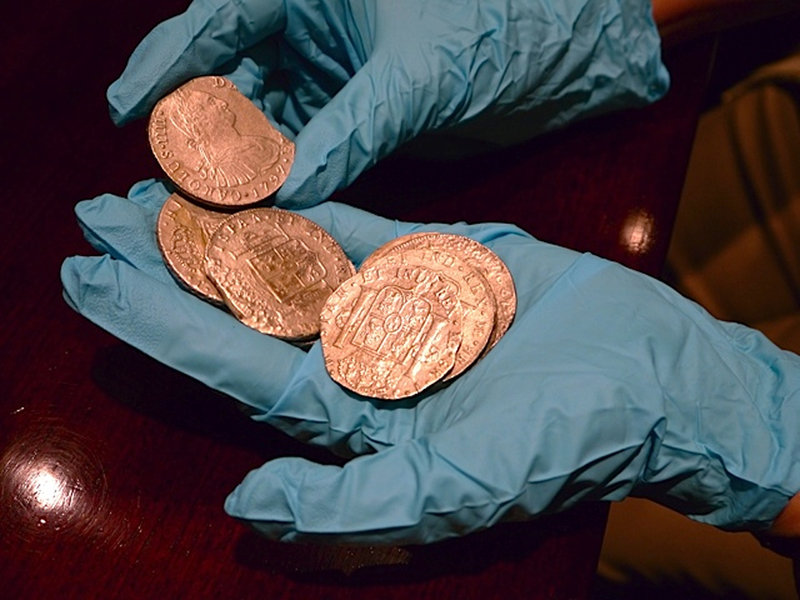
Odyssey Marine Exploration's Black Swan recovery is the cautionary case because it was not small, ambiguous, or merely symbolic. Odyssey recovered coins valued in public accounts at about $500 million from the wreck later identified as the Spanish frigate Nuestra Senora de las Mercedes; the Eleventh Circuit ordered the coins returned to Spain, the Supreme Court denied certiorari in 2012, and Odyssey was later ordered to pay $1 million in sanctions [4].
The legal lesson is not that salvors never perform useful work. It is that the United States courts treated the wreck and cargo as protected by Spain's sovereign immunity, blocking the arrest and recovery theory. A foreign sovereign warship is not ordinary abandoned cargo simply because it lies on the seabed. The court's threshold commitment to immunity disciplined the entire case.
The 1989 International Convention on Salvage reinforces the same boundary in treaty form. Article 4 excludes warships or other non-commercial vessels owned or operated by a state and entitled to sovereign immunity, unless the state decides otherwise [7]. In other words, the salvage framework itself contains a warship exception; it is not merely a defense raised after salvage law has done its work.
That does not mean every object aboard a sovereign vessel is automatically resolved without further analysis. Cargo can raise separate questions, especially where cargo was privately owned or insured. But Odyssey shows the danger of assuming that cargo value, recovery expense, or long loss at sea can overcome sovereign status. The forum will ask what was arrested, what sovereign interest attaches, and whether the court has power to proceed at all.
Treaty Law Adds Another Layer, But Not the Same One Everywhere
Treaty materials should be kept in their lane. The 1989 Salvage Convention matters directly to the salvage analysis because of its express treatment of warships and other state-owned non-commercial vessels [7]. It helps explain why a sovereign vessel is not just another wreck awaiting a reward calculation.
The 2001 UNESCO Convention on the Protection of the Underwater Cultural Heritage is different for U.S. litigation. Article 4 rejects the application of salvage and finds law to underwater cultural heritage except in limited circumstances, and the convention has 77 states parties in the cited source [8]. But the United States has not ratified the UNESCO 2001 Convention, so its direct effect in U.S. courts is limited absent implementation through domestic law or a persuasive customary-international-law argument [8].
For counsel, that distinction prevents two opposite errors. One error is ignoring treaty-based cultural-heritage restrictions when a site or claimant falls within a treaty regime. The other is importing UNESCO rules into a U.S. case as if ratification had already occurred. The applicable instrument, state party status, and domestic implementation all matter.
The San Jose Dispute Shows Why Classification Still Matters
The San Jose galleon is the kind of case that tempts everyone to start with value. Reports in 2026 continued to describe the treasure at stake in the range of $10 billion to $20 billion, and the dispute has been connected to PCA Case No. 2023-37 involving claims by Sea Search Armada against Colombia [9][10]. The number is useful because it shows why governments, private salvors, and cultural-heritage institutions are still fighting over centuries-old wrecks. It does not answer who owns anything.
The San Jose controversy sits at the intersection of sovereign claims, cultural heritage, asserted private salvor interests, and national control over recovery. Its current posture should be treated carefully because the proceedings remain live as of the 2026 reporting cited here [9][10]. A live arbitration or governmental recovery plan is not a final merits determination on every artifact, cargo category, or sovereign-interest question.
That is why the case belongs near the end of the analysis, not the beginning. Starting with a multibillion-dollar estimate invites the wrong legal reflex. The useful questions are narrower: Was the vessel a sovereign warship? What law governs the site? What rights, if any, did a private salvor acquire? Are the claimed objects cultural heritage, sovereign property, private cargo, or some mix? Which tribunal has authority to decide each issue?
What Actually Decides Shipwreck Treasure Rights
The cleanest way to analyze shipwreck treasure rights is to stop asking first who found the wreck and ask what legal regime attached when the discovery and recovery occurred. If salvage governs, the likely claim is a reward, not title. If finds governs, title depends on possession and strong proof of abandonment. If the Abandoned Shipwreck Act applies, state title and statutory removal from ordinary admiralty analysis may control. If sovereign immunity applies, arrest and recovery theories may fail at the threshold.
The unresolved issues are usually factual and jurisdictional, not atmospheric. A court or tribunal may need to decide actual abandonment, possession, sovereign status of the vessel, sovereign or private status of cargo, ASA embedding, state submerged-land boundaries, treaty applicability, and the current procedural status of any parallel proceeding. Discovery, recovery cost, artifact value, and public fascination may explain why the dispute exists. They do not decide who gets the treasure.
References
- Are Finders Keepers Under the Sea?, LawInfo.
- Liskow & Lewis shipwreck law series, Liskow & Lewis.
- Abandoned Shipwreck Act Guidelines, National Park Service.
- Black Swan Project, Wikipedia.
- Florida Department of State v. Treasure Salvors, Inc., 458 U.S. 670 (1982), Justia.
- California v. Deep Sea Research, Inc., 523 U.S. 491 (1998), Justia.
- Law of salvage, Wikipedia.
- Convention on the Protection of the Underwater Cultural Heritage, Wikipedia.
- Colombia's San Jose galleon treasure dispute coverage, The Art Newspaper, May 2026.
- PCA Case No. 2023-37 coverage of Sea Search Armada v. Colombia, Finance Colombia.
Comments
Join the discussion with an anonymous comment.