
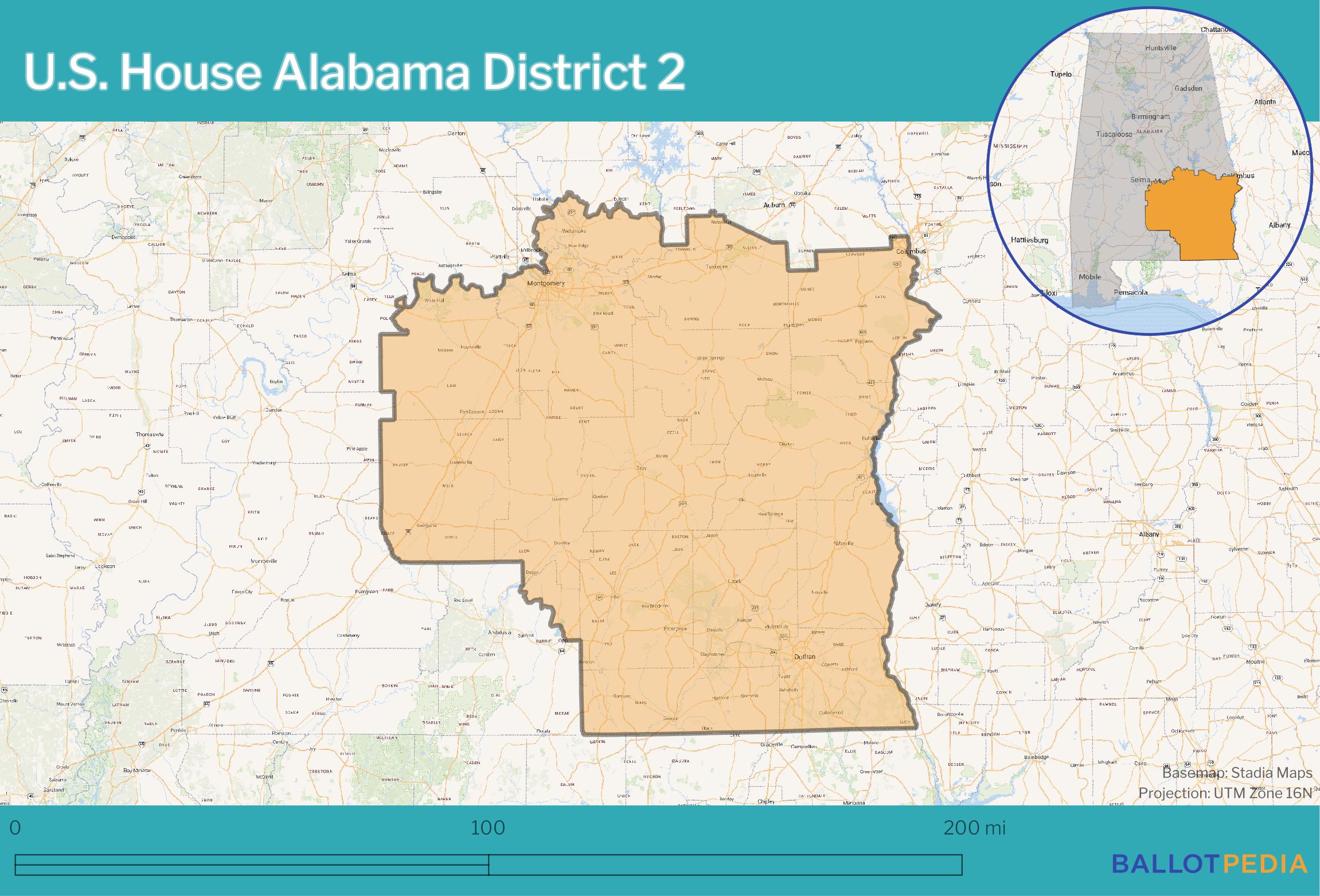
Alabama’s 2nd Congressional District is now the cleanest measure of the Supreme Court’s redistricting turn. The seat that Rep. Shomari Figures won in 2024 under a court-ordered Voting Rights Act map has been redrawn into a district reported at 39.9% Black and 50.9% white, down from roughly 49% Black under the prior configuration; its partisan baseline has moved from Democratic-leaning to Republican-leaning, and the race is now rated “Likely Republican.”[1][2]
That is the immediate legal impact for Shomari Figures: a Section 2 remedy that produced a Black Democratic member of Congress in 2024 has, for the 2026 election cycle, been displaced by a map that gives Republicans a structural advantage in the same seat. The doctrinal path matters because this did not happen through ordinary decennial line-drawing alone. It ran through three Supreme Court moments: Allen v. Milligan in 2023, Louisiana v. Callais in 2026, and the Court’s June 2, 2026 emergency order allowing Alabama to use the new map.
The Seat Changed Before the Doctrine Was Finished
The new Alabama map does not merely make Figures’ reelection more expensive or more uncertain. It changes the electorate he must persuade. AL.com reported that the legislature-approved version of District 2 shifted from about 49% Black to 39.9% Black and 50.9% white; that demographic description should be read as reported district analysis, not as independently verified Census block-level reconstruction.[1]
The partisan measure is just as stark. Inside Elections reported that the district moved from a Cook Political Report baseline of D+5 to R+7 and placed the race in the “Likely Republican” category.[2] AL.com also reported that Donald Trump carried the new district with 57% of the vote, 14 points above his national margin, a fact that helps explain why campaign committees began treating the seat less like a protected Voting Rights Act remedy and more like a Republican pickup opportunity.[1]
The available campaign numbers are suggestive, not conclusive. A DCCC-commissioned Impact Research poll conducted June 22-25, 2026 among 400 likely voters showed Figures at 44% and Republican Rhett Marques at 45%; because it is a single internal poll and no independent public general-election poll has been released, it is better evidence of competitiveness than of the race’s final direction.[1] FEC filings through April 29, 2026 showed Figures with $320,931 cash on hand and Marques with $469,298, though that snapshot predates the June 2 stay and may not reflect fundraising after the map changed.[1]
| Date | Legal or Political Event | Effect on AL-02 |
|---|---|---|
| June 2023 | Supreme Court decides Allen v. Milligan | Section 2 analysis supports a remedial Alabama map with two majority-Black districts |
| 2024 | Shomari Figures wins the redrawn 2nd District | The Allen remedy produces a second Black Democratic member from Alabama |
| April 29, 2026 | Supreme Court decides Louisiana v. Callais | Section 2 plaintiffs face a narrower test for race-conscious districting claims |
| May 26, 2026 | Lower court blocks Alabama’s new map | The district remains legally contested shortly before the election cycle advances |
| June 2, 2026 | Supreme Court stays the lower-court order | Alabama may use the new Republican-leaning map for 2026 |
Allen Set the Baseline
The starting point is Allen v. Milligan, decided in June 2023. In a 5-4 decision by Chief Justice John Roberts, the Supreme Court upheld the lower court’s conclusion that Alabama’s 2021 congressional map likely violated Section 2 of the Voting Rights Act by diluting Black voting strength.[3] The decision did not invent a new remedial theory. It preserved the lower court’s application of the familiar Gingles framework in a state where Black voters were numerous and geographically situated enough, in the lower court’s view, to support an additional opportunity district.
The remedial consequence was concrete. Alabama used a court-ordered map that created two majority-Black districts, and in 2024 Figures won the 2nd District with 54.6% of the vote while Rep. Terri Sewell continued to represent the 7th District.[1] That election produced the first Alabama congressional delegation with two Black Democrats serving simultaneously.[1]
For election lawyers, the important feature of Allen was not simply that plaintiffs won. It was that Section 2 still had force against a congressional map even when the state argued that race-conscious remedies would press too hard against equal-protection limits. The Court left room for a remedial map in which race mattered because racially polarized voting and minority vote dilution mattered.
Callais Narrowed the Route Plaintiffs Had Used
The turn came on April 29, 2026, in Louisiana v. Callais. In a 6-3 opinion by Justice Samuel Alito, the Court struck down a Louisiana redistricting map challenged as racially discriminatory and narrowed the practical operation of Section 2 in several ways that mattered immediately outside Louisiana.[4]
First, the Court made the alternative-map requirement more demanding. Plaintiffs could no longer rely on an illustrative map that showed a reasonably configured additional minority-opportunity district while satisfying traditional districting principles. Under the new formulation, the alternative map must “fully achieve all the State’s legitimate goals,” including incumbent protection and partisan objectives.[4] That requirement gives state defendants a broader field on which to argue that the plaintiffs’ benchmark map is not a lawful comparator.
Second, the Court instructed that polarized-voting analysis account for party affiliation, invoking the logic of Rucho v. Common Cause.[4] That matters because Section 2 cases often involve places where race and party are highly correlated. If courts must separate racial polarization from partisan preference before finding legally relevant vote dilution, plaintiffs face a proof problem that is not just statistical but conceptual: in many Deep South districts, the same election returns do double duty as evidence of both racial polarization and partisan alignment.
Third, the Court narrowed the totality-of-circumstances inquiry toward “present-day intentional racial discrimination regarding voting,” a formulation that critics described as reviving the kind of intent-centered burden Congress moved away from in the 1982 amendments to Section 2.[4] Justice Elena Kagan’s 48-page dissent, joined by Justices Sonia Sotomayor and Ketanji Brown Jackson, argued that the majority had “eviscerated” Section 2.[5] Justice Clarence Thomas, joined by Justice Neil Gorsuch, would have gone further and confined Section 2 to at-large election claims.[5]
The immediate effect was to make Allen look less like a stable high-water mark and more like a precedent operating under conditions the Court had now changed. The 2023 ruling had accepted a Section 2 path that produced Alabama’s second opportunity district. Callais did not formally overrule Allen, but it changed what lower courts and litigants had to show before Section 2 could justify similar districting relief.
Alabama Moved Quickly Under the New Rules
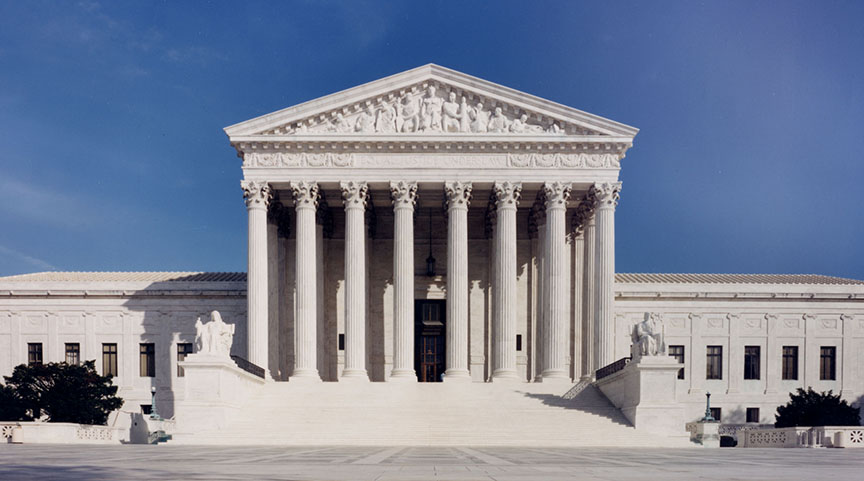
After Callais, Alabama’s legislature drew a new congressional map under the guidance of the narrowed Section 2 standard. On May 26, 2026, a lower court blocked that map, finding intentional discrimination. The block mattered procedurally because it forced the state back to the Supreme Court on an emergency timetable, where the question was no longer an abstract debate about Section 2 but which district lines election administrators would actually use in 2026.
On June 2, the Supreme Court issued an unsigned four-page order permitting Alabama to use the map for the 2026 elections.[6] The order rejected the lower court’s intent finding and cited Callais for two propositions with immediate administrative force: courts must apply a presumption of legislative good faith, and they must account for party control when evaluating evidence that a legislature acted on race.[6]
That is a stay order, not a full merits ruling. Its precedential weight in future Section 2 litigation remains uncertain, and treating it as a complete doctrinal opinion would overstate what the Court formally did. But emergency orders can still move elections. By clearing the map for 2026, the Court determined the operating law for county election offices, candidates, national committees, and voters who had to plan around the new District 2 boundaries.
The practical consequence of the stay was sharper than its unsigned form suggests. Alabama did not have to run the next election under the Allen remedial map. Figures did not merely lose the protection of a favorable partisan index; he lost the electorate that made the Section 2 remedy electorally meaningful.
Figures Is the Test Case, Not Just the Symbol
Figures’ position is unusual because the before-and-after comparison is unusually clean. He won in 2024 with 54.6% in a district created after Allen.[1] Two years later, he is running in a district reported to be substantially whiter, more Republican, and more favorable to Trump.[1][2] The same officeholder, the same state, and the same Voting Rights Act provision now sit on the other side of a narrowed standard.
Figures has described the Supreme Court’s Alabama ruling in blunt terms. AL.com reported his statement that “Section 2 is dead” after the Court allowed the new map to take effect.[7] As political rhetoric, the statement captures the stakes for the voters who benefited from the 2023 remedy. As legal description, it needs a narrower frame: Section 2 still exists, but the Court’s 2026 decisions have made the path to a race-conscious congressional remedy narrower, more party-sensitive, and more deferential to state legislative explanations.
That narrower frame is exactly why the Figures race matters. If he loses in a district that changed from D+5 to R+7 after the Court’s 2026 intervention, the result will not prove by itself that Section 2 has no remaining force. But it will show how quickly a doctrinal adjustment can become a change in representational power. The voters who elected him under the remedial map are not litigating an academic boundary between race and party; they are voting under lines that changed after the Court made that boundary harder for plaintiffs to cross.
What Is Settled for 2026, and What Is Not
For 2026, the operational answer is settled enough for election administrators: Alabama may use the new congressional map.[6] Campaigns must organize under the redrawn District 2; voters will cast ballots in that district; and Figures must defend a seat that has moved into Republican territory by the available partisan measures.[1][2]
The longer-term legal answer is less settled. Callais is a merits decision and changes the Section 2 analysis going forward.[4] The June 2 Alabama order is an emergency stay and should not be treated as if it resolved every merits question that future plaintiffs might raise.[6] That distinction will matter in the next round of voting-rights litigation, where lower courts will have to decide how much work the presumption of legislative good faith, party-control analysis, and the narrowed totality inquiry actually do.
The bounded judgment is enough. The 2026 rulings have, for this election cycle, converted the Allen remedy in Alabama’s 2nd District into a Republican-leaning seat and placed Shomari Figures at a measurable disadvantage. Whether future courts describe that as a doctrinal correction, an emergency-cycle consequence, or a retreat from Section 2, the voters in AL-02 are already living inside the new map.
References
- Can Shomari Figures win? All eyes on a suddenly competitive AL-02, AL.com, June 2026
- House Report Shorts: July 9, 2026, Inside Elections, July 9, 2026
- Merrill v. Milligan, SCOTUSblog, June 2023
- In major Voting Rights Act case, Supreme Court strikes down redistricting map challenged as racial, SCOTUSblog, April 29, 2026
- What to Know About the Supreme Court Ruling in Louisiana v. Callais, FairVote
- Supreme Court permits Alabama to use congressional map struck by lower court as racially discrim, SCOTUSblog, June 2026
- Shomari Figures: Voting Rights Act is dead after Supreme Court’s dangerous Alabama ruling, AL.com, June 2026
Comments
Join the discussion with an anonymous comment.