
Slackbot stopped being a roadmap item on January 13, 2026, when Salesforce announced general availability of the AI agent for Slack users.[1] That date matters for legal and compliance teams because the product is no longer a controlled demo in a procurement deck. It is an enterprise workplace tool that can sit inside the same channels where employees ask HR questions, discuss customers, escalate incidents, complain about managers, and paste information they should not have pasted.
Slack’s own materials give the rollout a reassuring technical shape. Slack says AI features operate within existing Slack permissions, use retrieval-augmented generation, and are designed so customer data remains within Slack’s virtual private cloud.[2] Slack has also said its AI architecture does not use customer data to train large language models.[3] Its AI principles emphasize customer control, privacy, and responsible deployment.[4]
Those are useful controls. They are not a legal clearance memo. The enterprise deploying Slackbot still has to decide which employees will encounter it, what notice they receive, what data it may process, whether conversations are being recorded or analyzed in a legally sensitive way, whether the bot touches employment decisions, and whether vendor terms leave the business holding the bag when a regulator, plaintiff, employee, or customer asks what happened.
Start With The Record You Would Need To Defend
The cleanest way to approach a Slackbot rollout is not to ask whether Slackbot is “secure.” It is to ask what the company can prove about its own deployment decision. A defensible record should show who approved the use case, which jurisdictions were considered, what notices were given, what data flows were reviewed, what employee-facing impacts were assessed, and how vendor obligations were allocated.
That record has to be built before rollout, maintained during rollout, and updated when the product use expands. A bot used only to summarize public company policies raises a different risk profile from one that answers benefits questions, drafts performance feedback, routes complaints, or helps managers search prior conversations. The permissions model may limit what the bot can see. It does not decide whether the employer gave legally adequate notice, obtained consent where needed, or avoided using AI in a way that affects protected employment rights.
| Rollout Question | Why It Matters |
|---|---|
| Who will interact with Slackbot? | Employee-only, customer-facing, HR-facing, and mixed-use deployments can trigger different disclosure, privacy, and employment obligations. |
| What will Slackbot process? | Channel messages, direct messages, HR content, customer data, and sensitive employee information require different review paths. |
| Where are users located? | State disclosure laws and two-party consent rules can turn geography into a deployment condition. |
| What decisions will Slackbot influence? | Hiring, promotion, discipline, performance, and accommodation workflows can move the rollout into employment-law territory. |
| What does the contract say? | Vendor security language does not automatically allocate indemnity, incident response duties, data handling limits, or regulatory support. |
Disclosure Laws Are Now A Deployment Requirement, Not A Courtesy
The first hard checkpoint is transparency. Current state chatbot and AI disclosure laws do not line up neatly by wording, timing, audience, or format. AGG’s 2026 compliance analysis identifies multiple states with AI chatbot disclosure duties and related requirements, including California, Utah, Colorado, Texas, New Jersey, Maine, and Washington.[5] For a national employer, that is not a footnote. It is the reason a single Slackbot launch plan can be legally incomplete on day one.
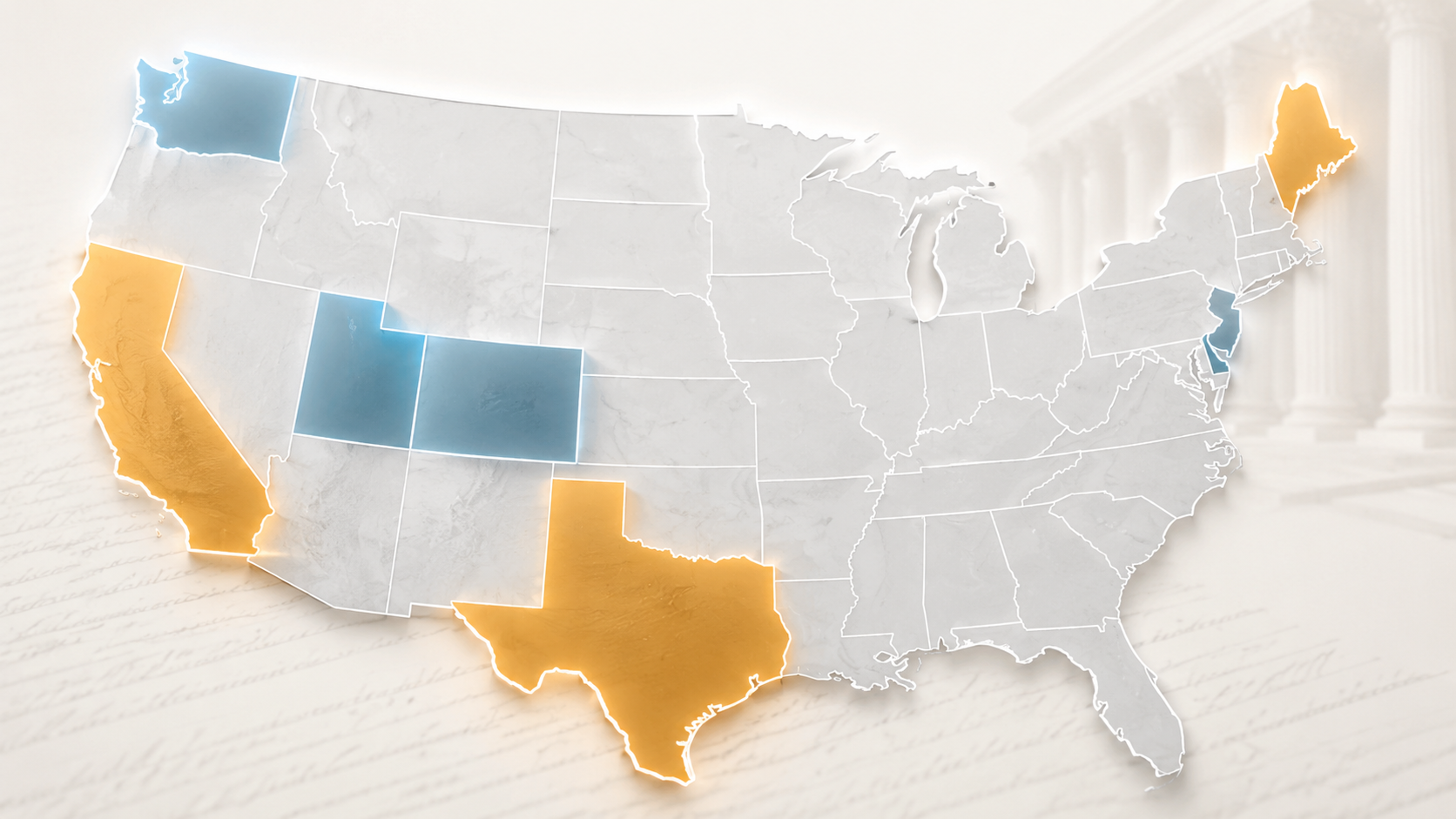
California’s BOTS Act, Utah’s AI Policy Act, Texas HB 4128, New Jersey A5430, Maine LD 1962, Colorado’s amended AI framework, and Washington’s companion chatbot law do not all ask the same thing in the same way.[5] Some rules focus on whether a person knows they are interacting with a bot. Some turn on whether the bot is used in regulated contexts. Some are concerned with consequential decisions or automated decision-making. Some effective dates and amendments are still moving enough that a pre-launch review should confirm the current statutory status rather than rely on a stale tracker.
Internal use should not be waved through as if chatbot laws are only about consumers clicking a website widget. AGG specifically flags that internal HR-facing bots are not exempt from the compliance analysis.[5] If employees ask Slackbot about leave rights, benefits, harassment reporting, policy violations, transfers, accommodations, or promotion criteria, the company should assume the notice question is live until counsel has documented why a specific law does or does not apply.
Timing matters because a disclosure given after the employee has already asked the sensitive question may be legally and practically too late. Format matters because a sentence buried in an acceptable-use policy may not function like an in-product notice before interaction. Audience matters because a California employee, a Utah customer-support worker, and a New Jersey job applicant using Slack Connect or an internal recruiting workflow may not sit under the same rule.
A workable disclosure review should answer four questions before activation:
- Does any applicable state law require users to be told they are interacting with AI or an automated system?
- Must the notice appear before the interaction, during the interaction, or only when the user asks?
- Does the law treat employee-facing, HR-facing, customer-facing, or consequential-decision use differently?
- Can the company preserve proof of the notice text, placement, launch date, affected users, and later changes?
The last item is often the one that decides whether the compliance work survives scrutiny. A notice that existed somewhere, at some time, in some version of Slack, is not the same as a dated deployment record showing what the company told which users before they used the tool.
Wiretapping Risk Escalates When The Bot Listens Without A Clean Consent Theory
Wiretapping exposure is the place where a Slackbot rollout can become a litigation problem faster than the launch team expects. The theory is straightforward: if a chatbot records, intercepts, analyzes, or allows a third party to access a conversation without the required consent, plaintiffs may argue that the business violated state wiretap or eavesdropping laws.
Fisher Phillips reports, based on the firm’s own case tracking, that chatbot wiretapping class actions have increased sharply: five Florida cases in 2021, 28 in 2024, and hundreds filed in 2025.[6] That is firm-tracked data, not a government census of every chatbot case. Still, the direction is hard to ignore for any enterprise rolling out AI into routine communications.
The exposure is higher in two-party or all-party consent states, including California, Massachusetts, and Florida, because the legal question is not only whether the company had a business reason to process the conversation. It is whether all required parties consented to the relevant recording or interception.[6] A permission boundary inside Slack does not answer that question. A user may have permission to see a channel and the bot may inherit that permission, but that does not automatically establish that every participant consented to bot-enabled recording, analysis, or third-party access for wiretap purposes.
This is not a reason to treat every Slackbot interaction as a lawsuit waiting to happen. It is a reason to separate ordinary message access from legally significant capture or analysis. The review should identify whether Slackbot logs prompts and outputs, whether conversations are retained, whether third-party model providers or subprocessors have access, whether human reviewers can inspect exchanges, and whether the bot is active in channels where employees reasonably believe they are having sensitive workplace conversations.
The consent plan should be more specific than “employees agreed to company systems monitoring.” Existing monitoring notices may help, but they may not describe AI chatbot interaction, automated analysis, or the role of a vendor. If the business wants to rely on existing notices, it should document why those notices cover the actual Slackbot configuration. If they do not, the company should update them before the rollout reaches two-party consent jurisdictions.
Privacy Review Has To Follow The Data, Not The Product Name
Slackbot’s architecture may reduce some data-exposure risks, but privacy law still asks what personal information is collected, used, disclosed, retained, and made available to individuals. Wiley’s chatbot risk framework identifies data privacy as a core issue for businesses deploying AI chatbots, including obligations under privacy regimes such as the CCPA and GDPR.[7]
For an enterprise Slack deployment, the privacy inventory should start with real workplace behavior. Employees may paste customer records into a channel to troubleshoot an issue. A manager may ask for a summary of a personnel discussion. A support team may connect Slack workflows to ticketing systems. A legal or security team may use private channels that include privileged, confidential, or regulated information. The privacy review should not assume a neat separation between “general collaboration” and sensitive data simply because the bot is embedded in a collaboration tool.
The company should also check whether its privacy notices, data maps, records of processing, retention schedules, access controls, and data subject response procedures describe the AI-enabled use. If Slackbot changes how information is searched, summarized, inferred, retained, or surfaced to other users, the privacy documentation should change with it.
Consumer Protection Risk Appears When The Bot Speaks For The Company
Not every Slackbot deployment is consumer-facing. Many will be internal productivity rollouts. But the boundary can blur in customer support, sales engineering, incident response, account management, and Slack Connect environments. If Slackbot drafts or supplies answers that employees send to customers, regulators and plaintiffs may care less about whether the bot technically spoke to the customer and more about whether the company made a misleading, unfair, or unsupported statement.
Wiley’s framework treats consumer protection as a distinct chatbot risk, separate from privacy and transparency.[7] That distinction is useful. A company may disclose that a bot is involved and still create risk if the bot generates inaccurate refund terms, overstates product capabilities, gives inconsistent policy answers, or supplies advice that the business is not licensed or prepared to provide.
The practical control is scope discipline. Slackbot should not be allowed to become an unreviewed policy spokesperson just because employees find it useful. High-risk answer categories need approved sources, human review, escalation paths, and logging sufficient to reconstruct what the bot provided when a customer-facing statement is challenged.
Employment Use Belongs In The Rollout Plan
The employment-law question is not whether Slackbot is marketed as a hiring tool. It is whether the enterprise uses it in a way that affects hiring, evaluation, promotion, discipline, accommodation, scheduling, or termination. Fisher Phillips flags that chatbot use in employment contexts may implicate Title VII, the ADA, and New York City Local Law 144 bias-audit requirements.[6]
That means a seemingly modest internal assistant can become part of an employment decision system if managers use it to summarize interview feedback, rank candidates, draft performance narratives, compare employees, identify “low performers,” or answer accommodation questions. The risk is not limited to final automated decisions. Inputs, summaries, recommendations, and manager-facing drafts can shape the human decision that follows.
The rollout file should therefore identify prohibited or restricted employment uses. If the company permits any employment-related use, the file should show who reviewed the use case, whether bias-audit or notice obligations apply, how disability-related information is protected, what human review is required, and how employees or applicants can challenge inaccurate or unfair outputs.
Vendor Diligence Is Where Assurances Become Contract Terms
Slack’s security materials are relevant to diligence, but they should not be treated as if they allocate legal responsibility. Wiley notes that current chatbot laws place compliance responsibility on the deploying business rather than the vendor, and that contracts should address issues such as data handling, indemnification, and incident response.[7]
That is the contract gap compliance teams should care about. A vendor may describe a strong architecture, but the enterprise still needs enforceable commitments that match its legal obligations. The contract and security addenda should be checked against the actual use case, not against a generic AI procurement checklist.
- Data handling: what Slackbot processes, where data is stored, how long prompts and outputs are retained, and who can access them.
- Training limits: whether customer data, prompts, outputs, metadata, or derived signals may be used to improve models or services.
- Incident response: notice timing, cooperation duties, forensic support, customer communication support, and regulator-facing documentation.
- Indemnity and liability: whether AI-related claims, privacy claims, disclosure failures, security incidents, and third-party model issues are covered or carved out.
- Audit and change management: how the enterprise learns about material product, subprocessor, retention, security, or AI-model changes.
The uncomfortable point is that vendor diligence can produce a perfectly acceptable risk decision and still leave the company responsible for disclosures, employee notices, consent, and internal restrictions. The vendor can help answer technical questions. It cannot decide the company’s jurisdictional posture.
A Practical Slackbot Rollout File

The end product should not be a glossy AI governance statement. It should be a rollout file that a lawyer, auditor, regulator, or executive can read after a bad incident and understand what the business knew, what it decided, and why that decision was reasonable at the time.
- Use-case description: identify who will use Slackbot, in which workspaces and channels, for what tasks, and with what excluded uses.
- Jurisdiction map: list states and countries where covered users sit, then map disclosure, consent, privacy, and employment obligations to those locations.
- Disclosure package: preserve notice text, screenshots, dates, placement, affected populations, and approval history.
- Consent assessment: document whether recording, interception, monitoring, or automated analysis requires additional consent in two-party consent states.
- Privacy assessment: update data maps, notices, retention rules, access controls, and data subject procedures for AI-enabled processing.
- Employment review: restrict or approve hiring, evaluation, promotion, discipline, accommodation, and performance-related use before managers improvise.
- Vendor record: keep the security review, contract analysis, data-processing terms, incident-response commitments, and change-management obligations together.
This file should have an owner. Legal may lead the analysis, but IT, security, HR, privacy, procurement, and business operations all control parts of the answer. If no one owns updates after launch, the file will age quickly as Slackbot’s use expands from summaries and search into workflows that carry legal consequence.
The Business Cannot Borrow Slack’s Judgment
The legal problem with Slackbot is not that Slack’s architecture claims are irrelevant. They are relevant. They belong in the diligence file, alongside permission boundaries, RAG design, customer-data controls, and model-training commitments.[2][3][4] The mistake is treating those materials as if they answer state disclosure law, wiretapping consent, employee notice, privacy documentation, consumer-protection scope, employment bias review, and contractual allocation.
For a 2026 enterprise rollout, there is no single safe harbor that turns Slackbot on cleanly across every use case and jurisdiction. The business has to assemble the answer itself: confirm applicable disclosure duties, assess recording-consent risk, evaluate privacy and employment impacts, pressure-test vendor terms, and keep the documentation that shows the company made its own judgment before employees started using the bot.
References
- Salesforce Announces the General Availability of Slackbot, Salesforce Investor Relations, January 13, 2026
- Security for AI features in Slack, Slack
- How we built Slack AI to be secure and private, Slack Blog
- AI Principles | Legal, Slack
- AI Chatbot Compliance: Key Legal Risks and Regulatory Considerations for Businesses in 2026, AGG, March 2026
- 10 Biggest Mistakes Businesses Make When Deploying AI Chatbots – And 10 Fixes You Can Make Today, Fisher Phillips, April 2026
- AI Chatbots: How to Address Five Key Legal Risks, Wiley, November 2025
Comments
Join the discussion with an anonymous comment.