
The July 21 and July 22 House Republican hearings on the Smithsonian's National Museum of American History were framed around political activism, radical revisionism, and the content of public history exhibits.[1][2] For a legal overview of the House Republican Smithsonian hearing, though, the harder question is not whether a particular exhibit is balanced. It is who has the legal switch when the President, Congress, and the Smithsonian's Board of Regents all appear to claim some role in deciding what the museum says.
That question became concrete because Executive Order 14253, issued on March 27, 2025, directs the Vice President, the Director of the Office of Management and Budget, and a White House special assistant to work to remove "improper ideology, including Marxist and gender ideology" from Smithsonian museums, education and research centers, and the National Zoo.[3] The order does not merely criticize exhibit choices. It treats Smithsonian content as a subject within the President's operational reach.
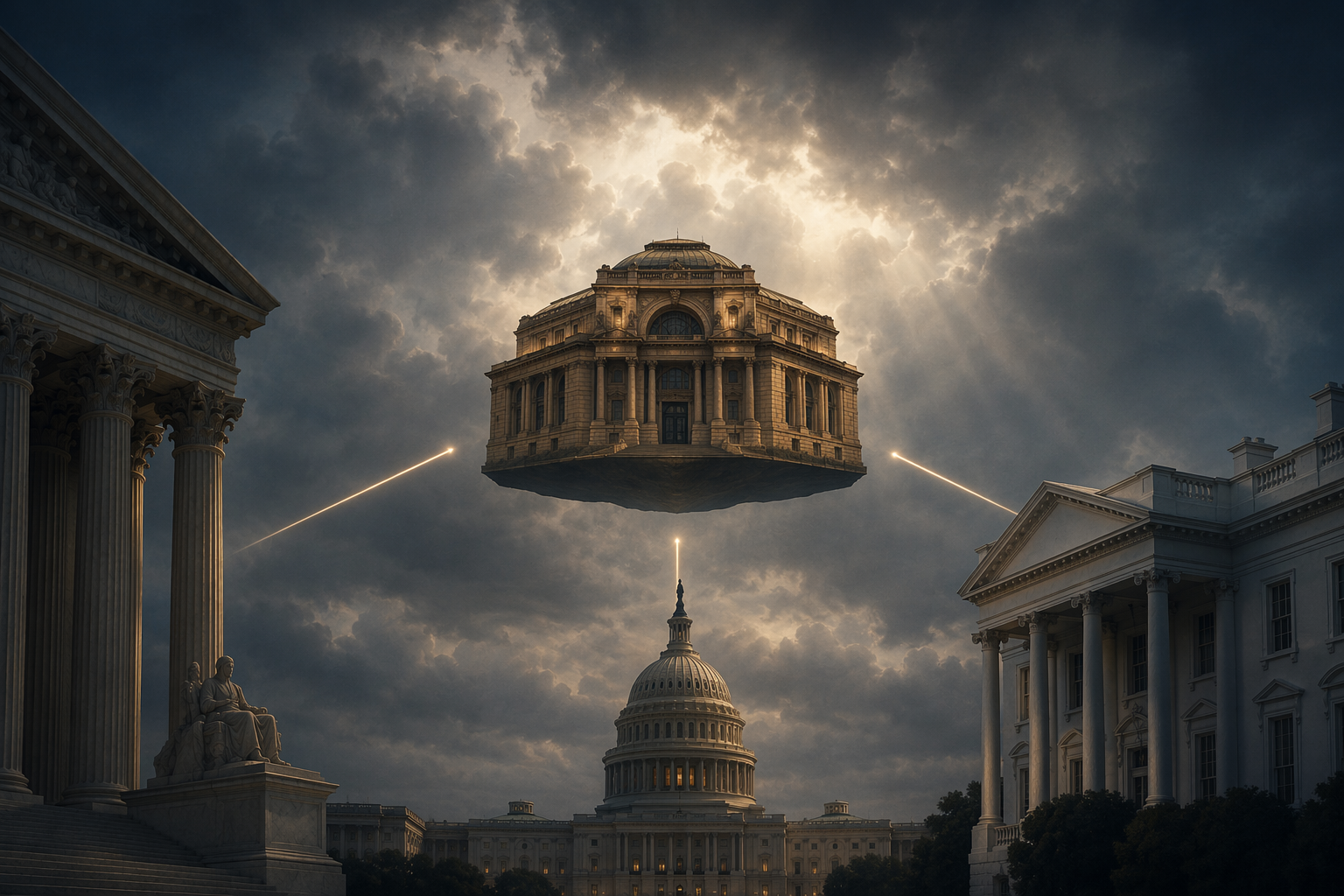
That is where the hearing headline stops being the main event. Congress created the Smithsonian in 1846 as an unusual institution governed by a Board of Regents that includes the Vice President, the Chief Justice, members of Congress, and citizen regents.[4] The Congressional Research Service describes the Smithsonian as "organizationally separate and distinct from the legislative, executive, or judicial branches," a formulation that is useful precisely because it refuses the usual branch label.[4]
Refusing a branch label, however, is not the same as answering an operational question. If the White House tells Smithsonian leadership to change curatorial content, does the Board of Regents have to treat that as a command, a recommendation, a funding threat, or a political position with no direct legal effect? The existing authorities do not line up neatly enough to make that answer obvious.
The Smithsonian Is Not Easy To Place In The Federal Chart
The Smithsonian is often described as public, federal, national, independent, or quasi-governmental. Those descriptions may be serviceable in a museum brochure or budget hearing. They are less useful when the question is whether presidential direction travels down a legal chain of command.
The statutory design matters. Congress did not simply create an executive department or place the Smithsonian under a cabinet secretary. It established a trust instrumentality administered through the Board of Regents, a cross-branch body with officers and members whose presence in ordinary executive administration would itself be constitutionally odd if the Institution were treated as a standard executive agency.[4]
That structure explains why arguments about "government control" tend to slide past the contested point. The Smithsonian can be deeply public without being presidential. It can receive federal appropriations without every curatorial choice becoming an executive-branch decision. It can speak in ways a court treats as government speech without identifying the President as the speaker.
The legal record is awkward because different doctrines have asked different questions. The two D.C. Circuit decisions that matter most - Dong v. Smithsonian Institution and Expeditions Unlimited Aquatic Enterprises v. Smithsonian Institution - do not fit comfortably into one clean status rule.
Dong Is The Strongest Obstacle To Ordinary Presidential Control
Dong v. Smithsonian Institution is the decision most directly relevant to the President's ordinary supervisory claim. In 1997, the D.C. Circuit held that the Smithsonian was not an "agency" for purposes of the Privacy Act because it was not an executive-branch establishment.[5] The court treated the Institution's structure as incompatible with a simple executive-chain model.
The significance of Dong is not that it immunizes the Smithsonian from all federal law. It does something narrower and more important here: it undercuts the assumption that, because the Smithsonian is federally created and federally supported, presidential supervision follows automatically. If an entity is not an executive-branch establishment for a statute keyed to federal agency status, the President needs more than a general appeal to national ownership to direct its internal decisions.
That matters for EO 14253 because the order does not merely ask an executive officer to review an executive department. It directs White House and executive officials toward an institution Congress structured through a Board of Regents that includes officials from more than one branch.[3][4] Dong does not answer whether the President can influence Smithsonian exhibits, but it is a serious barrier to saying the Institution sits inside the normal executive hierarchy.[5]
The limitation should be kept visible. Dong was a Privacy Act case, not a museum-governance case. It is binding in the D.C. Circuit, but it is not a Supreme Court ruling on the Smithsonian's full constitutional status. It tells us that one ordinary executive-agency route is blocked. It does not tell us what happens when the President asserts authority through the Take Care Clause, appropriations leverage, Board participation, or public messaging.
Expeditions Unlimited Keeps The Status Question Unsettled
Expeditions Unlimited, decided by the same circuit in 1977, points in the other direction. There, the D.C. Circuit treated the Smithsonian as a federal agency for purposes of the Federal Tort Claims Act.[5] That holding is why it is too easy to say Dong settled the matter by placing the Smithsonian outside federal-agency status altogether.
The two decisions can be partly reconciled by their statutory settings. The FTCA asks whether tort liability should be handled through the federal government's waiver of sovereign immunity. The Privacy Act asks whether an entity is an agency within a statutory scheme built around executive establishments and information practices. Different questions can produce different classifications without contradiction.
But that reconciliation only gets so far. The present dispute is not about tort liability or access to records. It is about curatorial control. Neither Dong nor Expeditions Unlimited decides whether the President may command exhibit content, whether the Board of Regents may disregard that command, or whether Congress may use oversight and appropriations to countermand executive pressure.
| Authority | What It Decides | What It Leaves Open |
|---|---|---|
| Dong v. Smithsonian Institution | The Smithsonian is not an executive-branch establishment for Privacy Act purposes. | Whether the President can direct curatorial content through other constitutional or statutory theories. |
| Expeditions Unlimited | The Smithsonian can be treated as a federal agency for FTCA purposes. | Whether federal-agency treatment in tort law creates presidential supervisory control. |
| CRS IF12975 | The Smithsonian is organizationally separate and distinct from the three branches. | How that separation operates when the White House, Congress, and Regents conflict over exhibit content. |
This is the core legal problem exposed by the hearings. The Smithsonian is not simply outside government, and it is not simply inside the executive branch. The classifications that exist are doctrine-specific. The curatorial-control question requires a different answer than the courts have so far supplied.
EO 14253 Turns Institutional Ambiguity Into A Control Dispute
Executive Order 14253 is important because it converts a long-standing status ambiguity into an instruction set. It directs named executive actors to address content at Smithsonian properties and to remove specified ideological material.[3] That makes the legality of presidential curatorial direction more than an abstract seminar question.
A Yale Law Journal student essay published in April 2026 argues that the order exceeds presidential authority because Congress delegated administrative control of the Smithsonian to the Board of Regents rather than to the President.[6] The essay is not judicial authority, and it should not be treated as if it were a holding. Its value is different: it maps the overreach argument with more precision than the hearing rhetoric does.
On that account, the relevant question is not whether the President may express a view about public history. Of course he may. Nor is it whether Congress may investigate the use of public funds. Of course it may. The narrower question is whether a presidential order can lawfully move through executive officials into curatorial administration when Congress assigned institutional governance to a Board that is not simply presidentially controlled.
The White House position, as described in The Atlantic, relies partly on a 1997 Office of Legal Counsel view that the Smithsonian is "so closely connected to the Government that the two cannot realistically be viewed as separate entities."[7] That characterization cannot carry more weight than the available source permits. Without the opinion itself in the open record cited here, it is a secondary account of an executive-branch legal position, not a directly reviewable OLC analysis.
Even taken at face value, the quoted OLC formulation still does not identify the operative controller. Saying the Smithsonian and the government cannot realistically be viewed as separate entities may matter for immunity, property, or public accountability. It does not by itself answer whether the relevant government actor is the President, Congress through statute and appropriations, the Board of Regents, or some composite arrangement that resists ordinary command language.
Government Speech Does Not End The Inquiry
Raven v. Sajet adds another layer. In 2018, the U.S. District Court for the District of Columbia treated Smithsonian exhibit selections as government speech and described the Institution's discretion over those selections in rejecting a First Amendment challenge.[8] That helps explain why a disappointed exhibitor or objector may have limited First Amendment leverage against curatorial choices.
But government speech doctrine answers a different problem. It generally addresses when the government may select its own message without creating a forum for private speakers. It does not always identify which public official or institution has final authority to choose the message. In the Smithsonian context, that is the missing step.
If an exhibit is government speech, whose government speech is it? The President's, because the Smithsonian is federally connected? Congress's, because Congress created the Institution and funds much of it? The Board's, because Congress placed administration there? Or the Institution's, in the sense that a congressionally created trust instrumentality has legally recognized discretion even though it is public? Raven does not decide that allocation question.[8]
This is why broad First Amendment language can mislead. A court can say the Smithsonian has discretion to select exhibits without deciding whether that discretion is insulated from presidential direction. A court can say the exhibit is government speech without deciding which part of the government may revise it. The July hearings pushed both questions into the same frame, but the doctrine has not yet fused them.
Appropriations Pressure Is Related, Not Identical
Funding pressure is the obvious practical lever. Federal appropriations account for 62% of the Smithsonian budget, making appropriations a powerful tool even if direct presidential command is uncertain. That fact, however, should not be collapsed into the curatorial-control issue.
Congress may attach conditions to appropriations within constitutional limits, and the executive branch may administer appropriated funds only within legal constraints. If the White House attempts to withhold, delay, or condition funds already appropriated to force exhibit changes, the dispute may begin to resemble other separation-of-powers fights over spending execution and impoundment. Readers following that adjacent track can place it alongside Lex Machina Review's coverage of executive impoundment authority and the legal consequences of stopgap funding fights.
Still, a funding condition and a curatorial command are not the same legal act. One asks whether money may be used, withheld, or conditioned. The other asks who administers institutional speech. They may converge in litigation if funding becomes the enforcement mechanism for EO 14253, but as of the hearing dates, the specific Smithsonian impoundment issue had not been filed as a case in the record summarized here.
The distinction also matters for Congress. Oversight hearings can expose management choices and political priorities. Appropriations can shape institutional incentives. Statutory amendment can restructure governance. But none of those tools necessarily validates a unilateral presidential claim to direct exhibit content under the Smithsonian's existing governance model.
The Board Of Regents Is Where The Branch Labels Break Down
The Board of Regents is not a decorative complication. It is the institutional answer Congress built. Because it includes the Vice President, the Chief Justice, members of Congress, and citizen regents, it does not map cleanly onto any one branch.[4] That is exactly why a presidential-control theory needs more than the premise that the Smithsonian is public.
The Atlantic's July 2026 account also reports that Vice President Vance appeared to be holding citizen regent nominees, adding another practical pressure point in the governance structure.[7] That fact, if accurate, illustrates how control can be exercised through appointment timing and institutional bottlenecks rather than through a direct exhibit-editing order. It does not eliminate the legal question; it changes the mechanism by which the question may matter.
A clean executive-branch model would make this easier. The President would direct subordinate officers, and the remedy for policy disagreement would be political accountability. A clean independent-corporation model would also be easier. The Board would govern, subject to statute, appropriations, and judicial review. The Smithsonian sits in the space between those models, and the cases have preserved rather than resolved that space.
What A Court Would Actually Need To Decide
A court reviewing a concrete challenge to EO 14253 or a funding enforcement action would not need to decide whether the Smithsonian is "government" in the abstract. It would need to decide which legal consequence follows from the particular classification being invoked.
- If the claim is direct presidential supervision, the court would have to confront Dong's rejection of executive-branch establishment status.
- If the claim is federal-agency treatment, the court would have to explain why Expeditions Unlimited's FTCA reasoning applies outside tort liability.
- If the claim is government speech, the court would have to identify the governmental speaker with authority to choose the message.
- If the claim is appropriations leverage, the court would have to separate valid funding conditions from unlawful withholding or executive revision of congressional choices.
- If the claim is Board autonomy, the court would have to say how much autonomy Congress validly vested in a cross-branch governing body.
That is a harder case than the hearing rhetoric suggests. It is also a more interesting one. The dispute is not just about an exhibit label, a presidential order, or a congressional hearing. It is about whether a nineteenth-century governance design can absorb a modern executive theory that treats federally connected cultural institutions as administratively reachable from the White House.
The current authorities support only a restrained conclusion. Dong makes ordinary executive-branch control difficult to defend. Expeditions Unlimited prevents a simple claim that the Smithsonian is never a federal agency. CRS confirms the Institution's separation from the three branches without resolving command authority. Raven supports government-speech treatment but not presidential ownership of the message. The Yale essay supplies a serious overreach theory, while the reported OLC position supplies an executive counterargument that remains difficult to evaluate without the opinion itself.
The July 2026 hearings therefore made unavoidable a constitutional ambiguity no court has squarely resolved. Until litigation, legislation, or a restructuring of the Smithsonian's governance clarifies the Institution's status, presidential curatorial control remains an asserted power rather than a settled one.
References
- Burchett Announces Hearing on Extreme Political Activism at the Smithsonian's National Museum of American History, House Committee on Oversight and Government Reform
- Full Committee Hearing: Oversight of the Smithsonian: Radical Revisionism at the National Museum of American History, Committee on House Administration, July 2026
- Restoring Truth and Sanity to American History, The White House, March 27, 2025
- Smithsonian Institution: Background and Issues for Congress, Congressional Research Service
- Legal History of the Smithsonian Institution, Smithsonian Office of the General Counsel
- Fight at the Museum: Executive Overreach and the Future of the Smithsonian Institution, Yale Law Journal, April 10, 2026
- The Smithsonian Is in Trump and Vance's Sights, The Atlantic, July 2026
- Control of Smithsonian Institution Exhibits, First Amendment Encyclopedia, July 9, 2026
Comments
Join the discussion with an anonymous comment.