
SOXL can be a winning trade and still create a long-term suitability problem
SOXL can post a spectacular year and still be a difficult recommendation to defend for any holding period that looks beyond the next session. That is the question the file has to answer, not the one marketing language usually prefers: when a client is told to hold a 3x daily-reset semiconductor ETF for more than a trading horizon, FINRA’s own guidance makes the defense much harder, because leveraged and inverse ETFs “typically are inappropriate as an intermediate or long-term investment.” [1]

The recent tape explains why the product is hard to dismiss, not why the recommendation is easy to justify
The conflict is not theoretical. One 2025-2026 write-up put SOXL’s 52-week range at $22.57 to $302.00, described YTD gains in the 320% to 537% band, noted single-day swings above 20%, and assigned a beta of 7.64; Direxion’s own product framing sits inside that same volatility regime by design. [2][3] Semiconductor ETFs more broadly were also unusually active in 2026, with BTIG data cited by CryptoBriefing showing 34-plus daily moves above 4% in SMH and SOXX. [4]
Daily reset is the issue, not just volatility in the abstract
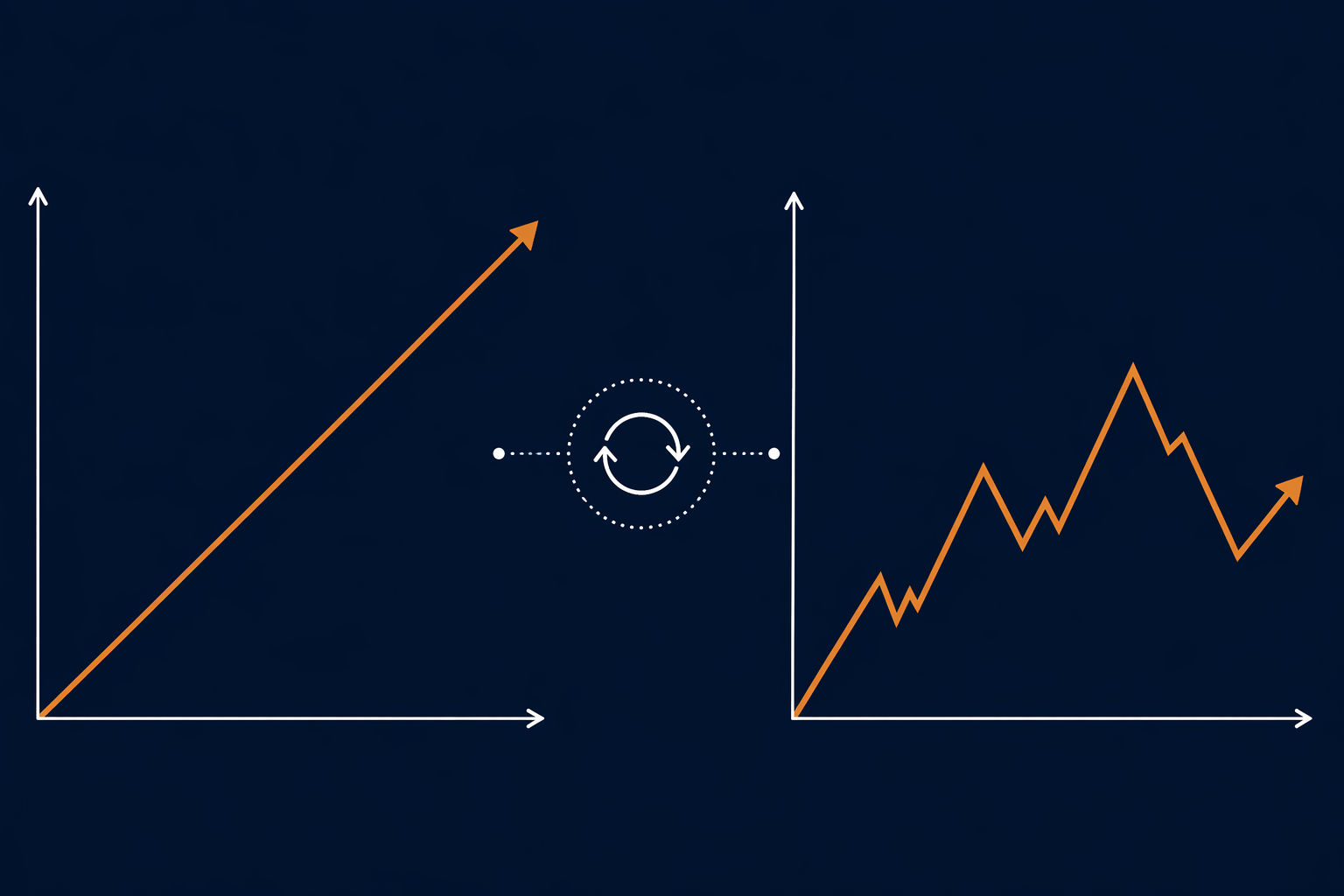
The mathematics are less forgiving than the slogan. A 3x leveraged ETF resets its exposure every day, so the path matters as much as the endpoint. In a strong one-directional trend, that feature can be masked for a while; in a volatile, flat, or choppy market, daily compounding works against the holder and value can erode even when the underlying does not move very far in net terms. ETFdb’s decay modeling uses random-walk simulations to show why the problem becomes visible over multi-month holding periods: the decay is not an accident, but a structural consequence of repeated resetting. [5][6]
Direxion’s own warning helps because it is not claimant rhetoric. The issuer says leveraged ETFs “are not suitable for all investors and should be utilized only by sophisticated investors who understand leverage risk,” which makes it harder to defend a long hold if the file shows only broad confidence in semiconductors. [5]
What a broker would need in the file
That is where the suitability analysis stops being generic. FINRA Rule 2111 and Notice 09-31 push the broker to show more than enthusiasm for a semiconductor theme: reasonable-basis understanding of the product, customer-specific fit, and some evidence that the position was meant to be monitored, not simply left to compound on hope. Reg BI’s care obligation asks the same question in a different register. The issue is what could be shown at the time of recommendation, not what looked impressive after the move had already happened. [1][5]
- The client understood that the product resets daily and does not behave like a conventional buy-and-hold ETF.
- The account notes reflect a real holding period and a reason for it, rather than a vague reference to “AI chips” or “long-term conviction.”
- There was a monitoring plan or review cadence if the recommendation extended beyond a single trading day.
- Exit instructions, if any, were defined well enough that the recommendation could be unwound before decay and volatility did the work first.
- The customer profile actually matched leveraged trading, not merely a desire to participate in a hot theme.
The litigation frame is useful, but the promotional frame has to be named
A Bakhtiari & Harrison analysis is worth reading here, so long as it is read as a law-firm marketing page with substantive analysis rather than as neutral industry reporting. The page calls leveraged single-stock ETFs “among the most complex and unsuitable products being sold to retail investors,” and it says the category had reached $36.2 billion in AUM, $13.7 billion in net inflows in 2025, and more than $250 million recovered in FINRA arbitration. [7] Those figures do not prove that every SOXL claim succeeds, but they do show why an unsuitability theory is a live one instead of a post hoc irritation.
AI-chip policy shocks make a long hold harder to defend
SOXL’s semiconductor basket is not insulated from policy shocks. Early-2026 export-control tightening, tariff uncertainty, and draft framework changes kept AI-chip names jumpy enough that a broker recommending a long hold had to deal with more than ordinary market risk. That matters because volatility decay is most punishing when the tape is noisy, not when it marches in a straight line. [8][9][10]
FINRA does not make SOXL forbidden in every account. It does make a long-term broker recommendation presumptively difficult to defend unless the record shows sophistication, purpose, monitoring, and documentation. For the broader market-risk backdrop, see the companion piece on the risks of AI chip leveraged ETFs for legal professionals and How AI Chip Volatility Is Transforming D&O Risk. This is general information, not legal advice.
References
- FINRA Regulatory Notice 09-31: Non-Traditional ETFs — FINRA — source
- SOXL 2025-2026 Riding a New Wave of AI-Driven Semiconductor Momentum — Tickeron — source
- Daily Semiconductor Bull & Bear 3X ETFs — Direxion — source
- Semiconductor ETF Record Volatility 2026 — CryptoBriefing — source
- Volatility Matters — Direxion — source
- Leveraged ETFs: Leveraged Decay and the Dangers of Long-Term Investing — ETFdb — source
- Leveraged Single-Stock ETFs: Volatility, Decay, and Recovery Potential — Bakhtiari & Harrison — source
- Administration Policies on Advanced AI Chips Codified — Mayer Brown — source
- U.S. Mulls New Rules on AI Chip Exports — Reuters — source
- Reported Draft Rules Signal New Semiconductor Export Controls Framework — Global Trade & Sanctions Law — source
Comments
Join the discussion with an anonymous comment.