
The State Department Worldwide Caution has a narrow legal meaning and a broader operational consequence. It does not prohibit international travel. It does not convert every overseas meeting into negligence. It does, however, make it harder for a law firm or legal department to say later that international security risk was too vague to plan around.
That distinction matters because the 2026 caution has not behaved like a one-day bulletin. Public reporting places its first issuance on February 28, 2026, with a March 22 renewal and a further July 17–20 update still urging Americans abroad to exercise increased caution amid heightened global security concerns tied to the Iran-conflict backdrop.[1][2] Forbes also reported that more than 43,000 Americans had been evacuated in connection with the regional crisis, which gives the alert a concrete administrative setting rather than the feel of generic travel boilerplate.[3]
One caveat belongs near the front: the official State Department Worldwide Caution page could not be directly verified for this analysis. The alert text and timing are therefore reconstructed from embassy mirror pages and multiple news reports, rather than treated as a directly authenticated primary page. That is not ideal. It is still enough to assess what legal employers should do with a public, repeated, widely reported government risk signal.
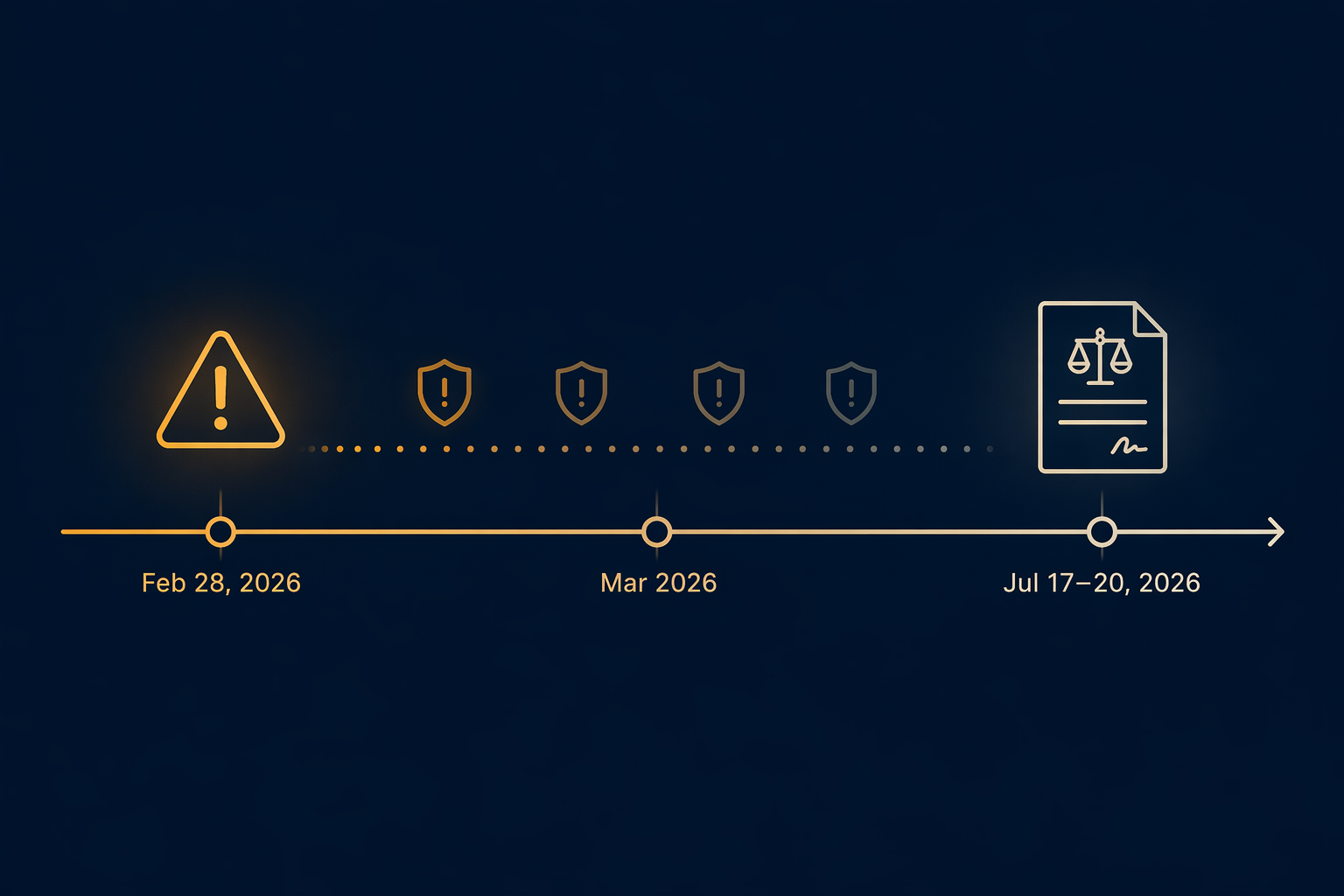
The caution also sits inside the State Department’s four-level advisory structure: Level 1 means Exercise Normal Precautions, Level 2 means Exercise Increased Caution, Level 3 means Reconsider Travel, and Level 4 means Do Not Travel.[4] The Worldwide Caution is treated here as a Level 2 risk signal, not as a Level 3 or Level 4 directive. That is the first place sloppy analysis goes wrong. Level 2 does not mean “do not send lawyers abroad.” It means a firm has been told to look harder before it does.
The Legal Issue Is Foreseeability, Not Prohibition
A travel advisory is not a statute, a regulation, or a court order. No reported case in the available materials squarely holds that a law firm is liable because it ignored the 2026 Worldwide Caution. That absence should prevent overstatement. It should not lead to complacency.
In risk files, the more useful question is not whether the advisory itself has the force of law. It is whether the advisory helps establish that a risk was known, knowable, and serious enough to require a documented decision. In employer-liability language, that is a foreseeability problem. In law firm management language, it is the difference between “the partner booked the flight” and “the firm assessed the trip, assigned responsibility, adjusted technology, checked insurance, and approved the risk.”
That difference becomes more important when the traveler is not only a rainmaker headed to a conference. It may be a junior associate carrying privileged files, an IT employee supporting a trial team, a paralegal with client exhibits on a laptop, or an in-house lawyer crossing a border with board materials. Those people do not control the business-development rationale for the trip, but they often inherit the practical exposure.
Employer Duty Of Care Becomes Harder To Treat As Informal
For legal employers, the Worldwide Caution belongs in the same file as OSHA duty-of-care analysis, common law negligence review, travel-risk management standards, and insurer questionnaires. The OSHA General Duty Clause is usually discussed in terms of workplace hazards, but modern business travel has made “workplace” a less tidy concept. If an employer sends someone abroad for work, the risk inquiry does not stop at the office door.
Everbridge’s 2026 business-travel duty-of-care guidance frames employer responsibility around anticipating, communicating, monitoring, and responding to travel risks, rather than treating travel as a purely personal safety matter.[5] The same practical view appears in legal-management guidance from ALANet and the ABA, which organizes international travel risk around physical safety, immigration compliance, IT security, insurance coverage, and business-development coordination.[6] Those categories are not legal elements in a negligence claim. They are the kind of operational record a firm may want if someone later asks how the trip was approved.
A risk-aware firm’s file would look different before the ticket is purchased. It would identify the destination’s current State Department level, confirm whether the trip touches Level 3 or Level 4 jurisdictions, explain why remote participation is insufficient if the risk is elevated, and name the person or committee with authority to approve the exception. It would also coordinate immigration, IT, emergency response, and insurance review before the traveler is already at the gate.
| Travel decision point | What a defensible record should show |
|---|---|
| Destination review | Current advisory level, local security issues, border-entry concerns, and whether the traveler’s role is necessary |
| Level 3 or Level 4 exposure | Special review, documented business justification, and executive or risk-committee approval |
| Traveler role | Whether the traveler is an attorney, staff member, non-citizen employee, or person carrying sensitive client material |
| Technology plan | Clean-device decision, data-minimization steps, remote-access limits, and incident reporting contact |
| Emergency protocol | Check-in expectations, evacuation contact path, medical assistance, and escalation authority |
| Insurance review | Confirmation of health, travel, professional liability, and destination-specific exclusions |
None of that proves that travel is unlawful. It proves something more mundane and more useful: someone made a decision with the risk in view. In a later dispute, the absence of that record may matter more than the advisory’s nonbinding status.
Northwestern University’s travel-safety framework describes the State Department advisory system as one tool to evaluate travel risk, not as a complete answer by itself.[7] That is the right posture for law firms. A Level 2 worldwide alert does not require cancellation. But if the destination also presents local unrest, sanctions issues, detention risk, or foreseeable border-device exposure, the advisory becomes part of a larger risk picture that should be documented.
The most vulnerable approval pattern is the informal one: a partner tells a team member to attend, travel books the itinerary, IT hears about the destination late, and risk management sees the matter only if something goes wrong. That sequence may be common. It is not reassuring.
Lawyers Carry A Different Border Risk
The confidentiality problem is where legal travel separates itself from ordinary business travel. A consultant may carry trade secrets. A lawyer may carry privileged communications, litigation strategy, internal investigation material, sanctions analysis, deal documents, or client identity information that cannot simply be exposed and apologized for later.
Customs and Border Protection searches also sit in a different constitutional posture from ordinary domestic device searches. AAML’s 2025 guidance for U.S. lawyers explains the border-search exception and warns that attorneys building or serving international practices should account for device inspection, sanctions compliance, and data-security risk before travel.[8] That does not mean every lawyer’s phone will be searched. It means the possibility is sufficiently known that carrying a full client archive across a border is a choice, not an accident.
The traveler’s citizenship status also changes the pressure at the inspection point. U.S. citizens cannot be denied entry to the United States for refusing a device search, although refusal may lead to device seizure, delay, or other consequences. Non-citizen attorneys and staff can face more serious admission consequences. A single firm travel policy that treats every traveler as legally identical will miss that distinction.
ABA Journal reporting in 2026 described increasing CBP electronic-device searches and focused on the problem of lawyers protecting client information at the border.[9] The reporting does not establish that the Worldwide Caution created a new ethics standard. It does make the practical contradiction harder to ignore: firms train lawyers to guard privileged material in document productions and AI tools, then sometimes send them across borders with devices that contain far more than the trip requires.
Model Rule 1.6 Is The Starting Point
Model Rule 1.6 requires lawyers to make reasonable efforts to prevent unauthorized disclosure of, or unauthorized access to, information relating to the representation of a client. The key word is “reasonable.” It does not demand perfect secrecy under all conditions. It also does not excuse a lawyer who ignored an obvious and avoidable exposure.
NYC Bar Formal Opinion 2017-5, as reflected in the border-search guidance discussed in the available materials, applies that reasonable-efforts concept to attorney border crossings and electronic devices.[8][9] The standard remains fact-specific. There is no authoritative 2026 opinion saying exactly what the Worldwide Caution adds to Model Rule 1.6. But a prolonged public warning, heightened regional tension, and growing attention to device searches make it harder to defend a no-protocol approach.
Reasonable efforts may look simple in some matters and demanding in others. A lawyer traveling to a low-risk conference with no client files on the device presents one problem. A sanctions lawyer, family-law attorney, white-collar defense lawyer, or investigations team member traveling with sensitive client material presents another. The rule does not require firms to pretend those situations are the same.
- Use a clean or travel-specific device when the matter and destination justify it.
- Limit local storage to materials actually needed for the trip.
- Disable unnecessary synced repositories, messaging archives, and document-management access.
- Create a border-search escalation contact before travel, not after inspection begins.
- Document the client-data assessment for higher-risk destinations or sensitive matters.
Rule 1.4 may become relevant if client information is accessed or compromised in a way that requires communication with the client. Rule 1.16 may enter the picture if border conditions, sanctions rules, or security constraints make continued representation materially difficult. Those are downstream consequences. The preventive work still starts with Rule 1.6 and the device in the lawyer’s bag.
Sanctions And Immigration Review Should Not Be Afterthoughts
International legal travel can also carry sanctions and immigration risks that ordinary trip approval systems miss. AAML’s guidance notes the complexity of U.S. sanctions compliance for lawyers working internationally, including nearly 40 active sanctions programs and the OFAC 50 Percent Rule.[8] That is not a reason to freeze legitimate international work. It is a reason not to let a conference invitation or client emergency bypass legal review of who will be met, what services will be provided, and what funds or entities may be involved.
Immigration review has the same practical character. A lawyer entering a country for meetings, negotiations, document review, or hearing preparation may face different questions from a lawyer attending a public conference. If the firm has not identified the work purpose accurately, the traveler is left to improvise at the border. That is a poor place to discover that “business travel” was being used as a label rather than an analysis.
Insurance Is A Shorter Question, But Not A Smaller One
Insurance does not need to dominate the analysis, but it should be checked before travel is approved. Professional liability policies may ask about non-U.S. practice, international offices, foreign proceedings, or travel connected to client work. If a firm’s annual application says one thing and its travel calendar says another, the advisory is not the coverage problem. The incomplete disclosure is.
The same review should cover medical and evacuation coverage. Employer health plans often have limits outside the United States, and travel policies may exclude or restrict claims tied to higher-risk destinations, especially Level 3 or Level 4 travel. ALANet’s international-travel risk framework treats insurance coverage as one of the core categories firms should address, alongside physical safety, immigration, IT security, and business-development coordination.[6]
This is where the Worldwide Caution matters even though it is only Level 2. It tells the firm to look. The destination-specific advisory, policy wording, traveler role, and matter sensitivity then determine how hard the firm needs to look and who must approve the answer.
What Changes In A Well-Run Approval Process
The administrative burden is not exotic. It is the kind of file firms already know how to build when they care about conflicts, confidentiality, lateral intake, cybersecurity, or client-money controls. The weakness is that travel often falls between departments: business development wants attendance, the practice group wants speed, travel staff book logistics, IT sees the ticket late, and risk management is expected to bless what has effectively already happened.
A cleaner process would separate routine travel from risk-triggered travel. Routine travel can remain light. Risk-triggered travel should move through a named approval path when the destination is Level 3 or Level 4, when the traveler is a non-citizen employee facing border-admission risk, when the traveler will carry sensitive client data, when sanctions or export-control issues may arise, or when the Worldwide Caution is reinforced by local security concerns.
- The practice leader explains why the trip is necessary and why remote participation is insufficient.
- Risk or compliance checks the advisory level, sanctions concerns, insurance position, and emergency support.
- IT decides whether the traveler should use a clean device, limited-access profile, or other data-minimization control.
- Immigration or outside counsel confirms whether the planned activity fits the traveler’s entry basis.
- A named approver accepts the residual risk before the ticket is treated as final.
That process does not need to be theatrical. In fact, it works better when it is boring: a short form, a clear threshold, a reliable reviewer, and a record that can be found later. The point is not to make international practice impossible. It is to stop pretending that a public global caution, client confidences, border-device searches, insurance conditions, and employee safety can be handled by calendar invite.
The Narrow Bottom Line
The State Department Worldwide Caution is not law. It is not a travel ban. It does not guarantee employer liability, ethics discipline, denied coverage, or border seizure. A Level 2 caution still leaves room for ordinary, justified international legal work.
But in Q3 2026, after months of continuous public warning and repeated updates, it is strong evidence that certain travel risks were foreseeable. For law firms and legal departments, the practical legal implication is therefore straightforward: international travel should be treated as a documented risk-management decision, especially when employees, client confidences, border searches, sanctions issues, or higher-level destinations are involved.
References
- State Department issues worldwide caution advisory Americans abroad, USA Today, March 24, 2026
- New travel alert: Worldwide caution urged by State Department, Cleveland.com, July 2026
- Here's What the State Department's 'Worldwide Caution' For Travelers Means, Forbes
- What is a Travel Advisory? Levels & Guide, Navan
- Duty of care for business travelers: What employers must do in 2026, Everbridge
- Protect Your Firm from International Travel Risks, ALANet / ABA, July-August 2023
- Evaluating the U.S. Department of State Travel Advisory System, Northwestern University
- Travel Safe, Stay Compliant: What U.S. Lawyers Building an International Practice Should Know, AAML
- As customs and border protection agents search more electronic devices, how can lawyers keep client information secure?, ABA Journal, 2026
Comments
Join the discussion with an anonymous comment.