
The legal controversy over Courtney Stodden and Jason Alexander is live again for a narrow reason: the public dispute is no longer only about whether a 2012 comedy sketch aged badly. On July 21, 2026, Stodden publicly called out the sketch, describing sexually suggestive material they participated in as a 17-year-old. Alexander responded with an apology, saying, “I completely agree that it was inappropriate and I truly regret it.” As of July 22, 2026, no lawsuit has been filed, and the sketch is no longer publicly accessible in full, leaving the most important evidence outside ordinary public review.[1]
One naming point matters at the start. The Jason Alexander at issue here is the actor widely known from Seinfeld who appeared in the sketch. He should not be confused with Jason “Jace” Alexander, the Law & Order director separately associated with a child pornography conviction. In a story involving minors, sex-related legal categories, and search-driven misattribution, that distinction is not cosmetic.
The legally uncomfortable facts are spare but serious: a minor performer; adults signing around that minor; a sexualized performance frame; an adult co-star who has now said the material was inappropriate; and a production record that may no longer be available for line-by-line public examination. Those facts do not decide liability. They do identify where the legal pressure points would be if Stodden or another claimant attempted to move from public call-out to civil litigation.
The first question is who had legal responsibility
A workable liability map has at least three groups: the adult performer or writer who allegedly conceived and performed the material; the production company or platform that produced, approved, distributed, or later hosted it; and the adults who authorized Stodden’s participation. Theories against those groups would not all do the same work. Some would focus on consent and contract. Some would focus on production duties. Some would focus on emotional harm. A narrower and more difficult category would ask whether the content crossed into statutory child sexual exploitation.
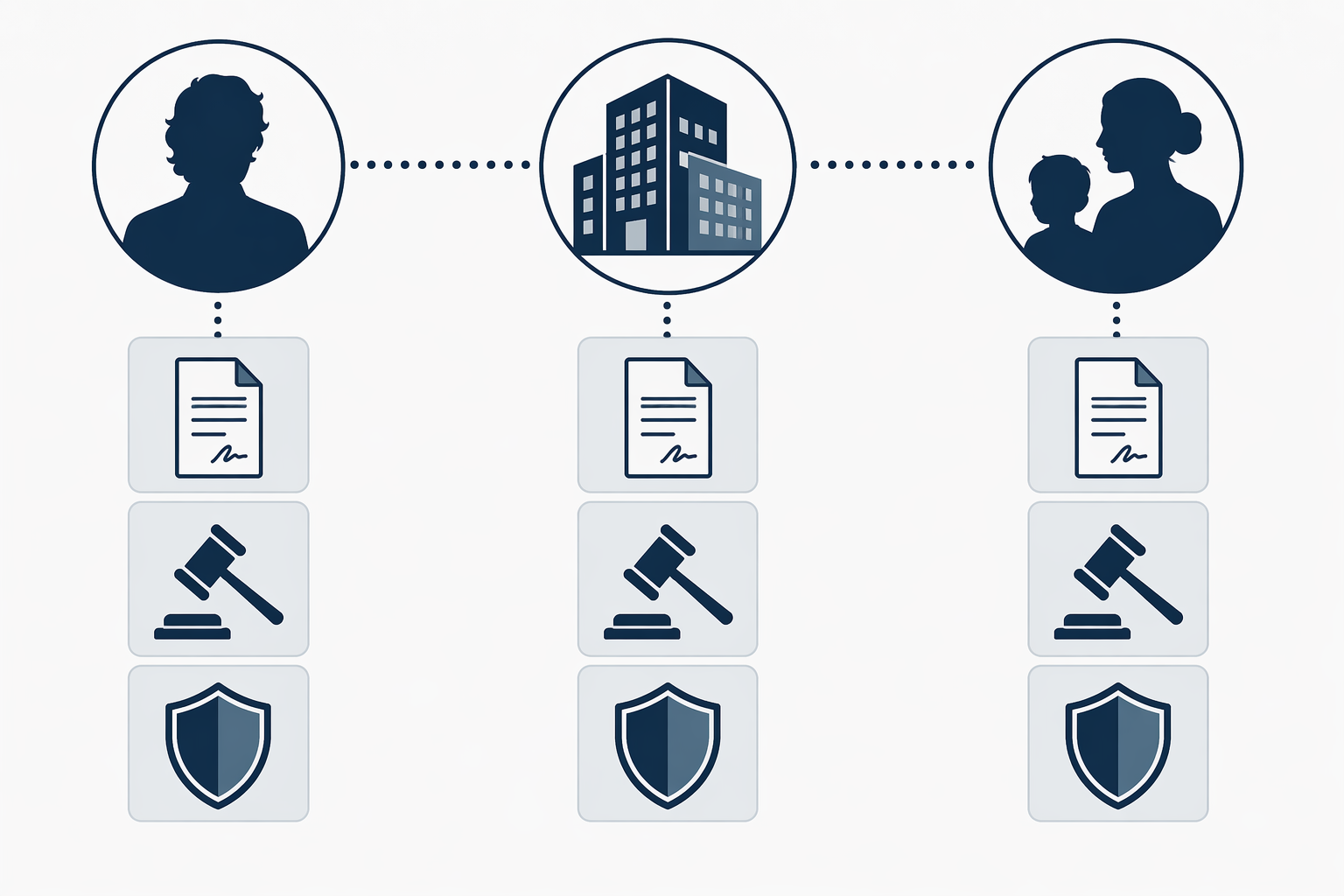
| Potential defendant class | Legal question | Why it matters |
|---|---|---|
| Adult co-star or writer | Did the adult help create, perform, direct, or normalize sexually suggestive material involving a minor? | This is where intent, knowledge, conduct, and Alexander’s current apology would be most relevant. |
| Production company or platform | Who approved, supervised, filmed, edited, distributed, and retained the sketch? | Production entities are the practical gatekeepers for child performer compliance and content risk. |
| Authorizing adults | What did the adults signing for or managing the minor authorize, and could that authorization bind the minor? | Adult signatures may matter evidentially, but they do not automatically end the inquiry under California minor-capacity rules. |
Adult signatures do not necessarily close the consent issue
The reported participation paperwork was signed by adults around Stodden, including their mother and then-husband/manager Doug Hutchison. That fact would matter in any defense account of authorization. It would not, by itself, settle whether a 17-year-old performer legally consented to the relevant arrangement.
California Family Code provisions governing minors’ contractual capacity are the starting point. A minor under 18 generally lacks full capacity to consent to contracts, subject to statutory exceptions and court-approval mechanisms in entertainment contexts.[2] The practical point is not that every contract involving a minor performer is void. It is that adult-signed paperwork cannot be treated as a universal shield when the claim is that the underlying work sexualized a minor in a way California law may separately regulate.
That distinction would matter for both plaintiffs and defendants. A plaintiff would likely argue that the people with leverage were adults and entities that controlled the set, script, release, and distribution. A defendant would likely point to signed releases, parental or managerial authorization, industry custom, and the absence of a contemporaneous lawsuit. Neither side gets a clean answer from contract formalities alone.
Civil harm theories would turn on conduct, context, and proof of injury
If a civil complaint were filed, intentional infliction of emotional distress or related tort theories would likely be considered before more exotic claims. Those theories would not ask only whether the sketch was tasteless. They would ask whether the conduct was sufficiently extreme or outrageous under the circumstances, whether defendants intended or recklessly disregarded the likelihood of emotional distress, and whether legally cognizable harm followed.
The minor status changes the context. Conduct that might be defended as adult satire in one setting becomes more vulnerable when the performer lacked adult bargaining power and was participating through adult intermediaries. Alexander’s apology could have evidentiary significance here, although it is not the same as a legal admission. A statement that the material was inappropriate and regretted may bear on knowledge, foreseeability, or the reasonableness of the conduct, but a court would still examine the words, the scene, the production process, and the claimed injury.[1]
The harder defense question is not whether comedy is protected as a genre. It plainly can be. The harder question is whether the comedy label changes the legal consequences of recruiting or directing a minor into sexualized performance material. Genre may explain intent or audience framing; it does not make the minor’s status disappear.
Production duties sit in the middle of the case
For production companies and platforms, the issue is less personal and more operational. Who reviewed the concept? Who cleared the performer? Who handled releases? Who supervised the shoot? Who decided the sketch was suitable for publication? Those are ordinary entertainment-production questions, but they become liability questions when the performer is a minor and the material is sexually suggestive.
Child labor and child-protection rules would frame that inquiry even if they did not supply the only cause of action. A production cannot outsource all risk analysis to a parent, spouse, manager, or adult co-star. The entity that films and distributes the work is typically the party best positioned to say no, require revisions, seek court approval where necessary, document safeguards, or refuse to use the minor performer in the first place.
That is why this controversy is not just a reputational event for one actor. The production-side question is whether systems existed that should have stopped the concept before filming or distribution. A legal department evaluating the same fact pattern today would want the script, call sheets, releases, edits, internal approvals, age-verification records, and communications about the performer’s age and role.
Penal Code § 311.2 is serious, but it cannot be analyzed from summaries alone
California Penal Code § 311.2 prohibits, among other things, employing or using a minor in the production of matter depicting sexual conduct. Whether the 2012 sketch fits within that statute would be a threshold question requiring the actual content, not just descriptions of it as sexually suggestive or inappropriate.[3]
That is where the sketch’s removal from public access becomes legally important. Removal may reduce continuing circulation, but it also prevents outside observers from evaluating the statutory elements. The distinction between crude sexualized comedy and statutorily prohibited depiction can be decisive. Without the full video, script, and production context, any confident public conclusion about § 311.2 would outrun the available record.
If litigation or a government inquiry ever arose, the actual artifact would be central evidence. So would outtakes, drafts, direction given to Stodden, and communications showing what the adults understood the performance to depict. The law does not punish a vibe. It applies statutory terms to a record.
The civil timing question is not necessarily closed
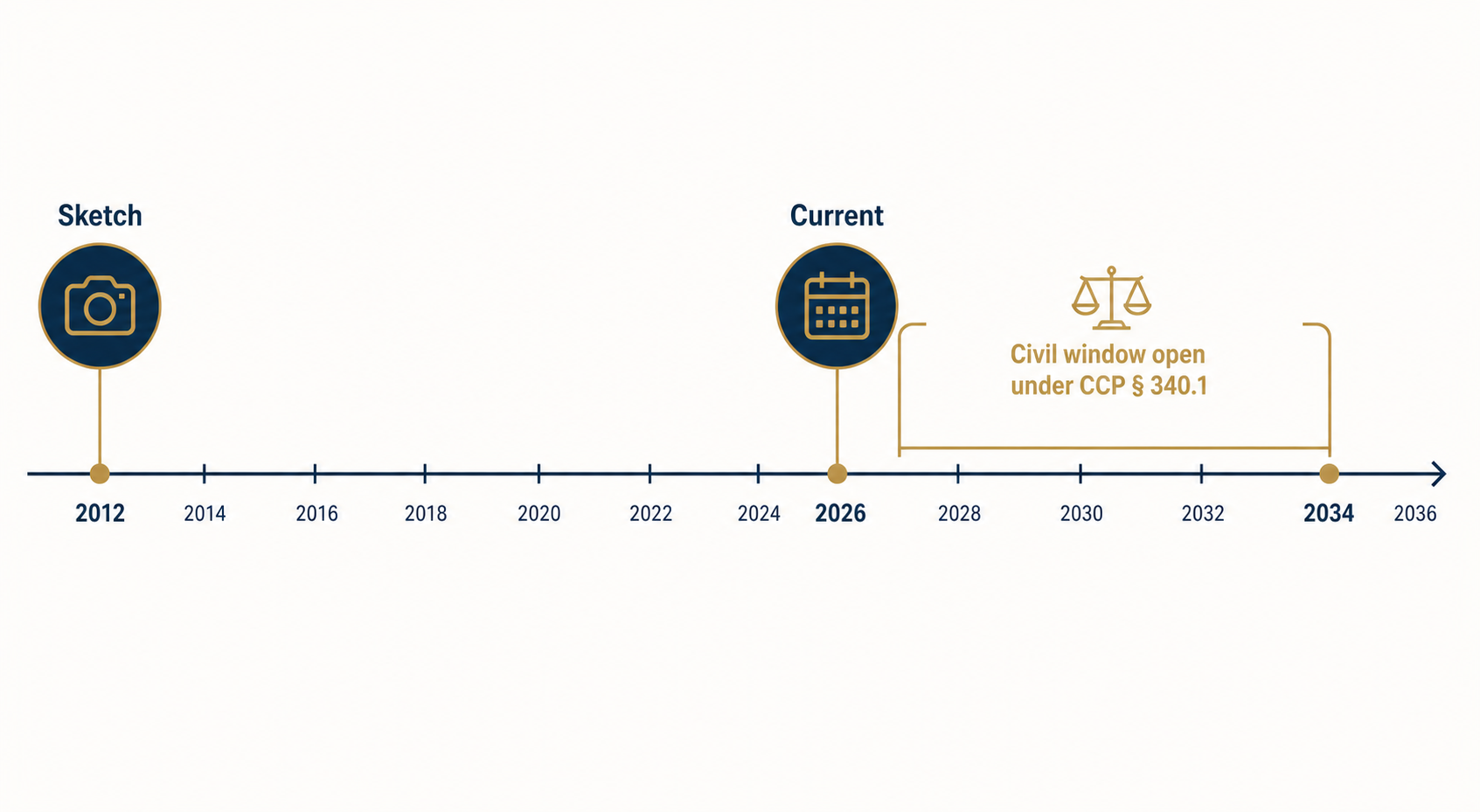
The passage of time is the obvious defense instinct. The sketch was from 2012, and Stodden’s public call-out came in July 2026. But California’s civil statute of limitations for childhood sexual abuse claims is not limited to the short window many non-specialists might assume.
California Code of Civil Procedure § 340.1 allows childhood sexual abuse survivors to bring certain civil claims until age 40, or within five years of discovering that psychological injury or illness occurring after age 18 was caused by the abuse. Stodden was born in August 1994 and is 31 as of July 2026, so a civil window may remain open if the pleaded facts fit the statute.[4]
That “if” does work. Section 340.1 does not automatically convert every harmful or exploitative entertainment experience involving a minor into a timely childhood sexual abuse claim. A complaint would still need to plead conduct within the statute’s scope, identify proper defendants, satisfy causation and damages requirements, and survive any defenses about the nature of the content and the role of each defendant. The timing issue is potentially open; the merits are not pre-decided.
The co-star and writer theory is the least settled part
The most legally unsettled theory is not against the production entity or the authorizing adults. Those categories at least fit familiar risk frameworks. The harder question is what California law would do with an adult co-star or writer who allegedly conceived sexually suggestive comedy material and then performed it opposite a minor.
There is no reported California case directly addressing that precise scenario. That absence does not mean there is no claim. It means counsel would have to reason by analogy: from minor-capacity law, child-protection rules, tort principles, abuse statutes, production-liability doctrines, and statutes governing sexual depictions of minors. Analogies can be powerful, but they are not the same as controlling precedent.
That gap matters because the role of a co-star can be difficult to classify. Was the adult merely performing approved material? Was he a writer with creative control? Did he have authority over the minor’s actions on set? Did he know the performer’s age? Did he participate in shaping the sexualized elements? The same public apology has different evidentiary force depending on the answers.
Production legal teams can spot the risk. They can impose policies. They can require age-based review and prohibit sexualized improvisation with minors. What they cannot do, as of Q3 2026, is point to a clean California appellate decision saying how liability attaches to this exact co-star/writer fact pattern.
What the missing sketch prevents anyone from deciding
Public commentary can describe the sketch as sexualized, inappropriate, or exploitative. Litigation would need more. The content itself would determine whether a statutory sexual-conduct theory is plausible. The production record would determine who knew what, who approved what, and whether any adult had authority to stop or alter the material. The release documents would determine what was signed, but not necessarily what a minor could validly waive.
The absence of the full public record also affects fairness to potential defendants. A removed video should not be treated as proof that the content met a criminal or civil threshold. Nor should removal be used to make the legal issue disappear. It is an evidentiary gap, and in this controversy the gap sits exactly where the statutory analysis would have to begin.
That is the practical discomfort of the case. The facts now visible are enough to raise serious legal questions. They are not enough to answer all of them. California law supplies several possible pathways and at least one potentially open civil limitations window, but the missing public record of the sketch and the absence of directly controlling precedent leave the liability answer unresolved.
References
- Courtney Stodden calls out Jason Alexander over 2012 sketch; Alexander apology, Page Six, July 21, 2026
- California Family Code §§ 6700-6712, California Legislative Information
- California Penal Code § 311.2, California Legislative Information
- California Code of Civil Procedure § 340.1, California Legislative Information
Comments
Join the discussion with an anonymous comment.