
By late July 2026, student loan default is a deadline collision, not a background policy story. In the space of a few months, involuntary collections restarted, FSA's quarterly snapshot reached roughly 9 million borrowers in default holding $220 billion in defaulted debt, and several active lawsuits began shaping who gets relief, who gets notices, and who inherits the cleanup when files go bad. [1][6]

The deadline collision
| Date | Event | Why it matters |
|---|---|---|
| Sept. 30, 2024 | The on-ramp period expired. [6] | Missed payments no longer sat behind a temporary buffer. |
| Jan. 2026 | Involuntary collections restarted. [6] | Default cases moved back into wage garnishment, offset, and notice workflows. |
| Mar. 31, 2026 | FSA's quarterly snapshot showed roughly 9 million borrowers in default and $220 billion in defaulted debt. [1] | The scale makes individual servicing errors and bad data fields harder to contain. |
| May 2026 | A 25-state challenge attacked the OBBBA loan-limit changes. [5] | Admissions planning, aid packaging, and compliance advice all picked up litigation risk. |
Sweet and the fast-moving relief docket
Sweet v. McMahon remains the clearest example of how a borrower-relief case turns into an institutional workflow problem. By the Jan. 28, 2026 settlement deadline, ED had adjudicated fewer than one-fifth of 251,000 post-class applications, and the court rejected an extension; the exposure described in contemporaneous analysis was that as many as 207,000 borrowers could move toward automatic discharge if the settlement machinery failed to finish on time. [3][4]
That kind of deadline does not just matter to individual borrowers. It forces schools, servicers, and counsel to answer basic questions about records, certifications, notice delivery, and whether a stale status code has become a live discharge obligation. A school that treats the case as only a student-relief headline can miss the operational work that follows when files need to be corrected after the court clock has already run. [3][4]
The 25-state OBBBA lawsuit sits in a different posture but the same risk lane. The challenge targets the elimination of Grad PLUS and the new professional-degree cap definitions, which means the live issue is not only policy direction but also whether institutions can keep advising applicants, setting budgets, and structuring degree pathways while the legal definition of eligibility is still under review. [5]
Collections now carry direct legal consequences
Administrative wage garnishment is back in the foreground. ED can take up to 15% of disposable pay without a court order, and NPR reported that the department initially began sending roughly 1,000 garnishment notices a month when collections resumed. Once a file reaches payroll, the issue is no longer just a student-loan account problem; it becomes an employer process, a notice issue, and sometimes an immediate client-emergency call. [6]
The enforcement record around servicers and collectors also matters because it tells compliance teams what regulators have already treated as actionable. CFPB actions have included Navient's $120 million penalty and federal servicing ban, an industry ban for Performant Recovery tied to fee-harvesting, and the later dismissal of the PHEAA enforcement action. Those cases do not prove every collection file is defective, but they do show that student-loan servicing is already a mature enforcement target. [7]
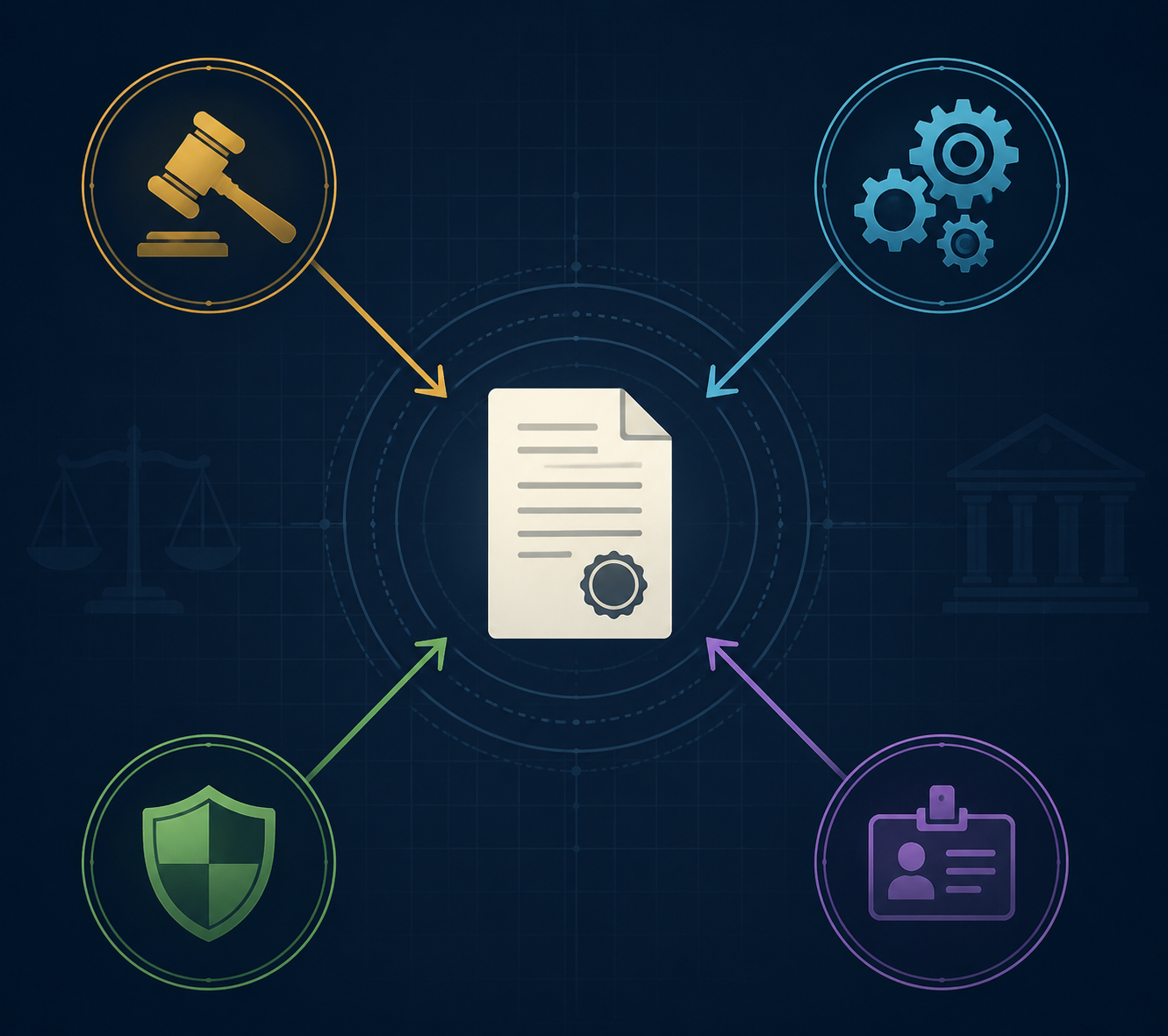
Collateral effects extend beyond collections vendors. CAIVRS can surface default-related issues in federal screening, and StudentAid.gov still treats the database as part of the federal credit-screening environment; Debt Collection Lab has also highlighted security-clearance implications for government attorneys and similarly clearance-sensitive roles. For the professional audience reading this, the legal consequence is simple: default can become an employment, contracting, or onboarding problem long before anyone files a complaint or a motion. [8][9]
State license suspension laws remain part of the picture in some jurisdictions, though older summaries should not be treated as current bar guidance. The point for counsel is narrower and more practical: where a state still allows suspension tied to default, the issue is not abstract debt collection but practice authority, and the governing rule has to be checked jurisdiction by jurisdiction before anyone assumes the exposure is dormant. [10]
What the default data suggests
The New York Fed's Liberty Street Economics analysis is what keeps this from looking like a normal delinquency cycle. It found about 1 million borrowers defaulted in 2025:Q4 and another 2.6 million in 2026:Q1; the average new defaulter was about 39 years old, and most had not been past due before the pandemic. The same analysis flags a forecasted second wave risk for about 7 million SAVE-plan borrowers approaching the nine-month default threshold. That is a forecast, not a measured default count, but it helps explain where the next operational bottleneck is likely to form. [2]
Items still moving
- Recheck the current Sweet v. McMahon docket status and any revised discharge timetable. [3][4]
- Recheck the posture of the 25-state OBBBA lawsuit before relying on loan-limit assumptions. [5]
- Recheck whether July 1 implementation of the new OBBBA provisions has been delayed or narrowed in practice. [5]
- Recheck jurisdiction-specific license suspension and bar-rule consequences before treating professional exposure as settled. [10]
References
- NASFAA coverage of the FSA quarterly default snapshot — NASFAA, June 25, 2026
- Liberty Street Economics analysis of the 2025-2026 student loan default wave — New York Fed, May 2026
- Sweet v. McMahon settlement deadline analysis — Cullen & Dykman LLP, January 2026
- Sweet v. McMahon coverage — Forbes, Adam Minsky, January 30, 2026
- NASFAA coverage of the 25-state OBBBA loan-limits challenge — NASFAA, May 20, 2026
- Coverage of resumed administrative wage garnishment — NPR, December 23, 2025
- CFPB enforcement coverage on student-loan servicing and collections — Protect Borrowers / SBPC
- CAIVRS and security-clearance analysis — Debt Collection Lab, November 2025
- CAIVRS information — StudentAid.gov
- Background on state professional license suspension laws — National Consumer Law Center
Comments
Join the discussion with an anonymous comment.