
The current map
On June 30, 2026, courts in Boston and Washington, D.C. vacated the Department of Education's PSLF 'substantial illegal purpose' rule one day before it was due to take effect, and in June 2026 Judge Beryl Howell vacated the Department's narrow professional-degree definition. Both rulings turn on the same point: the Department tried to add conditions Congress did not authorize in the Higher Education Act, and the courts refused to let that gloss harden into the operative rule. [1][2]
The 25-state Maryland challenge is the other practical hinge because it attacks the professional-degree definition that drives the new loan limits. In the materials reviewed here, that case did not seek preliminary injunctive relief, which is why the July 1 limits were able to take effect while the lawsuit stayed open. [3]
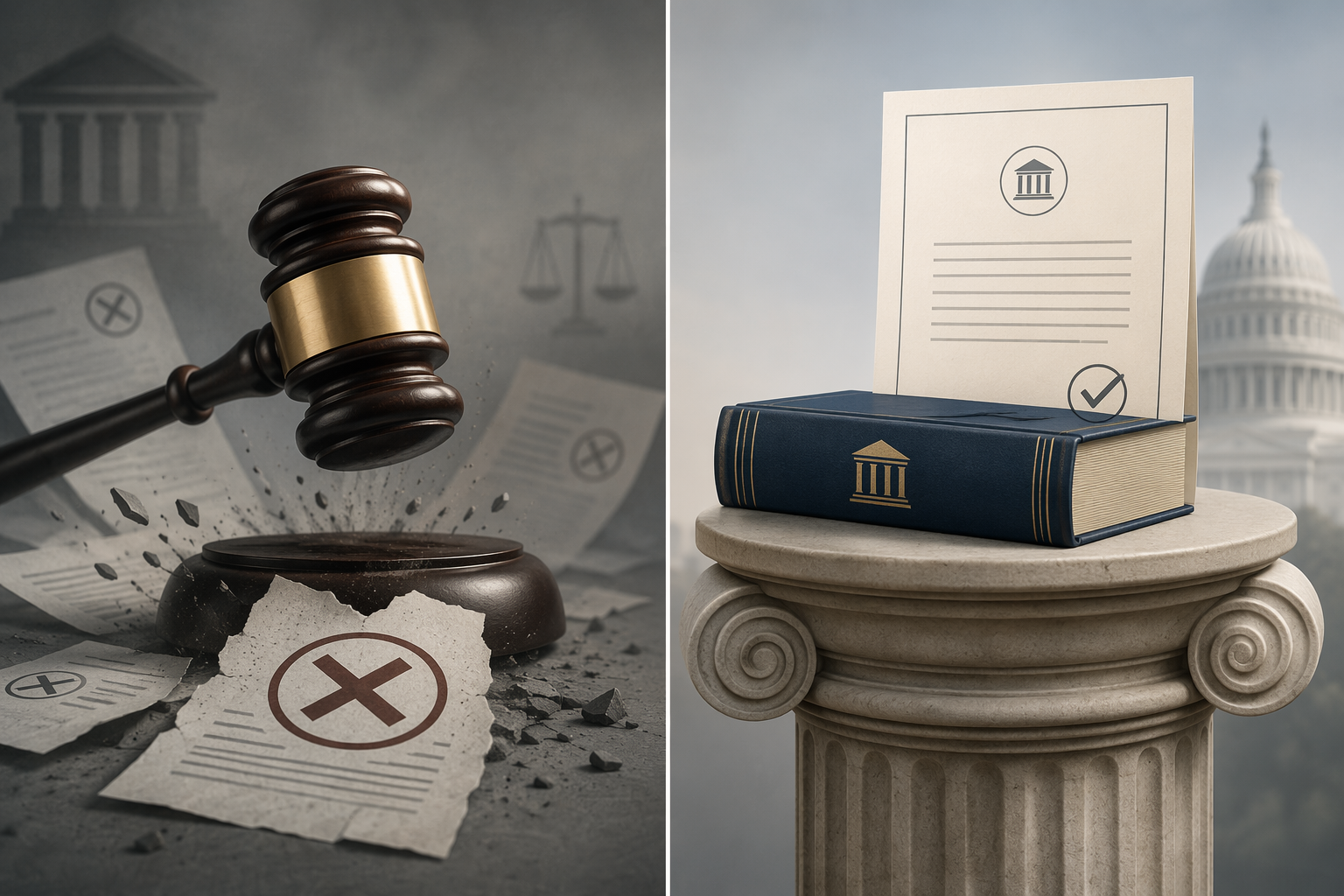
What survives
That is the point that gets blurred when all of this is flattened into a single student-loan-forgiveness story. At least five distinct challenges have been moving through district courts, but the core statutory framework still controls RAP-only PSLF eligibility, the new borrowing caps, and the elimination of Grad PLUS loans. The courts have checked agency overreach where the Department tried to add its own policy conditions; they have not erased the statute itself. [4]
The SAVE litigation is the cleanest example of a resolved track. The plan was formally terminated in a December 2025 settlement, and the Eighth Circuit confirmed that result in March 2026, so the live question is no longer whether SAVE survives; it does not. [5][6]
Borrower-defense changes are less dramatic but still unsettled. They remain in regulatory limbo under the Sweet v. McMahon consent-decree deadlines, which leaves schools and counsel planning around timing uncertainty rather than a final rule.
Why law schools feel it first
AccessLex's analysis found that 39% of ABA-approved law schools, or 72 of 183, had median J.D. debt above the effective $150,000 ceiling, while 75% of law students borrow compared with 59% of other graduate students. Brookings estimates the new caps could curtail about $560 million in federal disbursements to law students each year. [7][8]
Those numbers matter because they change the decision tree, not just the balance sheet. Deans have to revisit scholarship strategy, class-size assumptions, and placement pipelines; students deciding between firm work and public-service paths now face a policy environment where the statute still governs the borrower's ceiling, but the agency's attempt to narrow forgiveness has already had a chilling effect. The New York State Bar Association documented students shifting away from public service because of PSLF uncertainty tied to the 'substantial illegal purpose' rule. [9]
The best present-tense reading is simple: the Department lost where it tried to rewrite the Higher Education Act, but the surviving statutory caps and the Grad PLUS elimination still govern day-to-day borrowing. Appeals and later motion practice remain the main variables, so anyone modeling debt loads, enrollment strategy, or PSLF eligibility should treat the current rules as live pending further court action.
References
- Judges Strike Down Trump Admin.'s Student Loan Forgiveness Overhaul — EdWeek, July 2026
- Judge Voids Trump Admin. Rule Excluding Education From 'Professional' Degrees — EdWeek, June 2026
- Twenty-Five States Plus D.C. 'RISE' Up in Lawsuit Against the Department of Education Over New Rule's 'Professional Degree' Definition — Thompson Coburn
- Federal Student Loan Program Changes to Take Effect on July 1, Pending Litigation Outcomes or Legislative Action — Faegre Drinker, June 2026
- These 8 Sweeping Student Loan Forgiveness Changes Happen In 2026 — Forbes, Jan. 2026
- SAVE plan for student loan borrowers is over: Federal appeals court — CNBC, Mar. 2026
- How OBBBA's Student Loan Caps Could Reshape Law School Affordability and Access — AccessLex
- How OBBBA reshapes student lending — Brookings
- Proposed Changes to Student Loan Forgiveness Program Has Chilling Effect on Law Students and Public Service Attorneys — NYSBA
Comments
Join the discussion with an anonymous comment.