
Sunny Hostin is representing her son in a trespass citation matter, which is enough to trigger the ethics question before anyone gets lost in the celebrity framing [1]. Under New York Penal Law 140.05, trespass is a non-criminal violation, so the underlying charge is low-stakes in criminal-law terms even if it still matters to the family and the lawyer [2]. That is exactly the kind of case that can look harmless until the parent-lawyer starts making decisions with a second set of interests in the room.

Why the role collision matters
The risk here is not the citation itself. It is the shift from detached judgment to personal investment. A parent representing a child can feel pressure on plea decisions, on how hard to negotiate, and on whether to treat a practical resolution as acceptable when the emotional instinct is to keep pushing.
| Rule 1.7 prong | What it catches in a family case |
|---|---|
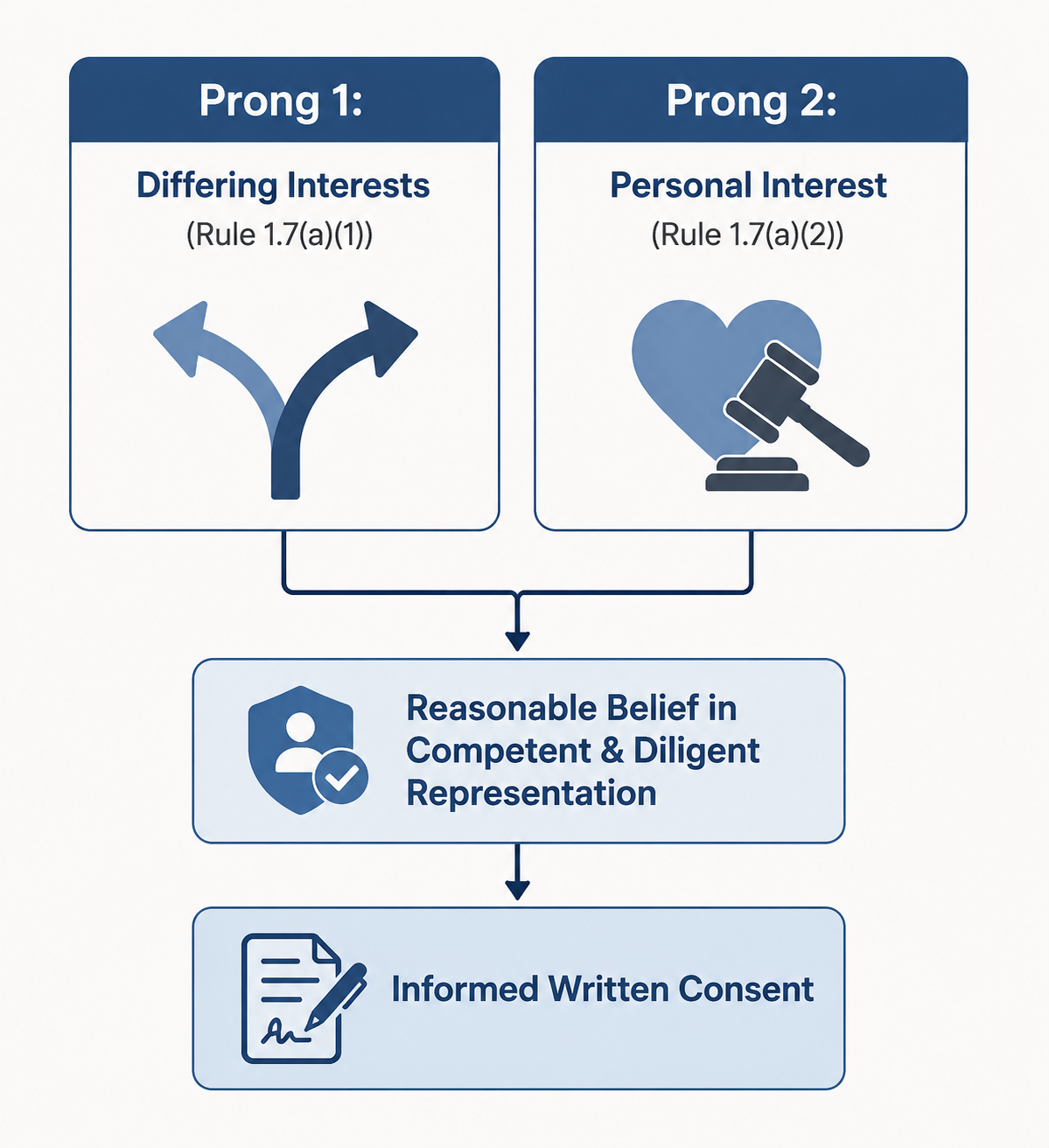
| Differing interests (Rule 1.7(a)(1)) | A lawyer must ask whether the parent and child could reasonably want different outcomes or tactics. |
| Personal interest (Rule 1.7(a)(2)) | The lawyer's own emotional stake can distort case evaluation, settlement posture, and advice. |
New York State Bar Association Ethics Opinion 1253 is the closest guide here, even though it addressed estate litigation rather than a parent defending a child on a minor violation [3]. Its value is the framework, not the fact pattern: if the conflict is consentable, the lawyer must reasonably believe competent and diligent representation is still possible and must obtain informed written consent from each affected client [3]. That is a stricter analysis than the familiar instinct to treat family representation as automatically safe.
The bodycam reporting is useful because it shows how easily the roles can blur in real time. In that account, Hostin identified herself as a co-host of The View and as a former federal prosecutor during the police encounter [3]. That does not itself prove a violation, but it does show the kind of status-and-family mix that should prompt a lawyer to stop and ask whether the representation can still be handled with ordinary professional distance.
The post-reporting criticism, including the Page Six recap of Megyn Kelly's comments, mainly shows reputational spillover rather than the ethics answer itself [5]. Anonymous chatter and public sniping do not tell a lawyer whether Rule 1.7 was satisfied. The cleaner question is whether Hostin made the conflict check before taking the matter and whether any informed written consent was actually obtained.
As of July 22, 2026, no public source has confirmed informed written consent, and the citation has not been dropped. New York does not ban family representation outright, but it does require an affirmative pre-engagement judgment: can the lawyer still act competently and diligently despite the personal stake, and, if the conflict is consentable, was the consent reduced to writing?
References
- The View's Sunny Hostin representing son in court case — USA Today, July 13, 2026
- New York Penal Law Section 140.05 — Justia
- Sunny Hostin was on phone with son when he was caught trespassing on Metro-North tracks — New York Post, July 17, 2026
- Ethics Opinion 1253 — New York State Bar Association, 2023
- Megyn Kelly rips Sunny Hostin for 'name dropping' The View after son's trespassing violation — Page Six, July 21, 2026
Comments
Join the discussion with an anonymous comment.