
Between March 2025 and July 2026, ticket scalping laws and regulations stopped being a narrow anti-bot problem. The BOTS Act had been on the books for years, but federal enforcement before the 2025 executive order amounted to only three actions and $3.7 million in civil penalties against individual brokers. The March 2025 White House directive called for vigorous enforcement and for the Department of Justice and FTC to coordinate with state attorneys general, moving the issue from episodic broker cases toward a broader enforcement program.[1]
That timing matters for compliance more than the usual consumer-outrage framing. As of Q3 2026, a platform, venue, promoter, or entertainment company cannot answer the regulatory question by pointing to one federal statute. It has to map federal anti-bot enforcement, an FTC platform-liability theory that remains unproven in court, pending federal disclosure legislation, and state-by-state resale caps that do not line up neatly. This is informational analysis, not legal advice.
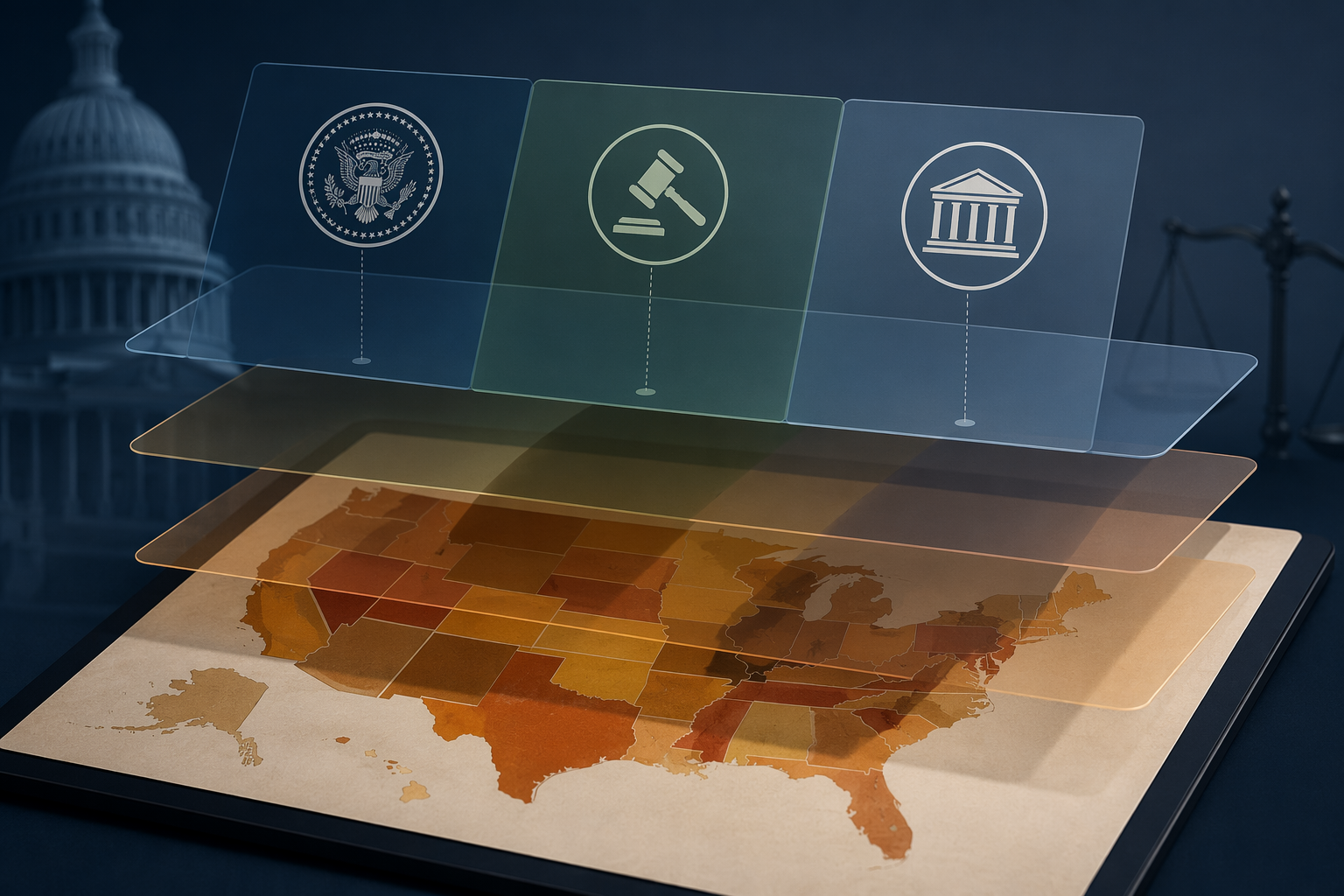
The BOTS Act baseline no longer carries the whole risk analysis
The pre-2025 compliance posture was comparatively simple to describe, even if difficult to police: do not circumvent ticket-purchase limits through bots, and do not sell tickets obtained that way. The weakness was not that the rule was obscure. It was that enforcement was sparse enough for many programs to treat broker abuse as an external problem unless a regulator could prove a specific automated circumvention scheme.
The 2025 executive order changed the enforcement signal. It did not create a complete ticket-resale code, and it did not preempt state price regulation. What it did do was tell agencies to treat middleman price gouging and anti-bot enforcement as a federal priority, with explicit federal-state coordination.[1] For in-house teams, that converts an old statutory citation into a reason for records review: purchase-limit controls, seller account histories, bot-detection escalation, broker communications, refund representations, and fee displays all become part of the same file.
Why the FTC’s Ticketmaster case is the real compliance hinge
The FTC’s September 18, 2025 action against Live Nation and Ticketmaster is important less because it names a dominant company than because it asks a different question. The familiar enforcement story is that bad brokers evade posted limits. The FTC’s press release alleges something more operationally dangerous: that the primary ticketing platform knew brokers were exceeding artist-set ticket limits, tolerated that activity, and benefited from resale revenue.[2]
Those allegations are not adjudicated facts. They are allegations in an enforcement action. But they still show what regulators may now examine when they look inside a ticketing business: not only whether a broker used prohibited software, but whether the platform’s own account controls, verification choices, fee disclosures, and internal escalation practices made the violation easier to monetize.
The scale alleged by the FTC is the part compliance teams should not skate past. The agency said five brokers controlled 6,345 Ticketmaster accounts and purchased 246,407 concert tickets across 2,594 events. It also alleged that Live Nation and Ticketmaster generated $3.7 billion in secondary-market resale revenue from 2019 through 2024, out of $82.6 billion in total ticket sales, and that consumers paid $16.4 billion in hidden fees.[2]
Numbers like that are not just press-release decoration. They describe the audit surface. If a small group of brokers can be associated with thousands of accounts, the obvious regulatory follow-up is whether the platform had tools to detect common ownership, payment patterns, device signals, delivery addresses, transfer behavior, or resale clustering. If those tools existed, the next question is who saw the reports and what happened after the reports were escalated.
The FTC also cited an internal executive email allegedly saying the company “turn[s] a blind eye as a matter of policy” to broker violations of ticket limits, and alleged that Ticketmaster rejected identity-verification technology in 2021 because it was “too effective.”[2] Those phrases may or may not survive litigation in the form the FTC presents them. For compliance design, the warning is immediate: controls that are available but deliberately softened are harder to defend than controls that fail despite documented, risk-based implementation.
What regulators may ask to see
A ticketing company responding to this enforcement environment should expect questions that cut across legal, engineering, trust-and-safety, and commercial teams. The uncomfortable point is that many of the relevant records will not sit in a legal memo. They will sit in product requirements, fraud dashboards, seller-management notes, sales discussions, and exception logs.
- Broker account control: whether the company can identify linked accounts and whether high-volume sellers are reviewed before major onsales.
- Purchase-limit enforcement: whether artist, venue, or event limits are applied by account, person, payment instrument, household, device, or another practical proxy.
- Identity verification: whether stronger verification was considered, rejected, delayed, or limited for commercial reasons.
- Resale monetization: whether secondary-market revenue incentives conflict with stated anti-scalping controls.
- Fee disclosure: whether total price, service fees, delivery fees, and resale markups are disclosed early enough to satisfy federal and state requirements.
- Internal knowledge: whether emails, dashboards, or account notes show repeated tolerance of conduct that public policies say is prohibited.
The most serious compliance failure is not always the absence of a policy. It is the gap between the policy shown to artists and consumers and the operational rule used when a high-volume reseller is profitable.
The TICKET Act would add a federal overlay, not a complete answer
The bipartisan TICKET Act, H.R. 1402 in the 119th Congress, matters because it points toward a federal consumer-disclosure framework. Congress.gov describes the bill as addressing all-in pricing disclosure, speculative ticketing, and refund requirements.[3] Those topics overlap with the FTC’s fee and resale concerns, but they do not collapse every compliance issue into one national rule.
The bill was still pending as of mid-2026.[3] That status should be kept visible in any compliance memo or board update. Treating it as enacted law would be a basic date-discipline error. Treating it as irrelevant would be just as careless, because companies may need to prepare pricing displays, seller representations, refund workflows, and speculative-ticket controls before a final federal rule arrives.
Even if a federal disclosure bill passes, state price caps, licensing thresholds, and local prohibitions can still control the economics of resale for particular events. Federal all-in pricing tells a seller how to show the price. A state cap may tell the seller what price can be charged at all.
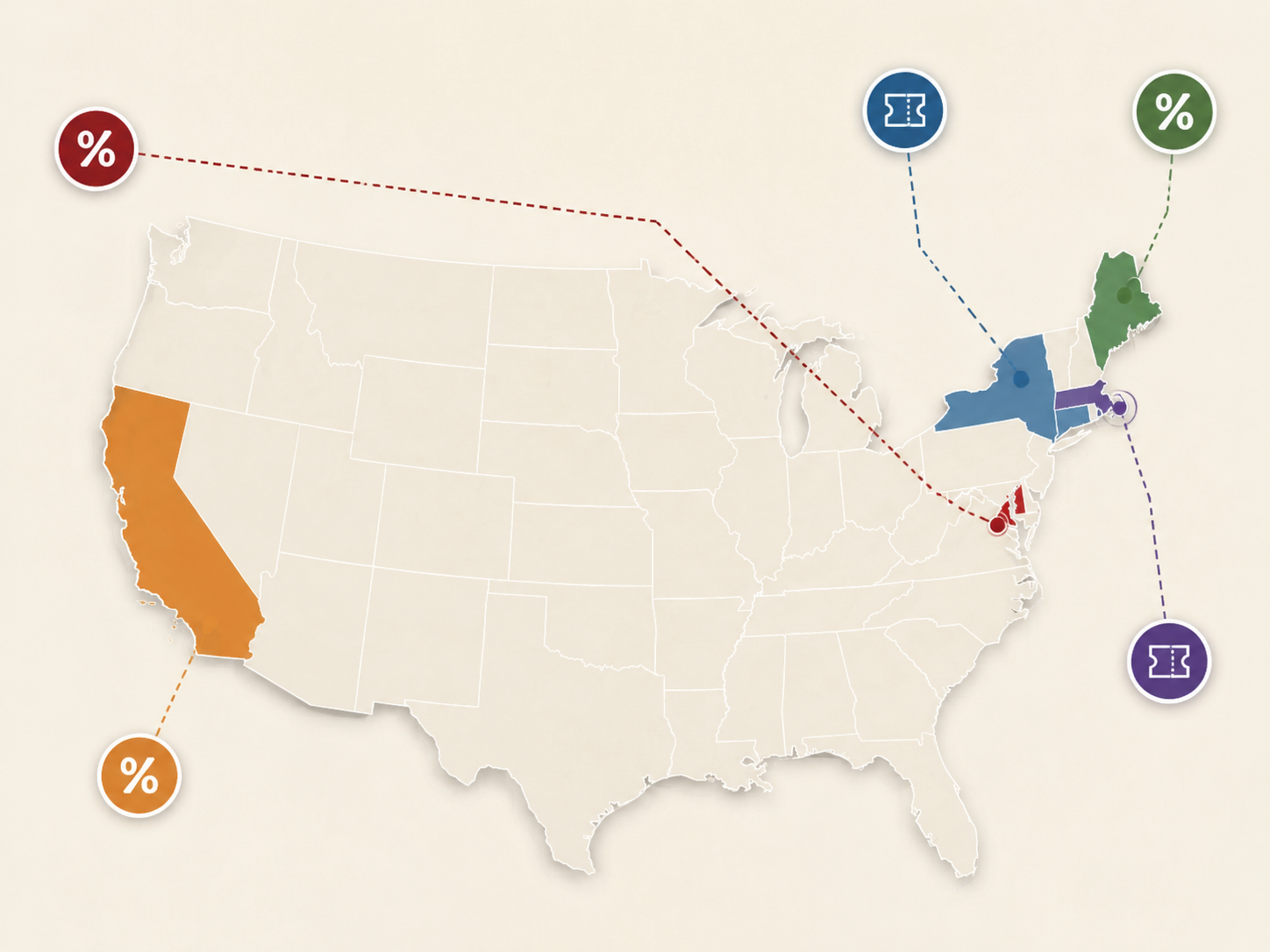
State price caps create the hard part: location-specific workflows
The state-law problem is not simply that some states are stricter than others. It is that they regulate different things: maximum resale price, permitted fees, speculative ticketing, licensing, bonding, seller thresholds, and artist choice. A national resale platform can build one fee display more easily than it can build a single resale rule that applies to every event.
| Jurisdiction | Regulatory shape described in current materials | Operational consequence |
|---|---|---|
| Washington, DC | 10% resale price cap plus 10% maximum fee allowance, with total resale price described as capped at 120% of face value; bans on speculative and surveillance pricing; annual licensing threshold for sellers reselling 50 or more tickets; $25,000 surety bond requirement. | Requires event-location tagging, seller-volume tracking, fee-cap logic, license verification, and bond documentation before the January 1, 2027 effective date. |
| California | AB 1720 was introduced in February 2026 with a 10% resale price cap and an exclusion for sporting events; AB 1349 addresses speculative ticketing with a $10,000 penalty. | Requires separation of covered entertainment events from excluded sports inventory and a speculative-ticket control that is not limited to price display. |
| New York | February 2026 proposal used an artist-optional price-cap structure and had more than 40 legislative sponsors. | Requires tracking whether a cap applies at the event or artist level, not only by state. |
| Maine | Current state-law summaries identify an enacted 110% resale cap. | Requires cap enforcement for covered Maine events even if a platform’s general resale policy allows higher markups elsewhere. |
| Massachusetts | State guidance describes an older statute limiting resale above face value to $2, with specified treatment of service charges. | Requires special handling because the statutory form does not resemble newer 10% cap models. |
DC is the cleanest example of policy becoming workflow. The DC Council unanimously approved the RESALE Act in July 2026, with an effective date of January 1, 2027.[4][5] The statute’s design details matter: a 10% resale cap, a separate 10% maximum fee allowance, bans on speculative and surveillance pricing, a licensing threshold at 50 tickets per year, and a $25,000 surety bond requirement.[4][5]
That is not a slogan about affordability. It is a build list. A platform has to know which events are covered, what counts as face value, which fees count toward the permitted allowance, when a seller crosses 50 tickets in a year, and whether a license and bond are on file. A venue or promoter has to know whether its ticketing partner can actually enforce those conditions, not merely whether its terms of use prohibit unlawful resale.
California shows a different problem. AB 1720, introduced in February 2026, proposed a 10% price cap but excluded sporting events.[6] That kind of carveout forces inventory classification. A system that treats all California events alike may overblock lawful resale for sports or underblock resale for covered concerts. California’s AB 1349, addressing speculative ticketing with a $10,000 penalty, adds a different compliance dimension: whether the seller actually possesses or has rights to the ticket being offered.
New York’s February 2026 bill took still another route: an artist-optional cap structure, with more than 40 legislative sponsors reported at introduction.[7] That model would be particularly awkward for platforms because the compliance trigger is not only jurisdiction or event type. It may depend on whether the artist has opted into a resale restriction for a particular event.
Maine and Massachusetts are useful precisely because they do not look like the newest bills. Current state-law summaries identify Maine as having an enacted 110% cap, while Massachusetts state guidance describes a longstanding rule limiting resale above face value to $2, with treatment of certain service charges.[8][9] Those older or differently structured rules are where stale national summaries cause mistakes: they tempt a reader to remember the policy trend while missing the actual statutory math.
The broader map is useful, but only as a starting point
A November 2025 state-by-state guide counted 16 states with some form of ticket resale prohibition and 24 states with no ticket-resale statute.[8] That is a useful orientation number, not a safe operating rule. By mid-2026, DC, California, New York, Maine, and Massachusetts already showed why the compliance file needs primary or current state-specific confirmation before product rules are changed.
The better map is not a color-coded yes-or-no chart. It is an obligation matrix tied to event location, event type, seller status, resale price, fee structure, ticket possession, artist election, licensing threshold, and enforcement date. The same seller conduct can produce different consequences depending on which field changes.
Where the compliance burden lands inside a business
A legal department can summarize the law, but it cannot implement this patchwork alone. The obligation map has to connect to systems that decide what a consumer sees and what a seller is allowed to do. If the law says the total resale price cannot exceed a percentage of face value, the platform needs reliable face-value data. If the law distinguishes service fees from resale markups, the checkout page needs price components that can be audited.
Seller operations carry the same burden. DC’s 50-ticket annual licensing threshold means the platform must count seller activity over time, not just at the listing level.[4][5] A speculative-ticket ban requires evidence of possession or contractual right, not just a seller attestation buried in terms. An artist-optional cap requires event metadata that may come from the promoter, artist team, or ticketing contract rather than from the buyer-facing listing.
The FTC’s Ticketmaster allegations add a recordkeeping problem to that operational problem. Once a company has dashboards showing linked broker accounts or repeated ticket-limit exceptions, those dashboards may become evidence of knowledge. The compliance question is therefore not only whether the company can detect abuse. It is whether detection leads to documented action.
International pressure is moving in the same direction, but it does not simplify U.S. law
The United States is not alone in moving against above-face resale. In November 2025, the UK government announced a ban on ticket touting above face value and projected that the measure would save fans £112 million per year.[10] Other country summaries describe criminal or administrative restrictions in parts of Europe, including France, Italy, Belgium, Poland, Portugal, and Ireland, and state-level 10% caps in Australia.[11]
That comparison should be kept modest. International summaries can show a wider policy trend, but they do not answer a U.S. platform’s state-law question. Cross-border events only make the mapping problem more obvious, as with ticket resale regulations for the 2026 World Cup, where host-city and jurisdictional differences can matter as much as the event brand.
The practical position as of Q3 2026
The 2025–2026 crackdown did not produce one clean national answer to ticket scalping. It produced a layered enforcement environment. The BOTS Act remains the federal anti-circumvention baseline. The executive order increased enforcement pressure. The FTC’s Ticketmaster case, still unproven, signals scrutiny of platform knowledge, account controls, fee disclosures, and resale monetization. The TICKET Act remains a pending federal overlay. State laws and bills continue to set different resale caps, seller thresholds, speculative-ticket rules, and fee allowances.
For market participants, the defensible task is a jurisdiction-by-jurisdiction obligation map tied to platform controls, seller practices, pricing displays, and event location. Anything broader than that risks treating a live enforcement patchwork as if it were already a settled code.
References
- Fact Sheet: President Donald J. Trump Will End Price Gouging by Middlemen in the Entertainment Industry, The White House, March 2025
- FTC Sues Live Nation and Ticketmaster for Engaging in Illegal Ticket Resale Tactics and Deceiving Artists and Consumers, Federal Trade Commission, Sept. 18, 2025
- H.R.1402 - TICKET Act, Congress.gov
- DC Council unanimously approves bill targeting ticket resellers, NBC Washington
- Council Gives Final Approval to RESALE Act, Regulating Ticket Sales and Capping Ticket Resale Prices, Council of the District of Columbia
- California introduces new ticketing bill with price cap, Los Angeles Times, Feb. 6, 2026
- New York Introduces Concert Resale Price Caps, The Hollywood Reporter, February 2026
- Ticket Resale Laws by State, Ticket Flipping, November 2025
- Massachusetts law about ticket reselling, Mass.gov
- Government bans ticket touting to protect fans from rip-off prices, GOV.UK, November 2025
- Ticket Resale Laws by Country, Ticket Flipping
Comments
Join the discussion with an anonymous comment.