
Speedy Trial Denied
Judge Jason B. Thompson has denied Tiffany Haddish's motion to dismiss her Georgia DUI case on speedy-trial grounds, leaving the prosecution in place and setting the case for an August 2026 trial date that should still be checked against the Fayette County docket because the reported day differs by source.[1][2][3]
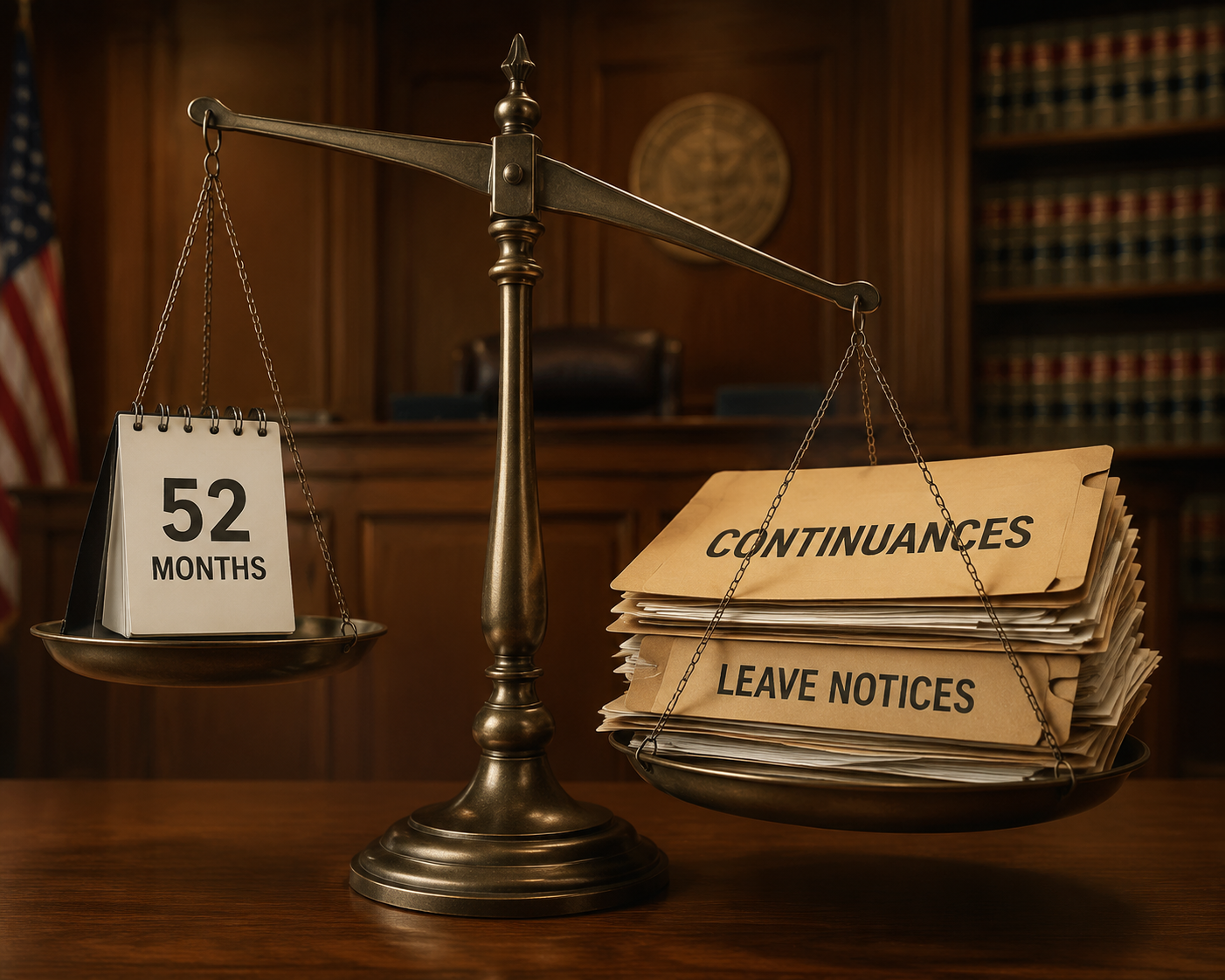
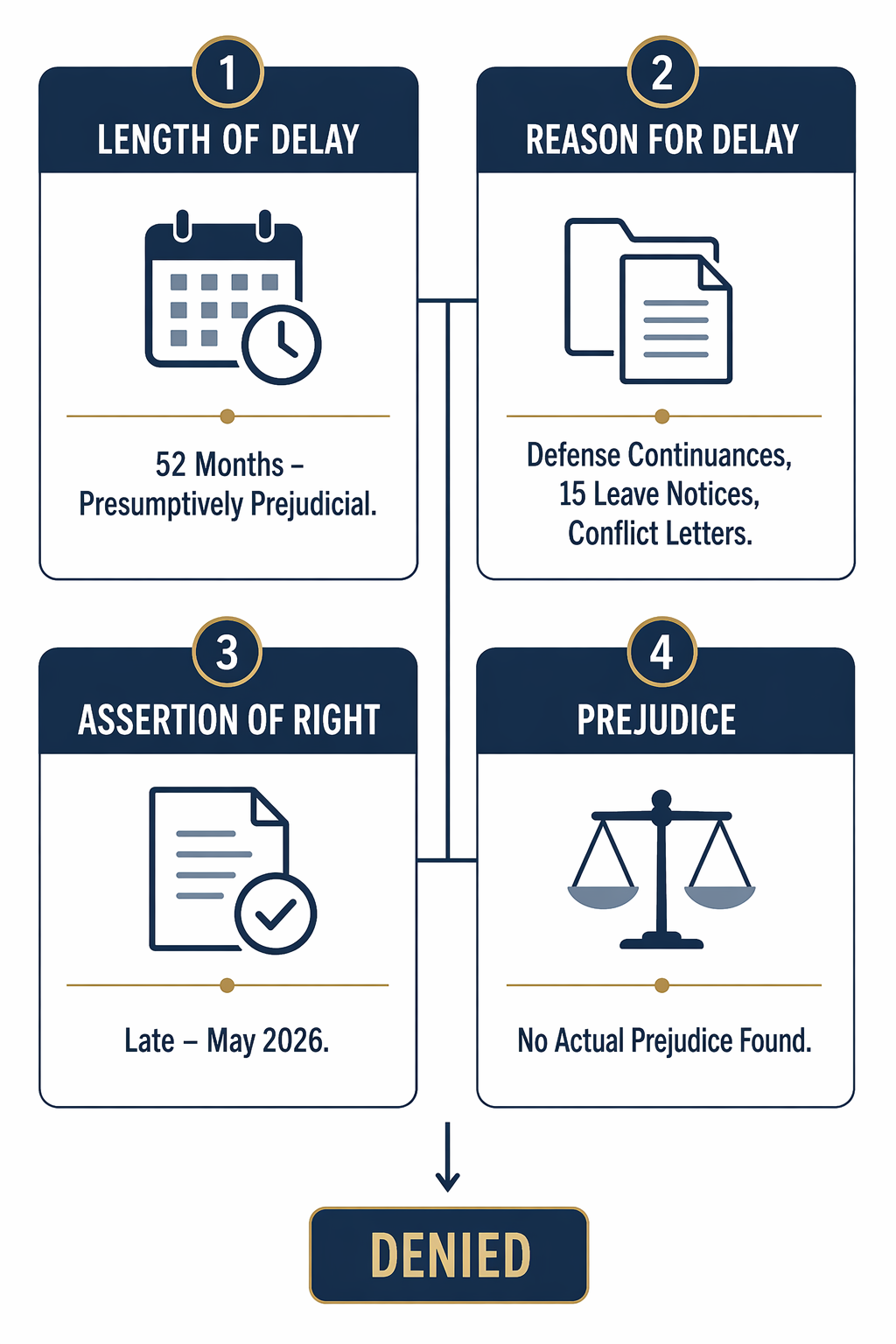
The order turns on Barker v. Wingo, and the part that mattered most was not the age of the case by itself. The reported 52-month delay was long enough to trigger constitutional scrutiny, but the court treated the delay as largely shaped by the defense record: 15 leave-of-absence notices, three conflict letters, several defense-requested continuances, a continuance tied to a Morocco fashion show, and a first assertion of the speedy-trial right only in May 2026.[1][4][5]
What The Court Counted
That combination explains why the motion failed. A long delay can help a defendant, but not when the record shows the defense repeatedly added to the calendar, waited until late in the case to invoke the right, and could not show actual prejudice from the passage of time.[1]
- Length of delay: 52 months, enough to make the claim presumptively prejudicial.[1]
- Reason for delay: 15 leave notices, three conflict letters, and defense continuances, including the Morocco fashion-show continuance.[1]
- Assertion of right: not raised until May 2026, which undercut the timing argument.[1][4][5]
- Prejudice: the court found no actual prejudice.[1]
How The Case Reached This Point
The case began with Haddish's January 14, 2022 arrest in Peachtree City, where officers found her asleep behind the wheel. She faces seven misdemeanor counts, including DUI alcohol, DUI drugs, DUI per se, and improper stopping.[2][3]
The procedural history also matters. The case spent about nine months in Peachtree City Municipal Court before moving to Fayette County State Court in January 2023, which adds time to the docket without turning the record into a clean speedy-trial dismissal case.[1]
The May 2026 suppression rulings gave the defense real movement without ending the prosecution. Reported rulings suppressed the horizontal gaze nystagmus test because the officer knew about Haddish's lazy eye but did not adjust the protocol, and suppressed post-arrest statements after the officer said, "We need to address something. I smell marijuana" without Miranda warnings. The walk-and-turn and one-leg-stand evidence survived, so the state still has field-sobriety evidence to work with.[6][2]
There is also parallel context, but it does not change the current Georgia posture. Haddish's California DUI resolved in February 2024 through a plea to reckless driving with probation, and the state has also pressed motions in limine and to compel over undisclosed defense experts.[6][1]
The current posture is narrow but clear: dismissal was denied, the case survives, and trial is set for August 2026, with the exact date still needing docket verification because the reporting conflicts between August 10 and August 13.[1][2][3]
References
- 1. The Citizen, July 6, 2026, reporting on Judge Jason B. Thompson's denial of the speedy-trial motion, the 52-month delay, the leave notices, conflict letters, continuances, and the August 2026 trial setting.
- 2. Fox 5 Atlanta, reporting on the January 2022 arrest and an August 10, 2026 trial date.
- 3. CBS Atlanta, reporting on the January 2022 arrest and an August 13, 2026 trial date.
- 4. George Creal law firm analysis, discussing Barker v. Wingo and the distinction from a statutory speedy-trial demand under OCGA section 17-7-170.
- 5. Church Law firm analysis, discussing Barker v. Wingo and the statutory speedy-trial distinction.
- 6. TMZ, May 21, 2026, reporting on the suppression rulings and the California DUI resolution.
Comments
Join the discussion with an anonymous comment.