
The hard question in the Today Show intruder hate-crime case is not whether the alleged words were racist. If the Manhattan complaint is credited, Andrew Truelove did not merely stumble into a workplace confrontation and later acquire a racial gloss. Prosecutors say he entered NBC’s studio area, confronted Craig Melvin, used the N-word, demanded to know where Al Roker was, and later said he had “always wanted to call a Black famous person the N-word.”[1] That is the kind of evidence hate-crime prosecutors usually wish they had: words and conduct pointing directly at why this victim, or this category of victim, was chosen.
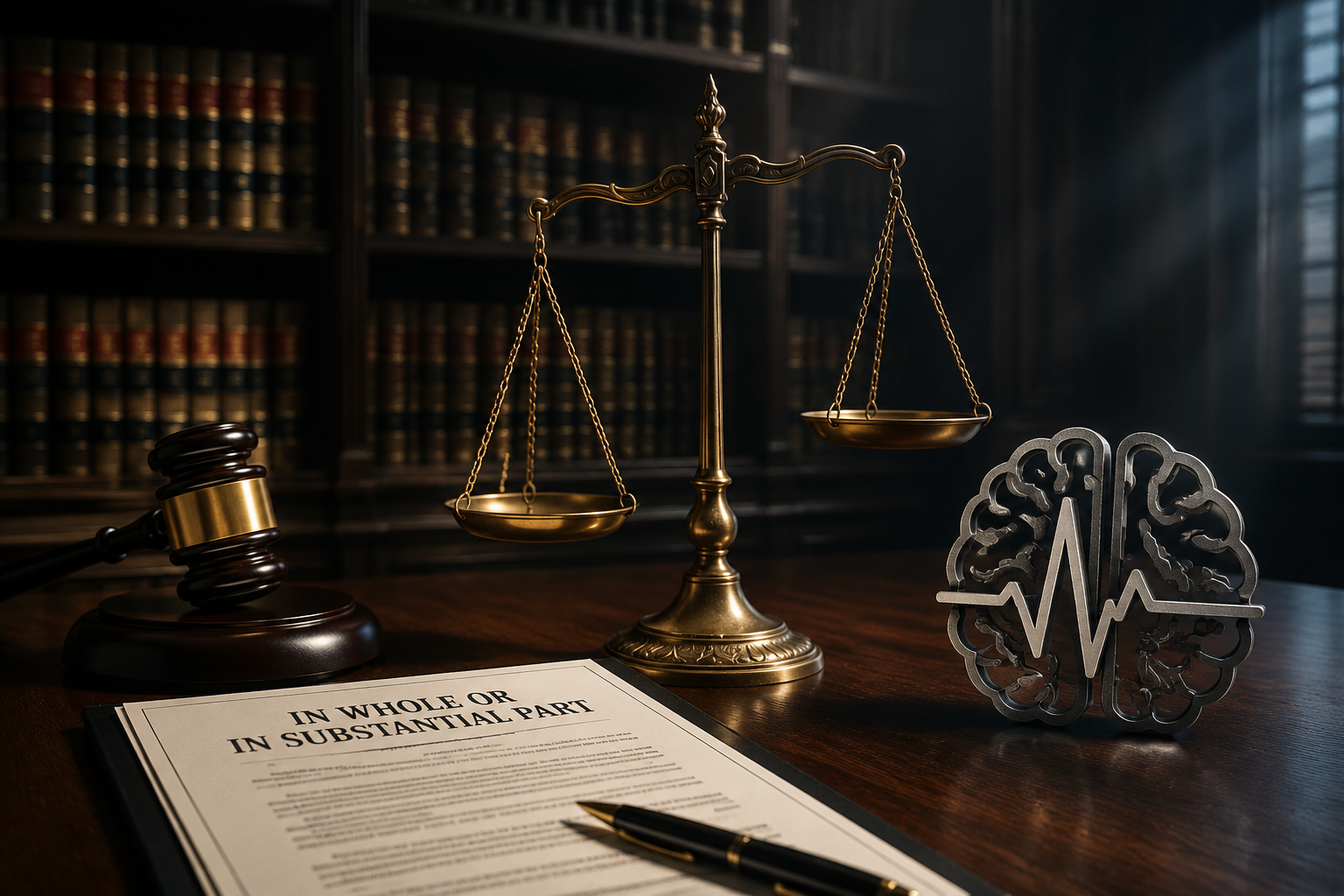
But New York still requires more than ugliness. Under Penal Law § 485.05, the prosecution must prove that the defendant intentionally selected the victim, committed the act, or committed it “in whole or in substantial part” because of a protected characteristic, including race.[2] The phrase matters. New York does not ask whether bias was the only motive, or even necessarily the cleanest motive. It asks whether bias was a substantial part of the selection.
For readers who need the charge-level mechanics first, the broader Article 485 framework is covered in How New York's Hate Crime Statute Elevates the Truelove Charges and How New York's Hate Crime Statute Applies to Andrew Truelove. This piece starts one step later, at the evidentiary hinge: whether the alleged statements prove intentional selection, and how much force a mental-health defense can have against that proof.
The Complaint Gives Prosecutors More Than Circumstantial Animus
Many hate-crime prosecutions are built from inference: a chosen location, prior online posts, symbols, timing, group affiliation, or slurs uttered near the offense but not necessarily tied to victim selection. The Truelove allegations, as reported from the Manhattan District Attorney’s complaint, are more direct. The alleged slur was directed at Melvin during the confrontation. The alleged demand to see Roker, another Black Today personality, broadens the point from one host to a recognizable racialized target set. The reported admission that Truelove had “always wanted” to say the slur to a “Black famous person” is especially damaging because it sounds less like incidental rage and more like preexisting selection language.[1]
That does not make the case automatic. A slur can prove hostility without proving that race substantially caused the choice of victim. New York’s statute does not allow prosecutors to say, in effect, defendant and victim differ by race, therefore selection was racial. Section 485.05(2) separately warns that proof of a victim’s protected characteristic, standing alone, is not enough to establish a hate crime.[2] That guardrail matters because the law is punishing bias selection, not merely the fact that a protected-class victim was harmed.
Here, though, prosecutors are not relying only on racial difference. They have alleged contemporaneous language, a named demand for another Black television figure, and a post-incident statement tying the conduct to a desire to use a racial slur against a Black celebrity.[1] If those allegations survive evidentiary testing, they let the state argue selection from the inside of the event rather than reconstructing motive afterward.
What “In Whole or in Substantial Part” Does
The statutory phrase “in whole or in substantial part” is doing real work. A defendant may have several motives at once: attention-seeking, anger, fixation on a public figure, resentment toward a workplace, intoxication, disorganization, or racial animus. New York’s formulation does not require the prosecution to isolate race as the sole cause. If race substantially contributed to the choice of Melvin, Roker, or a “Black famous person” as the target category, the enhancement can fit even if other motives were also present.[2]
| Question | Why it matters in this case |
|---|---|
| Was the victim selected because of race? | The alleged slur, demand for Al Roker, and reported admission give prosecutors direct evidence on selection rather than only evidence of anger. |
| Was race a substantial part, not merely background? | New York does not require race to be the sole motive, but it must be more than an after-the-fact description of the victim. |
| Can mental illness explain the conduct differently? | The defense may argue that the encounter reflected untreated disorder, delusion, impulsivity, or generalized disruption rather than coherent bias-based selection. |
That is why the reported “always wanted” statement is so important. A slur shouted in a chaotic encounter may invite an argument that the defendant was lashing out with whatever weaponized language came to mind. A statement describing a prior desire to call a Black celebrity the N-word is different. It gives prosecutors a way to argue that the celebrity’s race was not incidental to the confrontation; it was part of the point.[1]
The demand to see Roker also matters. If the confrontation were only about access to a television studio or a famous person generally, the racial theory would be thinner. A demand for another Black Today figure, paired with the alleged slur toward Melvin, allows the prosecution to frame the conduct as directed toward Black public-facing NBC personalities rather than toward whichever employee happened to be nearby.[1]
The Mental-Illness Challenge Is Not a Side Issue
The defense’s strongest route is not to pretend the alleged words are racially neutral. They are not. The more serious route is to contest what the words prove about selection and mental state. The reported history includes a 2007 bipolar diagnosis discussed through a Virginia psychiatrist’s testimony, as described in reporting cited by the New York Post.[3] That is not the same thing as a current forensic evaluation in the Manhattan case, and it should not be treated as one. But it gives defense counsel a factual starting point for arguing that the conduct may have been driven by severe untreated mental illness rather than a considered discriminatory choice.
There are several versions of that argument, and they are not identical. One version says the defendant was delusional or manic and attached racial language to a disorganized fixation on television personalities. Another says the conduct was impulsive and antisocial, with racist words used as escalation rather than selection. A third says the alleged desire to say the slur to a Black celebrity reflects offensive obsession, but not necessarily the statutory act of selecting a victim because of race in the sense Article 485 requires.
Those arguments have limits. Mental illness does not erase bias as a matter of law merely because both appear in the same record. A person can act from delusion and racial animus at the same time. New York’s “substantial part” language makes that coexistence especially important: if racial selection substantially motivated the encounter, the prosecution does not lose simply because the defense identifies other psychological drivers.[2]
Still, the defense does not need to make the words disappear. It needs to make their legal meaning less certain. If psychiatric evidence eventually supports a picture of acute illness, counsel can argue that the state is mistaking symptomatic fixation for intentional selection. That argument may not prevail, but it is not theatrical. It goes to the element.
Prior Conduct Cuts Both Ways
The older and newer history will be tempting for both sides, but it needs careful handling. Reporting on Truelove describes a 2007 Virginia incident involving an alleged abduction with a lug wrench, as well as the bipolar-diagnosis testimony connected to that period.[3] TMZ has also reported that Truelove had more than eight New York City arrests since July 2025 and a June 2026 felony criminal mischief conviction.[4]
For prosecutors, a recent pattern of arrests may help show that the NBC incident was not a harmless misunderstanding. For the defense, the same pattern may support a claim of deterioration, instability, or unmanaged illness. The old Virginia material is even more delicate. It may be relevant to mental-health history, but it is not primary evidence of what Truelove intended inside NBC’s studio area in 2026.
This is where public commentary often gets sloppy. A criminal history does not prove hate-crime intent. A diagnosis does not disprove it. The legal fight is narrower: what evidence bears on whether race substantially contributed to the alleged selection of Melvin, Roker, or a Black celebrity target.
Why New York Law Gives the State Room
Compared with a sole-motive theory, New York’s statute gives prosecutors room to work with mixed motives. The federal hate-crime vocabulary often centers on whether conduct occurred “because of” a protected characteristic; New York’s Article 485 language asks whether the protected characteristic was involved “in whole or in substantial part.” The difference is practical. In a case like this one, the state does not have to deny that Truelove may have been seeking attention, acting irrationally, or fixated on television fame. It has to prove that race was a substantial part of the selection.
That statutory room should not be mistaken for a shortcut. Section 485.05 still requires intentional selection. A prosecutor cannot convert every racially abusive outburst into a hate crime by pointing to the victim’s race after the fact. The Truelove allegations are legally stronger because the racial content is not peripheral: it is alleged to have appeared during the confrontation and in a later statement explaining what he wanted to do.[1]
The list of qualifying New York offenses is not the center of this dispute. New York identifies designated hate crimes by linking Article 485 to specified underlying offenses, and the state’s public guidance lists 53 specified offenses.[5] The live issue here is not whether Article 485 can attach in theory. It is whether the state can prove the bias-selection element on this record.
The Record Is Still Too Thin for Certainty
No trial has occurred, and the defense has not publicly tested the complaint allegations through cross-examination, psychiatric evidence, suppression practice, or a developed factual record. The AP account reports the complaint allegations and the hate-crime charges; it does not resolve whether the statements were accurately heard, whether any later admission is admissible, or how a court will assess mental state.[1]
A serious evidentiary battle would likely focus on a few concrete questions: who heard each statement, when it was made, whether it was recorded or memorialized promptly, whether Truelove appeared coherent, whether any psychiatric evaluation addresses his condition at the time of the alleged incident, and whether his fixation was specifically racial or broadly disorganized. Those are not atmospheric details. They determine whether the words are treated as intent evidence or as symptoms with limited probative value.
On the current public record, the prosecution appears to have unusually strong evidence of bias-based selection: direct racial language, a demand for another Black television personality, and a reported statement tying the conduct to a desire to target a Black celebrity.[1] The unresolved question is how far New York’s “in substantial part” standard reaches when the defense can plausibly argue that severe untreated mental illness, rather than coherent discriminatory choice, drove the encounter. That is not a prediction of outcome. It is the legal fault line.
References
- Man charged with hate crimes after confrontation with 'Today' show's Melvin at NBC studio, AP News
- New York Penal Law 485.05: Hate crimes, Tilem & Associates
- Man who allegedly stormed NBC’s ‘Today’ show set demanded to know where Al Roker was: DA, New York Post
- Today Show Alleged Intruder Andrew Truelove Has Criminal History, TMZ
- Designated Hate Crimes, New York State
Comments
Join the discussion with an anonymous comment.