
Roger Scott Rogoff’s disputed tenure as U.S. attorney in Seattle began with a court order and, according to CBS News, an 8 a.m. swearing-in. Fifty-four minutes later, the Trump administration fired him.[1][2][3]
That is the shortest and cleanest version of the constitutional problem now moving through several federal districts. The judges of the Western District of Washington had invoked 28 U.S.C. § 546(d), the provision that allows a district court to appoint a U.S. attorney after the attorney general’s 120-day interim appointment expires. The executive branch responded almost immediately by removing the court’s selection and leaving the office under contested leadership.[1][3]
Deputy Attorney General Todd Blanche’s public response treated the appointment as an intrusion on executive authority, saying that unelected judges had appointed Rogff “without the President’s consent” and that the administration would not “allow activist judges to install rogue prosecutors.” The New York Times also reported that a presidential personnel office email notified Rogoff that he had been removed.[3][4]
Rogoff, for his part, had told CNN before the firing that he would carry out the administration’s priorities, a fact that makes the Seattle episode less useful as a personality story and more useful as a sequence-of-authority problem.[5] If the question were simply whether an administration may prefer a different prosecutor, the answer would be ordinary. The sharper question is whether the executive branch can run out the 120-day interim clock, reject the court’s statutory appointment, fire the court appointee within minutes, and keep its own preferred official in practical control under another title.
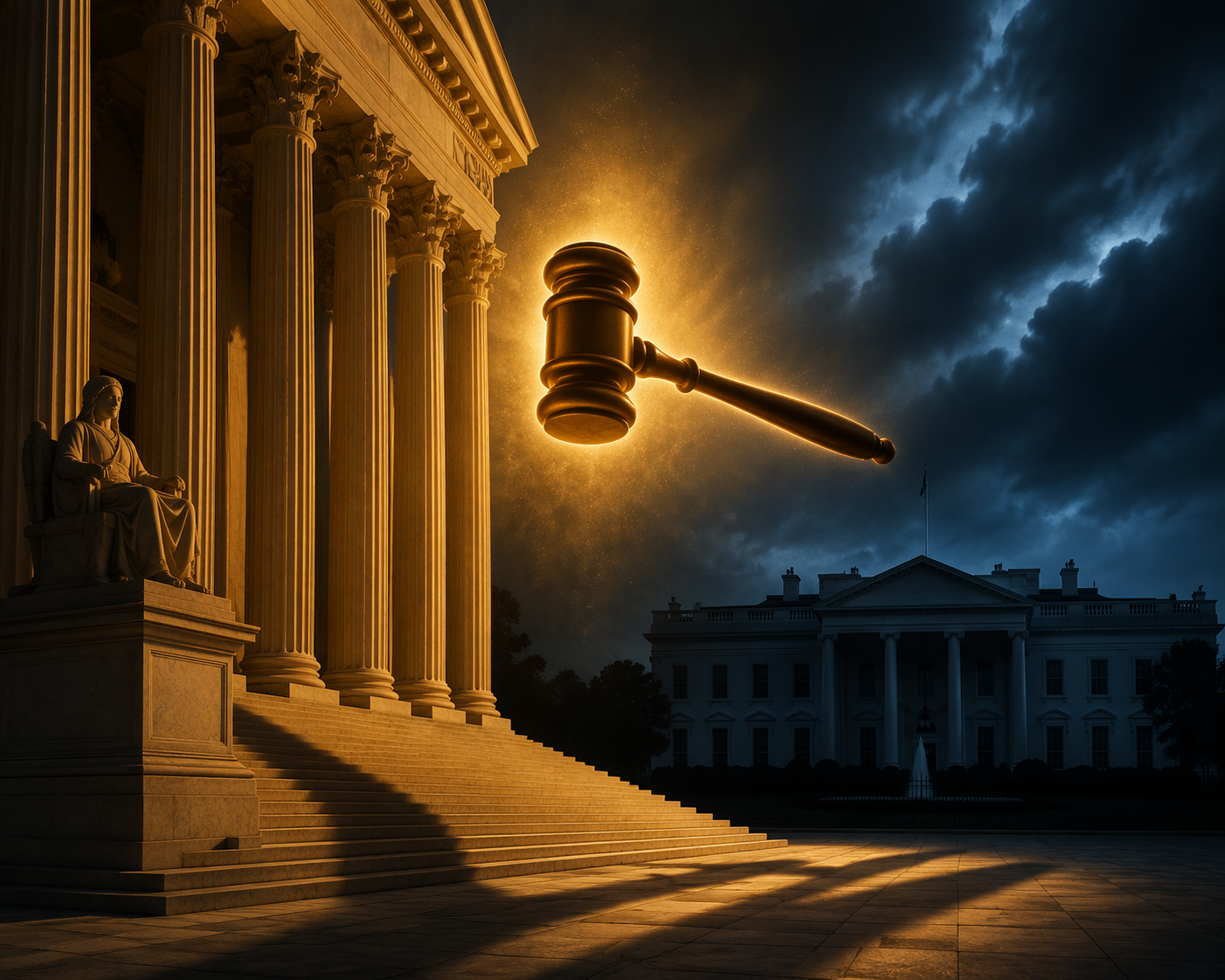
The Seattle Timeline Shows the Mechanism
In the Western District of Washington, the immediate predecessor was Charles Neil Floyd, an interim U.S. attorney whose 120-day term expired in February 2026. After that expiration, the administration reportedly kept him in effective control by making him first assistant U.S. attorney, a title shift intended to support a claim of automatic elevation under the Federal Vacancies Reform Act.[6]
That matters because § 546 is not just a staffing convenience. The statute creates a sequence. The attorney general may appoint an interim U.S. attorney for up to 120 days. If the vacancy remains after that, the district court may appoint a U.S. attorney to serve until the vacancy is filled. The Western District judges used that second step when they appointed Rogoff by general order.[1][6]
The firing did not merely replace one lawyer with another. It put clerks, assistant U.S. attorneys, defense counsel, judges, victims, targets, and defendants back into a familiar courthouse question: when a filing says “United States of America,” who has lawful supervisory authority behind it?
The Stranger captured the local practical confusion bluntly, asking who the lead federal prosecutor in Western Washington was and answering that it depended on whom one asked.[7] That is not a decorative separation-of-powers concern. It can affect who authorizes indictments, who approves plea terms, who makes charging-policy decisions, and whether defense counsel later has a colorable argument that an official action was taken under invalid authority.
Six Districts, One Recurring Appointment Fight
Seattle is the most compressed example, but it is not the first. Reporting collected across the District of New Jersey, the Eastern District of Virginia, the Northern District of New York, the District of Nevada, the Central District of California, and the Western District of Washington shows a recurring pattern since 2025: interim appointment, expiration of the 120-day period, resistance to a court appointment or judicial disqualification, and continued claims of authority through a different title or executive action.[6][8]
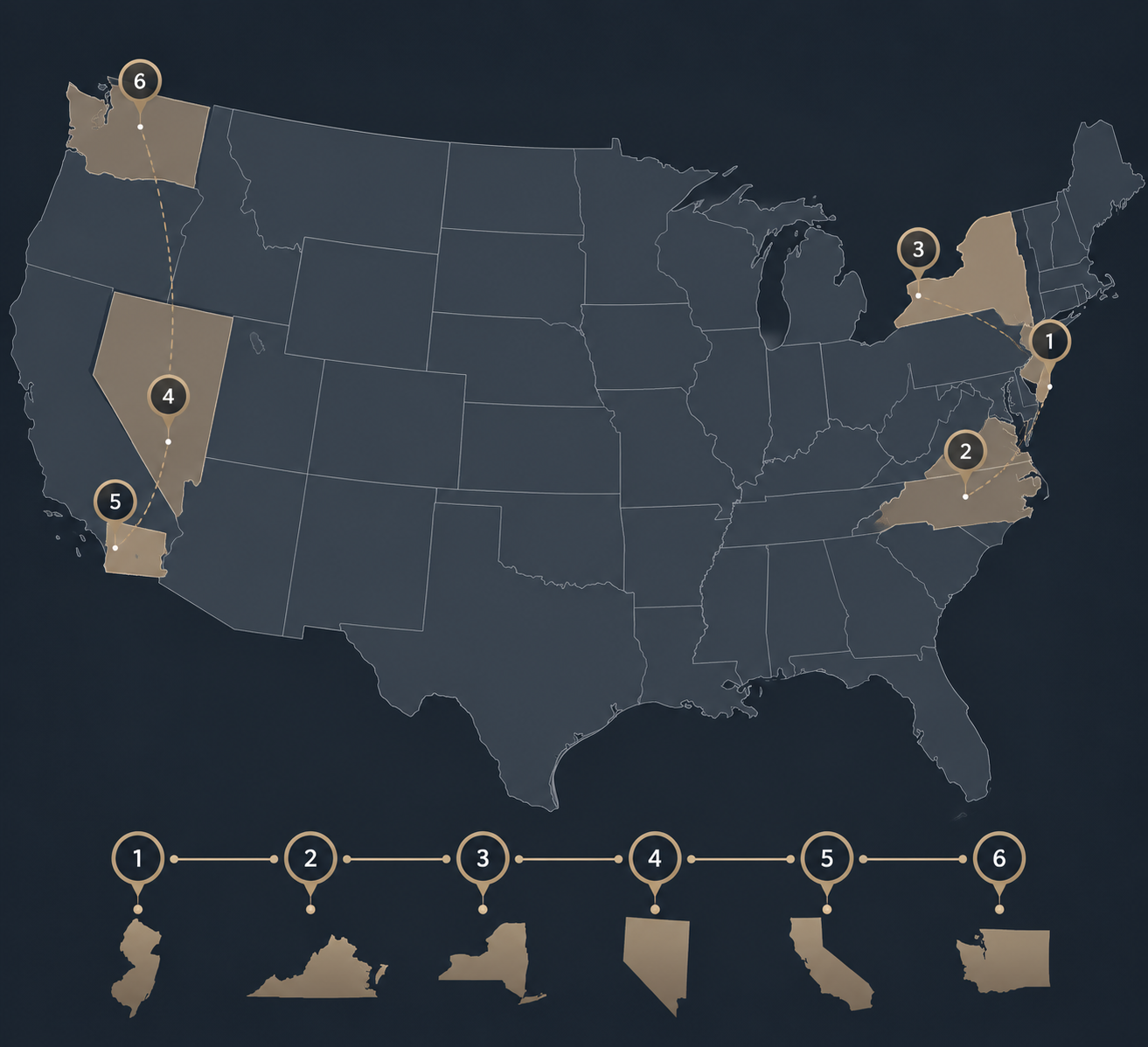
| District | Named dispute | Reported posture | Immediate legal risk |
|---|---|---|---|
| District of New Jersey | Habba | 3rd Circuit rejected the title-shift maneuver in December 2025 | Strongest appellate benchmark for challenges to continued authority |
| Eastern District of Virginia | Halligan | Challenge reported in November 2025 | Questions over whether disqualified or improperly serving leadership may supervise prosecutions |
| Northern District of New York | Sarcone | Appointment challenge reported as part of the same cross-district pattern | Uncertainty over leadership authority and downstream case challenges |
| District of Nevada | Chattah | Appeal pending in the 9th Circuit | Potential controlling precedent for Nevada and persuasive benchmark for Washington |
| Central District of California | Essayli | Challenge reported in October 2025 | Exposure tied to the legality of continued service after interim limits |
| Western District of Washington | Rogoff | Court-appointed on July 15, 2026, sworn in at 8 a.m., fired 54 minutes later | Live uncertainty over court appointment authority, removal power, and office supervision |
The districts are not procedurally identical, and that matters. New Jersey already has an appellate ruling. Nevada has a pending 9th Circuit appeal. Washington may produce a direct lawsuit because Rogoff has reportedly retained HKM Employment Attorneys LLP and is considering legal action.[3] The point is not that every case will end the same way, but that the same executive-branch architecture keeps appearing in places where Congress gave district judges a role after the interim period expires.
Why the 120-Day Clock Matters
Section 546 gives the attorney general a temporary appointment power, but it does not leave the office in executive limbo forever. The statutory design, as discussed in scholarship on interim U.S. attorneys, balances executive appointment interests with continuity in local federal prosecution and a backstop role for the district court when the temporary period ends.[9]
The administration’s title-shift maneuver tries to change the legal channel. After the attorney general’s 120-day appointment expires, the preferred official is no longer treated as the interim U.S. attorney under § 546. Instead, the official is retitled first assistant U.S. attorney, and the government argues that the Vacancies Reform Act permits that person to perform the functions and duties of the vacant office.[6]
That move does two things at once. It avoids yielding practical control to the court appointee, and it tries to locate the official’s authority in a different statute. For prosecutors and defense lawyers, the distinction is not academic. If the first assistant theory fails, then actions taken under that asserted authority may become targets for motions challenging supervision, authorization, or ratification.
The clean statutory path would be less unstable: the attorney general appoints an interim U.S. attorney for 120 days; if no presidentially nominated and Senate-confirmed U.S. attorney is in place, the district court appoints someone under § 546(d); that person serves until the vacancy is filled. The disputed path introduces a title change at the expiration point and then treats the court’s statutory appointment as removable interference.
Habba Is the Appellate Benchmark
The District of New Jersey dispute involving Alina Habba is the strongest existing appellate marker because the 3rd Circuit rejected the title-shift theory in December 2025.[6][10] That does not bind courts in the 9th Circuit, and it does not automatically decide Seattle. But it gives litigants a fully formed argument against the idea that an expired interim appointment can be preserved by changing the title to first assistant.
The significance of Habba is not simply that the administration lost. It is that the loss went to the maneuver itself. If a court treats the title shift as a statutory workaround that defeats § 546(d), then cases in other districts become easier to frame: the issue is no longer whether a particular prosecutor was politically controversial, but whether the executive branch can make the district court’s appointment power practically meaningless.
That framing is why Habba now shadows Nevada and Washington. A defense lawyer challenging an indictment in Seattle does not need to win a broad theory about presidential motives. The lawyer can ask a narrower question: after the 120-day period expired and the district court appointed someone else, who was legally authorized to supervise the prosecution?
Chattah May Define the 9th Circuit’s Room
Nevada is the live circuit-level pressure point. The dispute involving Sigal Chattah is pending in the 9th Circuit, and its outcome could shape how courts in both Nevada and Washington evaluate the same family of appointment arguments.[6][8]
That does not mean the 9th Circuit will necessarily write a rule that resolves every Seattle question. Rogoff’s reported facts are unusually sharp because the court appointment, swearing-in, and firing happened in under an hour, and because the Western District judges reportedly chose someone willing to sue if removed.[3] Still, Chattah is the next appellate place to watch because a 9th Circuit ruling on interim authority, first-assistant status, or the effect of § 546(d) would immediately change the risk calculation for federal prosecutions in the circuit.
For pending criminal matters, timing will matter. A ruling before a plea, indictment, superseding indictment, trial authorization, or sentencing position may be handled differently from a ruling after final judgment. The available record supports a risk map, not a universal answer for every defendant or every case.
What the Dispute Does Inside a U.S. Attorney’s Office
The visible dispute is between the White House and the courts. The operational dispute lands lower. An assistant U.S. attorney deciding whether to seek an indictment needs to know whose policies govern. A criminal chief reviewing a plea agreement needs to know who can approve departures from ordinary practice. A defense lawyer advising a client needs to know whether today’s offer will be defended by the same office tomorrow. A judge taking a plea needs confidence that the government representative in the courtroom speaks for an office with lawful authority.
Not every defect in appointment authority voids every prosecutorial act. Courts may consider ratification, harmlessness, forfeiture, timing, and the nature of the challenged act. But contested leadership gives litigants something concrete to file about. It also gives offices an internal problem that is harder to see on a docket: line prosecutors may keep cases moving while reserving questions that later become motions, appeals, or collateral attacks.
The risks cluster in predictable places:
- Indictment challenges, especially where defendants argue that a prosecution was authorized or supervised by an unlawfully serving U.S. attorney.
- Plea stability questions, including whether agreements approved during a disputed leadership period remain enforceable without later ratification.
- Policy reversals inside the office, where charging priorities or settlement positions may change depending on which leader is treated as lawful.
- Victim and witness uncertainty, particularly in cases where the government’s position affects cooperation, protection, or restitution decisions.
- Judicial-management friction, as courts are asked to resolve appointment disputes while also keeping criminal and civil enforcement dockets moving.
The Districts Are Now in Different Risk Bands
New Jersey is the benchmark district because the 3rd Circuit has already ruled against the Habba title-shift maneuver.[6][10] For lawyers outside the 3rd Circuit, Habba is persuasive rather than controlling authority, but it is now the most developed appellate rejection of the administration’s approach.
Nevada sits in the next tier because Chattah is pending before the 9th Circuit.[6][8] That appeal may either reinforce Habba’s logic, distinguish it, or leave narrower procedural grounds that preserve uncertainty. Until then, Nevada litigants have a live appellate vehicle and Washington litigants have a nearby circuit analogue.
Washington is the most volatile district because the firing of Rogoff occurred almost immediately after the court appointment and because a possible lawsuit could put the removal question directly before a court.[1][2][3] A Senate-confirmed replacement could also alter the practical stakes quickly by filling the vacancy through the ordinary constitutional route and potentially mooting parts of a § 546(d)-based dispute.
The Eastern District of Virginia, Northern District of New York, and Central District of California belong in the map because they show the strategy was not improvised in Seattle.[8][10] The public record described in the available reporting is less developed for each than the Habba appellate ruling or the Chattah appeal, so the safer conclusion is narrower: those districts show recurring challenges to continued authority, not yet a single nationwide rule.
Why Rogoff’s 54 Minutes Matter
Rogoff’s firing matters because it makes the administration’s position unusually legible. There was almost no time for a performance dispute, a policy rupture, or an office-management breakdown. The court appointed him, he was sworn in, and he was fired within 54 minutes.[1][2][3]
That compressed timeline points to the institutional object of the action: the court appointment itself. The administration’s response treated the judges’ use of § 546(d) as the problem. If courts accept that response, § 546(d) becomes a temporary inconvenience rather than a meaningful backstop. If courts reject it, the executive branch will have to choose between accepting court-appointed interim leadership, securing Senate-confirmed replacements, or litigating the limits of removal power more directly.
The current record supports a provisional but firm judgment. The Rogoff firing is the fastest visible escalation of a coordinated strategy to neutralize court appointments under § 546(d). It is not yet the final word on the strategy’s legality. The 9th Circuit’s Chattah appeal, any lawsuit Rogoff files, and any Senate-confirmed replacement could change the posture quickly.
For affected parties, the consequence is practical before it is theoretical: do not assume that a contested U.S. attorney title has the same significance in every district or at every procedural stage. This article is informational legal analysis, not legal advice. Defendants, witnesses, victims, companies, and government-side personnel facing case-specific consequences should consult qualified counsel.
References
- General Order Appointing Roger Scott Rogoff as United States Attorney, U.S. District Court for the Western District of Washington, July 15, 2026.
- Trump fires U.S. attorney in Washington, Roger Rogoff, on heels of court appointment, CBS News.
- Trump fires new Seattle prosecutor less than an hour after appointment, The Hill, July 15, 2026.
- Trump Administration Fires Roger Rogoff, U.S. Attorney, Minutes After His Appointment, The New York Times, July 15, 2026.
- Trump immediately fires new court-appointed top prosecutor Roger Rogoff in Seattle, CNN, July 16, 2026.
- White House Rapidly Fires Seattle Judges' US Attorney Pick (2), Bloomberg Law.
- Who is the Lead Federal Prosecutor in Western Washington? That Depends on Who You Ask, and That's Terrifying, The Stranger.
- The Legal Battles Over Trump's Prosecutor Appointments Are Escalating, Notus.
- Interim United States Attorneys, George Mason Law Review, Vol. 28-1.
- Despite Disqualifications, Trump Appointees Still Claim to Be Top Federal Prosecutors, Democracy Docket.
Comments
Join the discussion with an anonymous comment.