
The awkward fact at the center of the United Airlines engine incident passenger rights lawsuit story is not that passengers described fear after a violent in-flight failure. It is that the federal passenger-rights system has very little to say about that fear. A passenger may be refunded for a qualifying disruption, compensated for certain denied-boarding situations, or reimbursed within defined baggage limits. But if the compensable injury is shock, insomnia, tachycardia, nausea, or lasting fear after a domestic mechanical emergency, the usual Department of Transportation framework does not create a direct emotional-harm remedy.
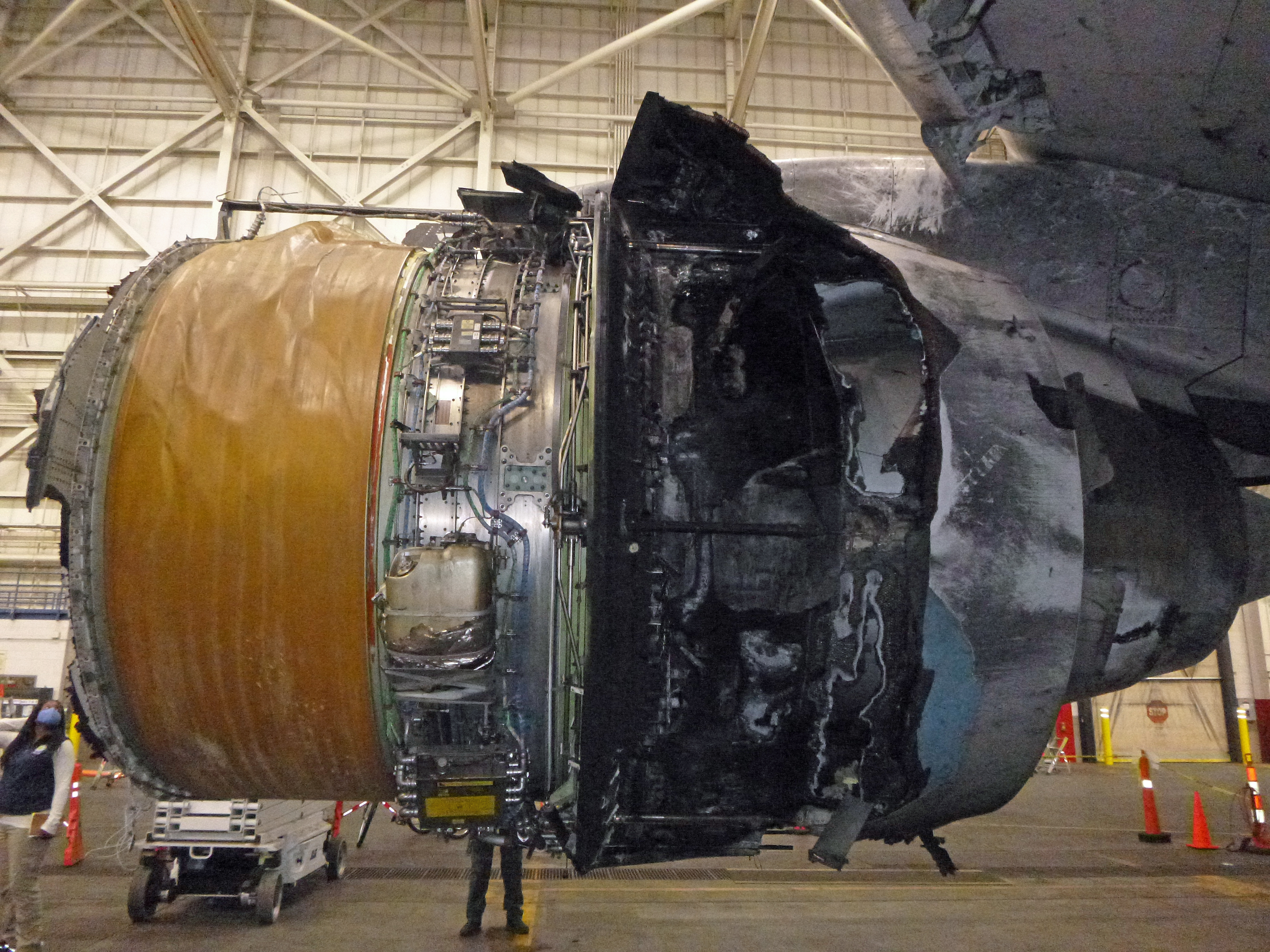
That is the remedial gap exposed by the lawsuits filed after United Airlines Flight 328, a Denver-to-Honolulu flight that suffered a right-engine failure over Colorado in February 2021. The visible event was dramatic: damaged engine components, debris over the Broomfield area, and a return to Denver. The legal event was quieter. Passengers who alleged serious psychological symptoms had to look beyond federal passenger protections and into state tort law.
The DOT Baseline Is Economic, Not Emotional
DOT passenger-rights materials are often discussed as if they form a broad compensation code for bad air-travel experiences. They do not. DOT’s consumer guidance states that airlines are not required to compensate passengers for delayed or canceled domestic flights, although passengers may have refund rights in qualifying circumstances and airlines may make their own customer-service commitments.[1]
The October 2024 automatic-refund rule reinforces the same point. It requires automatic refunds when a flight is canceled or significantly changed, including delays of at least three hours for domestic flights and six hours for international flights, but the remedy is still a refund for the unused transportation or service. It is not compensation for terror in the cabin, post-incident treatment, or non-economic distress.[2]
That distinction matters because a severe mechanical incident does not fit neatly into the consumer-protection categories most travelers know: delay, cancellation, bumping, tarmac delay, baggage, fare advertising, or ancillary-service refunds. A flight can land safely and still leave passengers alleging real trauma. Federal passenger regulation may treat that as outside its remedial design.
The Montreal Convention Does Not Rescue This Claim
Aviation has an international compensation regime, but it is the wrong tool for UA328. The Montreal Convention applies to international carriage, while UA328 was a domestic Denver-to-Honolulu flight. Even when the Convention applies, Article 17 permits recovery for death or bodily injury, and U.S. courts have generally rejected recovery for purely psychological injury without physical manifestation under that provision.[3]
So the legal question narrows quickly. The passenger is not asking whether the incident was frightening. The passenger is asking whether the forum’s tort law recognizes the kind of distress alleged, and whether the airline’s conduct can be pleaded as negligence rather than an unavoidable emergency.
Why the UA328 Claims Moved Into State Tort Law
The public filings identified in 2021 took that route. The Schnell putative class action was filed in the District of Colorado as Schnell v. United Airlines, No. 1:21-cv-00683, and sought to represent passengers aboard UA328.[4] Separately, Clifford Law Offices announced individual suits in Cook County, Illinois, including McGinley and Strawn matters, alleging emotional and psychological injuries after the same flight.[5]
The move from regulation to tort changes the entire analysis. DOT rules ask whether a passenger is owed a defined economic remedy. Tort law asks whether a defendant owed a duty, breached it, caused legally cognizable harm, and whether the claimed harm passes the jurisdiction’s threshold for recovery. In emotional-distress cases, that threshold is often the hard part.
Colorado and Illinois illustrate the problem without pretending to survey the country. Colorado generally requires either physical impact or a physical manifestation for negligent infliction of emotional distress. Illinois uses a zone-of-danger test, requiring the plaintiff to have been within the area of physical danger and to have feared for personal safety.[6]
| Forum issue | Why it matters for UA328 passengers |
|---|---|
| Colorado physical impact or physical manifestation approach | A passenger alleging fear alone may face a different gate than a passenger alleging nausea, tachycardia, or other physical symptoms tied to distress. |
| Illinois zone-of-danger approach | The focus shifts to whether the passenger was in an area of physical danger and feared for personal safety during the emergency. |
| Putative passenger class | A proposed class raises choice-of-law problems because passengers may have different domiciles, injury allegations, and applicable state-law standards. |
Those are not pleading technicalities. They are the legal filters that decide whether an experience a layperson would call traumatic becomes a claim a court can administer. A cabin-wide emergency may feel common to every passenger, but emotional-distress doctrine often requires individualized proof: where the person was, what symptoms followed, whether those symptoms are physical manifestations, and whether the defendant should have foreseen the risk.
The Foreseeability Hinge: UA1175 Before UA328
The stronger negligence theory does not rest on the bare proposition that an engine failed. Engines can fail without establishing liability to every passenger who was afraid. The sharper allegation is that United had earlier notice of a materially similar danger because United Airlines Flight 1175 suffered a February 2018 in-flight fan-blade failure involving the same Pratt & Whitney PW4077 engine model before UA328’s February 2021 failure.[5]

That prior incident changes the legal texture. A single freak event invites one set of defenses. A later event involving the same airline, same engine model, and same fan-blade fatigue issue invites questions about inspection practices, notice, and the reasonableness of continued operation under existing intervals.
The NTSB’s final report, issued September 8, 2023, supplied facts that fit that foreseeability frame. The agency found that thermal acoustic imaging inspections in 2016 had detected low-level crack indications that were dismissed as sensor noise. It also found that the 6,500-cycle inspection interval was insufficient because the failed blade had accumulated only 2,979 cycles since inspection.[7]
After the UA328 failure, inspection requirements changed. The interval was reduced to 1,000 cycles, with ultrasonic testing every 275 cycles.[7] That does not, by itself, prove United’s liability in the passenger cases. Post-incident changes can be legally complicated, and the public record identified here does not establish how any court treated those facts. But the NTSB findings help explain why the lawsuits were not merely complaints that passengers were scared. They pointed toward a prior-warning theory.
AeroTime’s coverage of the NTSB report likewise emphasized the agency’s conclusion that the prior inspection interval was inadequate in light of the failed blade’s cycle count.[8] CNBC’s coverage of the FAA’s post-incident inspection order reported the regulatory response after the engine failure, which is useful context for the safety side of the story but not a substitute for a tort finding.[9]
What a Passenger Still Has to Prove
A prior similar incident can strengthen foreseeability, but it does not erase the other elements. A passenger still must connect airline conduct to a legally recognized injury under the governing state law. For some plaintiffs, allegations of physical symptoms may matter more than descriptions of fear. For others, the key issue may be whether being aboard the aircraft during the engine failure satisfies a zone-of-danger standard.
That is where the gap between lived experience and legal remedy becomes most visible. The federal passenger-rights architecture is tidy because it compensates defined economic events. Emotional-distress litigation is untidy because it asks courts to distinguish severe, provable injury from generalized fear in a way that can be applied across cases.
The class-action posture adds another layer. A proposed class of all passengers may make intuitive sense when everyone was on the same flight. It becomes harder when the governing law may vary by forum, passenger residence, injury theory, and applicable emotional-distress doctrine. The available public materials identify the filing of the Schnell putative class action, but they do not establish certification, settlement, dismissal, or judgment.[4]
The Narrow Lesson of UA328
As of Q3 2026, the public materials identified for the UA328 passenger cases do not verify a post-2021 docket outcome, settlement, class-certification ruling, or liability finding. The legal significance of the incident is therefore restrained but real: passengers who allege psychological harm after a domestic in-flight mechanical emergency may have no federal passenger-rights remedy and may be forced into state tort litigation, where the result depends on the forum’s rules and the proof connecting prior knowledge to the event. This is legal news analysis, not advice about any passenger’s claim.
References
- Fly Rights: A Consumer Guide to Air Travel, U.S. Department of Transportation.
- New DOT rule requires airlines to automatically refund passengers for canceled or significantly changed flights, PIRG Education Fund.
- Montreal Convention, Podhurst Orseck.
- United Airlines Flight 328 Engine Failure Class Action Lawsuit, ClassAction.org.
- Passengers Sue United Airlines Over Flight 328 Engine Failure, Clifford Law Offices.
- Airline Liability for Emotional Distress, Ramos Law.
- NTSB Issues Final Report for United Airlines Flight 328 Engine Failure, National Transportation Safety Board, September 8, 2023.
- NTSB: United Airlines Boeing 777 engine failure caused by fan blade crack, AeroTime.
- FAA orders inspections of some Boeing 777 engines after United failure, CNBC.
Comments
Join the discussion with an anonymous comment.