
The legal problem for United Airlines starts at the ticketing counter, not in the later corporate statement. Josue Varela was at San Francisco International Airport on July 14, 2026, trying to complete a routine travel transaction when a United ticketing employee, reportedly on duty, in uniform, and wearing an IAM union steward badge, told him: “Maybe we should call ICE on you… you don’t act like a citizen.” Varela is a documented naturalized U.S. citizen, and as of July 21, 2026, he had not filed a lawsuit but was considering seeking legal counsel. [1]
United’s exposure, if Varela sues in California, is not limited to whether the airline approved that sentence. The more important questions are whether the statement amounted to discriminatory treatment in a business establishment and whether the employee was acting within the scope of the job United put her there to perform. Those are related questions, but they are not the same question.
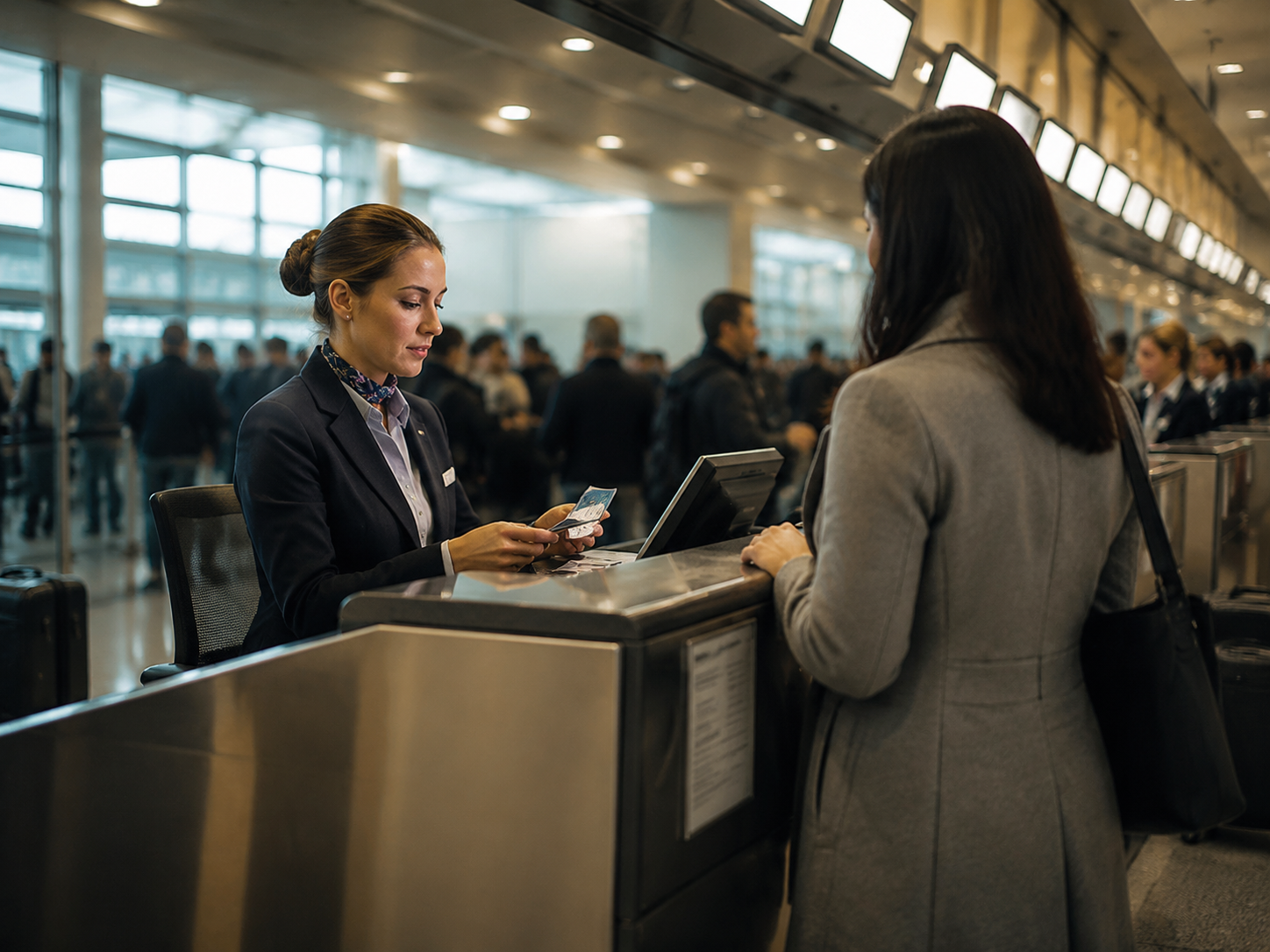
The only confirmed employment action reported as of July 21 is that IAM District 141 said the employee was being “held out of service pending further investigation.” [2] That matters for workplace process and possible discipline. It does not answer the customer-facing liability question.
Why the ICE threat changes the legal character of the incident
A passenger-service dispute can be unpleasant without becoming a civil rights case. This one looks different because the reported threat was not merely rude, loud, or unprofessional. Calling ICE into the exchange, paired with “you don’t act like a citizen,” ties the passenger’s treatment to citizenship, perceived national origin, and belonging in the country while he is standing at an airline counter trying to travel.
For United, that is the hinge. A frontline employee does not need to recite a protected category with courtroom precision to create litigation risk. In a California complaint, Varela’s counsel would likely frame the statement as national-origin-coded intimidation: the employee used the possibility of immigration enforcement as leverage during a service interaction, even though Varela was a naturalized U.S. citizen.
The setting strengthens that theory. This was not an off-duty quarrel in a parking lot or an online insult by someone who happened to work for the airline. The alleged speaker was at the counter, in uniform, performing the ordinary ticketing function. The passenger was not in an equal-position argument with a stranger. He was dealing with the person who appeared to control access to the airline’s service in that moment.
The two liability tracks United would likely have to defend
If Varela files suit, the cleanest structure is likely to run on two tracks: direct statutory liability under California’s Unruh Civil Rights Act and vicarious liability under respondeat superior. The first asks whether a business establishment denied or impaired equal treatment. The second asks whether the employee’s conduct is close enough to her assigned work that the employer can be held responsible for it.

Those tracks matter differently. Unruh gives the passenger a direct civil rights claim against a business establishment. Respondeat superior supplies the employer-liability bridge for conduct by an employee who may have gone well outside training, policy, and judgment while still doing the company’s work.
The Unruh Act route does not turn on United approving the words
California’s Unruh Civil Rights Act applies to “business establishments” and provides that all persons are entitled to full and equal accommodations, advantages, facilities, privileges, or services. Civil Code section 52 provides a minimum of $4,000 in statutory damages per violation, plus attorneys’ fees for a prevailing plaintiff. [3]
That statutory design is a problem for any defense built entirely around lack of authorization. In an Unruh claim against a business establishment, the core issue is not whether a headquarters lawyer, station manager, or written policy approved discriminatory treatment. The issue is whether the passenger received unequal treatment in the business’s provision of services.
On the reported facts, United would have to deal with the optics and mechanics of the transaction: Varela was at the airline’s counter, dealing with the airline’s employee, in the middle of the airline’s service process. If the ICE threat is credited as part of the service interaction, the claim is not merely that a United employee expressed a private prejudice. It is that the business’s representative used immigration enforcement language while exercising customer-service authority over a passenger.
That does not mean Varela automatically wins an Unruh claim. The record is still incomplete. Surveillance footage, audio, witness statements, the full sequence at the counter, and any prior interaction may change how a court understands the exchange. But the statutory route is not weak simply because United can say the statement violated policy.
Respondeat superior is about the job function, not corporate permission
The second track is vicarious liability. Here, United’s expected defense would be familiar: the employee was not authorized to threaten a passenger with ICE, the statement was contrary to company policy, and the airline should not be liable for a personal outburst.
That defense answers only part of the question. The hard distinction is between an unauthorized act and an act outside the course of employment. Many acts that expose an employer to liability are unauthorized in the ordinary sense. The employer did not want them done, did not train for them, and may discipline the employee afterward. Respondeat superior still asks whether the conduct arose out of the work the employee was hired and placed there to do.
Ticketing is not peripheral to an airline. It is a core service function. The counter is where the airline verifies passengers, handles travel problems, controls access to the next stage of the journey, and communicates who may proceed and under what conditions. If the alleged threat occurred while the employee was performing that function, United’s risk is materially different from a case involving an employee acting wholly apart from company business.
A court would still need a factual record. If discovery showed the employee had stepped away from her duties, was engaged in a purely personal confrontation, or had no operational role in Varela’s transaction, United would use that aggressively. But the reported facts presently point the other way: on duty, in uniform, at the counter, handling a passenger-service interaction.
The union badge changes process more than liability
The employee’s reported IAM union steward badge is relevant, but not in the way social media arguments tend to use it. A steward role may affect internal discipline, investigatory meetings, representation rights, and the way United has to move through a collective bargaining process. It may also affect how quickly the company can impose final discipline.
It does not make the customer interaction disappear. If the employee was performing United’s ticketing function, the presence of a union badge does not by itself convert the exchange into union activity or remove it from the airline’s service operation. The collective bargaining agreement may matter a great deal inside the employment relationship; it is less likely to be the decisive answer to a passenger’s civil rights claim.
Damages pressure would not be limited to one airport encounter
The Unruh Act’s $4,000 minimum damages figure is not, by itself, the whole financial risk. Attorneys’ fees can change the economics of a civil rights case, and a plaintiff may seek emotional distress damages depending on the claims pleaded and facts developed. The more dangerous question for United would be whether Varela could use other discrimination history to argue enhanced or punitive damages.
That is where United’s recent EEOC settlement becomes relevant, but only carefully. In January 2025, United agreed to pay $99,000 to settle an EEOC discrimination case alleging a hostile work environment based on race and national origin. [5] That settlement is not proof that United discriminated against Varela at SFO in July 2026. It is also not proof of a companywide practice applicable to passenger service. But if a lawsuit is filed, plaintiff’s counsel would likely look at it as part of a notice, pattern, or punitive-damages argument.
The airline industry has also shown a practical willingness to resolve high-sensitivity race discrimination claims rather than litigate them to judgment. In 2024, American Airlines settled a race discrimination lawsuit brought by three Black men who said they were removed from a flight; the settlement terms were undisclosed. [6] That settlement does not establish liability for United, and it does not provide a reliable dollar benchmark for Varela. It does show that airlines treat these disputes as meaningful litigation and reputation risks once they move from public incident to civil rights pleading.
A Bane Act claim is plausible, but less straightforward
Varela’s lawyers could also evaluate a claim under California’s Bane Act, which addresses interference, or attempted interference, with constitutional or statutory rights by threat, intimidation, or coercion. The statute can apply to private actors and authorizes a civil penalty of up to $25,000 per violation. [4]
The theory would be direct enough: an airline employee allegedly used the threat of immigration enforcement to intimidate a passenger while he was attempting to access services on equal terms. The difficulty is doctrinal. California appellate courts have not always read the Bane Act’s threat, intimidation, or coercion requirement the same way, and defendants often argue that the alleged coercion must be distinct from the underlying rights violation.
That makes the Bane Act a pressure claim, not the cleanest claim. It may survive if a court sees the ICE language as an independent coercive threat layered onto discriminatory service treatment. It may narrow or fall away if the court treats the same words as insufficiently separate from the alleged denial of equal treatment.
Federal preemption is a defense, not an escape hatch
United would also be expected to examine preemption under the Airline Deregulation Act, especially because the incident occurred during ticketing. Airlines often argue that state-law claims touching prices, routes, or services are preempted. A passenger would answer that generally applicable civil rights laws regulate discriminatory conduct, not airline pricing, routing, scheduling, or economic deregulation.
Recent ACLU-backed airline discrimination lawsuits from 2024 and 2025 were allowed to proceed on state-law claims despite federal preemption arguments. [7] That is useful headwind against an airline preemption defense, not a guarantee. Preemption analysis remains claim-specific and fact-specific, and a court would look closely at whether the requested remedy would interfere with airline services in the statutory sense.
What discovery could still change
The present record is news-report-level, not litigation-grade. A filed complaint would only start the process. The documents and testimony that matter most would be operational: surveillance video, any available audio, passenger and employee witnesses, counter records, supervisor involvement, prior complaints, training materials, and the internal investigation file.
United would want evidence that the employee’s statement was isolated, immediately corrected, contrary to training, and not connected to any denial or delay of service. Varela would want evidence that the threat affected the transaction, that other employees failed to intervene, that the employee appeared to exercise airline authority, or that United had prior notice of similar conduct risks.
The internal investigation also matters because it may define what United itself concluded about the employee’s status, the service interaction, and policy violations. A company finding that the employee violated anti-discrimination or passenger-service rules would not automatically establish civil liability, but it could be difficult to manage in front of a jury. A finding that the interaction has been mischaracterized would change the posture just as sharply.
The practical legal consequence for United
As of July 21, 2026, the legal consequences remain potential rather than adjudicated because no complaint has been filed. But if Varela sues in California, United’s hardest problem is unlikely to be whether it personally approved the ICE threat. Few companies approve that kind of sentence in writing, and that is rarely the end of the analysis.
The harder problem is whether a court sees the alleged threat as discriminatory customer treatment by an on-duty ticketing employee inside the airline’s ordinary service operation. If so, the Unruh Act gives Varela a direct statutory route, respondeat superior gives him a bridge from employee conduct to employer exposure, and United’s prior discrimination settlement history may increase damages and settlement pressure without proving the SFO incident by itself.
References
- SFO United Airlines Employee Allegedly Threatens to Call ICE on US Citizen, KQED, July 17, 2026.
- United probing incident after employee's ICE threat caught on video, USA Today, July 20, 2026.
- California Civil Code sections 51 and 52.
- California Civil Code section 52.1.
- United Airlines to Pay $99,000 in EEOC Discrimination Case, EEOC, January 2025.
- American Airlines settles race discrimination lawsuit filed by three Black men, AP News, 2024.
- ACLU's 2024–2025 lawsuits against multiple airlines, ACLU.
Comments
Join the discussion with an anonymous comment.