
The useful place to enter the dispute over Will Smith’s possible testimony in Bilaal Salaam’s lawsuit is not a red carpet, a memoir, or a feud chronology. It is a July 7, 2026 email. Salaam, representing himself in his lawsuit against Jada Pinkett Smith, asked Pinkett Smith’s counsel, Courtney L. Puritsky of Leech Tishman, to arrange Will Smith’s deposition. Puritsky answered that there was “nothing to meet and confer about” because Smith is not a party and Salaam “must comply with the applicable procedures for obtaining discovery from a nonparty.”[1]

That exchange is the dispute in miniature. Salaam asked. Counsel declined to treat the request as a deposition process. The missing object was not a better explanation, a celebrity accommodation, or a meet-and-confer session. It was a deposition subpoena.
As of the July 18, 2026 publication frame, the available reporting does not show that Will Smith had been personally served with a deposition subpoena. That matters more than the headline question of whether Smith “will testify.” In California civil discovery, a non-party is not pulled into a deposition merely because someone wants the testimony. The party seeking that testimony has to use the mechanism the Code of Civil Procedure provides.
The non-party problem comes first
Will Smith’s status is the first procedural fact. He is not reported to be a defendant in Salaam’s case against Pinkett Smith. He is a non-party witness whom Salaam wants to question. That distinction changes the discovery route.
California Code of Civil Procedure section 2020.220 provides that a deposition subpoena requiring personal appearance must be personally served, and the service must allow the witness reasonable time for compliance.[2] Section 2020.310 addresses a subpoena commanding only the attendance and testimony of the deponent, without also requiring production of business records or other things.[3]
Those statutes are not decorative. They are the gate through which a non-party enters the discovery process. Until that gate is used, the disagreement is not yet the familiar fight over whether a witness is evading testimony, whether a deposition should be limited, or whether an objection is well taken. It is a more basic question: has the person been legally commanded to appear?
The answer, on the reported record, is no. TMZ reported that the Will Smith deposition request appeared as an exhibit to a July 15, 2026 motion filed by Pinkett Smith’s team, and that no subpoena had been served on Smith at that point.[4] The legal consequence is straightforward: an email request may announce what Salaam wants, but it does not itself create a non-party deposition obligation.
A request is not a subpoena with softer edges
The temptation in celebrity litigation coverage is to treat every discovery move as a personal standoff. One side “demands” testimony; the public figure “refuses”; the case supposedly escalates. That framing skips the only sequence that matters in a non-party deposition.
| Step | What matters procedurally |
|---|---|
| Identify the witness | Is the person a party or a non-party? |
| Choose the discovery device | For a non-party deposition, use a deposition subpoena. |
| Serve it correctly | Personal service is required for a subpoena requiring personal appearance. |
| Litigate compliance if necessary | Only then do objections, motions, limits, and enforcement issues become the center of the dispute. |
Meet-and-confer obligations make sense when there is an actual discovery dispute to confer about. A properly noticed deposition, a served subpoena, objections, scheduling limitations, privilege assertions, burden objections, confidentiality terms — those are the usual pieces of a discovery fight. Without a subpoena served on a non-party witness, counsel’s response that there is “nothing to meet and confer about” is not a ruling that Smith can never be deposed. It is a position that the procedural predicate has not been satisfied.[1]
That is also why Salaam’s pro se status does not change the analysis. Courts may give self-represented litigants some practical leeway in understanding filings, but the subpoena power is not an informal courtesy system. It burdens someone who is outside the case. The law therefore requires formal notice, service, and a command backed by the court’s authority before noncompliance can become meaningful.
This is not a comment on whether Smith has relevant information. Relevance comes later. Nor is it a comment on whether Salaam has a good reason to want the deposition. The narrower point is enough: under the reported facts, Salaam had not yet used the California procedure required to compel a non-party’s attendance.
Why Jada Pinkett Smith’s deposition dispute is different
The cleaner comparison is not between Will Smith and the celebrity news cycle. It is between Will Smith’s reported posture and Jada Pinkett Smith’s. She is the defendant in Salaam’s case. He seeks her deposition too, but that dispute is already further down the procedural road.
People reported that Pinkett Smith did not appear for a scheduled May 20, 2026 deposition. Her team argues that any additional questioning should be limited to one hour because she already sat for a deposition in a related proceeding. The parties are also fighting over the protective order: Salaam wants a pared-down version, while Pinkett Smith’s team says the standard Los Angeles County protective order is sufficient.[5]
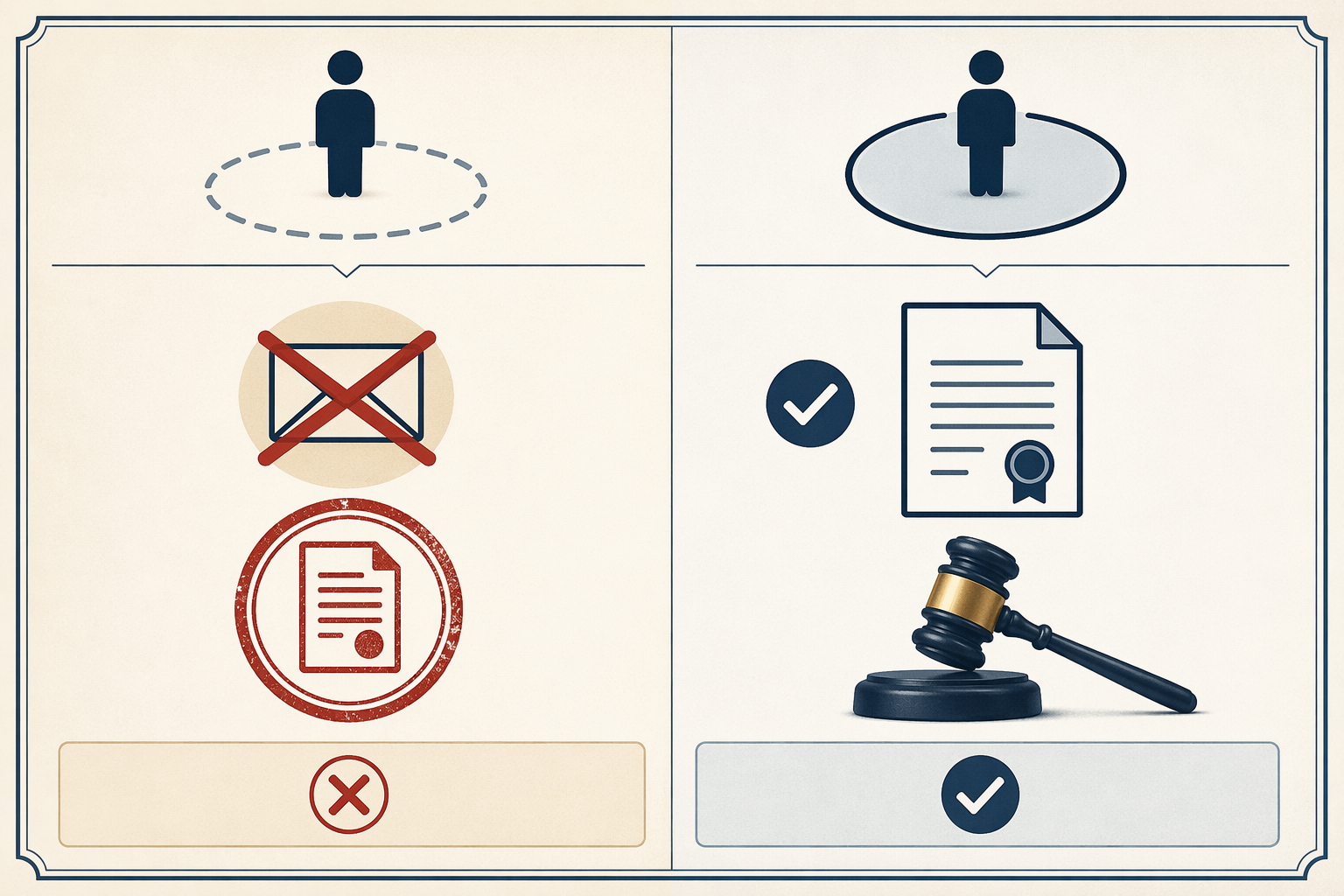
That is a real deposition dispute. The fight is over appearance, remaining time, prior testimony, and the terms governing confidential information. Those are issues a court can manage because the witness is already inside the litigation posture in a way Will Smith, on the reported facts, is not.
The contrast matters because it prevents a common misread. Pinkett Smith’s team can be resisting the scope or conditions of her deposition while also correctly saying that Smith, as a non-party, has not been properly brought into deposition discovery. Those positions are not inconsistent. They involve different people, different status, and different procedural predicates.
What the broader case posture adds, and what it does not
Salaam’s lawsuit against Pinkett Smith has already generated significant procedural pressure. USA Today reported in May 2026 that Salaam, who is representing himself, had been ordered to pay $32,836 in fees after a partial grant of Pinkett Smith’s anti-SLAPP motion, a reduction from the $49,181.23 sought.[6] Complex later reported that Salaam claimed “certified homeless” status and noted an August 19, 2026 court date.[7]
Those facts help explain why the discovery skirmishes are charged. Fee exposure, pro se litigation, and a pending hearing can make every filing feel consequential. But they do not relax the subpoena statute. Financial hardship is not character evidence, and it is not a substitute for service. Celebrity proximity is not a substitute either.
There are also limits to what can responsibly be said from the current materials. The exact details of the court’s anti-SLAPP order should be verified from the order itself before drawing fine-grained conclusions about which claims were struck and which survived. The reported “certified homeless” claim has been reported in entertainment and news coverage, but the research materials do not independently verify it through court filings. And because this article is framed as of July 18, 2026, later filings or service attempts may change the posture.
The current answer on Will Smith’s testimony
On the reported July filings, Salaam cannot compel Will Smith’s testimony by email request alone. California non-party deposition practice requires the service of a deposition subpoena, and for a subpoena requiring personal appearance, personal service is the operative step. Until that happens, there is no enforceable command for Smith to attend a deposition.
That does not mean Will Smith could never be deposed in the case. It means the analysis has not reached that question. If a proper subpoena is served, the next dispute could involve relevance, burden, scheduling, objections, or a motion to quash or compel. Those are later fights. The July 7 exchange stopped at an earlier threshold.
So the careful answer to the headline question is narrower than the headline. Will Smith is not, on the reported record, refusing a legally compelled deposition. Salaam asked opposing counsel to arrange one; counsel responded that Smith is a non-party and that the non-party discovery procedure had not been followed. As of July 18, 2026, that is a subpoena problem before it is a testimony problem.
References
- Will Smith asked to testify in $3M legal battle against wife Jada Pinkett Smith, USA Today, July 17, 2026
- California Code, Code of Civil Procedure - CCP § 2020.220, Justia California Codes
- California Code, Code of Civil Procedure - CCP § 2020.310, Justia California Codes
- Will Smith's Former Friend Trying to Drag Him Into Legal War With Jada Pinkett Smith, TMZ, July 17, 2026
- Will Smith's Ex-Friend Seeks Actor's Testimony in Lawsuit Against Jada Pinkett Smith, People, July 17, 2026
- Jada Pinkett Smith's legal battle with former friend continues after anti-SLAPP ruling, USA Today, May 20, 2026
- Will Smith's Former Friend Reportedly Claims 'Certified Homeless' Status Amid Jada Pinkett Smith Lawsuit, Complex, July 2026
Comments
Join the discussion with an anonymous comment.