
AI data center pollution rules now fall to the states
- Authority
- U.S. Environmental Protection Agency (EPA)
- Rule type
- regulation
- Jurisdiction scope
- US federal and state
- Effective date
- Jun 10, 2026
- Source text
- Read primary rule text ↗
Existing Clean Air Act and state permit obligations remain in effect; compliance depends on permit terms and source classifications.
Obligations record — Q3 2026
Category: regulation-ethics. Last verified: Aug. 3, 2026. This article is for general informational purposes and is not legal advice; facility-specific conclusions require review of permits, source classifications, state approvals, operating records, and current docket materials.
- EPA Administrator Lee Zeldin’s June 10, 2026 statement that EPA will not set nationwide environmental requirements or recommendations for AI data centers changed federal posture, not the legal status of existing permits or Clean Air Act programs. Crowell & Moring describes that announcement as EPA handing the issue to states and communities, but the alert does not identify any repeal of NSPS, NESHAP, NSR, or state-law obligations. [1]
- For AI infrastructure pollution compliance, teams should start with the facility file: engine or turbine classification, emergency-generator limits, synthetic minor conditions, hourly limits, fuel-throughput assumptions, variance terms, and state-law siting or large-load requirements.
- The active enforcement map is now led by state air agencies, with Clean Air Act citizen suits as the federal-court route. NAACP v. x.AI is the current example to read for that risk, not proof that every backup-power strategy is unlawful. [1]
- Do not treat guidance as law. That caution matters for EPA’s July 2026 Acid Rain Program position on “islanded” data-center power, which has been reported as guidance rather than a tested rule or final judicial holding. [8]
What EPA’s June 10 statement did not do
The mistake to avoid is reading “EPA stepped back” as “nothing applies anymore.” EPA headquarters may have declined to write nationwide environmental requirements or recommendations for AI data centers, but a facility with stationary engines, turbines, fuel tanks, cooling systems, construction approvals, or state utility obligations still has documents that bind it. The compliance question did not disappear; it moved closer to the permit file.
Williams Mullen’s June 2026 air-permitting explainer identifies the operative Clean Air Act frameworks counsel still has to check for data center emergency-generation fleets: NSPS Subparts IIII and JJJJ for stationary compression-ignition and spark-ignition internal combustion engines, NESHAP Subpart ZZZZ for reciprocating internal combustion engines, New Source Review, and synthetic minor permitting. [2] Those programs do not need a new AI-specific EPA rule to matter.
State law remains its own layer. WilmerHale’s state-regulation survey tracks emerging data center requirements across environmental, energy, utility, and land-use categories, including measures that do not look like conventional air rules but can still change whether a site can connect, build, expand, or operate on the proposed schedule. [3] That is why a federal retreat does not simplify a siting memo into one yes-or-no EPA question.
Who enforces now
In ordinary operation, the first enforcement audience is the state air agency that issued or administers the permit. That agency can read the same operating logs, generator run-hour records, fuel records, emissions calculations, startup notifications, and maintenance documentation that the facility relied on when it accepted a source classification or synthetic minor limit.
The second audience is a federal court in a Clean Air Act citizen suit. Crowell & Moring identifies NAACP v. x.AI, filed April 14, 2026 in the Northern District of Mississippi as No. 3:26-cv-74-MPM-JMV, as the concrete example of that channel after EPA’s retreat. The same alert reports a DOJ intervention and dismissal motion on June 16, 2026. [1] WilmerHale’s later litigation survey also treats data center disputes as moving through nuisance, environmental, and land-use claims; because the DOJ timing is described differently across secondary alerts, cite the docket directly before relying on the precise intervention date in a pleading or closing memo. [4]
For more on the Mississippi dispute family, see the site’s record on xAI Southaven data center noise and legal disputes and the related zoning-challenge treatment of Clean Air Act citizen suits over data center generation. Those records are useful because they keep the lawsuit in its procedural lane: a citizen-suit enforcement route, not a substitute for reviewing every facility’s permit terms.
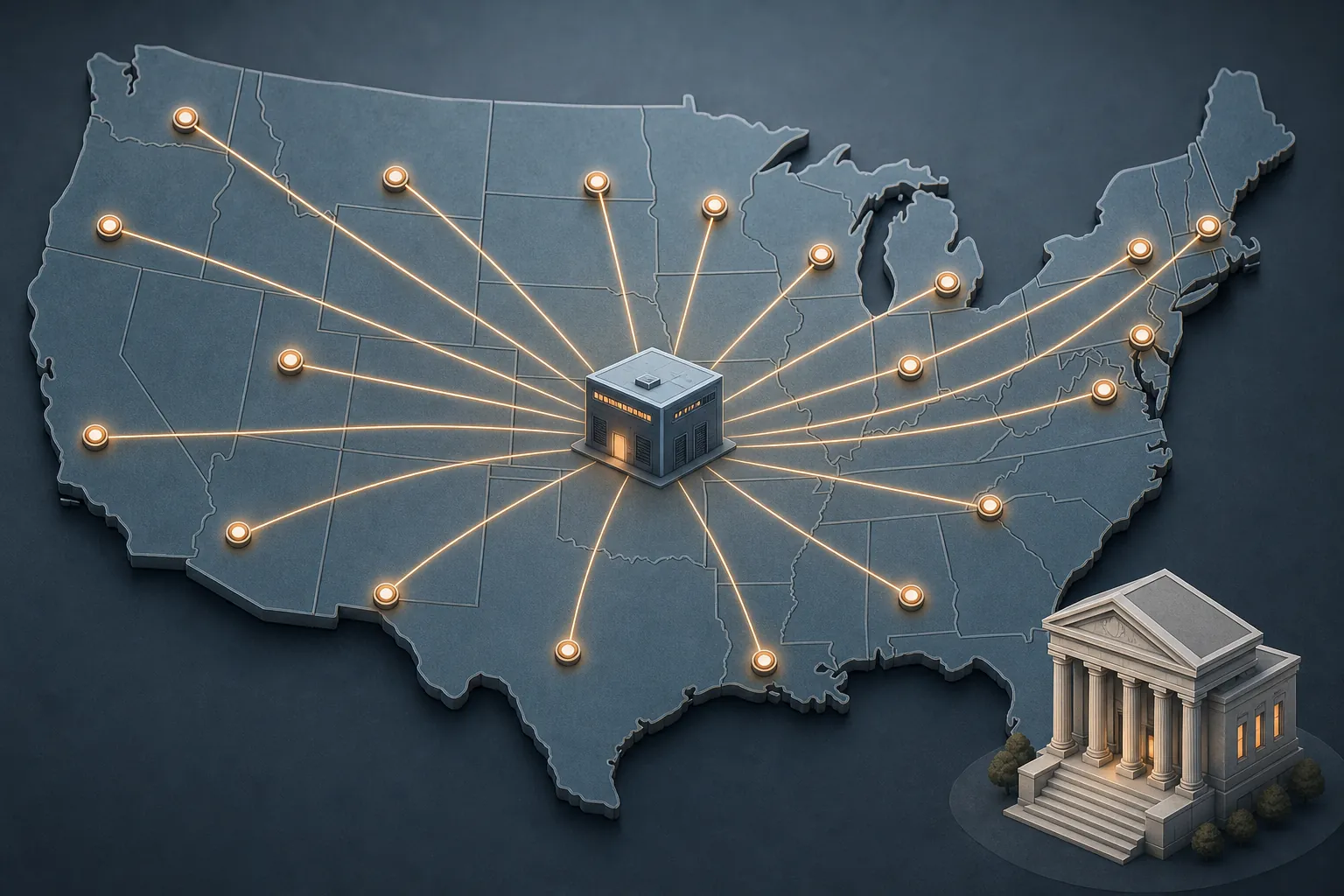
The permit file is the risk file
The most reliable compliance screen is not whether a facility calls its generation “backup,” “resilience,” “islanded,” or “behind the meter.” It is whether the equipment, use pattern, and records match the legal status the facility claimed when it received authorization to construct and operate.
| Facility question | Document or classification to check | Why it changes legal risk |
|---|---|---|
| Are the engines compression-ignition, spark-ignition, or something else? | Equipment list, manufacturer specifications, permit application, NSPS applicability analysis | NSPS Subparts IIII and JJJJ apply by engine category, not by whether the site is branded as AI infrastructure. [2] |
| Are reciprocating internal combustion engines covered by NESHAP ZZZZ? | NESHAP applicability determination, maintenance records, operating records | A facility that treats NESHAP as a background obligation still has to prove the required work practices, limits, or records fit its engine status. [2] |
| Was the site permitted as minor, major, or synthetic minor? | NSR analysis, construction permit, synthetic minor permit, enforceable emissions limits | Synthetic minor status is a legal commitment to stay within enforceable limits; it is not merely a modeling assumption. [2] |
| How many hours may each unit operate, and for which purposes? | Permit conditions, emergency-generator provisions, demand-response or reliability provisions, run-hour logs | A generator strategy can move from planning assumption to exposure when actual operating hours or allowed purposes diverge from the permit. |
| Do fuel-throughput assumptions cap emissions? | Fuel records, throughput limits, emissions calculations, annual certifications | Throughput assumptions become consequential when they are written into enforceable limits or used to preserve a source classification. |
| Did a state or local body grant a variance or special approval? | Variance order, zoning approval, state environmental approval, utility interconnection conditions | Variance conditions can become the document a regulator, neighbor, or litigant reads first when the facility’s real-world operation is challenged. |
The Virginia generator counts illustrate why this is not a paperwork quibble. Williams Mullen reports more than 9,000 permitted diesel emergency generators at data centers in Virginia and approximately 4,700 units representing about 12 GW in eastern Loudoun County. [2] Those figures do not establish noncompliance. They do explain why a one-sentence description of “backup generation” is a poor substitute for reviewing unit-by-unit classifications, hour limits, and aggregation assumptions.
The same point applies when developers or lenders discuss “islanded” power. If a site’s power strategy depends on operating combustion sources outside ordinary grid supply, the permit question is not whether the engineering team has a workable resilience story. It is which source category the equipment falls into, which emissions limits apply, whether the facility’s claimed minor-source or synthetic-minor status survives the operating plan, and whether any state variance or utility approval carries enforceable conditions.
This tracker does not merge competing generator-fleet estimates from advocacy groups, trade publications, or local inventories into a single national number. If a disputed number will affect a permit memo, it should be attributed to its source and matched against the agency file. Likewise, this article does not rely on snippet-level reports of a July 2026 minor-source public-participation proposal or an asserted Amazon NOx figure; those points need the primary Federal Register text before they belong in an obligations chart.
The 2025–2026 federal sequence, without treating every item as binding law
The federal record is easy to overread because several agency actions sit close together. They do not all have the same legal effect.
| Date or period | Federal action | Compliance significance |
|---|---|---|
| September 2025 | EPA posted Clean Air Act resources for data centers, including NSR pre-construction permitting guidance. [5] | Useful as a federal permitting reference; it does not replace the permit actually issued by the state or delegated authority. |
| January 15, 2026 | EPA finalized NSPS rules for new, modified, and reconstructed stationary combustion turbines, described by Clark Hill as permitting relief for data centers. [6] | Relevant for turbine-based power strategies; counsel still has to match the actual equipment and construction timeline to the final rule. |
| May 11, 2026 | EPA announced proposed permitting guidance to redefine “begin actual construction” for data center development. [7] | A proposal or guidance item is not the same thing as a permit shield. Check whether the source has commenced construction, what the permit says, and whether the rule or guidance is final and applicable. |
| June 10, 2026 | EPA leadership stated that the agency would not set nationwide environmental requirements or recommendations for AI data centers. [1] | This is the source of the “EPA stepped back” shorthand. It does not erase NSPS, NESHAP, NSR, state permits, or local approvals. |
| July 27, 2026 | The Hill reported EPA guidance under which certain “islanded” data center power plants would avoid Acid Rain Program limits. [8] | Treat as guidance with untested legal durability, not as settled statutory immunity. |
The Acid Rain item deserves particular care. A guidance document can affect agency posture and regulated-party arguments, but it is not the same as a statute, a final legislative rule, or a court decision upholding the agency’s interpretation. If a financing model or dispatch plan assumes that an islanded configuration avoids a federal emissions program, that assumption belongs in the legal-risk section, not in a footnote.
State activity is now part of the core checklist
State law is not just filling a political vacuum. It is producing operating conditions, large-load rules, moratoria, disclosure requirements, and siting constraints that can determine whether a project proceeds on the expected terms.
MultiState’s 2026 tracker reports more than 200 state bills in 2025, more than 40 enacted measures, 27 states with “large load” legislation, and a Maine construction moratorium running through November 2027. [9] Those are legislative-tracker figures, not proof that every state has adopted the same model. The useful takeaway is narrower: any US data center pollution or infrastructure review in Q3 2026 needs a state-law current-status check before counsel signs off on air, water, energy, or land-use assumptions.
Texas is a good example of why the checklist cannot stop at air permitting. Load-shedding and curtailment obligations can affect operational assumptions even when they are framed as grid reliability rather than pollution control. The site’s separate tracker on Texas SB 6 curtailment and AI data centers fits into that state-law branch of the review. For a broader patchwork view, see the record on 2026 state data center regulation and legal challenges.
Federal reporting proposals are a separate lane. Senator Markey’s June 9, 2026 release describes the reintroduced AI Environmental Impacts Act of 2026 as a bill that would create reporting and measurement obligations, including fines and a NIST-led measurement consortium; Congress.gov identifies the bill as S.4727 in the 119th Congress. [10][11] As of this record, that is a proposal to verify by legislative status, not an enacted reporting rule.
Existing emissions-reporting questions should not be confused with that bill. If the issue is greenhouse-gas reporting, inventory method, or assurance under GHGRP, GHG Protocol, or ISO 14064, use the separate GHGRP and ISO 14064 legal compliance record rather than treating S.4727 as current law.
A practical review order for counsel
The fastest way to lose the thread is to ask only what EPA said. A more useful review order is document-based:
- Identify the emissions units: diesel engines, gas engines, turbines, boilers, cooling-related equipment, tanks, and any temporary or rental units that may not be captured in the first permit summary.
- Match each unit to the asserted Clean Air Act category: NSPS IIII, NSPS JJJJ, NESHAP ZZZZ, NSR major or minor status, and any synthetic minor limits. [2]
- Pull the actual permit conditions: run-hour caps, fuel limits, emissions limits, startup and testing conditions, emergency-use language, monitoring, recordkeeping, reporting, and certification requirements.
- Compare planned operation to permitted operation: resilience runs, commissioning, maintenance testing, grid-support dispatch, demand response, curtailment response, and islanded operation should each have a permit answer.
- Check state and local overlays: air permits, water approvals, zoning approvals, variances, utility interconnection terms, large-load rules, moratoria, and public-participation conditions.
- Review litigation and notice risk: citizen-suit notices, nuisance claims, zoning appeals, community-benefit conditions, and any docket filings involving the same site, parent company, or equipment strategy.
- Date every uncertain point: pending EPA proposals, guidance positions, legislative trackers, docket events, and disputed fleet estimates should be attributed and time-stamped rather than smoothed into a single compliance conclusion.
That review order also keeps comparative material in the right place. EU AI Act obligations may matter to corporate governance, transparency, or risk-management programs for companies operating across markets, but they are not the source of US stationary-source permit limits. For that counterpart regime, use the site’s EU records on EU AI Act penalties for US companies and EU AI Act high-risk obligations.
In Q3 2026, federal silence is not a safe harbor. The answer for a US AI data center lives in the permits, source classifications, state-law obligations, enforceable limits, and operating records, with every disputed number or pending proposal dated and attributed before anyone treats it as compliance footing.
References
- EPA Steps Back from AI Data Center Regulation: What Developers Must Know Now, Crowell & Moring, June 23, 2026.
- Frequently Asked Air Questions (FAAQs): Understanding Data Center Emergency Generators and Their Air Permits, Williams Mullen, June 1, 2026.
- State Regulation of Data Centers: Emerging Trends and Potential Legal Complexities, WilmerHale, Feb. 23, 2026.
- Data Centers in Court, WilmerHale, July 13, 2026.
- Clean Air Act Resources for Data Centers, US EPA.
- EPA's New Turbine Rules Provide Air Permitting Relief for Data Centers, Clark Hill.
- EPA Issues Permitting Guidance..., US EPA, May 11, 2026.
- Data center power plants avoid acid rain limits in new Trump guidance, The Hill, July 27, 2026.
- Federal AI Data Center Policy Meets Resistance from State Lawmakers: 2026 Tracker, MultiState.
- Senator Markey, Rep. Beyer Reintroduce AI Environmental Impacts Act, Sen. Markey press release, June 9, 2026.
- S.4727 — 119th Congress, Congress.gov.
Operationalizing workflow
No workflow has been explicitly linked to this obligation yet. See Workflows generally.
Illustrative cases
No illustrative case is currently tracked for this obligation. See Risk Digest for documented incidents generally.
← Back to RegulationReport a correction or tip
Spotted an outdated figure, a misstated fact, or a ruling this regulation entry should reflect? Public comments are disabled for this content given the professional cost of a misreported case outcome, penalty amount, or rule text — use the structured correction channel instead.
Report a correction or tip for this record →