
What Andy Kim's SAFE Act Means for Freight Enforcement
- Authority
- U.S. Congress
- Rule type
- proposed legislation
- Jurisdiction scope
- US federal
- Source text
- Read primary rule text ↗
Proposed: GAO study, automated screening, interagency data sharing, appeals process.
Last-verified status record: August 3, 2026
For anyone tracking “Andy Kim SAFE Act freight enforcement,” the first verified point is procedural: the SAFE Act is not an enforceable federal rule as of August 3, 2026. The Senate companion was introduced on July 28, 2026 by Sen. Todd Young and Sen. Andy Kim as a companion to H.R. 7539, the House bill introduced by Rep. Harriet Hageman on February 12, 2026.[1][2] No public Senate bill number was verified from the available sources used for this record, so the safer citation posture is to refer to the Senate measure by name and companion status until the S. number appears in Congress.gov or another primary legislative record.
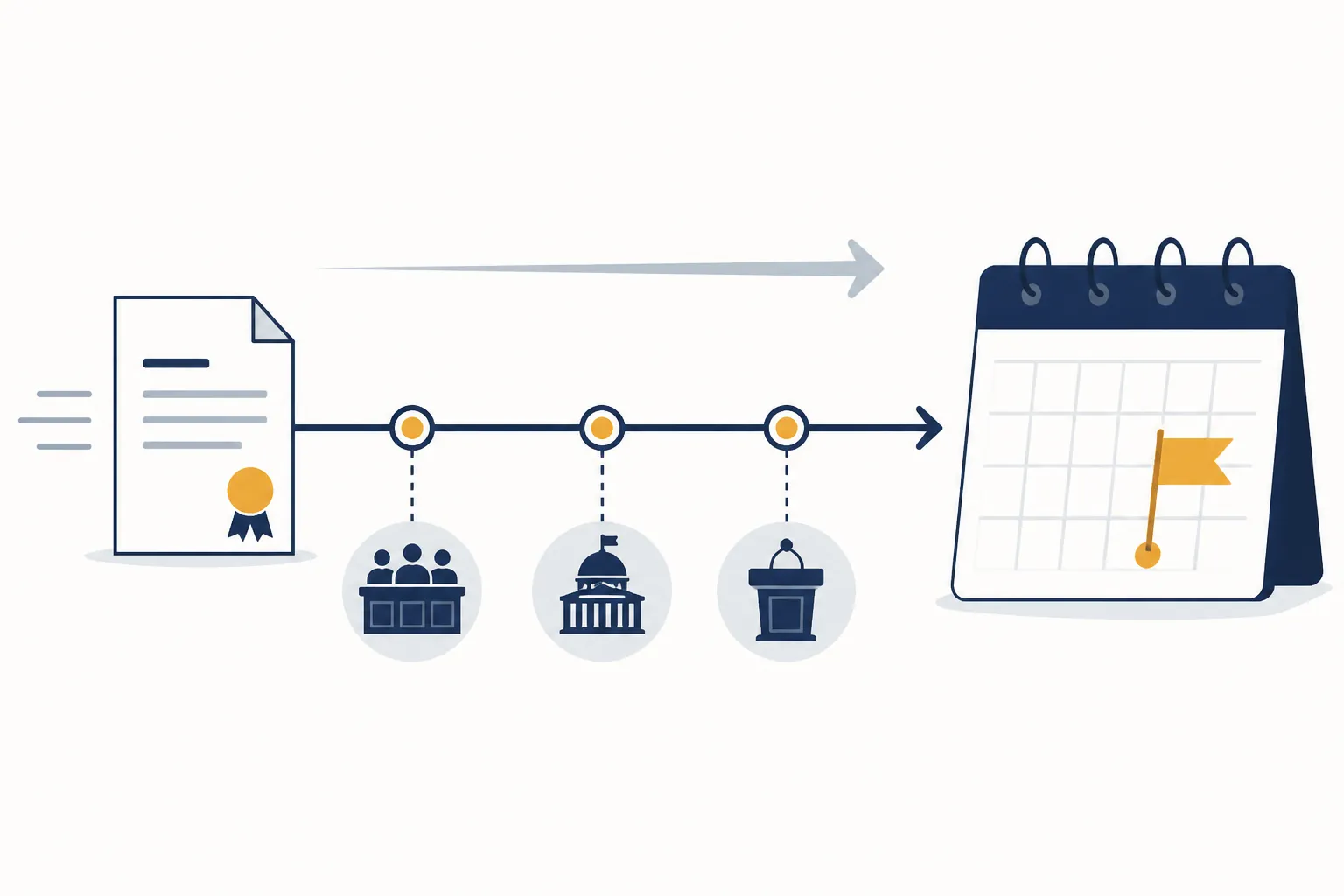
The operative path is the surface transportation reauthorization. SAFE Act language was added to the House reauthorization package, the BUILD America 250 Act, through a May 21 amendment, and the current surface transportation authorization expires on September 30, 2026.[3] That date is the practical risk trigger for boards, carrier compliance teams, brokers, freight forwarders, intermodal equipment providers, and counsel. This record is an obligations tracker, not legal advice.
| Tracker item | Verified record | Why it matters |
|---|---|---|
| Bill name | Safety and Accountability in Freight Enforcement Act, or SAFE Act | Targets so-called chameleon carriers: operators alleged to reappear under new registration identities to avoid enforcement consequences. |
| Senate sponsors | Todd Young and Andy Kim; introduced July 28, 2026.[1] | The Senate introduction created the companion vehicle that many readers are now searching under Sen. Kim’s name. |
| House companion | H.R. 7539, introduced February 12, 2026 by Harriet Hageman; referred to the House Subcommittee on Highways and Transit on February 13, 2026.[2] | The House bill and its reauthorization language remain the more important text trail until the Senate number and committee path are verified. |
| Legislative vehicle | BUILD America 250 Act surface transportation reauthorization; SAFE Act language added by May 21 amendment; current law expires September 30, 2026.[3] | This is the calendar item that can convert a monitoring issue into an enactment-risk issue. |
| Current legal effect | Not law as of August 3, 2026. | No carrier, broker, forwarder, or IEP has a new federal filing duty under the SAFE Act today, but the proposed obligations identify the records that will matter if the language survives. |
Where the bill sits before the reauthorization deadline
H.R. 7539 is the House-side anchor. It was introduced on February 12, 2026, referred to the House Subcommittee on Highways and Transit on February 13, 2026, and had 19 co-sponsors by late July 2026.[2] The Senate version, introduced by Young and Kim, gives the proposal a bipartisan Senate counterpart, but the available record still leaves committee movement and the public Senate bill number to be confirmed.[1]
The House reauthorization track is the reason this is not just another introduced-bill note. FreightWaves’ legislative tracker reported that SAFE Act language was incorporated into the BUILD America 250 Act through a May 21 amendment by Rep. Dave Taylor, with the reauthorization deadline set against the September 30, 2026 expiration of current surface transportation law.[3] Counsel should therefore monitor the highway-bill text, not just the stand-alone SAFE Act press releases.
Industry support is broad enough to matter politically, but it is not enactment. The bill has drawn support from organizations including the American Trucking Associations, OOIDA, the Truckload Carriers Association, the National Tank Truck Carriers, the Indiana Motor Truck Association, and the Truck Safety Coalition.[1][4] That endorsement mix signals that the proposal is not confined to one trade lane or one safety advocacy constituency. It does not answer the narrower legal question of what language, if any, survives conference, amendment, or reauthorization negotiation.
The four obligations the SAFE Act would create
The SAFE Act’s compliance significance is not that it uses the label “chameleon carrier.” The significance is that it points regulators toward continuity evidence: ownership, management, equipment, addresses, phone numbers, email domains, facilities, insurance history, asset transfers, inactive USDOT numbers, and formation timing. If the bill becomes law, those facts will be treated less like background trivia and more like registration-risk evidence.
This article does not redo the government-AI and due-process analysis. For that issue, see The SAFE Act’s Automated Detection: A Case Study in Algorithmic Due Process. The point here is narrower: what files a regulated party or counsel should be able to produce if the registration history is flagged.
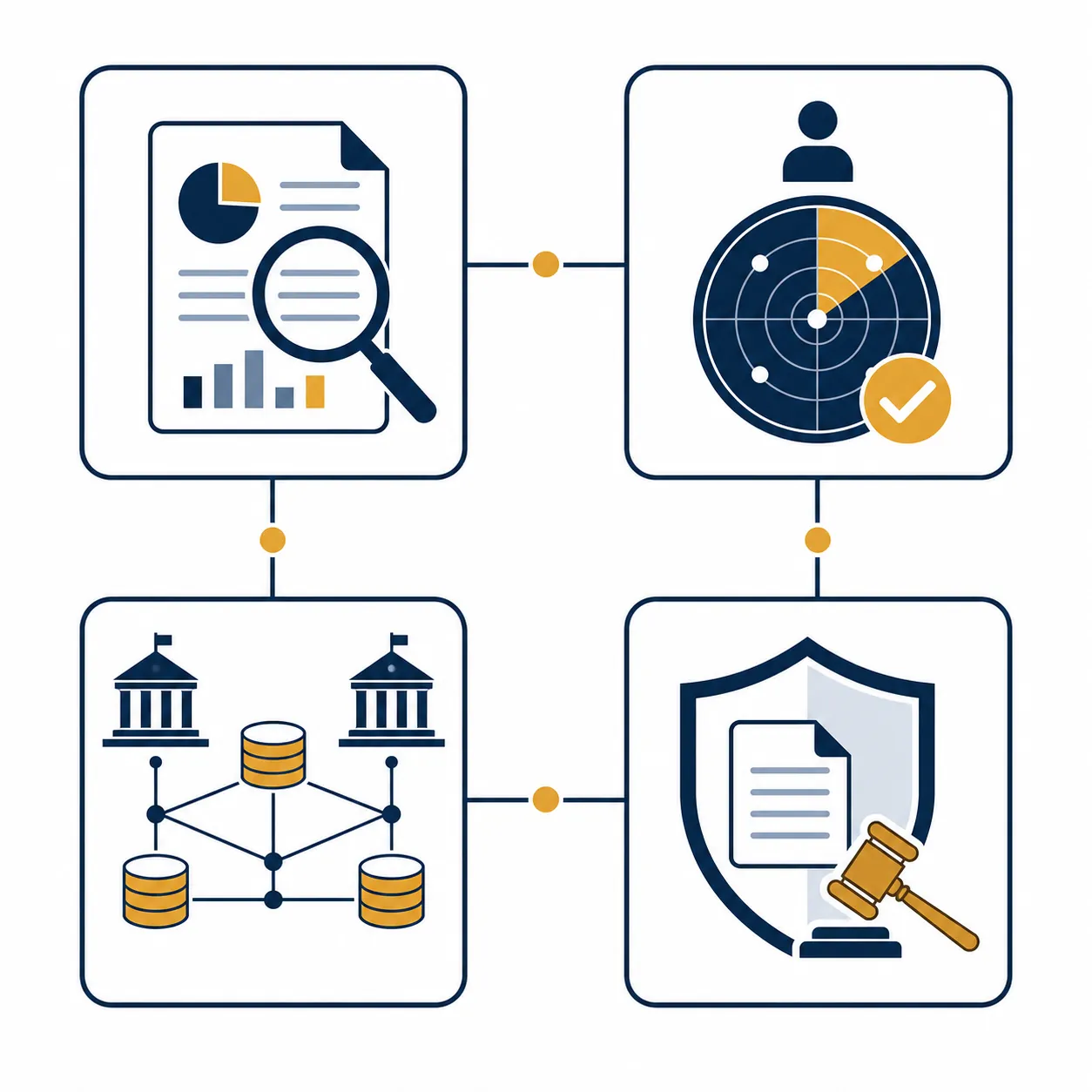
| Proposed obligation | What the bill would require | Immediate tracking item |
|---|---|---|
| GAO prevalence study | A Government Accountability Office study due within one year of enactment, covering prevalence, fatalities, serious injuries, property damage, enforcement methods, and recommendations.[1][5] | Preserve a clean identity-continuity file before any later study or rulemaking frames the evidence regulators expect. |
| FMCSA automated screening | FMCSA would use an automated tool to flag chameleon-carrier characteristics while keeping final registration decisions with agency personnel.[1][5][4] | Reconcile shared addresses, managers, drivers, equipment, insurance histories, asset transfers, and inactive USDOT numbers before an application or transaction forces the issue. |
| Interagency information sharing | The bill contemplates information sharing with DHS, DOJ, Treasury, Commerce, and State, subject to privacy protections.[1][5] | Assume inconsistencies may be compared across records, not just within the FMCSA registration file. |
| Appeals and DOT OIG audit | The proposal would require a process for incorrectly flagged applicants and a DOT Office of Inspector General audit roughly two years after implementation, including flagged applications, rejected registrations, errors, redeterminations, and severe-crash reductions.[1][5] | Build an appeal file before the flag arrives: ownership documents, insurance records, asset-sale paperwork, lease records, and explanations for overlapping contact data. |
1. GAO study: the evidence baseline Congress wants
The GAO study would not, by itself, impose a carrier filing obligation. Its practical effect would be to create a government baseline for how often chameleon-carrier patterns appear, how severe the safety consequences are, which enforcement methods work, and what further recommendations Congress or DOT should consider.[1][5] That is why counsel should treat it as more than a report-writing exercise. A later enforcement or registration standard often borrows the categories that a study first formalizes.
The 2012 GAO report explains why Congress is returning to this problem. GAO found that freight applicants with chameleon attributes increased from 759 to 1,136 during 2005–2010, that carriers with those attributes had an 18% severe-crash rate compared with 6% for carriers without those attributes, and that the pre-2012 vetting process covered only about 2% of new applicants.[6] Those are government findings, not private-data estimates, and they should not be blended with higher or lower figures from later trade or media accounts.
For a carrier or related entity group, the useful response is a continuity memorandum. It should explain why a new applicant shares an address, dispatcher, officer, driver pool, equipment source, phone number, insurance contact, or facility with an older entity. If the overlap is innocent, document why. If it reflects a legitimate acquisition, restructuring, lease, or asset sale, keep the paper trail in one place rather than scattering it across corporate, insurance, and operations files.
2. Automated screening: the flag is not supposed to be the final decision
The bill’s automated-screening provision is the part most likely to create day-to-day friction. Reported bill descriptions list chameleon indicators including common ownership, managers, drivers, equipment, addresses, phone numbers, emails, facilities, insurance continuity, lapsed coverage, transferred assets, inactive USDOT numbers, and formation dates.[1][5][4] Those categories are familiar to anyone who has handled a successor-carrier dispute. They are also categories that create false positives when ordinary trucking operations share yards, contractors, family members, leased equipment, insurance producers, or dispatch infrastructure.
The important guardrail is that final decisions would remain with agency personnel.[1][5] That does not make an automated flag harmless. It means the file has to be ready for a human reviewer who is looking at a structured set of similarities and asking whether those similarities show evasion, continuity, or coincidence.
- Ownership and control: current and prior officers, members, managers, beneficial owners, family relationships where relevant, and dates of role changes.
- Equipment: titles, leases, bills of sale, plate records, maintenance-provider continuity, and explanations for equipment transferred from a prior entity.
- Insurance: policy periods, cancellations, reinstatements, producer information, coverage gaps, and any reason a new entity uses the same insurance channel as an older one.
- Contact data: shared addresses, virtual offices, yards, email domains, phone numbers, dispatch lines, and who actually uses them.
- USDOT-number history: inactive numbers, withdrawn applications, rejected applications, acquisitions, name changes, and dormant entities that still appear in public or vendor databases.
Inactive USDOT numbers deserve special attention. They tend to sit outside the active compliance calendar until a transaction, crash, insurance renewal, or new-entrant filing pulls them back into the record. If an inactive number is connected to the same people, address, or equipment as a new applicant, counsel should be able to explain the connection without needing to reconstruct it under a registration deadline.
3. Interagency sharing: the FMCSA file may not be the only file
The proposed information-sharing authority would involve DHS, DOJ, Treasury, Commerce, and State, with data-privacy protections.[1][5] That list matters because chameleon-carrier screening is not only a motor-carrier registration exercise. Entity formation, sanctions exposure, import/export activity, tax records, immigration-related records, criminal enforcement information, and trade data may all sit in different institutional systems.
For regulated parties, the operational point is consistency. A broker onboarding packet, a carrier’s MCS-150-related information, insurance applications, Secretary of State filings, lease documents, and tax records should not tell incompatible stories about who controls the business, where it operates, or what equipment it uses. A mismatch may have a benign explanation. The mistake is assuming that the explanation will be obvious to an agency reviewer who sees the mismatch before seeing the context.
4. Appeals and OIG audit: the correction file should be built early
The bill would require an appeals process for applicants incorrectly flagged as chameleon carriers and a DOT OIG audit roughly two years after implementation.[1][5] The reported audit topics include flagged applications, rejected registrations, errors, redeterminations, and severe-crash reductions.[1][5] Those topics show the two audiences for the paper trail: the immediate FMCSA reviewer deciding whether an applicant is wrongly flagged, and the later auditor asking whether the tool produced correctable errors.
An appeal packet should not begin with a denial letter. It should begin with the entity history. Counsel should be able to show the applicant’s formation, capital, ownership, operating location, equipment source, driver source, insurance history, and relationship to any prior entity whose record may have triggered the flag. If the applicant is a lawful successor to part of another business, say so and document it. If it is unrelated despite a shared address or shared equipment vendor, document that too.
Who needs to prepare which file
The SAFE Act is framed around motor-carrier registration, but the document burden would not stop with the applicant. Brokers, freight forwarders, 3PLs, intermodal equipment providers, insurers, and transaction counsel may all hold the records that explain why two entities look connected. If those records live in separate systems, the regulated party may know the answer and still be unable to prove it quickly.
| Actor | File to prepare now | Reason |
|---|---|---|
| Motor carriers | Entity-history memo; USDOT-number inventory; insurance timeline; equipment-transfer and lease records; address and phone-number explanations. | The carrier is the most likely applicant and the first party asked to explain a continuity flag. |
| Brokers and freight forwarders | Onboarding records, authority checks, insurance certificates, carrier-contact histories, and explanations for affiliated carrier groups. | A broker may not be the registration applicant, but its files may show whether a carrier group was treated as continuous, separate, dormant, or newly formed. |
| Intermodal equipment providers | Equipment interchange, lease, maintenance, and transfer records tied to carrier identity. | Shared or transferred equipment is one of the easiest pattern-detection fields to misunderstand without transaction context. |
| Outside counsel | A privilege-aware chronology of formation, ownership, assets, insurance, authority status, safety history, and prior enforcement matters. | The appeal record should be assembled before a filing deadline compresses review. |
| Insurers and risk managers | Coverage binders, cancellations, reinstatements, policy gaps, producer history, and named-insured changes. | Insurance continuity and lapsed coverage are specifically relevant to the proposed screening pattern. |
The same discipline helps in crash and preservation contexts. Carrier groups already facing serious-incident exposure should align this work with ordinary evidence-preservation planning, including vehicle, telematics, maintenance, and dispatch records. For a separate evidence-preservation workflow, see Preserve Truck Accident Evidence in Five Steps.
Evidence context, kept in its lane
The GAO baseline above is the cleanest government evidence in the available materials, and it should be kept separate from later private-data estimates, expert estimates, and trade or media accounts. It does not prove that any current applicant is a chameleon carrier. It explains why a bill would focus on registration-stage pattern detection.
Recent crash-network reporting has added political force. FreightWaves reported figures attributed to Hageman’s office for a network linked to a February 3, 2026 crash in Jay County, Indiana: 2,993 inspections, 1,552 violations, 439 out-of-service orders, and 91 crashes.[5] FreightWaves also reported DOT-data figures cited in a 60 Minutes segment involving Super Ego-connected carriers, including about 15,000 violations and about 500 accidents over two years.[7] Those accounts help explain legislative momentum, but they should not be treated as the statutory standard or substituted for the bill text.
What remains uncertain until the highway bill process resolves
Several items remain open as of this record. The Senate companion’s public bill number still needs verification. The final text must be checked against primary legislative materials before anyone quotes operative language. The reauthorization vehicle may carry the SAFE Act language, modify it, omit it, or leave it for a later stand-alone path. Implementation timing also remains a post-enactment question: the GAO study would run from enactment, while the OIG audit is described as occurring roughly two years after implementation.[1][5]
- Confirm whether SAFE Act language remains in the BUILD America 250 Act or any successor surface transportation reauthorization text before September 30, 2026.
- Confirm the Senate bill number when it appears in a public legislative record.
- Verify any quoted obligation against the primary bill PDF, Congress.gov, or govinfo rather than relying on summaries or trade coverage.
- Track whether enactment language fixes deadlines for the GAO study, FMCSA tool implementation, appeals process, interagency sharing rules, and DOT OIG audit.
- Treat ownership, insurance, equipment, address, contact-data, and inactive-USDOT histories as readiness files now, not as materials to collect after a flag.
The SAFE Act is not binding law today. Its four obligations still define the questions counsel should be ready to answer: how the business identity changed, why the insurance record looks the way it does, what happened to dormant authority or inactive USDOT numbers, why assets or contact data overlap, and how an incorrect flag would be challenged if the reauthorization turns this proposal into an enforceable program.
References
- Young, Kim Introduce SAFE Act to Crack Down on Chameleon Carriers, Sen. Todd Young, July 28, 2026
- Lawmakers attempt to show chameleon carriers’ true colors, Land Line
- The legislative trucking tracker: What moved, what stalled, FreightWaves
- ATA Applauds Bill to Combat Chameleon Carriers, American Trucking Associations
- New Senate bill targets chameleon carriers that reopen to escape penalties and enforcement, FreightWaves
- Motor Carrier Safety: New Applicant Reviews Should Expand to Identify Freight Carriers Evading Detection, U.S. Government Accountability Office, March 22, 2012
- 60 Minutes: Chameleon carrier network Super Ego, FreightWaves
Operationalizing workflow
No workflow has been explicitly linked to this obligation yet. See Workflows generally.
Illustrative cases
No illustrative case is currently tracked for this obligation. See Risk Digest for documented incidents generally.
← Back to RegulationReport a correction or tip
Spotted an outdated figure, a misstated fact, or a ruling this regulation entry should reflect? Public comments are disabled for this content given the professional cost of a misreported case outcome, penalty amount, or rule text — use the structured correction channel instead.
Report a correction or tip for this record →