
What the FCC's foreign robot vacuum ban actually does
- Authority
- Federal Communications Commission
- Rule type
- regulation
- Jurisdiction scope
- US federal
- Effective date
- Jul 28, 2026
- Source text
- Read primary rule text ↗
New FCC equipment authorizations are barred for covered foreign-produced advanced robotic devices; applicants must certify non-covered status under 47 CFR § 2.911(d)(5)(i).
The FCC did not order a recall of foreign robot vacuums. It did not ban consumers from using units already in their homes. It did not, on the materials available as of August 1, 2026, prohibit retailers from selling previously authorized inventory. And it did not announce a brand ban on “foreign robot vacuums.” What changed is narrower and more consequential for compliance teams: effective July 28, 2026, the FCC added certain foreign-produced advanced robotic devices and foreign-produced power inverters to the Covered List, which cuts off new FCC equipment authorizations for covered equipment. [1][2]
| Record item | Status |
|---|---|
| Nature of this article | Legal information for compliance tracking; not legal advice. |
| Last verified | August 1, 2026, three days after the FCC Public Notice. |
| Issuing authority | Federal Communications Commission, United States. |
| Jurisdiction scope | U.S. FCC equipment authorization and Covered List consequences. |
| Effective date | July 28, 2026. [1][2] |
| Primary source set | FCC Public Notice, FCC FAQ, FCC Covered List page, National Security Determination, and OET waiver. |
| Reviewer note | Before publication, check DA-26-786A1, robots-nsd.pdf, and DA-26-789A1 directly. Some definition and waiver details in this record are reconstructed through the FCC FAQ and secondary legal alerts. |
For readers maintaining an obligations file, this sits in the Regulation & Ethics lane rather than the gadget-news lane. The closest site-format precedent is an obligations tracker such as AI Literacy in Schools Becomes a Legal Requirement; the job here is to identify the obligation, the actor, and the date.
What the FCC actually did
The operative act was an update to the FCC’s Covered List. The FCC’s Public Notice says the agency added foreign-produced power inverters and robots to that list effective July 28, 2026, following National Security Determinations dated July 27, 2026. [1][4] The FCC’s Covered List page is the agency’s public mechanism for identifying communications equipment and services that have been determined to pose an unacceptable risk to U.S. national security or the security and safety of U.S. persons. [3]
That distinction matters because the Covered List does not operate like a consumer product recall. In the equipment-authorization context, the practical effect is on new grants. The FCC FAQ describes the July 2026 action as barring new authorizations for covered foreign-produced advanced robotic devices and covered foreign-produced power inverters, while leaving existing authorized models, consumer use, and previously authorized inventory outside the target of the action as described there. [2]
The phrase “foreign robot vacuum ban” therefore compresses the legal object past the point of usefulness. The rule does not ask first whether a product is a robot vacuum, whether the logo is foreign, or whether the company is headquartered in a particular country. It asks whether the equipment falls within a Covered List category, whether it is foreign-produced in the rule’s sense, and whether someone is seeking a new FCC equipment authorization or taking another step that the equipment-authorization rules regulate.
The FCC’s role is constrained by the Covered List statute
The legal chain starts with Section 2 of the Secure and Trusted Communications Networks Act of 2019, codified at 47 U.S.C. §§ 1601–1609. Under 47 U.S.C. § 1601(c), the FCC does not update the Covered List on its own threat judgment. The FCC acts at the direction of a qualifying national security authority and does not make its own national-security determination for the listed equipment or services. [2]
That is why the July 27, 2026 National Security Determinations matter. They are not just background color; they are the predicate documents that allowed the FCC to perform the Covered List update the next day. [4] A product team may care most about certification timing, but counsel should keep the authority chain intact: National Security Determination first, Covered List update second, equipment-authorization consequences third.
Once equipment is covered, the equipment-authorization rules become the operating surface. The FCC FAQ and legal alerts identify 47 CFR § 2.903(a) as the rule consequence barring authorization of covered equipment, and 47 CFR § 2.911(d)(5)(i) as the certification obligation under which new applicants must certify that the equipment for which authorization is sought is not covered. [2][5]
For a business briefing, that means the first question is not “Are foreign robot vacuums illegal?” The first question is whether the next filing, permissive change, import activity, marketing step, or retail display depends on an FCC authorization posture that the July 2026 Covered List addition now changes.
The four-part device test does most of the work
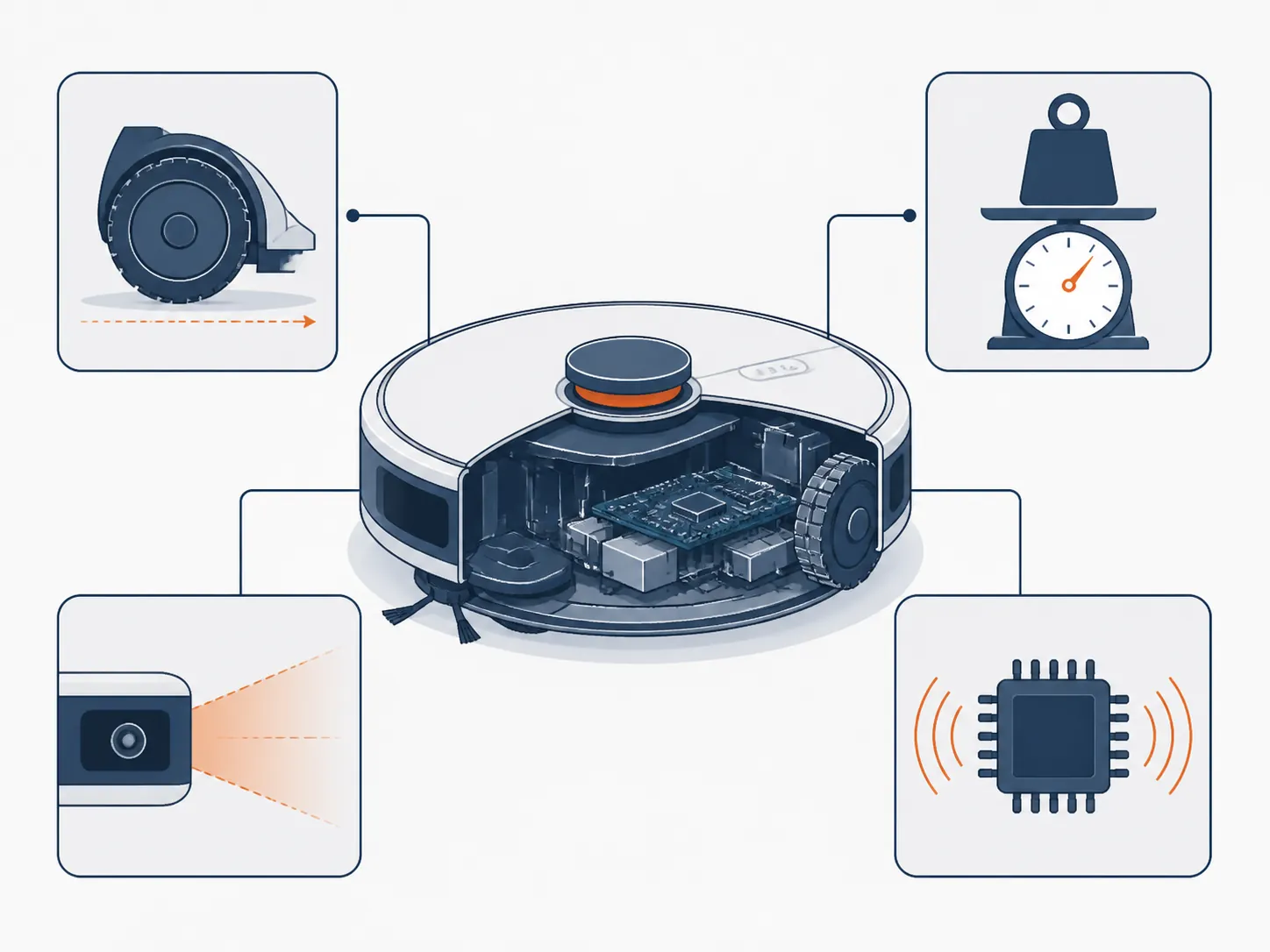
A robot vacuum is not automatically covered just because it is a robot vacuum. The FCC FAQ and law-firm alerts describe a four-part definition for “advanced robotic device.” The device must be a ground-moving device weighing more than 4.4 pounds, including its dock; it must include an environment-perceiving sensor; it must have network connectivity of at least 200 kbps; and it must use software, including AI or machine-learning weights, to control navigation, data collection, or remote command. [2][5][6]
- Ground movement and weight: the covered category starts with a device that moves on the ground and exceeds the stated weight threshold when the dock is included. [2]
- Perception: the device must have a sensor that perceives the surrounding environment. [2][5]
- Connectivity: the device must have network connectivity of at least 200 kbps. [2][6]
- Software control: software, including AI/ML weights, must control navigation, data collection, or remote command functions. [2][5]
The statutory exclusions are also part of the scope analysis. The materials identify exclusions for connected vehicles, rail vehicles, uncrewed aircraft, underwater vehicles, FDA-regulated medical devices, and fixed industrial robot arms. [2][5][6] Those exclusions prevent the “robot” label from turning into an open-ended device category.
Product counsel should resist doing this analysis by product nickname. A home cleaning robot, a warehouse floor robot, and a mobile service robot may all invite the same casual label, but the authorization question turns on the definition. If a product misses a required element, that is a different compliance posture from a product that meets the device definition but may still have to be analyzed under the production standard.
“Foreign-produced” is not the same thing as “foreign brand”
The second major filter is production. The FCC FAQ describes “foreign-produced” by reference to the Buy American domestic-end-product test in 48 CFR § 25.101(a): a domestic end product must be manufactured in the United States and the cost of domestic components must exceed 65% of the cost of all components. Equipment that fails that domestic-end-product standard is treated as foreign-produced for this Covered List category. [2][6]
That makes the category facially country-neutral and entity-neutral. It is still a national-security restriction with real commercial consequences, but it is not written as “Chinese robot vacuums,” “foreign brands,” or “non-U.S. companies.” Wiley’s alert likewise describes the standard as tied to domestic-end-product status rather than a named-country or named-company test. [6]
This is the place where a Monday-morning business briefing can go wrong. If the instruction becomes “foreign brands are banned,” sales and support teams may over-stop lawful activity. If it becomes “only Chinese brands are affected,” certification teams may miss products that fail the domestic-end-product test even though the brand story is more complicated. The rule’s own production standard is the safer working language.
Who has to act now
The burden does not fall evenly across everyone who touches a robot vacuum. The highest immediate burden is on manufacturers, responsible parties, and certification applicants that need new grants or must make representations in the authorization process. New applicants must certify non-covered status under 47 CFR § 2.911(d)(5)(i). [2][5]
| Actor | Practical question | What the July 2026 action does not by itself prove |
|---|---|---|
| Manufacturer or responsible party | Does the product meet the advanced robotic device definition, and does it fail the domestic-end-product standard? | It does not prove every robot vacuum sold by the company is covered. |
| Certification applicant | Can the applicant certify that the equipment is not covered under 47 CFR § 2.911(d)(5)(i)? | It does not allow a loose country-of-origin shortcut to replace the certification analysis. |
| Importer | Does the import activity involve equipment whose authorization status or R&D treatment is now constrained? | It does not automatically mean all existing imports in the channel must be recalled. |
| Retailer or marketplace | Is the product previously authorized inventory, and are FCC ID display and marketing obligations being met? | It does not create a blanket consumer-facing sales ban on already authorized models as described in the FCC FAQ. |
| Consumer | Can the unit already in the home continue to be used? | The FCC FAQ does not describe a consumer use ban. [2] |
Retailers and importers should not treat that lower direct burden as no burden. They are often the parties left with the product page, the FCC ID display, the return question, and the customer-service script after a regulatory headline becomes public. Their near-term task is to separate previously authorized inventory from products needing new authorization, and to preserve the records that show why a SKU was treated one way rather than another.
Federal procurement is also not the target of this FCC action as described in the sources reviewed. The Covered List and federal procurement rules can interact in broader supply-chain compliance programs, but this July 2026 action is being tracked here as an FCC equipment-authorization consequence, not as a procurement ban. [2]
The compliance clock: July 2026, January 2028, January 2029
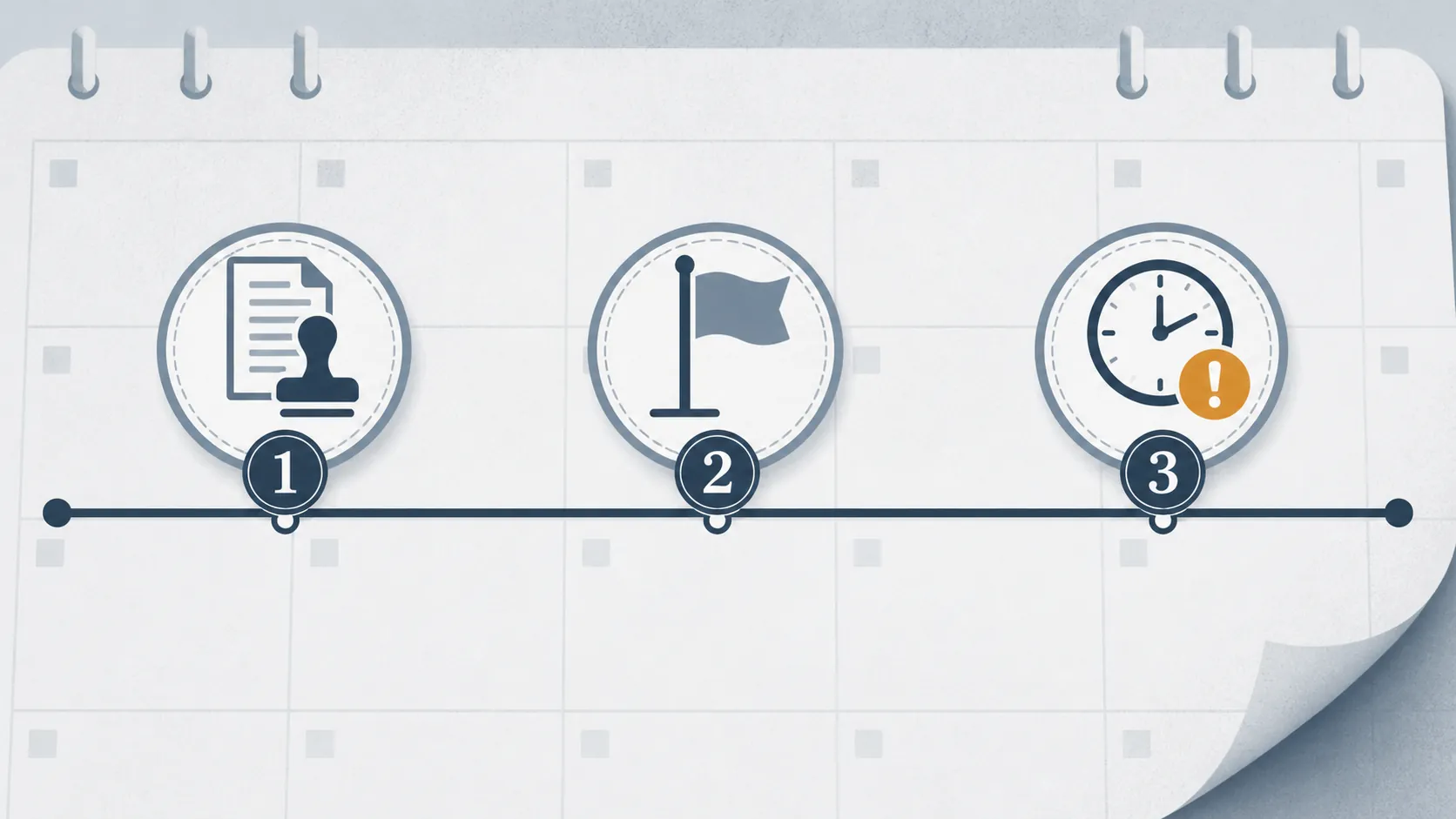
The dates are not decorative. They define the transition work.
| Date | Compliance significance |
|---|---|
| July 28, 2026 | Covered List additions for foreign-produced advanced robotic devices and foreign-produced power inverters take effect; new authorizations for covered equipment are barred. [1][2] |
| January 1, 2028 | Conditional Approval applications must be submitted by this date, according to the FCC FAQ and legal alerts. [2][5] |
| At least until January 1, 2029 | OET waiver permits certain Class I and Class II software/firmware permissive changes, including security patches, at least until this date. [7][8][6] |
From now: new applicants need a non-covered-status record
For new applications, the work is front-loaded. The applicant needs a defensible basis for saying the equipment is not covered. That basis should map the product against the advanced robotic device definition, the statutory exclusions, and the domestic-end-product standard. The certification under 47 CFR § 2.911(d)(5)(i) is not just a formality if the product has a moving base, sensors, connectivity, and software-controlled navigation. [2][5]
The record does not need to become a geopolitical essay. It needs the facts that would matter if the grant were questioned: product configuration, dock inclusion for the weight threshold, sensor and connectivity characteristics, software functions, manufacturing location, component-cost analysis, and the basis for any exclusion.
By January 1, 2028: Conditional Approval applications
The FCC FAQ and Latham & Watkins alert describe a Conditional Approval process with applications due by January 1, 2028. The described application contents include ownership disclosure, supply-chain and bill-of-materials information, justification for non-U.S. production, and a time-bound U.S. onshoring plan. [2][5]
The relevant department is the Department of War, the post-September 2025 name for the former Department of Defense. [5] For companies that may need this pathway, the hard part is unlikely to be writing the application in late 2027. It will be producing a coherent ownership, BOM, supplier, manufacturing, and onshoring record early enough that the application is not a scramble.
At least until January 1, 2029: firmware and software changes
The OET waiver is the most important consumer-support detail in the immediate record. OET waived certain permissive-change prohibitions so that Class I and Class II software or firmware changes, including security patches, may continue at least until January 1, 2029. [7] Consumer Reports also describes the waiver as allowing software and firmware updates for existing robot vacuums through that period. [8]
That should not be overread as a permanent firmware safe harbor. “At least until January 1, 2029” is a cliff to calendar, not a final operating model. Security, bug-fix, and feature-update teams should preserve the classification of each change, the device authorization history, and the reason the change fits within the waiver rather than assuming all updates remain ordinary-course indefinitely.
What consumers and existing retail channels can safely be told
The consumer-facing answer is short because the legal action is not aimed at consumers. The FCC FAQ states that existing units, previously authorized models in inventory, consumer use, and federal procurement are not affected in the way a viral “ban” headline suggests. [2] Consumer Reports likewise explains the action as affecting future authorizations rather than requiring consumers to stop using covered household devices already purchased. [8]
Some of the public confusion is easy to trace. Headlines such as The Verge’s “The US government just banned Roombas” captured the attention-grabbing version of the story, while the underlying legal record turns on Covered List scope, production status, and FCC authorization posture. [9] A retailer support script should not repeat the headline. It should say whether the unit is previously authorized inventory, whether the customer can keep using it, and where software-update support stands under the OET waiver.
There may still be commercial consequences. A forward-looking authorization cutoff can change product roadmaps, launch timing, replacement models, warranty logistics, and marketplace listings. But those are downstream effects of the authorization gate, not evidence that the FCC ordered products out of homes or off shelves across the board.
Watch next: adjacent FCC supply-chain and marketplace pressure
The July 2026 Covered List action should be tracked alongside, not merged with, other FCC supply-chain and marketplace activity. Cooley and Wiley flag adjacent developments involving logic-bearing hardware components and online-marketplace FCC ID display rules. [10][6] Latham & Watkins also notes R&D import limits under 47 CFR § 2.1204 and the 47 CFR § 2.939(e) importation and marketing prohibition process. [5]
- Do not assume a product outside the advanced-robotic-device definition is outside every FCC supply-chain risk issue.
- Do not treat R&D imports as ordinary commercial imports without checking the separate import limits.
- Do not let marketplace pages drift away from FCC ID display and authorization records.
- Monitor FCC marketplace-facing enforcement programs, including Operation Clean Carts, as part of the same compliance dashboard rather than as a product-law footnote. [10]
For now, the legal implication is not that foreign robot vacuums disappear from U.S. homes. It is that manufacturers, importers, certification applicants, and retailers need to map products against the device definition, the domestic-end-product standard, the certification duties, and the January 1, 2028 and January 1, 2029 transition dates. As of August 1, 2026, waiver practice and Conditional Approval procedures may still move quickly; the record should be re-verified against the FCC source documents before any filing, customer notice, or channel instruction.
References
- FCC Adds Foreign-Produced Power Inverters and Robots to Covered List, Federal Communications Commission
- FAQs on Recent Updates to FCC Covered List Regarding Foreign-Produced Advanced Robotic Devices and Power Inverters, Federal Communications Commission
- Covered List, Federal Communications Commission
- National Security Determination PDF, Federal Communications Commission
- FCC Adds Foreign-Produced Power Inverters and Advanced Robotic Devices to the Covered List, Latham & Watkins
- FCC Adds Foreign-Produced Power Inverters and Advanced Robotic Devices to the Covered List, Wiley
- OET firmware-update waiver DA-26-789A1, Federal Communications Commission
- What the FCC Ban on Foreign-Made Robot Vacuums Means for U.S. Consumers, Consumer Reports
- The US government just banned Roombas, The Verge
- FCC Expands Restrictions on Covered List Equipment and Supply Chains, Cooley
Operationalizing workflow
No workflow has been explicitly linked to this obligation yet. See Workflows generally.
Illustrative cases
No illustrative case is currently tracked for this obligation. See Risk Digest for documented incidents generally.
← Back to RegulationReport a correction or tip
Spotted an outdated figure, a misstated fact, or a ruling this regulation entry should reflect? Public comments are disabled for this content given the professional cost of a misreported case outcome, penalty amount, or rule text — use the structured correction channel instead.
Report a correction or tip for this record →