
Your Roomba Isn't Banned by the FCC Robot Vacuum Rule
- Authority
- Federal Communications Commission (FCC)
- Rule type
- regulation
- Jurisdiction scope
- US federal
- Effective date
- Jul 28, 2026
- Source text
- Read primary rule text ↗
Consumers may continue using previously purchased authorized robot vacuums; newly unauthorized foreign-produced covered devices require FCC authorization before import or operation except the narrow R&D exception.
Last verified: July 31, 2026. This is general legal information, not legal advice for any specific household, seller, importer, or manufacturer.
If you already own a Roomba or another previously authorized robot vacuum, the FCC robot vacuum rule does not make it illegal to keep, charge, run, or ordinarily resell. The cleanest consumer answer is in the FCC’s own FAQ: the Covered List “does not restrict the continued use by consumers of previously-purchased devices” [1].
That sentence is doing real work. The July 2026 update is about equipment authorization for covered devices going forward, not a retroactive possession ban on normal household equipment. It also does not turn every foreign-made vacuum in a U.S. living room into contraband overnight. The risky fact pattern is different: importing or operating a newly unauthorized covered device after the rule applies, outside the narrow research-and-development exception the FCC identifies [1].
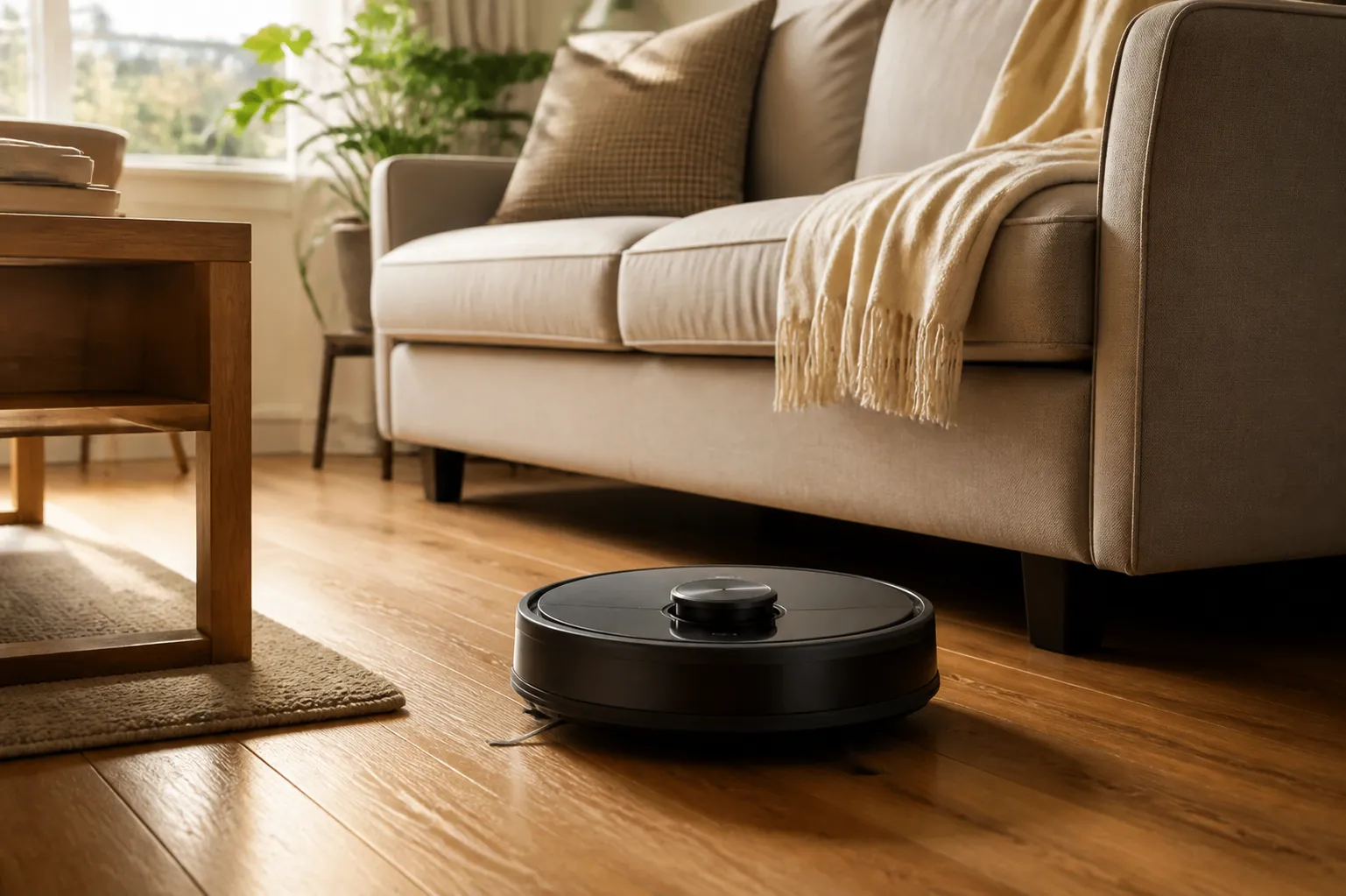
The consumer answer turns on status, not panic
Most bad versions of this story collapse four different situations into one headline. They are not the same situation under the FCC materials.
| Device situation | What the FCC materials support | Consumer takeaway |
|---|---|---|
| You already bought a previously authorized Roomba or similar robot vacuum | The Covered List does not restrict continued consumer use of previously purchased devices [1]. | You may keep using it. The update does not make possession or ordinary home use illegal. |
| A model was already authorized before the update and remains in U.S. retail channels | The FCC FAQ distinguishes already-authorized devices from newly unauthorized covered devices [1]. | The legal question is not simply where the device was made; it is whether that model already had FCC authorization. |
| A future foreign-produced robot vacuum model seeks new FCC authorization | The July 28, 2026 Covered List update affects authorization of foreign-produced advanced robotic devices [2]. | Future U.S. model availability may narrow or change. |
| You personally import a new foreign-sourced covered device that lacks required authorization | Unauthorized devices generally cannot be legally operated in the United States outside the limited R&D exception identified by the FCC [1]. | This is the fact pattern that deserves caution before purchase or use. |
For consumers, “authorized” is the word to slow down on. A robot vacuum is not lawful merely because it looks ordinary, and it is not unlawful merely because a headline says “foreign robot.” The FCC regulates radiofrequency devices through equipment authorization. The July update changes how newly covered equipment can receive or keep that authorization; it does not instruct households to unplug devices that were lawfully purchased before the update [1].
What changed on July 28, 2026
On July 28, 2026, the FCC issued a public notice adding foreign-produced power inverters and advanced robotic devices to its Covered List under the Secure Networks Act and a national-security determination process [2]. That is the legal mechanism behind the headlines. It is not a household search rule, a recall notice, or a consumer privacy settlement.
The distinction matters because the FCC has different legal tools for different problems. A Covered List designation affects covered communications equipment and services, including authorization pathways. It does not itself create a general consumer ban on owning an object already sitting in a home. For a separate discussion of FCC power and public-facing legal framing, see our earlier piece on FCC license-revocation threats and the First Amendment.
A Wiley legal alert adds one useful detail for reading the mechanism without over-reading it: the national-security determination came through a White House-convened interagency process, and Wiley describes conditional approval as available only in a narrow DoW procurement context, with statutory exclusions also relevant [3]. That is a market-access and authorization story.
Why robot vacuums can be covered without every wheeled gadget being covered
The FCC FAQ does not use “robot” as a loose consumer label. It gives a four-part definition of an “advanced robotic device,” and the device has to fit that definition before this category does its work [1].
- It uses ground locomotion.
- It operates away from a human operator.
- The device plus its dock weighs more than 4.4 pounds.
- It has an environmental sensor, network connectivity of at least 200 kbps, and software or AI that controls navigation.
That definition explains why robot vacuums are in the practical coverage zone. A typical connected vacuum moves around floors, navigates away from the person who pressed start, uses sensors, communicates over a network, and often works with a charging dock. The Verge likewise reported that robot vacuums are swept into the category, which is why Roomba became the consumer shorthand for the rule almost immediately [4].
But the same definition also sets boundaries. A toy car, a simple remote-controlled device, or a gadget with wheels but without the required connectivity, sensing, weight, and navigation-control features is not automatically covered just because someone calls it a robot. The legal trigger is the FCC’s defined category, not the marketing noun on a box.
Roomba is the example, not a special exception
Consumers are asking about Roomba because it is the best-known name in the category, not because the FCC wrote a Roomba-specific household rule. ZDNET and USA Today both treated the immediate consumer questions as practical ones: can owners keep using robot vacuums, can shoppers still buy them, and what happens to support [5][6]. Those are the right questions. They just need to be answered from the FCC materials before being turned into a ban headline.
The Verge reported that Roomba is now owned by Picea and noted manufacturing facilities in China and Vietnam [4]. That ownership and manufacturing context may matter for future authorization and availability of specific models. It does not change the legal status of an already purchased, previously authorized vacuum in a consumer’s home.
This is also where the country shorthand gets sloppy. The rule is often described through a China lens because many affected supply chains and market players are China-linked, and Reuters framed the action as part of a national-security effort involving new Chinese robots and inverters [7]. But the FCC category described in the July materials is “foreign-produced” advanced robotic devices. For a consumer checking a particular purchase, the safer question is not “Is this brand foreign?” It is “Was this model already FCC-authorized, or is this a new unauthorized covered import?”
Firmware updates are not cut off tomorrow
The support question deserves the same precision. The FCC materials, through the OET blanket waiver identified in the FAQ context, preserve security patches and firmware updates through at least January 1, 2029 [1]. That date is not a promise that every manufacturer will offer every feature forever. It is also not permission to market newly unauthorized covered equipment as if nothing changed. It is a limited but important answer to the immediate fear that existing robot vacuums must suddenly become unsupported.
Repairs and replacement parts are a separate consumer-service issue. The FCC update does not guarantee a cheap battery, a replacement brush, or a warranty extension. It also does not, by itself, prohibit ordinary firmware or security maintenance for devices already in consumers’ hands during the waiver period identified above [1].
Buying now: the ordinary retail channel is different from self-importing an unauthorized model
If you are buying from a normal U.S. retailer, the first practical question is whether the exact model was already FCC-authorized. Retailers and manufacturers should be able to identify which models are authorized for U.S. sale. A general claim that “foreign robot vacuums are banned” is too broad; a general claim that “nothing changed” is also too broad.
If you are buying from an overseas marketplace, arranging your own import, or selecting a model that was not previously authorized for the United States, the legal posture changes. The FCC FAQ identifies a narrow R&D exception under 47 CFR § 2.1204(a)(3), but that is not a normal consumer-use pathway [1]. A household purchase for cleaning floors is not made safer by calling it research after the box arrives.
PCMag’s bottom-line observation that the FCC action includes robot vacuums is useful if it is read at the right level of specificity [8]. Robot vacuums can be covered advanced robotic devices. That does not mean every already-sold robot vacuum is now banned, and it does not mean a consumer should ignore authorization status when buying a new import.
What not to infer from the rule
Do not infer confiscation. The FCC FAQ says continued consumer use of previously purchased devices is not restricted [1].
Do not infer that privacy complaints have been resolved. This FCC action is a national-security and equipment-authorization action. If a consumer has a data-practices complaint about a connected device, that is a different legal lane.
Do not infer that future shelves will look the same. Prospective authorization restrictions can affect which models are imported, marketed, and refreshed in the United States. That is a real consequence even when the device already in your house remains lawful to use.
The consumer-safe reading as of July 31, 2026
If you already own an authorized Roomba or similar robot vacuum, the FCC’s July 2026 Covered List update does not make possession or ordinary use illegal. If you are buying through ordinary U.S. retail channels, the key issue is whether the model was already authorized. If you are importing a new foreign-sourced covered device that lacks authorization, legal operation in the United States is a different and riskier question.
Because this story is only days old, conditional approvals, retailer notices, and manufacturer responses may change. Recheck the FCC FAQ and any OET waiver updates before treating this as a final answer for a specific model. This explainer follows the same dated-scope convention as our Regulation & Ethics trackers on Germany’s 2027 conscription law and the MediKids Act.
References
- Covered List FAQs: Robots and Inverters — Federal Communications Commission
- FCC Adds Foreign-Produced Power Inverters and Robots to Covered List — Federal Communications Commission — July 28, 2026
- FCC Adds Foreign-Produced Power Inverters and Advanced Robotic Devices to the Covered List — Wiley
- The US robot ban could sweep up Chinese vacuums — The Verge
- FCC ban on foreign-made robot vacuums and your Roomba — ZDNET
- Foreign robot ban rules: Roombas, vacuums — USA Today — July 30, 2026
- Trump administration to ban new Chinese robots, inverters in protecting US AI buildout — Reuters — July 28, 2026
- FCC Ban on Foreign-Made Robots Includes Robot Vacuums — PCMag
Operationalizing workflow
No workflow has been explicitly linked to this obligation yet. See Workflows generally.
Illustrative cases
No illustrative case is currently tracked for this obligation. See Risk Digest for documented incidents generally.
← Back to RegulationReport a correction or tip
Spotted an outdated figure, a misstated fact, or a ruling this regulation entry should reflect? Public comments are disabled for this content given the professional cost of a misreported case outcome, penalty amount, or rule text — use the structured correction channel instead.
Report a correction or tip for this record →