
OSC and DHS OIG document FEMA's Hatch Act violation
- Authority
- U.S. Office of Special Counsel
- Rule type
- statute
- Jurisdiction scope
- US federal
- Source text
- Read primary rule text ↗
Federal employees may not engage in partisan political activity while on duty or use political affiliation to decide disaster-assistance outreach.
Record status: Verified through August 27, 2026. DHS OIG Report OIG-26-21, released August 25, 2026, confirms that a FEMA Disaster Survivor Assistance crew violated the Hatch Act and FEMA policy by using political affiliation as a criterion for bypassing homes. The separate Office of Special Counsel complaint filed with the Merit Systems Protection Board on February 11, 2025 remains an unresolved prosecution; the supplied record identifies no final MSPB decision or adjudicated penalty.[1][4]
Primary record links: DHS OIG Report OIG-26-21; the Florida attorney general’s federal complaint; and OSC’s Federal Employee Hatch Act Information.[1][2][3] The source set does not include OSC’s administrative complaint or the MSPB docket itself, so the filing date is supported by contemporaneous reporting rather than a linked docket document.[4] Legal reviewer: not identified in the supplied record. This enforcement record is informational and is not legal advice.
| Track | Action taken | Status through August 27, 2026 |
|---|---|---|
| DHS Office of Inspector General | Completed a program-integrity investigation and found a Hatch Act and FEMA-policy violation. | Confirmed OIG finding in Report OIG-26-21.[1] |
| Office of Special Counsel / Merit Systems Protection Board | OSC charged Marn'i Washington with prohibited political activity and sought discipline before the MSPB. | Complaint pending; charges and requested discipline have not become a final MSPB judgment.[4] |
Political signs became a disaster-assistance screening criterion
The underlying conduct was unusually concrete. During the October 2024 Hurricane Milton response in Lake Placid, Florida, Marn'i Washington directed FEMA Disaster Survivor Assistance Crew 33 to “avoid homes advertising Trump.” The crew skipped 11 homes displaying signs supporting then-candidate Donald Trump. DHS OIG found that the resulting use of political affiliation in field operations violated both the Hatch Act and FEMA policy.[1]
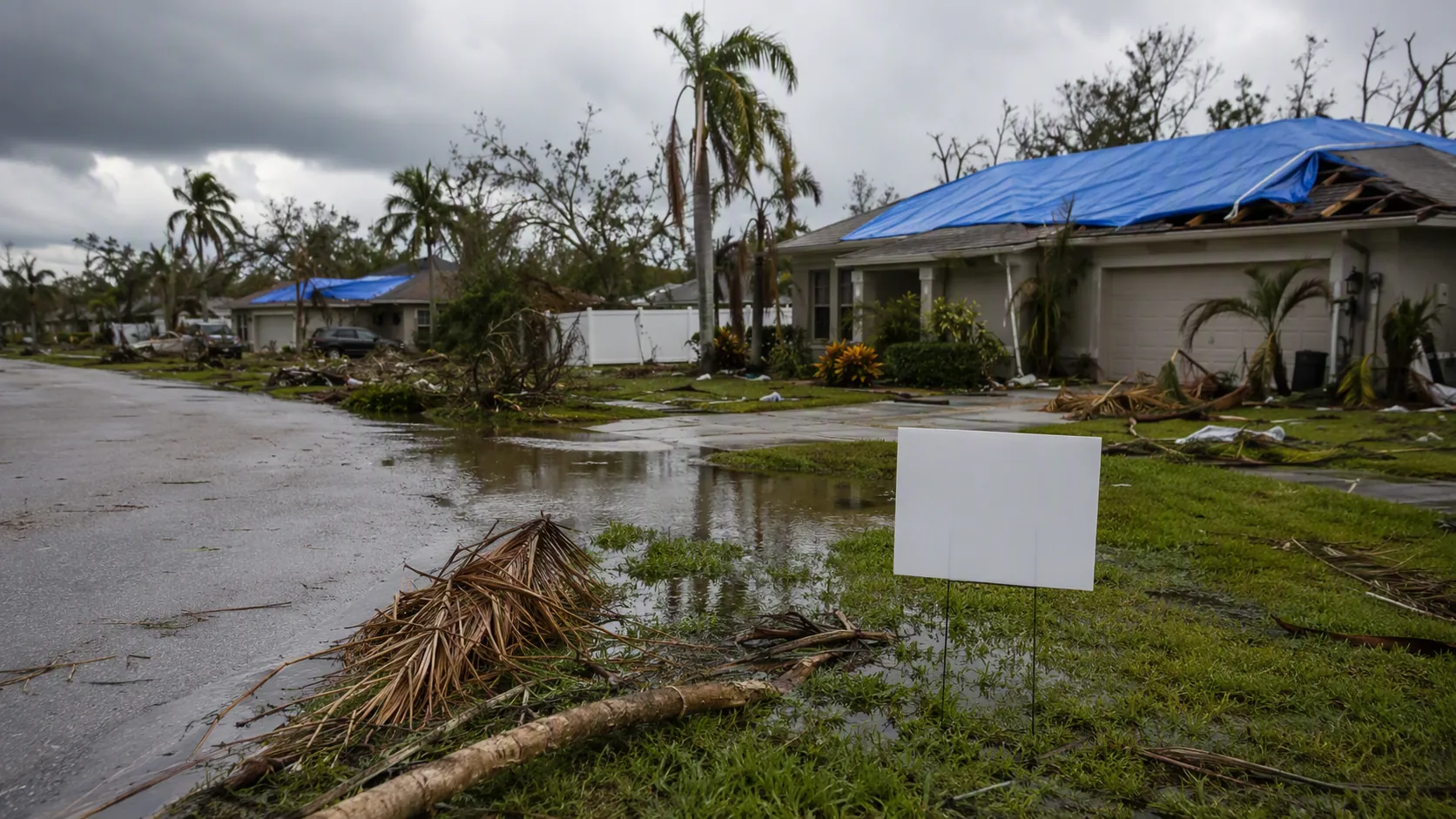
For residents, the consequence was not an abstract concern about agency neutrality. A political sign outside a damaged home affected whether a federal disaster-assistance crew approached that address. Even if later outreach could have supplied another route to aid, the initial field decision conditioned access to public assistance on personnel’s partisan judgment.
The 11-home count describes the addresses documented in this incident. It should not be enlarged into a claim that political screening occurred throughout FEMA’s Milton response. Nor does the record establish that every member of the crew independently adopted Washington’s political purpose. What it does establish is that the instruction entered an official workflow and caused homes to be bypassed.
One incident, two authorities and two procedural postures
DHS OIG and OSC examined overlapping conduct but performed different institutional functions. OIG completed an oversight investigation directed not only at individual behavior but also at the controls surrounding FEMA field operations. OSC brought a disciplinary case against an employee under the Hatch Act, leaving adjudication to the MSPB.
The OIG finding is complete
Report OIG-26-21 found a Hatch Act violation and a violation of FEMA policy. It also attributed the incident to “weaknesses in FEMA’s training, documentation, and oversight” and concluded that the conduct “eroded public trust in FEMA’s ability to treat everyone impartially.”[1] Those are inspector-general findings, not allegations awaiting a fact finder.
That distinction gives the report value beyond the individual employment dispute. OIG did not treat the instruction as an isolated remark detached from agency operations. It examined how the instruction became operational, how skipped addresses were documented, and whether FEMA’s controls were capable of preventing or detecting partisan screening. The resulting record confirms the violation while also locating institutional weaknesses that FEMA had to correct.
OSC’s charges still require MSPB adjudication
OSC filed its complaint on February 11, 2025. It charged Washington with engaging in political activity while on duty and using official authority or influence to interfere with or affect an election. Then-Special Counsel Hampton Dellinger stated that “a federal employee clearly violates the Hatch Act by engaging in explicit partisan political bias or activity when on the job.”[4]
The quote describes OSC’s enforcement position; the complaint remains a charging document. OSC prosecutes the case, but the MSPB decides whether the charged violation is proved in that proceeding and what discipline, if any, follows. The later OIG finding strengthens the public administrative record concerning the conduct, yet it does not convert OSC’s requested discipline into an imposed MSPB sanction.
Counsel can therefore say that DHS OIG confirmed a Hatch Act violation by FEMA personnel. Counsel should not say that the MSPB found Washington liable, ordered removal, imposed a fine, or selected any other penalty. No such final decision appears in the record through August 27, 2026.
The enforcement chronology
| Date | Event | Legal significance |
|---|---|---|
| October 2024 | Crew 33 skipped 11 Lake Placid homes after the instruction to avoid homes advertising Trump. | Conduct later confirmed by DHS OIG as violating the Hatch Act and FEMA policy.[1] |
| November 2024 | FEMA fired Washington. | Agency employment action, distinct from a final MSPB penalty in OSC’s case.[1] |
| November 13, 2024 | Florida Attorney General Ashley Moody filed a federal civil complaint against then-FEMA Administrator Deanne Criswell and Washington in Fort Pierce. | Allegation-bearing civil litigation, not an adjudicated finding.[2] |
| February 11, 2025 | OSC filed its Hatch Act complaint with the MSPB. | Start of the separate disciplinary prosecution.[4] |
| By March 2025 | FEMA informed the House Oversight Committee that it had terminated three additional employees. | Reported agency remediation; the congressional release does not establish individual Hatch Act liability.[5] |
| August 25, 2026 | DHS OIG released Report OIG-26-21. | Completed oversight finding confirming the violation and identifying control weaknesses.[1] |
Florida’s complaint belongs in the chronology because it shows the immediate state response and a separate route by which affected conduct entered federal court. It does not belong in the findings column. The complaint named Criswell and Washington, was filed in Fort Pierce, and was assigned to U.S. District Judge Donald Middlebrooks; its factual and legal assertions remain allegations unless established through adjudication.[2]
The additional terminations reported to Congress require similar restraint. The House Oversight Committee said FEMA had terminated three more employees by March 2025.[5] That disclosure establishes what FEMA reported about personnel action. Without individual OIG findings, OSC complaints or final personnel decisions in the supplied materials, it does not establish that each additional employee committed the same Hatch Act violation.
What penalties are legally available—and what has not been imposed
The penalty provisions are a menu of authorized outcomes, not a report of what happened in this case. Under 5 U.S.C. § 7326(2) and 5 C.F.R. § 1201.126(a), the disciplinary consequences available for a covered Hatch Act violation include:[3]
- Removal from federal employment;
- Reduction in grade;
- Debarment from federal employment for a period not exceeding five years;
- Suspension;
- Reprimand; or
- A civil penalty of up to $1,000, subject to the applicable adjustment.
None of those sanctions should be described as the outcome of OSC’s case unless and until the MSPB issues a decision selecting it. Washington’s earlier firing by FEMA is a completed agency personnel action, but it does not answer whether the MSPB will sustain OSC’s charges, order a sanction, address the effect of the prior removal, or dispose of the proceeding on another basis.
This is more than a drafting technicality. A statement that “the penalty was removal” would collapse FEMA’s November 2024 employment decision into OSC’s later statutory prosecution. A statement that Washington “faces removal, debarment and a fine” could likewise imply cumulative or selected sanctions when the provisions merely identify legally available forms of discipline. The accurate formulation is that OSC sought disciplinary action and that the MSPB had not finally adjudicated a penalty as of the verification date.
FEMA changed the operating model
FEMA’s response extended beyond personnel action. The agency discontinued FEMA-led door-to-door outreach in favor of support delivered at fixed locations and required Hatch Act and ethics training for Disaster Survivor Assistance crews.[1] Those changes matter because the violation occurred within a mobile field process in which crew-level instructions could determine which residents received an approach.
Fixed locations reduce the discretion involved in choosing which doors to visit, although they also transfer more of the burden to residents who must identify and reach those locations. Training addresses the rule; documentation and supervision determine whether departures from it are visible. OIG’s findings concerning training, documentation and oversight make all three controls relevant to the remediation assessment.[1]
The corrective measures do not erase the incident, but neither should they be omitted from an institutional-risk account. FEMA terminated personnel, changed its outreach method and mandated additional training. Whether those measures prove effective is a separate question from whether the agency adopted them; the present record documents adoption, not comparative effectiveness.
How to use the record
For agency counsel and ethics officers, the record supplies a direct example of official field authority being used for partisan selection during an emergency response. The conduct did not require a campaign speech, fundraising appeal or formal endorsement. An operational instruction that changed government service based on campaign signage was sufficient to trigger a confirmed OIG finding and an OSC prosecution.
For litigators and knowledge-management teams, every description should carry both an authority label and a status date. “DHS OIG found” is appropriate for the completed report. “OSC alleged” or “OSC charged” is appropriate for the MSPB complaint. “Florida alleged” is appropriate for the state’s civil complaint. “FEMA reported” is appropriate for the additional terminations disclosed to Congress.
Related institutional questions can be placed beside the site’s records on the legal limits of changing FEMA’s core functions, DHS oversight tensions, federal obligations and disaster-aid enforcement. Those records provide adjacent context; they do not establish facts in the Crew 33 matter.
The durable status rule is narrow: DHS OIG has confirmed that political affiliation was used as a disaster-relief triage criterion and that the conduct violated the Hatch Act and FEMA policy. OSC’s requested consequence remains before the MSPB. The violation is confirmed; the final disciplinary adjudication is pending.
References
- FEMA Employees Violated the Hatch Act and FEMA Policy by Skipping Homes with Trump Signs. DHS Office of Inspector General, August 25, 2026.
- Complaint. Office of the Florida Attorney General, November 13, 2024.
- Federal Employee Hatch Act Information. U.S. Office of Special Counsel.
- Ex-FEMA worker who directed team to skip pro-Trump homes violated Hatch Act, OSC says. CBS Austin, February 11, 2025.
- Comer Applauds FEMA for Holding Bad Actors Accountable for Political Discrimination Against Trump Supporters. U.S. House Committee on Oversight and Government Reform, March 2025.
Operationalizing workflow
No workflow has been explicitly linked to this obligation yet. See Workflows generally.
Illustrative cases
No illustrative case is currently tracked for this obligation. See Risk Digest for documented incidents generally.
← Back to RegulationReport a correction or tip
Spotted an outdated figure, a misstated fact, or a ruling this regulation entry should reflect? Public comments are disabled for this content given the professional cost of a misreported case outcome, penalty amount, or rule text — use the structured correction channel instead.
Report a correction or tip for this record →