
The legal limits of Markwayne Mullin's FEMA overhaul
Most of Mullin's FEMA overhaul requires legislation: 6 U.S.C. §316 and PKEMRA bar the DHS Secretary from substantially reducing FEMA's core functions, and the Review Council's recommendations largely need Congress. This record maps what only Congress can change, what the administration can do alone, and where pending grant-condition and funding lawsuits concentrate the near-term legal exposure.
- Jurisdiction
- US Federal
- Court
- Multiple U.S. District Courts
- AI tool named
- No AI tool implicated
- Ruling date
- May 7, 2026
- Source document
- View primary court order ↗
- Last verified
- Aug 3, 2026
Lex Machina Review is an independent risk-tracking and reference resource. Nothing on this site is legal advice, and using it does not create an attorney-client relationship. Every record is reviewed against primary sources but may not reflect the most current status of a matter — always verify directly against the cited court order, rule text, or a licensed attorney before relying on it.
Companion explanation — secondary to the source document above
Record status
| Item | Status |
|---|---|
| Last verified | August 3, 2026, UTC |
| Core sources used | DHS final report, BPC comparison, CRS R49028, and Harvard EELP statutory framework [1][2][3][4] |
| Confirmed posture | The Council issued a final report with 10 recommendations on May 7, 2026; several implementation questions remain dependent on legislation, rulemaking, appropriations, and pending litigation [1][2] |
| Non-advice note | This is a legal-risk record for issue spotting and source orientation, not legal advice for any state, subrecipient, applicant, or survivor. |
The legal implications of Markwayne Mullin’s FEMA overhaul start with a mismatch between rhetoric and authority. “Restructured, not eliminated” is a narrower claim than abolition, but it still leaves the operative question unanswered: which parts can DHS implement, and which parts require Congress?

That question is not academic for state lawyers or grant administrators. A state deciding whether to sign a Homeland Security Grant Program certification, challenge an immigration-related condition, or wait out a mitigation funding suspension is not asking whether FEMA reform is attractive in theory. It is asking whether the federal actor imposing the condition has lawful authority, whether the money is being withheld under a permissible process, and what happens if a court order enters before the agency complies.
The statutory spine: FEMA is not an internal preference
The controlling legal fact is that FEMA’s role is statutory. PKEMRA made FEMA a distinct entity within DHS, and 6 U.S.C. § 316 bars the DHS Secretary from substantially or significantly reducing FEMA’s authorities, responsibilities, or functions, or its capability to perform them, unless Congress later authorizes that reduction [3][4].
That does not freeze every FEMA form, staffing chart, review queue, or internal approval threshold. Agencies retain ordinary managerial discretion. But it does mean the Secretary cannot treat FEMA’s statutory functions as if they were discretionary portfolio assignments. If a reorganization has the practical effect of moving, disabling, or materially shrinking FEMA’s core emergency-management functions, the problem is not merely administrative inconvenience; it is statutory authority.
The Stafford Act supplies the disaster-assistance framework that makes this more than an org-chart fight. Declarations, public assistance, individual assistance, hazard mitigation, duplication-of-benefits limits, and nondiscrimination obligations all sit inside a statute-driven system. Section 308’s equitable-and-impartial command, codified at 42 U.S.C. § 5151, and the duplicate-benefits structure in Stafford Act § 312 are not optional program preferences [4].
The same statutory frame explains why disaster survivors and subrecipients are exposed when federal direction is ambiguous. If FEMA narrows access, delays reimbursement, or attaches new certifications without a firm legal basis, the burden does not land first on a separation-of-powers diagram. It lands on state emergency offices, counties, utilities, school districts, hospitals, and households waiting for a benefit determination or a reimbursement decision.
What the Review Council can recommend, and what DHS can do alone
The President’s Council to Assess FEMA issued its final report on May 7, 2026, with 10 recommendations and a phased implementation frame. The BPC comparison is useful because it does not treat all recommendations as administratively interchangeable; it separates items that line up with congressional proposals from those that might be handled through agency action, regulation, or management changes [1][2].

| Council recommendation area | Likely authority category | Why it matters legally |
|---|---|---|
| Abolish FEMA, merge it into another component, or end its status as a distinct DHS entity | Congress required | PKEMRA and 6 U.S.C. § 316 make FEMA’s institutional status and core functions statutory, not simply executive. |
| Substantially reduce FEMA’s authorities, responsibilities, functions, or capability to perform them | Congress required unless a later statute authorizes the reduction | The statutory bar turns on practical effect, not labels. A restructuring can violate the statute even if it avoids the word “abolition.” |
| Change the basic federal-state allocation in disaster declarations, cost shares, eligibility, or Stafford Act assistance | Mostly Congress required | The Stafford Act governs the declaration and assistance architecture; agency discretion exists inside that architecture, not outside it. |
| Limit FEMA to the “worst of the worst” events while shifting more ordinary disaster responsibility to states | Mixed; implementation details control | DHS may prioritize resources, but a categorical withdrawal from statutory functions would raise 6 U.S.C. § 316 and Stafford Act problems. |
| Revise statutory public-assistance, individual-assistance, mitigation, duplication-of-benefits, or nondiscrimination requirements | Congress required for statutory terms; agency action possible only within delegated discretion | Regulations and guidance cannot override statutory eligibility, equity, or benefits rules. |
| Consolidate, suspend, terminate, or repurpose preparedness and mitigation grants | Depends on the authorizing statute, appropriations language, and grant terms | The main exposure is APA, Spending Clause, appropriations, and impoundment-style arguments when funds are withheld or conditions are added. |
| Change internal approval workflows, procurement, data systems, staffing allocation, or interagency coordination | Executive action often possible | Ordinary management authority is real, but it cannot be used as a back door to substantially disable statutory functions. |
| Add state or local certifications tied to policy priorities outside the grant program’s core purpose | Legally vulnerable unless clearly authorized and sufficiently related | Grant conditions invite Spending Clause and APA challenges when they are unclear, retroactive, coercive, or not germane. |
| Use rulemaking, guidance, manuals, or notices to adjust implementation | Possible if procedure and authority match the substance | Legislative rules require APA process; guidance cannot impose binding obligations without lawful authority. |
| Transmit a legislative package implementing structural reform | Executive proposal only; Congress decides | The administration can recommend statutory change, but Congress must enact the parts that alter FEMA’s statutory status or core duties. |
This table is not a judgment about whether any recommendation is good disaster policy. Some administrative waste, duplication, and federal overextension may be real. The legal point is narrower: a finding that FEMA should do less does not itself create authority for DHS to make FEMA do less when Congress has assigned the function.
The guardrail that does the work: “substantially or significantly”
The important phrase in 6 U.S.C. § 316 is not ceremonial. The Secretary may not “substantially or significantly” reduce FEMA’s authorities, responsibilities, or functions, or its capability to perform them, absent later congressional authorization [3][4]. That language prevents a formalist workaround. Renaming a reduction as “streamlining,” “realignment,” “state empowerment,” or “mission discipline” does not end the inquiry.
The hard cases will be operational. A new review layer for large disaster obligations may be within DHS management authority if it preserves lawful program delivery. A staffing cut that leaves FEMA unable to carry out statutory response, recovery, or mitigation duties is different. A grant-policy review is one thing; a funding hold that changes the bargain after Congress appropriated money and states built programs around existing terms is another.
Reports that DHS required Secretary-level approval before FEMA could spend more than $100,000 illustrate the distinction. An approval threshold is not, by itself, abolition. But if the threshold predictably delays statutory assistance, blocks obligated work, or becomes a de facto suspension of program delivery, the legal question shifts from internal management to whether DHS has impaired FEMA’s statutory capability [5].
That is why the Council report’s phased implementation language matters. A two-to-three-year implementation path can describe a realistic reform sequence, but it cannot supply missing statutory authority. For the largest changes, the lawful sequence is still proposal, legislation, appropriation if needed, and then implementation [1][2].
Where the live legal exposure is already concentrated
The near-term legal battlefield is less likely to be a clean lawsuit titled “Can the President restructure FEMA?” and more likely to be a series of grant, funding, and compliance disputes. That is already the pattern: states are challenging conditions, holds, and terminations rather than waiting for a formal abolition order.
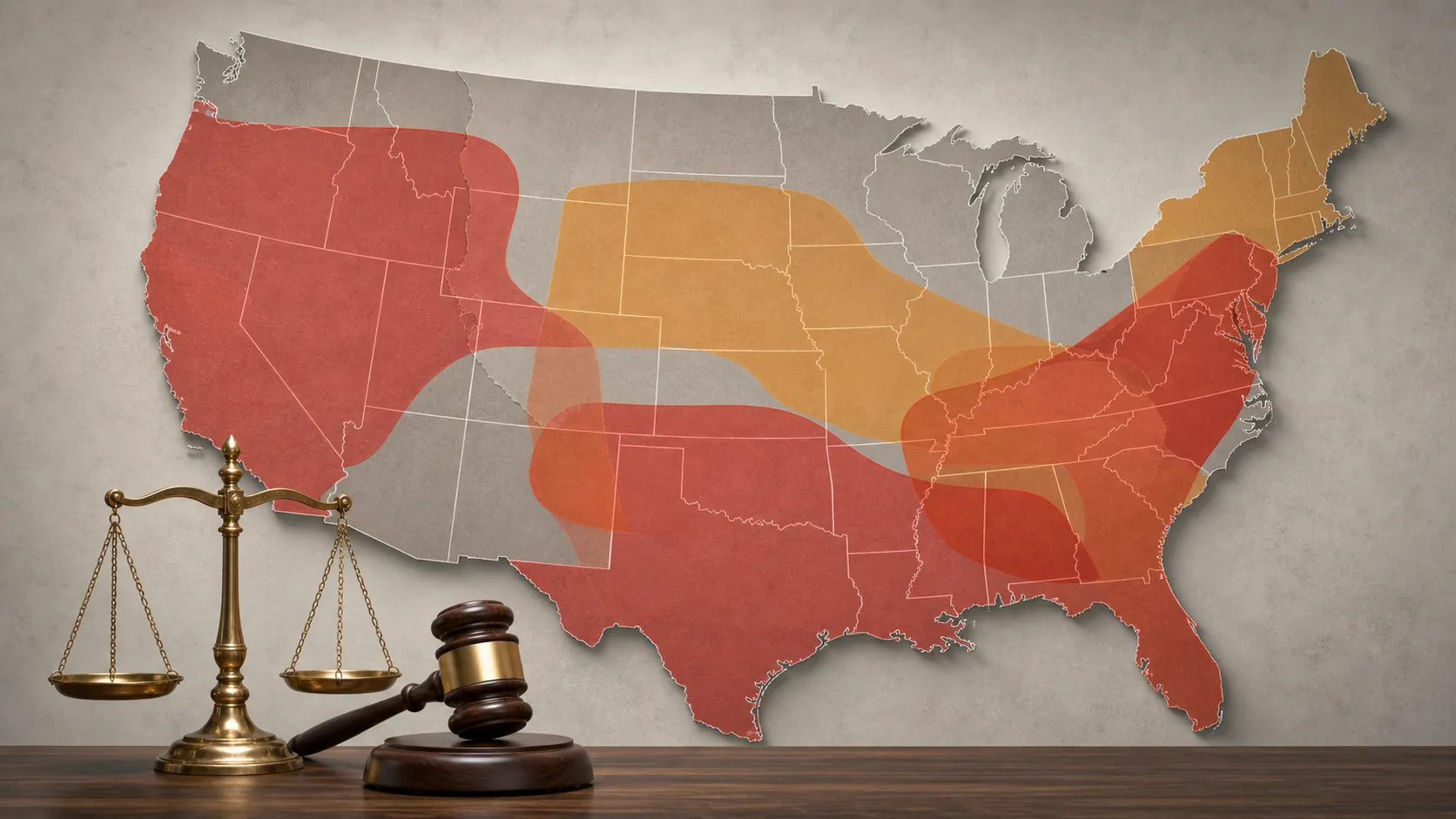
Rhode Island HSGP suit: election and immigration conditions
On July 23, 2026, 25 states and the District of Columbia sued FEMA and DHS in the District of Rhode Island over an approximately $148 million Homeland Security Grant Program hold and attached election- and immigration-related conditions. The reported claims include APA and Spending Clause theories. As of this record, the suit should be treated as newly filed, with no merits ruling identified here [6][7].
For grant counsel, the amount is not the only issue. The sharper question is whether DHS is using a preparedness grant to extract certifications that Congress did not clearly authorize and that recipients could not have knowingly accepted when the grant framework was set. If the condition is unclear, unrelated to the grant purpose, retroactive, or coercive, the Spending Clause theory becomes more than a pleading label.
Oregon EMPG and HSGP suit
A separate 12-state suit filed in Oregon on November 4, 2025, challenges limits tied to FEMA emergency-management and homeland-security grants. The posture matters: this is not a final appellate settlement of the legality of the new FEMA agenda; it is another pending dispute over whether the administration may condition or limit grant funds in the way it has chosen [8].
The Oregon case is useful because it shows how the same legal issues can appear before any formal structural FEMA bill moves. State emergency-management agencies do not need to wait for Congress to debate FEMA’s long-term mission before they encounter immediate certification, reimbursement, and planning risk.
BRIC termination suit
On July 16, 2025, a 20-state coalition challenged the termination of BRIC disaster-mitigation funding, describing the challenged cuts as reaching billions of dollars and raising claims that include an Appointments Clause challenge involving acting Administrator Cameron Hamilton. The case should be read as part of the mitigation-funding exposure layer, not as a final ruling that every BRIC-related action is unlawful [9].
BRIC is especially sensitive because mitigation sits upstream of disaster loss. A termination or suspension can look, on paper, like a budget or program-priority decision. For a state or locality that has already planned flood, fire, or resilience work around federal mitigation funds, it becomes a project-cancellation, procurement, and match-funding problem.
Court-order compliance is now part of the risk map
The record also includes a reported Rhode Island order-breach episode in October 2025 involving federal funding compliance. That episode should be docket-verified before it is used for a client-specific litigation memo, but it belongs on the risk map because funding disputes change character once a court has ordered relief and the government is accused of noncompliance [6].
Mullin’s reported June 2, 2026 refusal to commit to following court orders adds a separate institutional concern. The statement is not itself a holding, and it does not decide any grant case. Its relevance is practical: when agencies are already litigating funding holds and conditions, uncertainty about compliance with court orders affects how states evaluate emergency motions, enforcement requests, and reliance on agency assurances [10].
The recurring claims: APA, Spending Clause, and statutory displacement
The cases and disputes are not identical, but the legal theories cluster. APA claims test whether the agency acted within statutory authority, followed required procedure, explained its decision, and avoided arbitrary or capricious action. Spending Clause claims test whether funding conditions were stated clearly enough, related closely enough to the federal program, and imposed in a way that recipients could knowingly accept.
The FEMA-specific overlay is 6 U.S.C. § 316. Even if DHS can defend a condition or hold under ordinary grant-law principles, it may still face a separate problem if the action substantially or significantly reduces FEMA’s statutory capability. Conversely, a management change that irritates states or slows paperwork is not automatically unlawful unless it crosses a statutory, procedural, constitutional, appropriations, or grant-term line.
Older FEMA-benefits litigation also matters because courts have been willing to police disaster-aid procedures when individual rights, due process, or statutory limits are implicated. Ridgely v. FEMA, Santos v. FEMA, and ACORN v. FEMA do not answer every 2026 grant dispute, but they are part of the administrative-law background against which FEMA benefit and eligibility decisions are evaluated [4].
A practical classification test for new FEMA directives
For a state or subrecipient receiving a new FEMA directive, the first useful move is classification. The legal response changes depending on whether the document is a statutory proposal, a binding rule, a grant condition, a funding hold, an internal workflow change, or an informal statement by a political official.
- Identify the claimed authority. If the directive cites only an executive order or internal DHS authority for a change that alters Stafford Act or PKEMRA functions, the authority gap should be treated as a primary issue.
- Ask whether FEMA’s statutory capability is reduced. A nominally internal change can become legally significant if it disables FEMA’s ability to perform assigned response, recovery, preparedness, or mitigation functions.
- Separate eligibility rules from grant conditions. Eligibility changes, reimbursement holds, and recipient certifications trigger different records, deadlines, and remedies.
- Check timing. A condition imposed after funds were appropriated, awarded, or relied upon is more exposed than a clearly stated prospective term.
- Preserve the administrative record. APA challenges often turn on the agency’s stated reasons, the documents before it, and whether it treated similar recipients consistently.
- Track court orders separately from merits claims. Once an injunction or enforcement order exists, compliance becomes its own legal issue.
For related issue-spotting, the Stafford Act denial and appeal framework is discussed in this companion record on FEMA disaster appeals, while parallel grant-condition litigation is tracked in the San Francisco anti-DEI grant-terms challenge.
What Mullin’s “restructured, not eliminated” claim can legally mean
Mullin’s August remarks that FEMA should be “restructured, not eliminated” and should be present for “the very worst of the worst, not on every storm” describe a policy direction, not a complete legal mechanism [11]. The lawful version of that direction is limited: DHS can manage priorities, improve administration, propose legislation, and use delegated rulemaking authority where Congress has given it room.
The unlawful or highly vulnerable version would be different. DHS cannot unilaterally erase FEMA’s distinct statutory position, substantially reduce its assigned functions, or use grant conditions and funding holds to accomplish indirectly what PKEMRA, the Stafford Act, appropriations law, the APA, or the Spending Clause would not allow directly.
So the defensible risk judgment is restrained but firm. Most structural elements of the Mullin FEMA overhaul require Congress. The immediate exposure sits in grant conditions, funding suspensions, APA process, Spending Clause limits, statutory-capability reductions under 6 U.S.C. § 316, and compliance with court orders.
References
- Final Report: The President's Council to Assess the Federal Emergency Management Agency, DHS, May 7, 2026
- FEMA Reform: Comparing the Review Council's Recommendations and Congressional Proposals, Bipartisan Policy Center
- Fixing Emergency Management for Americans Act of 2025, CRS Report R49028
- Proposed Changes to FEMA and the Future of Federal Disaster Response, Harvard Law School EELP, February 27, 2025
- DHS Markwayne Mullin approval FEMA aid disaster response, NBC News/AP
- States sue FEMA, DHS, Trump administration funding, CBS News
- States Sue Trump Admin Holding $148M in Disaster Aid Over Unlawful Election Demands, Democracy Docket
- States sue over Trump's limits for FEMA grants, Courthouse News
- Attorney General Platkin Sues Trump Administration for Unlawfully Cutting Billions in Disaster Mitigation Funding, New Jersey OAG, July 16, 2025
- Mullin refuses to commit to following court orders for DHS, Politico, June 2, 2026
- Markwayne Mullin calls for FEMA overhaul during appearance in OKC, The Oklahoman, August 1, 2026
Related records
Tool profile
How Meta's AI Spending Reshapes Law Firm ProfitabilityGoverning regulation
Browse the obligations tracker →Preventive workflow
Browse verification workflows →
Report a correction or tip
Spotted an outdated figure, a misstated fact, or a ruling this case record should reflect? Public comments are disabled for this content given the professional cost of a misreported case outcome, penalty amount, or rule text — use the structured correction channel instead.
Report a correction or tip for this record →